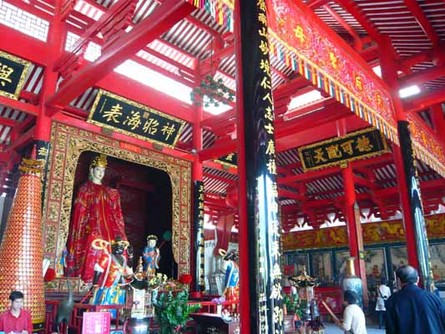
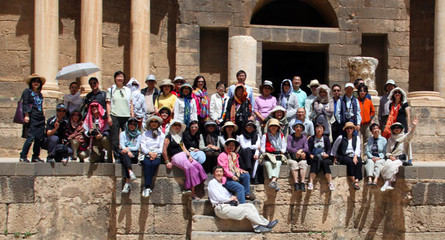
Owing to the overwhelming response from members to the trip announcement last September, we decided to operate two parallel tours, instead of just one. As both tours are fully subscribed, the waiting list is now closed. We are grateful to members for their enthusiastic participation which gives our committee a greater incentive to plan for more exciting trips in the future. Thank you!
India – A Transcendental Tapestry: Tour of Sanchi, Khajuraho, Amritsar & Dharamsala
We will visit three UNESCO World Heritage sites on this tour: Buddhist Monuments at Sanchi, Rock Shelters of Bhimbetka & the Khajuraho Group of Temples.
Sanchi is famous for outstanding specimens of Buddhist art and architecture belonging to the period between the 3rd century BC and the 12th century AD. The most notable of all the Sanchi monuments is the Great Stupa which was commissioned by the Maurya Emperor Ashoka in the 3rd century BC.
Khajuraho boasts the largest group of medieval Hindu and Jain temples famous for their bold, sensuous and erotic sculpture. Made of sandstone, the temple complex was built by the Chandela Rajputs over a span of 200 years from 950 to 1150. Today, they serve as fine examples of artistic Indian architectural styles that have gained popularity due to their depiction of sexual life during medieval times.
Amritsar, home to the Golden Temple, is an important seat of Sikh history and culture. The architecture of the Golden Temple represents a unique harmony between the construction styles of the Muslims and the Hindus and has created an independent Sikh school of architecture in India. The shining gold facade is accentuated not only by hundreds of lights but by the faith and devotion of its followers, many of whom are not even of the Sikh faith.
Dharamsala literally means “Holy Refuge” and many monasteries have been established here by Tibetan immigrants in the past. In 635, Hsuan Tsang recorded 50 monasteries with around 2,000 monks in this region. Dharamsala pulsates with the characteristic sights and sounds of old Tibet and has become an important destination for scholars and pilgrims worldwide.
Andre Alexander will be the Resource Person of this tour. Since 1996, he is the Co-Director and Co-Founder of the Tibet Heritage Fund. Andre is responsible for managing conservation and development projects in Tibetan areas in India and China, including architectural conservation and urban rehabilitation, traditional construction skills as well as sustainable planning and design programs. These projects won several awards. Andre will share with us his knowledge of Tibetan culture and heritage and Buddhist architecture.
Optional Extension to Delhi, Agra & Jaipur (31 October – 6 November 2009)
We offer an optional five-night extension in Delhi, Agra and Jaipur. The highlights include six UNESCO World Heritage sites: Humayun Tomb, Qutub Minar and Red Fort in Delhi and Agra Fort, Fatehpur Sikri and the Taj Mahal in the State of Uttar Pradesh.
Qinghai and Southern Gansu Tour with UMAG Director, Yeung Chun-tong (Conducted in Cantonese)
Overview:
The itinerary will follow the footsteps of ancient Buddhist priests along the Silk Road in Qinghai and Southern Gansu provinces. It includes a visit to a Neolithic site at Liuwan where 1,500 tombs were discovered, yielding a large quantity of attractive painted pottery.
Founded in the Hongwu period (1368-1398), Qutan Si is a well-preserved architectural gem near Liuwan. It houses a number of exquisite Ming dynasty (1368-1644) Buddhist statues. Its wall paintings vividly depict the life of the Buddha Sakyamuni.
Ta’er Si and Labuleng Si are the greatest monasteries in Qinghai and Gansu for training Lama monks. Both have important collections of Tibetan Buddhist tangkas and sculptural works made of various materials.
The focal spots to be visited in Southern Gansu are the earliest Buddhist sites in China. They are the cave temples at Maijisan, Wushan and Binglingsi. Their history can be traced back to the late 4th century. The colourful stucco figures in these caves are of exceptional historic value for the study of Chinese Buddhist culture.
Conducted in Cantonese, this tour will be lead by our own Museum Director, Yeung Chun-tong (???). He is a graduate of the University of Hong Kong with B.A. and M.Phil. Degrees, both in Fine Arts. He is currently Honorary Associate Professor, teaching Chinese material cultures and museum studies in the Department. With over 30 years of experience and an in-depth knowledge of Chinese art and history, Director Yeung is an invaluable resource for our visit to the sites in this part of the Silk Road.
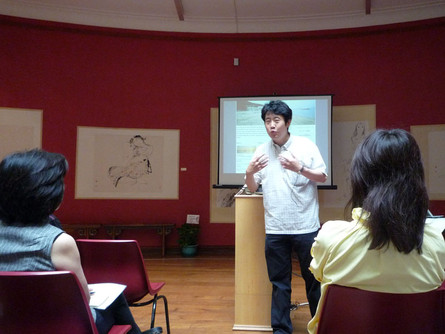
Pre-trip Talk – Chinese Culture in Qinghai and Gansu
In ancient times, Qinghai and Gansu were on the Silk Road linking Eurasia and China. Both of these provinces have developed a mixture of cultures that are clearly reflected in their Buddhist art, as found in cave temples and Lamaseries.
Director Yeung will introduce the pottery finds from a Neolithic site in Qinghai and compare them with similar discoveries in other parts of Mainland China. The wall paintings and stucco sculptures in Gansu cave temples will also be highlighted to illustrate the Buddhist influence on the development of Chinese art and culture.
Do join us for an informative and enlightening evening talk on a part of China that is culturally diverse and fascinating.
在中國歷史上,青海和甘肅於絲綢之路未開拓前,是不受重視的地方。本講座將介紹這兩個省份的早期歷史,內容包括漢人文化和當地少數民族的融和,以及自漢代開始外地文化的傳入所帶來的影響。
本講座以青海甘肅兩地彩陶的發現,追溯新石器時代的歷史,並且利用甘肅石窟的壁畫和彩,說明當地在中國佛教史上的重要地位,同時帶出佛教思想和藝術與中國文化發展的密切關係。
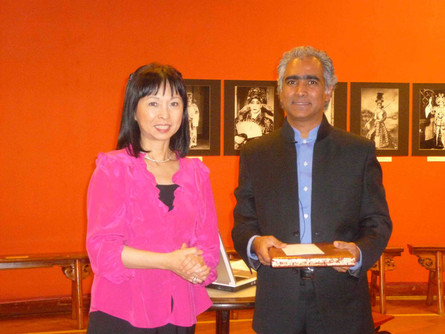
Traditions and Tensions – The Rise of Mondernism in India with Sundaram Tagore
Lecture synopsis
This lecture explores the multiple facets of Indian modernism. The narrative begins with the question: If modernism, in the Western context, is defined as a rejection of tradition, just how does a 5,000-year-old traditional culture such as India manage to make modern art? It somehow unfolds to us in a more tangled and complex manner, influenced by factors such as urbanism, primitivism and neologism. Unlike their counterparts in the West, Indian artists made modern art not by shocking and rejecting, but by assimilating elements from innumerable artistic traditions.
Modernism first took root on the Indian subcontinent with the establishment of colonial art colleges that followed the curriculum of the Royal College of Arts in London. The introduction of Western ideas generated great debate and conflict. Hence a group of Asian and European intellectuals, including Englishman Ernst Binfield, Japanese curator Okakuro Kakuzo and Chinese artist Xu Beihong, created the Pan-Asian alliance to counteract the pervasive influence of Western academic naturalism promoted by the government colleges. The movement swept through India and spread to other Asian countries as well, resulting in an international aesthetic and ideology. Thus began the story of Indian modernism.
The speaker
Sundaram Tagore is a New York-based art historian and gallerist. A descendant of the influential poet and Nobel Prize winner Rabindranath Tagore, he promotes East-West dialogues in multicultural and multidisciplinary events globally. He has worked with many international organizations including The Peggy Guggenheim Foundation, Venice, Italy; Metropolitan Museum of Art; Museum of Modern Art, New York; United Nations; Pace Wildenstein Gallery. He is currently a Ph.D. candidate of Oxford University, and he writes for numerous art publications. In 1999, he was nominated by Avenue magazine as one of the 100 Most Influential Asian Americans in the United States. Recently, he was profiled in a 30-minute special interview with CNN International’s Talk Asia.
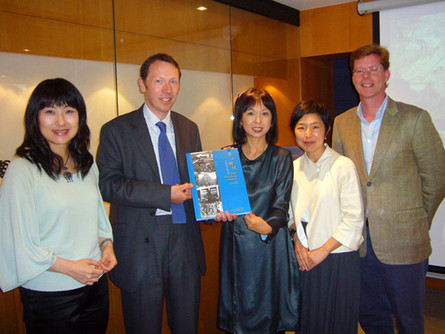
Dr. Shane McCausland: Telling Images of China – Narrative and Figure Paintings, 15th – 20th Centuries
Lecture Synopsis:
This talk will introduce themes from an exhibition of paintings, on loan from the Shanghai Museum, to be mounted at the Chester Beatty Library in Dublin in early 2010. Each of these 38 paintings retells some kind of story from Chinese legend, folklore, literature or history. While many of the tales will be familiar in China, the ways they were illustrated in painted scrolls and albums are less well known. Individually, these images and the tales they describe have the power to delight viewers; taken together, they can also give a taste of China’s rich lyric tradition.
The show includes narrative paintings that describe the plotlines of emotive tales through sequences of pictorial images, as well as portraits of individuals or groups. Historically, such images were often the starting point for viewers’ individual reminiscences on a figure’s humanity or place in culture. Included are tales like that of the Chinese lady Wenji, who in ancient times was married to a “barbarian” chieftain, bore his children, and was later faced with the harrowing decision of whether to return to China without them. This tale lay at the heart of an ongoing definition of Chinese culture through history, but also has resonance for Chinese people at home and abroad today. Other tales of “scholars and beauties”, demon-slayers and Taoist immortals similarly continue to have relevance in daily life and the popular imagination.
This exhibition sets out to explore the dynamic interplay of words and pictorial images in the art of China’s last two imperial dynasties, the Ming (1368-1644) and Qing (1644-1911), and into the Republican period. It explores how narratives took form in pictures, and how portraits and genre scenes could transmit cultural memories. In highlighting themes, from exile and longing, to supernatural and religious lore, to the morality of history and the delights of romance, the exhibition shows how successive generations of artists gave new life to learning, devotion and leisure in pictorial images fit for their own times.
The Speaker:
Dr. Shane McCausland is Head of Collections and also Curator of the East Asian Collections at the Chester Beatty Library, Dublin. In 2003-04 he was Sainsbury Fellow in the Sainsbury Institute for the Study of Japanese Arts and Cultures, based at the SOAS, University of London, where he was previously a lecturer in Chinese art history. He has a doctorate from Princeton University (2000). In 2003, he published The Admonitions Scroll: First Masterpiece of Chinese Painting and Gu Kaizhi and the Admonitions Scroll (contributing editor) (both British Museum Press). His Zhao Mengfu: Calligraphy and Painting for Khubilai’s China is forthcoming from Hong Kong University Press in 2010.
Venue:
A double treat for our members – we are privileged to be dining at the exclusive Min Chiu Society Club. It was founded in 1960 by a group of Hong Kong collectors and connoisseurs. Today, with 50 members, they continue to work towards their goal of propagating and preserving traditional Chinese art and culture. This prestigious Society has extensive contacts with curators, collectors and scholars from China and overseas. The members’ collections have been individually or collectively exhibited or loan to various museums.
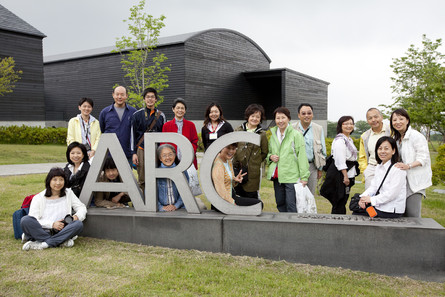
Trip: Contemporary Art and Architecture in Japan Echigo Tsumari Triennial Art Festival 2009 Preview Tour with Alex Hui
The University of Hong Kong Museum Society is proud to present an exciting summer tour for our members this year. We will be led by architect Alex Hui
( 許日銓 ), former Curator of the University of Hong Kong Museum and Art Gallery, and past Director of Hong Kong Arts Centre. This exclusive art and architecture tour is designed to introduce our members to the most forward-looking art festival in Asia, the Echigo Tsumari Art Triennial. In addition, we will visit at least six top-notch museums, special restaurants and designer hotels. By the end of our tour, we would have made a loop around the area and seen some wonderful gems of Japanese architecture rarely visited.
Our trip will last 7 days plus an optional extension – details have been mailed out earlier but here is a summary of the trip.
Itinerary:
Day 1 – Friday, 5 June 2009
We will meet in the morning to begin the tour. Our bus will pick us up in Tokyo (at a location to be advised) and our first stop will be Hara Museum and the Kankai Annex. Then we continue on to Echigo Tsumari where we will stay for the next few days to view art works in the company of the curators of the show. We will stay in a small ryokan and experience rural hospitality. Please note that as with rural traditional ryokans, facilities are shared, in a small home atmosphere. Treat this as an experience of traditional Japanese way of life.
May-June 2009 9
Day 2 & 3 – Saturday and Sunday, 6-7 June 2009
We will view a selection of works from amongst the hundreds of art works on show. These art works are all site specific installations and what is notable is that the local community has a large say in which art work stays and which goes as they are the ones living with the works. If the community chooses to ignore and not maintain the work, it will be gone sooner or later, maybe even after the first snow bound winter!
Day 4 & 5 – Monday and Tuesday, 8-9 June 2009
Traveling westward to the Japanese Alps, we visit Chihiro Art Museum designed by Hiroshi Naito, Professor Emeritus of Architecture at Waseda University. Another museum to visit is Matsumoto City Museum of Art where the permanent collection of Yayoi Kusama is kept.
Day 6 & 7 – Wednesday and Thursday, 10-11 June
Our last two days will be in Kawaguchi area where we will stay in Risonare, an award winning highland resort hotel. While in the highlands, we will visit Tadao Ando's Koumi-machi Kogen Museum of Art as well as Fuji Harness, the headquarters of the Japan Guide Dog Association designed by architect Chiba Manabu. Transportation will be arranged for members to return to Tokyo, or if members are taking the Yokohama extension, then to the hotel in Yokohama.
Optional Extension tour to Yokohama and Kamakura
"Y 150" celebrates 150 years of the Port of Yokohama – There is a 2-night extension for those interested in spending some extra time in the area.
Pre-trip Talk: Japan’s Contemporary Art and Architecture with Alex Hui
Alex Hui ( 許日銓 ) led the 2006 tour and the time has come to join him for another visit. In conjunction with our June trip to Japan, Alex will give a power point presentation to show us some of the site specific art works in Echigo Tsumari. He will explain the concept behind Echigo Tsumari and the HKU Museum Society's historical links with this art triennial. He will also show us some of the places we shall visit after our stay in Echigo Tsumari. The lecture will illustrate architecturally interesting museums, hotels and even a training centre for guide dogs!
Day Trip: Shenzhen Walls with Dr. Joseph Ting
Our recent trips to Shenzhen have focused on the new Shenzhen – a lively metropolis teeming with new buildings, broad highways, people in a hurry!
In the last 30 years, the economic boom has changed this city beyond recognition. We now think of Shenzhen as a very modern city, almost forgetting that it too – like many places in China, is part of an ancient land. Yes, there are still parts of Shenzhen that are old.
Our trip will take us to Namtou Old City (南頭故城), the seat of the former Xin’an County (新安故城), founded in 1573. The county covered not only present day Shenzhen but also Hong Kong, Kowloon and the New Territories – before the coming of the British. It has long been the administrative, economic and cultural centre of the entire area. We will see the remnants of this walled city. There is the South Gate, the restored Coastal Defense Office and some old houses. We will also visit the northern city wall – which was built in the Ming Dynasty and a small museum.
Inside this walled city is the Chiwan Tinhau Temple (赤灣天后廟). This temple used to be the most important temple dedicated to the Goddess of Heaven in the Pearl River estuary area. It was first built in 1410, and since then has been renovated and refurbished numerous times. Before 1949, it was the hub of the local fishermen during the Tinhau Festival. Its importance is evident in that it was mentioned in the Xin’an Gazetteer.
If time permits, we will also visit the tomb of the Boy Emperor. This grave is alleged to be the tomb of the last emperor of the Southern Song Dynasty. Fleeing from the Mongol army, the imperial court stayed in Kowloon and Lantau for sometime before they were finally defeated at a sea battle near Macao when the boy emperor was drowned. It was said that the boy’s body was found and was subsequently buried here.
We are very privileged to have as our guest lecturer, Dr Joseph Ting, formerly Chief Curator of the Hong Kong Museum of History. Dr Ting graduated from the Department of Chinese, University of Hong Kong in 1974, majoring in Chinese Literature and Chinese History. He acquired his Ph.D in 1989 from the same department. He joined the Hong Kong Museum of Art in 1979 as Assistant Curator II. He was transferred to the Hong Kong Museum of History in 1988, and became the Curator. He retired as the Chief Curator of the Hong Kong Museum of History. At present he is honorary adviser to a number of cultural institutions both in Hong Kong and China.
Dr Ting will guide and enlighten us and walk us through this old part of Shenzhen, a part that many of us have probably not even heard of, much less visited. Do join us for a day of discovering a different Shenzhen, one definitely off the beaten track.
Trip: The Road to Damascus …..Tracing Syria’s Glorious Heritage
– Anjar, Baalbek, Byblos, Tyre, the Qadisha Valley and the Cedars in Lebanon
– The Old City of Damascus, Aleppo, Palmyra, Krak des Chevaliers, Qala't Salahel-Din and Bosra in the Syrian Arab Republic
– The "rose-red city" of Petra in Jordan