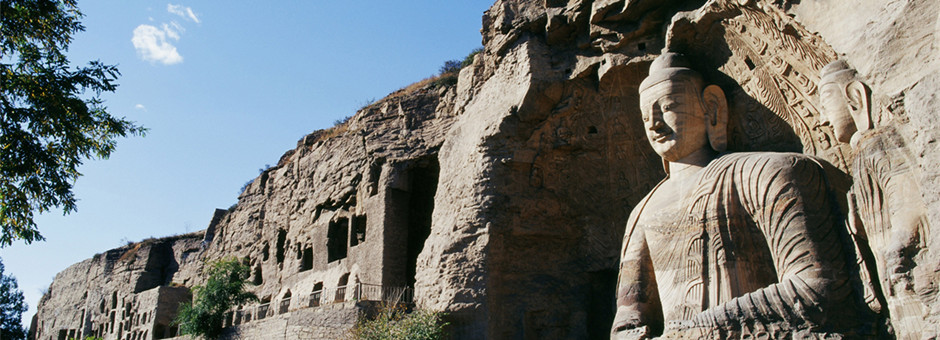
Shanxi province is well known for its rich historical and cultural heritage. Shanxi has at present a total of 4,296 gazetted national monuments, of which 452 items are in Shanxi province, including some of the oldest and finest built heritage in China. This trip will bring us to northern Shanxi where some of these magnificent buildings are found, including the Foguang Temple 佛光寺 and Nanchan Temple 南禪寺 in Mount Wutai 五台山, the Wooden Octagonal Pagoda of Yingxian county 應縣木塔, the Jin Ancestral Hall in Taiyuan 晉祠, the Hanging Temple 懸空寺 in Hunyuan county, and above all, the Yungang Grottoes 雲崗石窟 at Datong which is now a World Heritage.
Historically, northern Shanxi lies at the border between nomadic tribes from Mongolia and the agrarian Han Chinese. The Great Wall running along the northern border of the province protected the land from the aggressive nomads. We will visit Yanmenguan 雁門關, one of the major fortified gatehouses along the Great Wall. We will also visit the Shanxi Provincial Museum 山西省博物館 at Taiyuan to study the unique collections of archeological finds which shed light on the origin and development of the culture of this part of northern China.
– Dr Joseph Ting
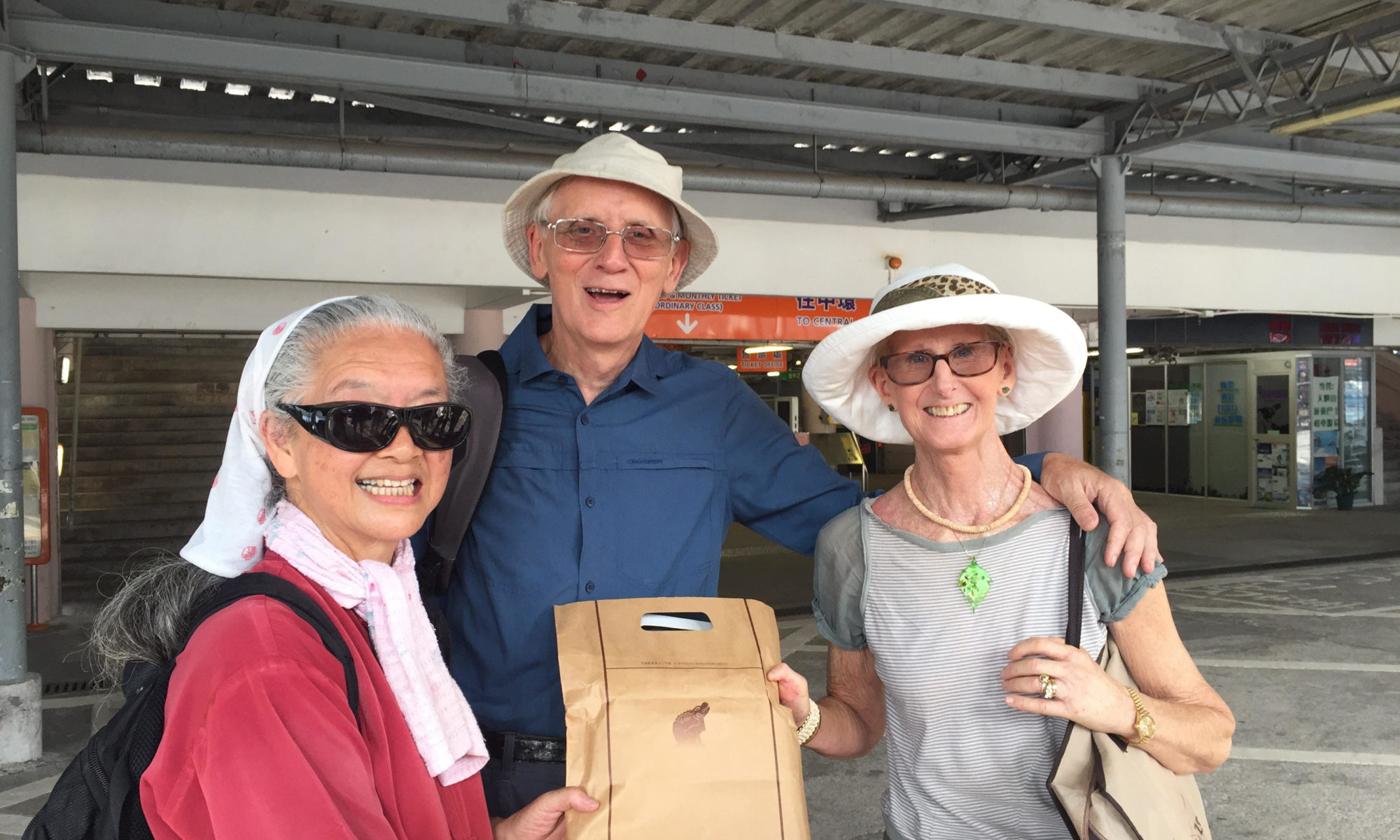
Bob and Sally Bunker have called Mui Wo their home for years and are happy to share with us the beauty of the place. Bob will walk us through some remaining old villages and Sally will show us flora and fauna of the area.
This afternoon walk will take us off to areas rarely visited by many day trippers to Mui Wo!
Resource Persons
Born in UK 1949 and growing up in the country, Sally always had a hobbyist interest in the environment and the artistic representation of flora. An athlete and dancer, she took up physical education along with remedial child therapy, and specialized at secondary level.
Moving with family to Hong Kong 1979, Sally worked in P/E and environmental studies at kinder/primary level, before starting an International Kindergarten, and she obtaining her qualifications to be a Principal. Her curriculum emphasised environmental studies.
Having no training in botanical art-work, but having dabbled for 15 years, she was encouraged to take it up full time, so in 2002 she enrolled in a week’s course with Anne-Marie Evans, igniting new-found passion. Obtaining a Distinction in the Society of Botanical Artists’s Long-distance Learning Course, her work has been exhibited at SBA’s annual exhibition ever since.
Seeking a worthwhile project, Sally is now working alongside Hong Kong University on a “heritage book” of 100 of the 360 species of indigenous, significant and endemic trees of the territory. Illustrating seasonal changes of each tree needs “meeting” all her subjects, involving many hours of field-work, mainly on Lantau – Hong Kong’s lovely rural island where she now lives. A university professor is writing up the details of each tree; publication hopefully in a few years’ time, with more to follow!
Sally’s husband Bob, retiring after a career in finance, has spent many years involved in Green groups on Lantau, and has deep interest in the island and its history.
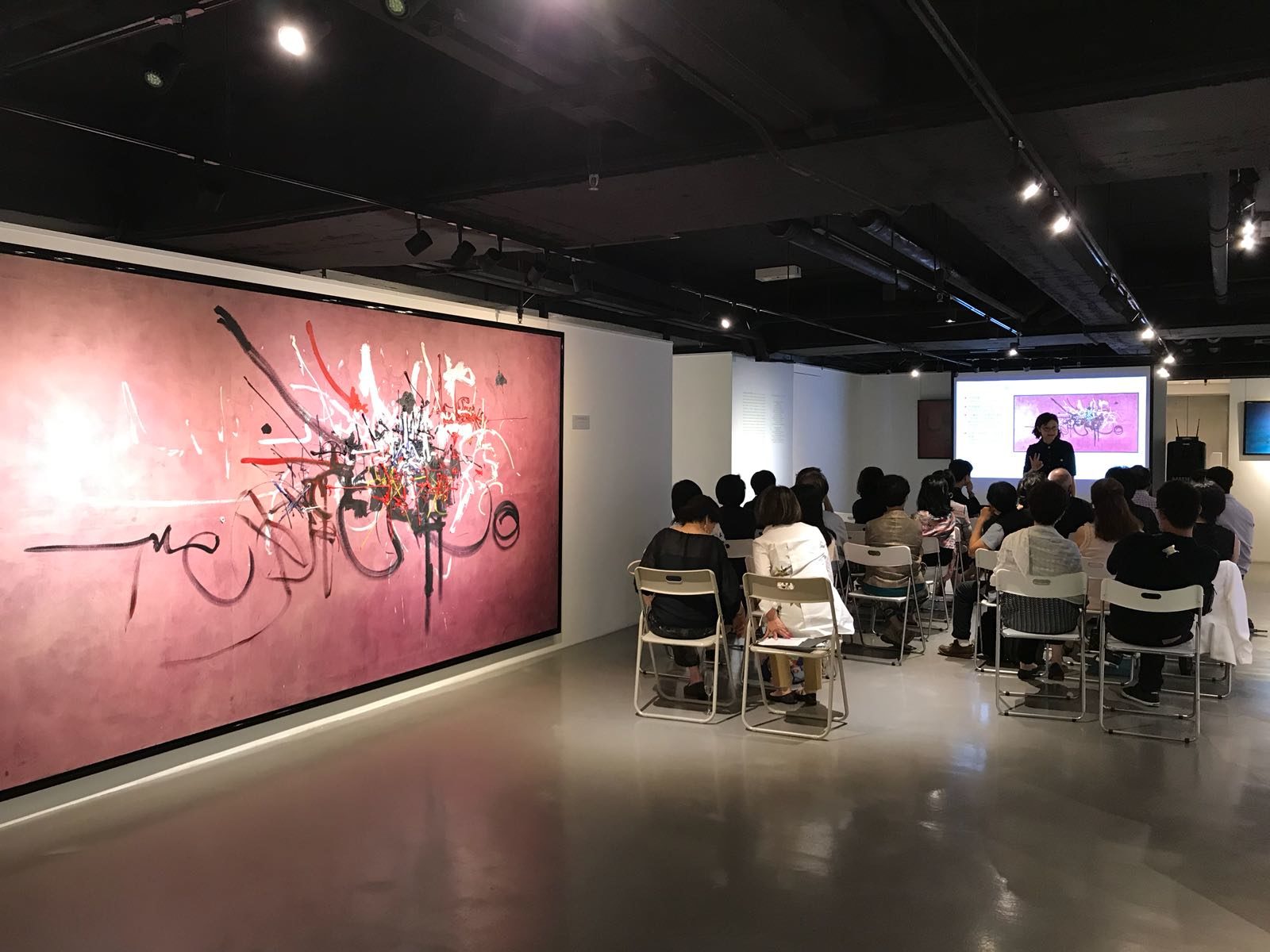
The Executive Committee is delighted to host a morning coffee and guided tour with the artists Mehmet Gürsoy and Nida Olçar. To register on-line, please visit:
https://hkuems1.hku.hk/hkuems/ec_hdetail.aspx?guest=Y&ueid=56385
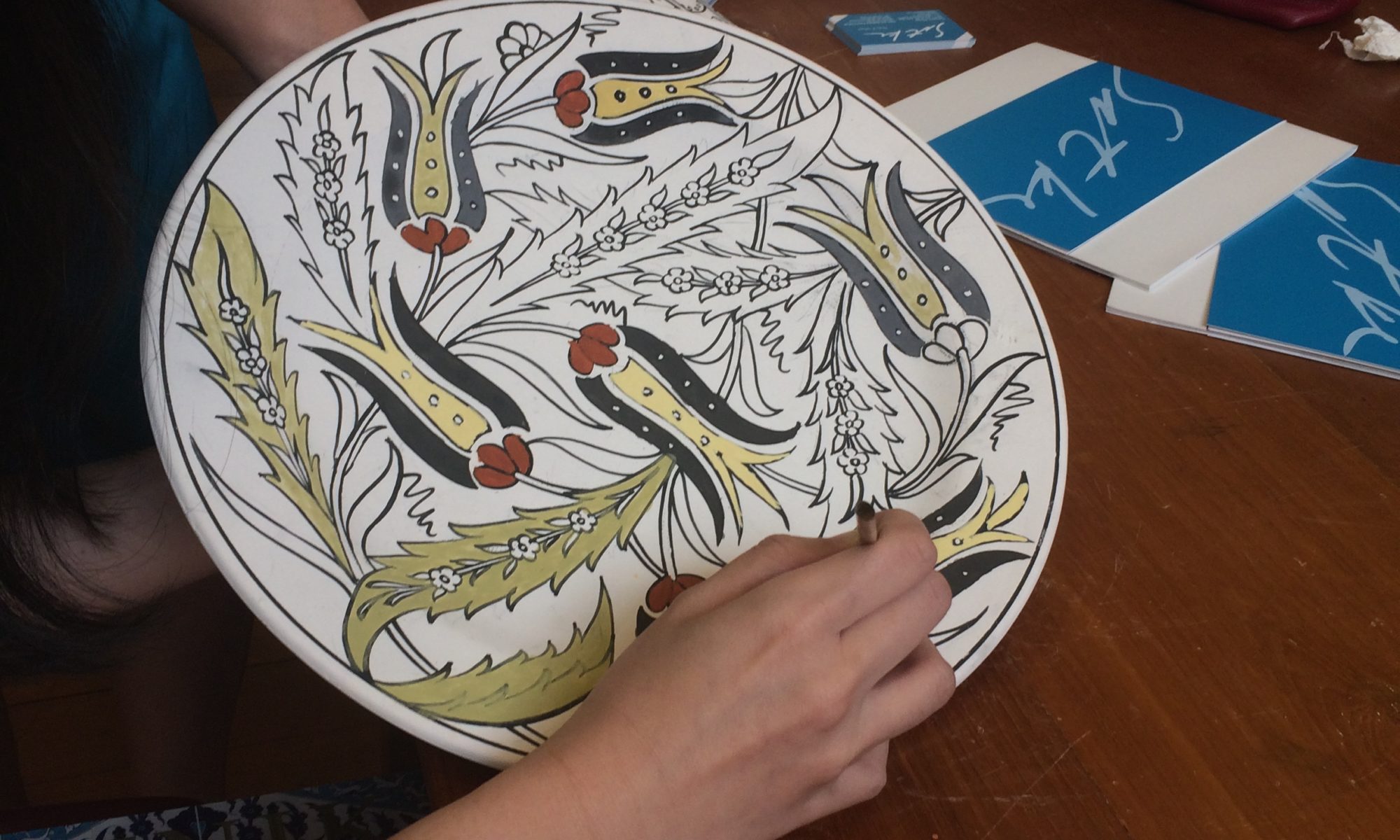
“Contemporary Blue-and-White: Iznik Ceramic by Mehmet Gürsoy and Nida Olçar” exhibits some forty Turkish ceramics by two well-known and award-winning contemporary potters. Both artists work in a traditional, yet also contemporary Iznic style. Mehmet Gürsoy was recognised as a UNESCO Living Human Treasure in 2010, while Nida Olçar, a much younger artist, continues the renowned workshop and ceramic style of her late father Sıtkı Olçar who was awarded the same prestigious UNESCO award in 2008.
This lecture is presented in conjunction with the Museum Society’s upcoming trip to Northern Shanxi with Dr. Joseph Ting. All are welcome to attend.
Shanxi province is well known for its rich historical and cultural heritage. China has at present a total of 4,296 gazetted national monuments, of which 452 are in Shanxi province, including some of the oldest and finest built heritage in China. Historically, northern Shanxi lies at the border between nomadic tribes from Mongolia and the agrarian Han Chinese. Historically the Great Wall running along the northern border of the province protected the land from the aggressive nomads.
Speaker
Dr. Joseph Ting majored in Chinese Literature and Chinese History from HKU and graduated with a BA degree in 1974. He was conferred an MPhil in 1979 and a PhD in 1989, both from HKU. Dr. Ting joined the Hong Kong Museum of Art as an Assistant Curator in 1979 and was appointed Chief Curator of the HK Museum of History in 1995. He retired in 2007 after serving for 28 years. He is currently an Honorary Assistant Professor in the School of Chinese at The University of Hong Kong, as well as an Adjunct Professor in the Department of History at the Chinese University of Hong Kong.
The Executive Committee is delighted to host a morning coffee and guided tour with collector Luigi Bellini and UMAG Museum Director, Dr. Florian Knothe. To register on-line, please visit:
https://hkuems1.hku.hk/hkuems/ec_hdetail.aspx?guest=Y&ueid=56384
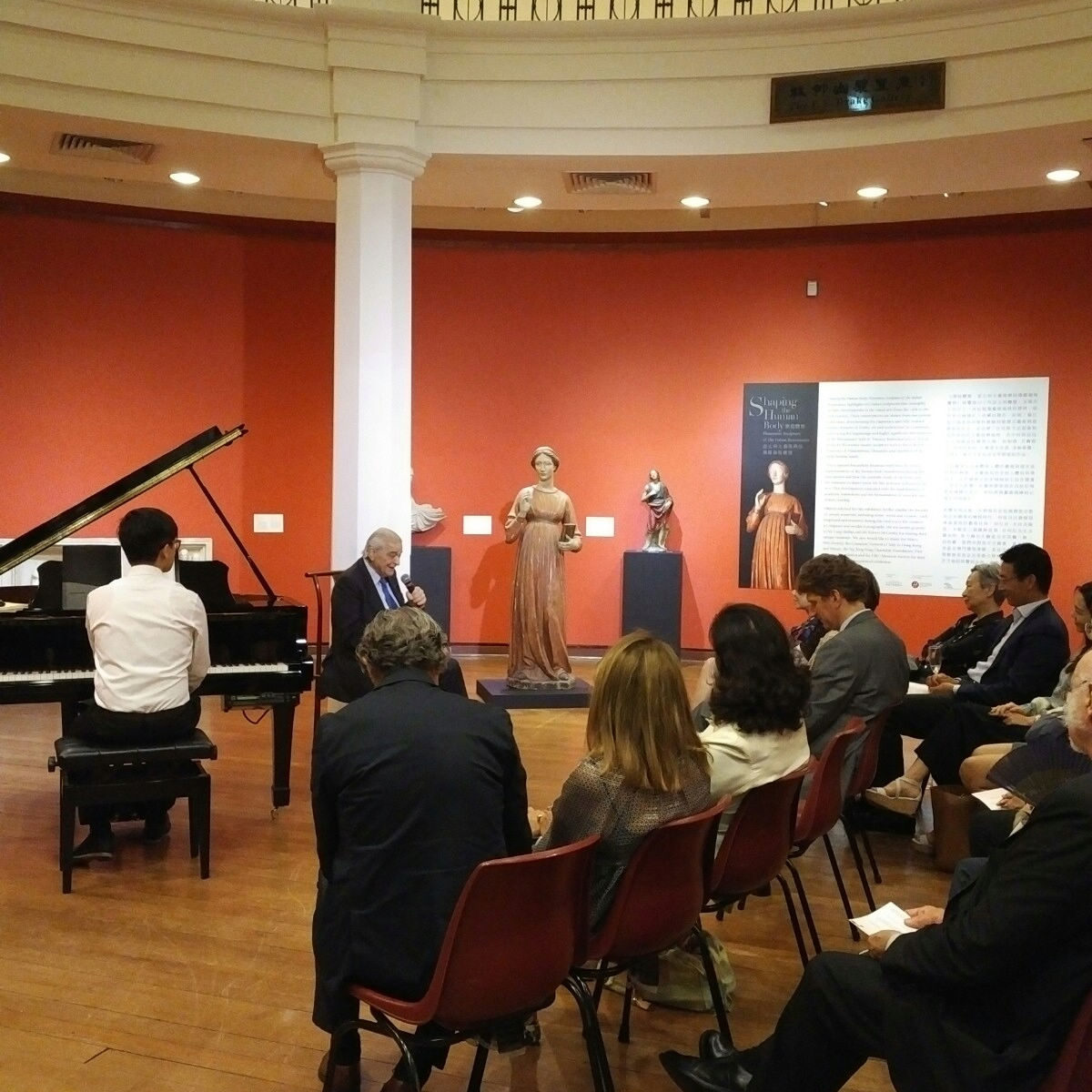
“Shaping the Human Body: Florentine Sculpture of the Italian Renaissance” highlights ten Italian sculptures that exemplify stylistic developments in the visual arts from the 14th to the 16th century. These masterpieces are drawn from two private collections, documenting the important and fully realised stylistic features of Gothic art and architecture in Lombardia — where the Cathedral of Milan stands as a celebrated monument of the time period and style — and tracing the beginnings and highly significant development of the Renaissance style in Tuscany.
The Executive Committee is delighted to host a morning coffee and guided tour with collector Luigi Bellini and UMAG Museum Director, Dr. Florian Knothe. To register on-line, please visit:
https://hkuems1.hku.hk/hkuems/ec_hdetail.aspx?guest=Y&ueid=56384
Shaping the Human Body: Florentine Sculpture of the Italian Renaissance highlights ten Italian sculptures that exemplify stylistic developments in the visual arts from the 14th to the 16th century. These masterpieces are drawn from two private collections, documenting the important and fully realised stylistic features of Gothic art and architecture in Lombardia — where the Cathedral of Milan stands as a celebrated monument of the time period and style — and tracing the beginnings and highly significant development of the Renaissance style in Tuscany.

The Executive Committee is delighted to host a morning coffee and guided tour with collector Luigi Bellini and UMAG Museum Director, Dr. Florian Knothe. To register on-line, please visit:
https://hkuems1.hku.hk/hkuems/ec_hdetail.aspx?guest=Y&ueid=56384
“Shaping the Human Body: Florentine Sculpture of the Italian Renaissance” highlights ten Italian sculptures that exemplify stylistic developments in the visual arts from the 14th to the 16th century. These masterpieces are drawn from two private collections, documenting the important and fully realised stylistic features of Gothic art and architecture in Lombardia — where the Cathedral of Milan stands as a celebrated monument of the time period and style — and tracing the beginnings and highly significant development of the Renaissance style in Tuscany.
The Executive Committee is honoured to present Mr. Luigi Bellini, collector and descendant of the Bellini family as the guest speaker for this year’s Annual General Meeting (AGM).
To say “the Bellinis” means ‘dynasty’, a great and ancient family deeply rooted in the common passion for art creations of the past. It also means a Gallery known all over the world, a special kind of antique dealing, lofty and noble in its class, moving along a classic track and never diverted by the passing fancy for the curiosity object.
The Bellini family of antiquarians can be traced back to the XVIII century. Not only antiquatarians, the Bellinis have through the centuries also been dealers, and collectors of art and antiquity. Within the former house of the Soderini family located along the Arno in Florence lies a noble collection that includes a head by Donatello, a portrait by Tintoretto, a Madonna by della Robbia, a bronze by Giovanni Bologna, a majolica by Xanto Avelli from Rovigo, a gothic tapestry, a wardrobe carved by Sansovino.
The University Museum and Art Gallery in the exhibition Shaping the Human Body: Florentine Sculpture of the Italian Renaissance will be featuring a selection of sculptures from 14th to the 16th century from the Bellini’s collection. In this talk, Luigi Bellini will tell us more about his fascinating family and the incredible collection the family has amassed over the centuries.
The Executive Committee is honoured to present Mr. Luigi Bellini, collector and descendant of the Bellini family as the guest speaker for this year’s Annual General Meeting (AGM).
To say “the Bellinis” means ‘dynasty’, a great and ancient family deeply rooted in the common passion for art creations of the past. It also means a Gallery known all over the world, a special kind of antique dealing, lofty and noble in its class, moving along a classic track and never diverted by the passing fancy for the curiosity object.
The Bellini family of antiquarians can be traced back to the XVIII century. Not only antiquatarians, the Bellinis have through the centuries also been dealers, and collectors of art and antiquity. Within the former house of the Soderini family located along the Arno in Florence lies a noble collection that includes a head by Donatello, a portrait by Tintoretto, a Madonna by della Robbia, a bronze by Giovanni Bologna, a majolica by Xanto Avelli from Rovigo, a gothic tapestry, a wardrobe carved by Sansovino.
The University Museum and Art Gallery in the exhibition Shaping the Human Body: Florentine Sculpture of the Italian Renaissance will be featuring a selection of sculptures from 14th to the 16th century from the Bellini’s collection. In this talk, Luigi Bellini will tell us more about his fascinating family and the incredible collection the family has amassed over the centuries.
Overview:
Our annual boat trip takes us to yet another fascinating area of Hong Kong. This time we take our boat from Tung Chung Ferry Pier and go to North Lantau and Soko Islands(北大嶼山及索罟群島).
Brief itinerary:
1. Start from Tung Chung Pier ;
2. From the boat, view the Hong Kong Boundary Crossing Facilities (香港口岸) and the Tuen Mun Chek Lap Kok Link (屯鬥至赤鱲角連接路) ( under construction) ;
3. Pass through the newly designated Brothers Marine Park (大小磨刀海岸公園) and associated Islands;
4. Look at the construction works of the Third Runway (第三跑道) from our boat;
5. Pass through Sha Chau and Lung Kwu Chau Marine Park (沙洲及龍鼓洲海岸公園);
6. Pass under the Hong Kong-Zhuhai-Macau Bridge (港珠澳大橋);
7. Visit Tai O (大澳) and watch for Chinese White Dolphins (中華白海豚) on the way if any;
8. A simple lunch at Tai O;
9. Go to Soko Islands (索罟群島) – the sea area is being proposed to be a new Marine Park for the conservation of dolphins and finless porpoises;
10. Land at Tai A Chau (大鴉洲) and visit the old Vietnamese Refugee Camp, and the deserted village;
11. Return to Central.
Resource Persons
Dr. Wong Fook-yee (王福義) is an avid hiker and nature lover. He was formerly the Assistant Director of Agriculture, Fisheries and Conservation Department of Hong Kong (Country and Marine Park Branch), and is now Honorary Associate Professor of the Geography Department at The University of Hong Kong.
Mr. To Ka Yan (杜嘉恩) – a geographer and geomorphologist, formerly a teacher trainer specializing in geographical and environmental education, serving as Senior Lecturer in the then Hong Kong Institute of Education.