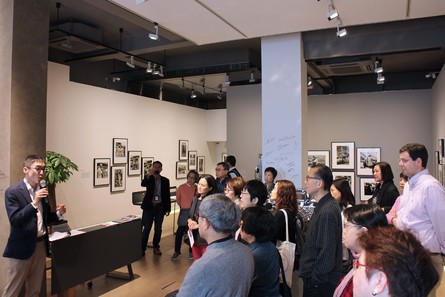
Guided Viewing: “Imagining Qianlong: Louis XV’s Chinese Emperor Tapestries and Battle Scene Prints at the Imperial Court in Beijing” with Dr. Florian Knothe

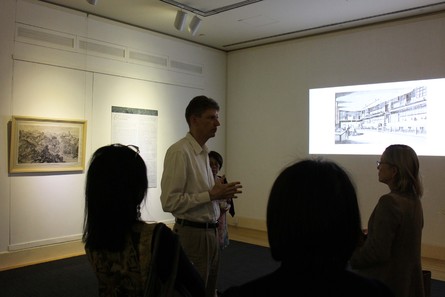
Members are invited to join Museum Director Dr. Florian Knothe for afternoon tea and a guided viewing of the special exhibition of tapestries and prints entitled "Imagining Qianlong: Louis XV’s Chinese Emperor Tapestries and Battle Scene Prints at the Imperial Court in Beijing Museum".

This exhibition is co-sponsored by HKUMS and the French Consulate, and will be featured as one of the programmes of Le French May 2017.

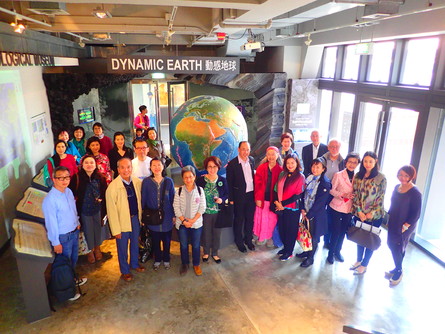
Guided Visit: “2017 Mineral Exhibition” with Professor Chan Lung-sang 陳龍生教授

The Stephen Hui Geological Museum will present a special exhibition on selected minerals by local mineral collectors. Specimens of over 10 local collectors will be displayed, in addition to the regular mineral and rock exhibition in the Museum. This is arguably the best public exhibition of minerals in Hong Kong.

The Stephen Hui Geological Museum opened its doors to the public on January 16, 2009 as the first and only geological museum in Hong Kong. Located on the campus of the University of Hong Kong as part of the Department of Earth Sciences of the Faculty of Sciences, it offers an attractive interface between the Hong Kong University and the community of Hong Kong to encourage stewardship of the Earth and promote an understanding of the value of Earth Science and its application and relevance to Hong Kong's modern environment.

The Museum Society is honoured to have Professor Chan Lung-sang 陳龍生教 give us a short presentation on minerals and gems.

Resource Person
Professor Chan Lung-sang is professor in Earth Sciences at the University of Hong Kong as well as College Principal of HKU SPACE Community College and HKU SPACE Po Leung Kuk Community College. He received his doctorate degree in geology from the University of California, Berkeley and is arguably the first Hong Kong native to receive formal training in geology. His research interests include tectonics of South China and Hong Kong, earthquake geology and applied geophysics. He is devoted to promoting Earth Science education, and has led field trips for students to South China, Tibet, Taiwan, North America, Australia, Italy, Cyprus, the Arctic region and Antarctica.

Guided Viewing: Perception: Cai Xiao-song with Katherine Don (CANCELLED)

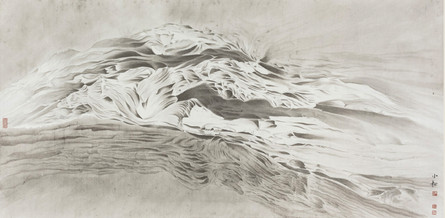
Sotheby’s Hong Kong will present "Perception: Cai Xiao-song" 蔡小松, a solo exhibition showcasing new paintings by the Beijing-based artist. In his new series, Cai shifts his artistic focus from representational expression to a visual interpretation of the world on a metaphysical level. Meticulously executed scholar’s rocks, planets, and Buddhist sculptures frequently seen in his previous works now give way to semi-abstract landscapes, full of movement and rhythm that capture the essence of nature instead of its physical forms.

This new series manifests a mature style, not only demonstrating confidence in brushwork but also emphasizing movement and maintaining resonance in overall composition. Marking a departure from Chinese painting tradition, Cai applies his gongbi brushwork technique to the rendition of abstract forms. The visual movement and vitality seen in these landscapes are created by multiple layers of ink wash, each applied on top of the other once completely dried. Such a slow process, in his own words, “gives life to the painting as if ink itself grows from paper and gradually transforms into a finished composition, full of power and visual impact.”

Resource Person
Our tour will be led by Katherine Don, Sotheby’s Department Head of Contemporary Ink Art in Asia (since August 2014). She is responsible for organising the bi-annual Contemporary Ink Art ("Contemporary Literati series") and selling exhibitions in Hong Kong.

Prior to joining Sotheby’s Hong Kong, Katherine was an art advisor specialising in contemporary Chinese art. From 2013 to 2014, she was a key contributor to Sotheby’s Contemporary Ink sales in New York and Hong Kong as a consultant.

For nine years, Katherine established and directed RedBox Studio Ltd., an art advisory firm for private collectors of contemporary Chinese art. Her curatorial activities in
Beijing, New York, Canada and Spain had a consistent focus on works on paper, including contemporary Chinese ink painting. Prior to 2005, she worked at several New York art galleries, including Goedhuis Contemporary where she served as Director for two years.

Katherine holds a dual-degree in Art History and East Asian Studies from Barnard College, Columbia University, and received a Masters degree from UCLA Anderson School of Management.

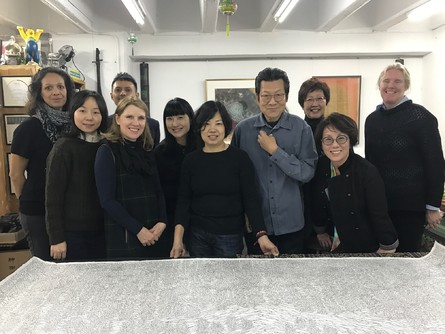
Studio Visit with Eddie Lui

In conjunction with Hong Kong painter and sculptor Eddie Lui’s exhibition at UMAG, the Museum Society is delighted to organize an afternoon tea with Eddie at the his studio.

In the early 1970s, Lui completed an art and design course with the Department of Extra-Mural Studies at The University of Hong Kong (now HKU SPACE), before he studied a one-year contemporary ink painting programme with Hong Kong ink painters Lui Shou-kwan (1919–1975), Wucius Wong (b. 1936), and others. Since then, Lui has developed his own individual style, displayed his deeply felt admiration for nature, and created a new language of naturalistic as well as abstract motifs. As a draftsman, painter and sculptor—Lui is one of the founders of contemporary art in Hong Kong.

Inspired by the naturalism of America-born painter Georgia O’Keefe (1887–1986) as well as steeped in the tradition of Chinese bird-and-flower painters, Lui depicts exotic fruit and vegetables full of life and symbolism. His artworks, whether in ink, gouache, Japanese handmade paper on canvas, or sculpted in clay, are reminiscent of poetry that connects us humans with nature and appeals to our senses.

Over the years, Lui’s palette changed and the often bright and flamboyant colours gave way to more muted monochrome ink. At the same time, in artworks large and small, the fine execution of each detail and the certainty with which the artist’s brush moves remain of the highest quality. A generation younger than his master Lui Shoukwan and other influential ink painters, such as Hon Chi Fun (b. 1922) and Liu Kuosung (b. 1932), Lui himself became a gifted teacher who instructed students and helped develop New Ink Painting as a discipline.

Guided Viewing and Talk: “1952 Hong Kong” with Mr. Douglas So and Dr. Joseph Ting

Join us for a Sunday visit to F11! The Museum Society is delighted to have Mr. Douglas So guide us through the photographic exhibition 1950s Hong Kong, to be followed by a talk by Dr. Joseph Ting on Crisis and Opportunities: Hong Kong in the 1950s.

“Exhibition – 1950s Hong Kong”
After working in Japan for 10 months, Magnum photographer Werner Bischof and his wife, Rosellina, arrived in Hong Kong by sea in May 1952. He spent two months working on photo-documentation of the then British Colony which was suffering deeply from the embargo America and the United Nations had imposed on China due to the
Korean War.

The 85 photos selected for this exhibition constitute a lively documentary of the 1952 Hong Kong where extremes abound. Bischof’s photos revealed Hong Kong as a rapidly growing community in search of a delicate balance between East and West, old and new, affluence and otherwise, with a strong common desire to begin a new page in this haven of hope.

“Talk – Crisis and Opportunities: Hong Kong in the 1950s”
In the aftermath of destruction brought about by war and the Japanese occupation, Hong Kong slowly recovered in the late 1940s. Before long, civil war broke out in Mainland China, and thousands of Chinese fled to Hong Kong, causing the population to soar. The local Chinese had to settle down and call Hong Kong their home after the founding of the Communist regime in China and the subsequent closure of the border. Meanwhile the Korean War broke out in 1950, Hong Kong’s entrepôt trade received a fatal blow as a result of the embargo enforced by the United Nations. Under such circumstances, the colonial government began to formulate long term plans and policies regarding housing, education and social service, as well as promoting local industry to cope with these traumatic changes, thus laying the foundation for rapid developments in the following decades.

Resource Persons
Mr. Douglas So obtained his Bachelor of Laws (LL.B.) and Postgraduate Certificate in Laws (PCLL) from The University of Hong Kong (HKU). He became a solicitor of Hong Kong in 1993. Douglas practised commercial law, corporate finance, as well as mergers and acquisitions before joining The Hong Kong Jockey Club (HKJC) as Legal Counsel in 2000. Until his recent resignation, Douglas was the Vice-President and Pro-Vice-Chancellor (Institutional Advancement) of the University of Hong Kong. Douglas founded F11 Foto Museum in a Grade III heritage building in Happy Valley in 2014 to promote photography, heritage conservation and private museums in Hong Kong.

Dr. Joseph Ting majored in Chinese Literature and Chinese History at The University of Hong Kong (HKU) and graduated with a BA degree in 1974. He was conferred an MPhil in 1979 and a PhD in 1989, also from HKU. Dr. Ting was appointed Chief Curator of the Hong Kong Museum of History in 1995 and retired in 2007 after serving for 28 years. He is currently an Honorary Assistant Professor in the HKU School of Chinese, and was an Honorary Research Fellow at the former Centre of Asian Studies. He is an Adjunct Professor in the Department of History at the Chinese University of Hong Kong and a Member, inter alia, of the Antiquities Advisory Board, the Lord Wilson Heritage Trust and the Education Bureau of Hong Kong.

Central Japan Tour – A cultural trip to the heart of Arts and Crafts Immersing in SAKE and ONSEN

HKU Museum Society is delighted to present a fundraising trip for our 30th Anniversary Endowment Fund.

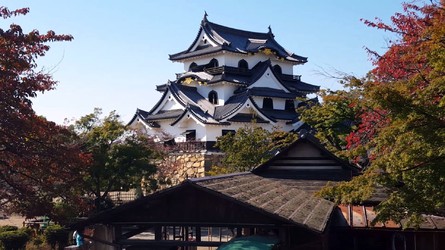
“By invitation only”, our members will be given access to legendary collector Mr. Ise’s private museum that is normally closed to the public. During our stay in central Japan, we will embrace various aspects of Japanese traditional arts and crafts through special visits to see exclusive art studios in Iwase Artist Village supported by Mr. Masuda, owner of a gold medal awarded local sake brewery, as well as a patron of local artists creating lacquer ware, wood carving, metal engraving and etc. Our tour will consist of many cultural activities, including sake tasting in Toyama and Ukai (cormorants fishing) viewing in Gifu. In addition, we will also explore the national treasure Hikone Castle and stay at the traditional onsen hotels for hot spring spa and kaiseki dinning.

Casas & Quintas – Porto, Portugal with Michael Borozdin-Bidnell

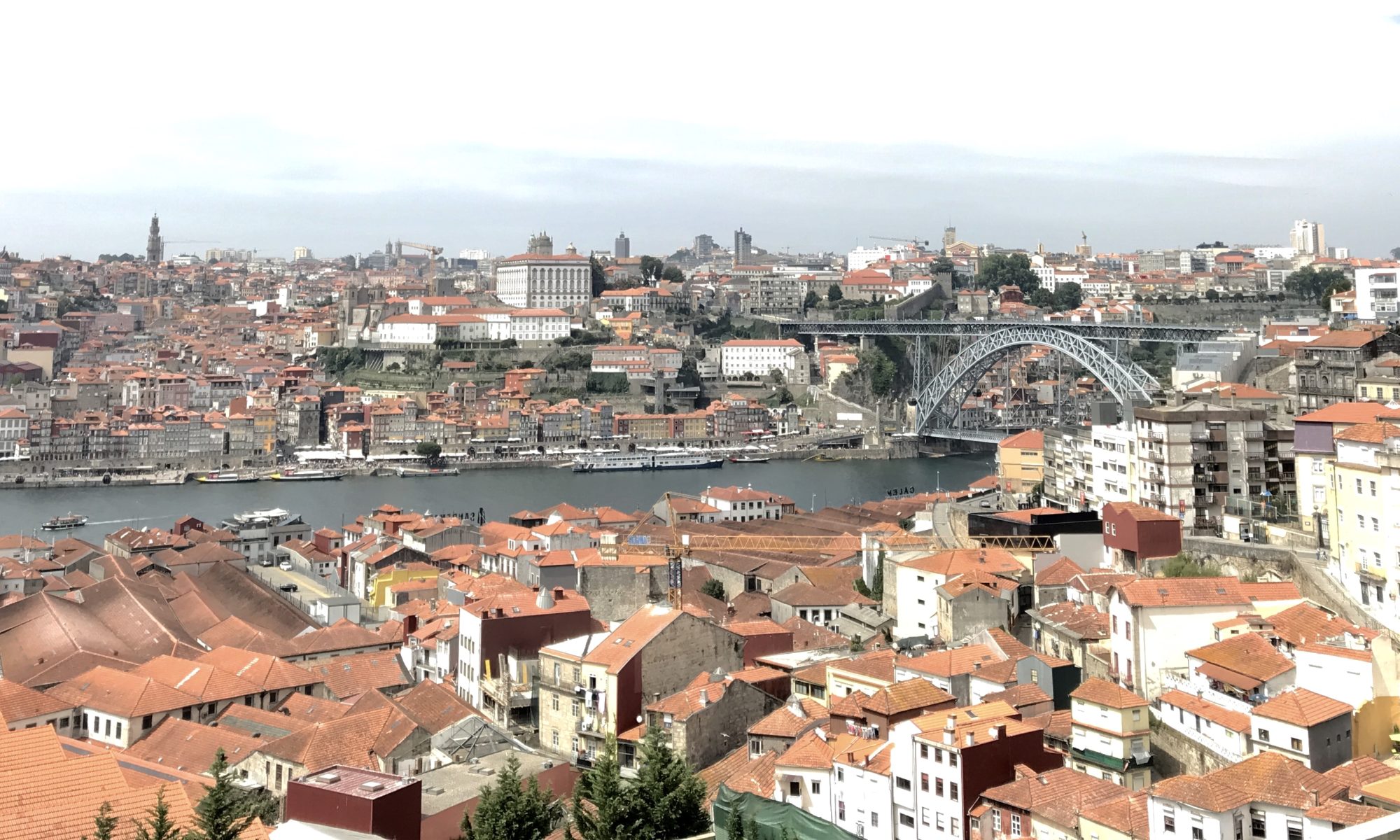
The little-explored, but extremely picturesque, region of northern Portugal offers many hidden gems outside traditional tourist destinations. Here, through a unique conjunction of Anglo-Portuguese cooperation, nestled amongst the hills and valleys of the country’s most fertile landscape, are the quintas, or vineyards, of the Portuguese nobility, at the heart of which are a unique series of historic manor houses which rarely open their doors to the public.
This exclusive tour has been especially compiled not only to provide a rare opportunity to see the remarkable interiors of these private homes, but also to explore the historic context of their evolution.

Resource Person : Michael Borozdin-Bidnell
Graduating in the 1970s, Michael Borozdin-Bidnell spent many years as a London-based interior des igner, working internationally as a Senior Partner and travel ling extensively in Europe, America and both the near and far East.
Becoming a Master of Science in the mid- 1990s, he joined the Georgian Group, the UK national amenity society, a charitable organization established in 1937 to campaign to protect eighteenth and early nineteenth century buildings in England, as Head of Research and Information. Since then he has written and lectured extensively, both in the UK and overseas, as an architectural historian and has led overseas cultural tours in Europe for the past nine years. He is currently in the final year of a Doctorate in Architectural History.

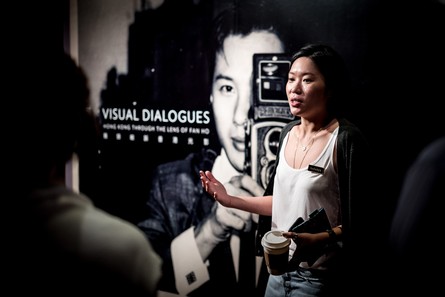
Guided Viewing: Visual Dialogues Hong Kong through the Lens of Fan Ho

The Executive Committee is pleased to organise this guided tour of a retrospective exhibition of the photography of Fan Ho.

A celebrated photographer,film director and actor, Fan Ho was born in Shanghai in 1931 and immigrated with his family to Hong Kong at a young age. His love of photography began with a Rolleiflex camera given by his father. His early works imbue romance and mystery of people in bustling markets and quiet alleyways. Through his mastery of shadows and lights, lines and textures, they have become iconic images of Hong Kong.

Ho received over 280 photography awards in his career with many of his works found in public and private collections worldwide, including the Bibliothèque Nationale de France, the San Francisco Museum of Modern Art, and the Melbourne Museum. Until his passing in 2016, he continued working every day exploring ways of integrating modern photo processing technologies to create new works from his old film negatives.

Resource Person
Our tour will be led by Jasmine Yan, Gallery Director for Sotheby’s Hong Kong.

Jasmine Yan first joined Sotheby's Hong Kong in 2006, since then she has been a key member in the growth and development of the Asia business taking on roles in Client Development, Contemporary Asian Art and starting the Private Client Group in Asia. Jasmine relocated to Sotheby’s New York headquarters in 2012, where she focused on business development for Modern and Contemporary Asian Arts. That same year she became the first and only Chinese-American auctioneer at Sotheby’s and now takes regular auctions in Hong Kong and New York. She recently returned to Hong Kong in 2016 taking on the role Gallery Director for Sotheby’s Hong Kong gallery.

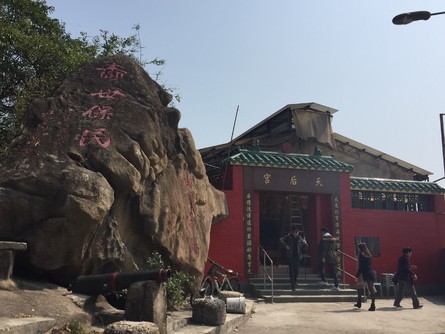
Made in Hong Kong Ceramics Factory: Archaeological Exhibition of the Majestic Chemical Art Craft Manufacture in Lei Yue Mu and Tour of Lei Yue Mun With Professor Sharon Wong Wai-yee and Ms. Kikki Lam

In March this year, 20 undergraduate students from the Preserving Cultural Heritage course and several research postgraduate students at The Chinese University of Hong Kong conducted a field trip in Lei Yue Mun under the guidance of Professor Sharon Wong. The research topic was preserving the Hong Kong ceramics factory site and its intangible cultural heritage — ceramics craftsmanship from Jingdezhen to Hong Kong. After the field trip, 8 undergraduate and postgraduate students volunteered, conducting archaeological fieldwork and artifact analysis, and then curated an exhibition supported by Jockey Club Lei Yue Mun Plus and The Lord Wilson Heritage Trust. This exhibition presents the rise and fall of the ceramics industry in Hong Kong during the late colonial period from an archaeological perspective; multiple interpretations of ceramic objects: from fake antiques, handicrafts, movie props to archaeological artifacts, and how the ceramic factory played a role in the daily lives of the Lei Yue Mun community and the "Hollywood of the East" during the 1960s to 1970s.

This will be followed by a guided walk exploring Lei Yue Mun village, its history and development over the years. We will conclude with an optional lunch in one of the seafood restaurants inside the village.

Resource Persons
Professor Sharon Wong will lead the guided visit and talk about the exhibition behind the scenes. She is an assistant professor from the Department of Anthropology at The Chinese University of Hong Kong. She studied Southeast Asian archaeology and cultures and received her PhD in Southeast Asian Studies from the National University of Singapore. She was originally trained in archaeology and was awarded her Master from the School of Archaeology and Museology in Peking University. Dr. Wong serves on the Antiquities Advisory Board and is a Museum Expert Adviser (Archaeology), Leisure and Cultural Services Department. She is currently working on an intangible cultural heritage project on Hong Kong traditional ceramic crafts sponsored by The Lord Wilson Heritage Trust and a Khmer-Chinese ceramics research project in Angkor, Cambodia funded by the University Grants Committee, Hong Kong.

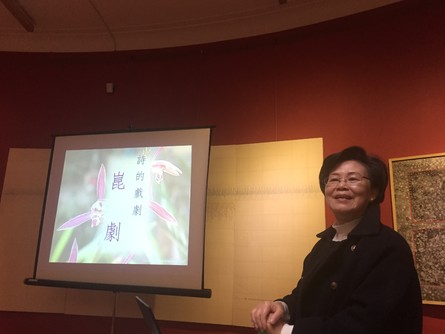
Kunqu: An Introduction With Cheung Lai-chun

Kunqu (崑曲) is a form of Chinese musical drama. But it is more than just drama: it is a combination of play, opera, ballet, poetry recital, and musical recital.

The name Kunqu refers, strictly speaking, to the musical element of this art form, and is connected with the fact that one of the principal types of regional music that went into the making of Kunqu came from the district of Kunshan (崑山) (near Suzhou, in modern Jiangsu Province). This type of regional music goes back to the fourteenth century. It was given shape in the sixteenth century by Wei Liangfu and others, who combined it with three other forms of southern music and with northern tunes from the drama of the Yuan dynasty (1279–1368). Wei Liangfu (魏良輔) and his collaborators standardized the rules of rhyme, tones, pronunciation, and notation, making it possible for this regional form of music to become a national standard. By the end of the sixteenth century, Kunqu spread from the Suzhou region to the rest of China, and became the most prestigious form of Chinese drama.

Music is an essential element of Kunqu, but it differs from Western opera in that there are no individual composers in the Western sense; the author of the drama chooses from an existing repertory, according to fixed conventions, as the tunes exist not in isolation but in sequences. There is a delicate relation between words and tunes: Chinese is a tonal language, every word has a “melody," as it were, and the musical air is superimposed on the word melody, without interfering with it.

In addition to music and words, there is the third element of dance movements and gestures, all rigidly stylized. The three elements work in harmony to convey the meaning and the aesthetic effect desired. Stage equipment is kept to a minimum. There is no curtain, and few props: sometimes a table and a chair. The stage setting, like the costumes, is not meant to be realistic. The actors appeal to the audience’s imagination and conjure up a scene or a setting (such as a door, a horse, a river, a boat) with words, gestures, and music.

Speaker
Cheung Lai-chun began learning the qin (古琴) under Madame Tsar Teh yun in 1976, and Kunqu (崑曲) under Ms Le Yiping in 1988. She is currently a part-time instructor in the Department of Chinese Language and Literature of the Hong Kong Baptist University, teaching the Art of Kunqu. She is also a member of the Commission for the Research and Promotion of Kunju of the Hong Kong Institute for Promotion of Chinese Culture, a researcher at the Centre for Chinese Cultural Heritage of the Hong Kong Baptist University, and chairman of the Concordia Kunqu Society of Hong Kong. In recent years, she has been dedicated to the exploration of traditional Chinese vocal art. She gave vocal interpretations in three recent publications in Hong Kong, one of which is The Vocalisation of the Ci Poems of Jiang Kui(白石詞擬唱), published by the Department of Chinese Language and Literature of Hong Kong Baptist University, and the other is the vocal interpretation of Kunqu in the CD accompanying An Anthology of Notated Northern and Southern Ci Music in Nine Modes: A Critical Edition with Commentary(新定九宮大成南北詞宮譜譯註), a nine-volume series published by the Music Department of the Chinese University of Hong Kong, and also the vocal interpretation of Gem of Ci Poetry Music(宋韻遺珍), published by The Commercial Press.