Collage Workshop

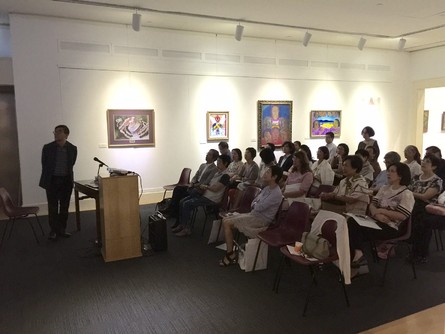
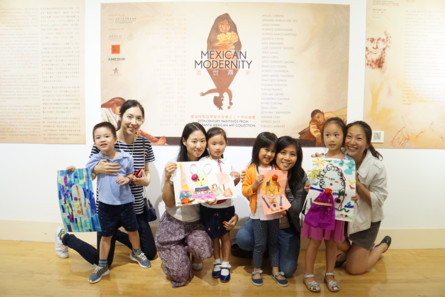
This workshop is organized for HKU Museum Society members and family. Participants will join an educational child-friendly guided tour to view the Mexican Modernity: 20th-Century Paintings from the Zapanta Mexican Art Collection exhibition, which follows the development of styles of Mexican art and their relationship with Mexico’s societal and political changes.

The instructor will demonstrate collage techniques and the children will have the opportunity to create their own collages by using various materials such as paper, ribbons and beads. In the art demonstration,the instructor will explain the type of art materials and their characteristics that were used in these works and the children will be able to create their own work by using watercolour pencils, soft pastels, charcoal and crayons.

This event will be conducted in Cantonese supplemented with English. Every child must be accompanied by an adult. Due to limited capacity, only 1 adult will be admitted with 1 child inside the workshop. Please feel free to bring your own child-friendly scissors and apron if deemed necessary.

Photographing Objects With Ricky Poon Wing-kin

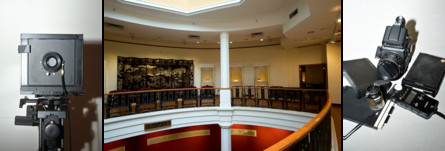
Photographing objects, to get the lighting just right in order to highlight beautiful details, is harder than it looks. During this 2 hour workshop we will look at the principles of photographing objects and try our hand at photographing one or two objects from the museum’s collection. Photographs taken by participants will be analysed and discussed during the session. This is a great opportunity to enhance your photography and lighting skills, under the guidance of Ricky Poon, in-house photographer at the University Museum and Art Gallery.

Resource Person
Ricky Poon Wing-kin first studied photography at various Hong Kong technical institutes and obtained his Applied Photography Higher Certificate at the Hong Kong Polytechnic University. He has participated in local exhibitions, including Kitch 26 Expo 91; Swire School of Design Evening Course Annual, HKPU (1992); Hong Kong Arts Centre Tutors’ Exhibition (1995) and Hong Kong Tramways (2004).

Tai Ping Ching Chiu With Anthony Chan Tin-kuen (陳天權)

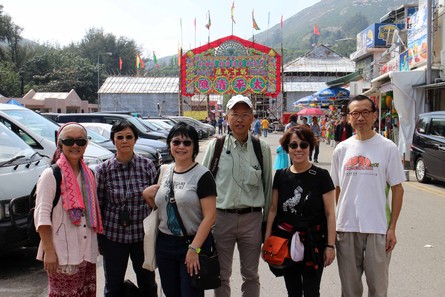
The Tai Ping Ching Chiu (Da Jiao) in Shek O, a festival that happens just once in a decade, will take place from 9 to 12 of November 2016.

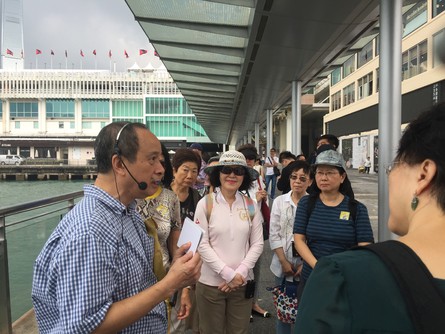
Our visit to the festival on Saturday 12 November will begin by watching the parade
(飄色巡遊). Mr. Anthony Chan will introduce the meaning of Da Jiao and the function of different scaffoldings on site. This will be followed by a visit to the Tin Hau Temple. Then we will walk to the beach, where the history and geography of Shek O will be discussed.

Note: Shek O will be extremely congested on the day. Pending traffic arrangements by the Hong Kong Police for the event, we may have to modify or cancel the trip at the leader’s discretion. Participants may choose to remain in Shek O after the Guided Visit to view the other events scheduled: the Chinese Opera (at 1:30 pm and at 8 pm), parade of Ta Shi Wong (大士王出巡, at 5 pm), and burning the Ta Shi Wong (at 11 pm).

Resource Person
陳天權曾任職新聞工作,2006年畢業於香港大學建築文物保護碩士課程,現為專欄作家和自由撰稿人,撰寫香港歷史建築和傳統風俗。另外擔任多個非牟利團體如「文化葫蘆」、「海濱文化導賞會」和「國際漫遊協會」的顧問,以及多個機構的建築文物課程導師和地區歷史導賞員。曾出版十多本書籍,包括《被遺忘的歷史建築》(港島九龍篇和新界離島篇)、《香港節慶風俗》、《香港歷史系列:穿梭今昔、重拾記憶》和《融會中西:澳門文化之旅》等。

Anthony Chan Tin-kuen was a journalist. After graduating from the Architectural Conservation Programme of the University of Hong Kong in 2006, he became a columnist and freelance writer, focusing on local history, built heritage and folk customs. He is an adviser to several NGOs including Hulu Culture, Hoi Bun Heritage Docents Society and International Travellers Association, and also a lecturer and docent for several other organizations. Anthony has published a number of books, including Forgotten Historic Buildings in Hong Kong, Hong Kong Folk Customs, The History of Hong Kong Series, Heritage Trails in Macau, etc.

From Enlightenment to Arts and Crafts:Scottish Art and Architecture between 18th-20th Centuries With Professor Puay-peng Ho

This lecture is presented in conjunction with the Museum Society’s upcoming trip
Crystal Streams and Azure Skies: Narratives, Architecture, and the Landscape of
Scotland and Ireland with by Professor Puay-peng Ho. All are welcome to attend.

Synopsis
The Scottish Enlightenment of the 18th century was a cultural movement with
enormous influence on all fronts: religion, philosophy, literature, economics,
education, science, art and architecture. The like of Adam Smith, David Hume, Sir Walter Scott, Joseph Black, Adam Ferguson, James Watt, Erasmus Darwin and Robert Adam. Their influences extended beyond the Scottish border and in particular,Robert Adam (1728-92), became the most sought after architect of 18th century England and Scotland. Neo-classical architecture of Adam had an enormous influence on both the private estates and castle home in England and Scotland, but also transmitting the spirit of humanistic enlightenment in the graceful proportion and rhythmic composition of townscape in Edinburgh. The Register House, Old College of University of Edinburgh and Charlotte Square in the New Town are elegant examples of Adamesque architecture. On the other hand, late 19th century saw Scotland as one of the most important centres of the Arts and Crafts Movement in Great Britain, centering on the art and architecture of Charles Rennie Mackintosh (1868-1928). Through the patterns seen on wall paintings, carpet, wallpaper, cutlery as well as architecture façade and details, Mackintosh and his wife created exciting naturalistic and uplifting spirit that find parallel in Art Nouveau works in Vienna and Paris. The lecture will conclude with the works of Phoebe Anna Traquair (1852-1936) who followed the examples of the Pre-Raphaelites and decorated walls, altars, furniture as well as paintings and books in Edinburgh that are vibrant and sensuous.

Speaker
Professor Puay-peng Ho is Professor of Architecture at The University of Chinese
University. He received his First Class Honours degree in Architecture from the
University of Edinburgh and a Ph.D. in Art History from the School of Oriental and African Studies, University of London. His thesis was focused on Buddhist art and architecture of the Tang dynasty. Dr. Ho is a member of the Royal Institute of British Architects and the Society of Architectural Historians. Currently, he serves on Town Planning Board, Antiquities Advisory Board and History Museum Advisory Panel, and is Chairman of the Council of Lord Wilson Heritage Trust. His research interests and publications are in the areas of Chinese art and architectural history, vernacular architecture, and architectural theory. He is also involved in many architecture conservation projects in Hong Kong.
Photographing Objects With Ricky Poon Wing-kin

Photographing objects, to get the lighting just right in order to highlight beautiful details, is harder than it looks. During this 2 hour workshop we will look at the principles of photographing objects and try our hand at photographing one or two objects from the museum’s collection. Photographs taken by participants will be analysed and discussed during the session. This is a great opportunity to enhance your photography and lighting skills, under the guidance of Ricky Poon, in-house photographer at the University Museum and Art Gallery.
Resource Person
Ricky Poon Wing-kin first studied photography at various Hong Kong technical institutes and obtained his Applied Photography Higher Certificate at the Hong Kong Polytechnic University. He has participated in local exhibitions, including Kitch 26 Expo 91; Swire School of Design Evening Course Annual, HKPU (1992); Hong Kong Arts Centre Tutors’ Exhibition (1995) and Hong Kong Tramways (2004).

Classical Chinese Huanghuali Furniture from the Haven Collection With Dr. Lau Chu-pak

The exhibition Classical Chinese Huanghuali Furniture from the Haven Collection, contains a fine selection of both domestic furniture and scholars' objects, such as brush pots and chests. Chinese huanghuali furniture is world-famous and, for the longest time, has been collected in both East and West.

In Ming Dynasty China, traditional wood architecture and Buddhist thrones inspired Chinese furniture of elegant lines and carved details often made from huanghuali and zitan woods. The usage of elegant dark hardwood with a natural shine is both important and remarkable for the fact that Chinese furniture is typically made from solid timber, not an invisible sub-construction covered by a decorative veneer, as it is so often the case in the West. The strength of all individual elements of a piece of furniture and their consistent colour matter, the exposure of every detail and the exactness of the joints, the size and position of the dowels, and so forth, are visual elements of the often very simple and graceful designs. Applied surface finishing mostly existed of waxing to add shine to the dense and in itself decorative woods.

Resource Person
We are privileged to have collector, Dr. Lau Chu-pak introduce us to the many interesting pieces in this exhibition. Dr. Lau is a world authority in Cardiology and particularly Electrophysiology, including the management of patients with cardiac pacemakers and defibrillators and is the author of numerous scientific papers published in the world's most prestigious cardiology publications. Dr. Lau has been collecting for 20 years and started the Haven Collection as a 'haven' and refuge to relax and follow his personal interests.

Peace and Harmony – The Divine Spectra of China’s Fragrant Harbour With Professor Paul Kan

The relationship between agarwood and the history of Hong Kong is intertwined. In the early days, Aquilaria sinensis trees were planted in Hong Kong and incense traders would make them into incense and export them to various provinces in China, Asia, even as far as Arabia. Hong Kong was actually an important port for incense trading. “Hong” means “incense” or “fragrant ” and “Kong” is “harbour”; thus Hong Kong literally means “Incense or Fragrant Harbour” in Chinese. It is with its production and trading of agarwood that Hong Kong has played an important role in global cultural interactions.

The exhibition “Peace and Harmony – The Divine Spectra of China's Fragrant Harbour, with 108 Aloes of Sacred Scripture and Related Artifacts” is staged as one of the programmes of the World Cultures Festival. On display are 108 agarwood artefacts relating to the theme “wisdom” including exquisite statues of Manjusri, Jambhalas, ritual implements in the Esoteric Buddhism and other relevant treasures.

Resource Person
We are delighted to present this special guided tour with collector and founder of the Imperial Museum, Professor Paul Kan. Professor Kan developed the world's first Chinese and multi-lingual wireless communication system in 1987 and is renowned as the “Father of Multi-lingual Messaging” for pioneering the wireless communication transmission technology in multiple languages. He has been making significant contributions to the information technology industry globally over 40 years and is the Founder and Chairman of Champion Technology Group which comprises Champion Technology Holdings (0092) and Kantone Holdings (1059), both of which are IT companies listed on the main board of the Hong Kong Stock Exchange.

Professor Kan holds a Master's degree in Business Administration from the Chinese University of Hong Kong. He also received academic awards which include Honorary Fellow of the Academy of Chinese Studies (2005) and Honorary Professor of Szent Istvan University in Budapest, Hungary (2011).

Professor Kan is dedicated to serving the community. In 1990, he set up the charity “A Better Tomorrow”, which has since contributed to community programs in education, arts, culture and religion. In 2005, he set up Chinese World Cultural Heritage Foundation and World Cultural Relics Protection Foundation to take over the increasing activities of the cultural heritage projects, which include the “Peace and Harmony” exhibition series.

Professor Kan's motto is “Integrity: my principle; Honesty: my foundation; Dedication: my value”. His work and efforts have been recognized globally.

Down Memory Lane: Yau-Tsim District With Cheng Po Hung (鄭寳鴻)

Overview
Route: Salisbury Road(梳士巴利道)→ Nathan Road(彌敦道)→ Jordan Road(佐敦道)→ Temple Street(廟街)→ Public Square Street(眾坊街)→ Shanghai Street(上海街)→Reclamation Street(新填地街)

Cheng Po Hung, UMAG honorary advisor and renowned Hong Kong historian will take us down memory lane, walking through old Kowloon historic sites and scenic spots in the Yau-Tsim District. We will pass through Tsim Sha Tsui (formerly known as Hong Po Tou 香埗頭), the Hong Kong and Kowloon Wharf and Godown Company Limited(九龍倉), Railway Terminus(火車總站), Signal Hill(訊號山), Marine Police Headquarters and the Time Ball(水警總部、時球台), Peninsula Hotel(半島酒店), Holt's Wharf(藍煙囪貨倉碼頭), Brands & Products Expo(工展會), Chungking Mansions(重慶大廈), Whitfield Barracks(威菲路兵房), Dairy Farm Company, Limited(牛奶公司), Princess Theatre(樂宮戲院), Yau Ma Tei Red-light District(油麻地風月區), Kwong Chee, Alhambra and Astor Theatres(廣智、平安及普慶戲院), Yung Shu Tau(榕樹頭), the old and new Yau Ma Tei Police Station(新舊差館)and Wholesale Fruit Market(果欄).

Whisky Tasting With Stephen Mack

From the crystal streams and azure skies of Scotland, members are invited to an exclusive whisky tasting and to discover the art of enjoying quality single malt, and to experience the diverse aromas and flavours in this unique kind of drink.

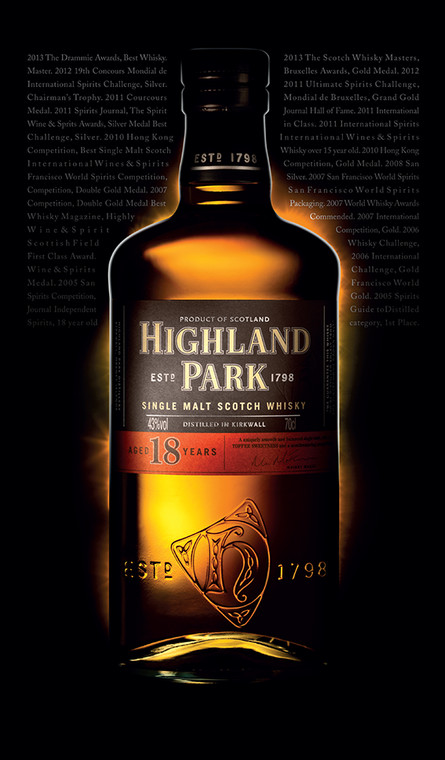
The tasting will feature a line-up of five exceptional vintages from The Macallan and Highland Park: The Macallan Sherry Oak 12 years, Fine Oak 17 years and 25 years, Highland Park 12 years and 18 years.

Resource Person
Stephen Mack will lead us through this whisky appreciation journey. Stephen is the CEO of Asia Wine Service and Education Centre. A renowned wine and spirit educator and speaker, he has given wine and spirit presentations all over the world on subjects including all the world’s major wine and spirit countries and regions and on matching wine with various cuisines.

Sotheby’s Auction 2016 With Nicolas Chow

The first half of 2016 has been a remarkable year for Sotheby’s Hong Kong, with a 22% increase in total sales over the same period last year. The season’s success was driven by notable collections and themed sales from collectors around the globe. This autumn on October 5th, Sotheby’s Hong Kong will present another exceptional tightly-curated and highly sought after sale of Chinese Works of Art, including three exceptional private collections. Highlights include a magnificent and extremely rare large Qianlong mark and period blue and white vase decorated with immortals, estimated at HK$28-35M.

Nicolas Chow, will give an up-close and personal guided tour on this season’s highlights in a private tour of the exhibition.

Resource Person
Nicolas Chow is the Deputy Chairman for Sotheby’s Asia and the International Head and Chairman of the Chinese Works of Art department. Mr. Chow joined Sotheby’s in 1999 and has been responsible for leading the Chinese art market across the Asia Pacific region since 2003, while maintaining strong relationships with important collectors and dealers around the globe. In 2006, he took global oversight for the Chinese Works of Art department, which holds two major sales a year in four locations, namely Hong Kong, London, Paris and New York.

Mr. Chow has brought to the market record-breaking objects and collections including Chinese Art Through The Eye Of Sakamoto Gorō (2013-2014), The Meiyintang Collection Parts I to V (2011 to 2013) as well as The Meiyintang Chicken Cup in April 2014, amongst others. He is also the key figure behind many successful theme sales focusing on Imperial works of art, such as Yongzheng – The Age of Harmony and Integrity (April 2015), Legacies of Imperial Power (October 2008) and Lost Treasures (October 2007), as well as the Contemporary Literati sales.

Mr. Chow holds a master’s degree in Art and Archaeology from the University of London.