Heritage Walk: Central to Wanchai with Cheng Po Hung

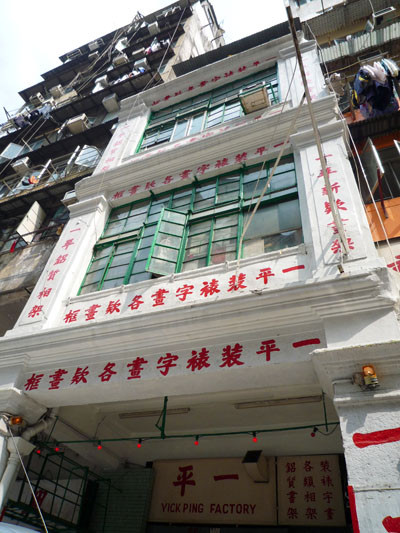
In view of the ever-changing cityscape of Hong Kong, we have invited Cheng Po Hung ( 鄭寶鴻 ) , an expert on Hong Kong history, to recount what the city was like before the major reclamations in the early 20th century. He will take us on a walk and share tales beginning with Central, the old banking district that witnessed the growth of banking giants HSBC and Bank of China; important government buildings that represented the British colonial rule; and along the way, visit the original site of Queen's Pier before 1954.

From Central, we will continue to Admiralty, the former military base that includes army barracks and a naval dockyard. Walking eastward we will reach the peripheral area of Wanchai, once used as a burial site before being transformed into a church district. In 1890, the Hong Kong Electric Company was established here, giving streets names of Sun, Moon, and Star, reflecting the brilliance brought upon the city with the age of electricity.

It is hard to imagine that Queen's Road East was the original coastline before 1842. With reclamation, Wanchai developed into a popular residential area for expatriates and locals.We will continue our walk by meandering through the heart of Wanchai – Hung Shing Temple,Stone Nullah Lane, Tai Yuen Street Market and Spring Garden Lane before ending the morning at Lung Moon Restaurant, a popular dimsum restaurant that has remained unchanged since its opening in 1949.

Cheng Po Hung is an expert on Hong Kong history and has been collecting old photographs of Hong Kong for many years. He advises museums on local history and has written a number of books on this topic. His latest exhibition, Early Hong Kong Transport will be held at UMAG (25 March-10 May 2009). Visitors can glimpse the early development for Hong Kong's public transportation over the past hundred years.

Guided Auction Viewing: Sotheby’s Spring 2009 Exhibition

Sotheby's has been very supportive of the University of Hong Kong Museum Society for many years. We will have a chance to preview Sotheby's Hong Kong spring 2009 auction with specialists who will guide us through the major exhibits to discuss the works on display. The forthcoming sale of Chinese Work of Art will once again bring to the market exceptional treasures of the high quality and provenance. Visitors are also welcome to view the other galleries on exhibit including Asian Contemporary and Modern Art, watches and jewellery.

At stop press, we do not have information yet regarding the highlights of this auction. Do watch out for our e-mail updates on the details of this popular activity.

Trip: The Road to Damascus …..Tracing Syria’s Glorious Heritage

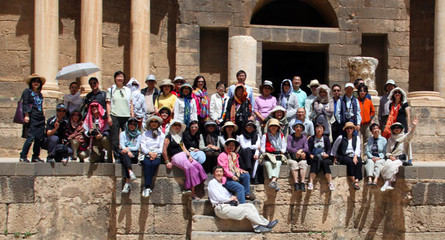
On this trip, we shall visit Syria, Jordan and Lebanon. Highlights include UNESCO World Heritage sites of:

– Anjar, Baalbek, Byblos, Tyre, the Qadisha Valley and the Cedars in Lebanon

– The Old City of Damascus, Aleppo, Palmyra, Krak des Chevaliers, Qala't Salahel-Din and Bosra in the Syrian Arab Republic

– The "rose-red city" of Petra in Jordan

Day Trip: Shenzhen Walls with Dr. Joseph Ting

Our recent trips to Shenzhen have focused on the new Shenzhen – a lively metropolis teeming with new buildings, broad highways, people in a hurry!

In the last 30 years, the economic boom has changed this city beyond recognition. We now think of Shenzhen as a very modern city, almost forgetting that it too – like many places in China, is part of an ancient land. Yes, there are still parts of Shenzhen that are old.

Our trip will take us to Namtou Old City (南頭故城), the seat of the former Xin’an County (新安故城), founded in 1573. The county covered not only present day Shenzhen but also Hong Kong, Kowloon and the New Territories – before the coming of the British. It has long been the administrative, economic and cultural centre of the entire area. We will see the remnants of this walled city. There is the South Gate, the restored Coastal Defense Office and some old houses. We will also visit the northern city wall – which was built in the Ming Dynasty and a small museum.

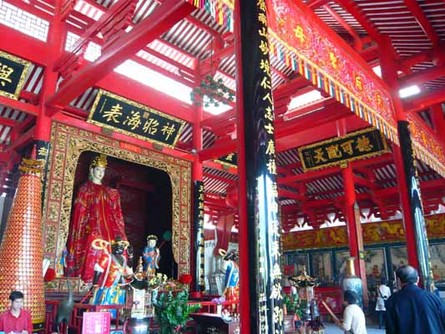
Inside this walled city is the Chiwan Tinhau Temple (赤灣天后廟). This temple used to be the most important temple dedicated to the Goddess of Heaven in the Pearl River estuary area. It was first built in 1410, and since then has been renovated and refurbished numerous times. Before 1949, it was the hub of the local fishermen during the Tinhau Festival. Its importance is evident in that it was mentioned in the Xin’an Gazetteer.

If time permits, we will also visit the tomb of the Boy Emperor. This grave is alleged to be the tomb of the last emperor of the Southern Song Dynasty. Fleeing from the Mongol army, the imperial court stayed in Kowloon and Lantau for sometime before they were finally defeated at a sea battle near Macao when the boy emperor was drowned. It was said that the boy’s body was found and was subsequently buried here.

We are very privileged to have as our guest lecturer, Dr Joseph Ting, formerly Chief Curator of the Hong Kong Museum of History. Dr Ting graduated from the Department of Chinese, University of Hong Kong in 1974, majoring in Chinese Literature and Chinese History. He acquired his Ph.D in 1989 from the same department. He joined the Hong Kong Museum of Art in 1979 as Assistant Curator II. He was transferred to the Hong Kong Museum of History in 1988, and became the Curator. He retired as the Chief Curator of the Hong Kong Museum of History. At present he is honorary adviser to a number of cultural institutions both in Hong Kong and China.

Dr Ting will guide and enlighten us and walk us through this old part of Shenzhen, a part that many of us have probably not even heard of, much less visited. Do join us for a day of discovering a different Shenzhen, one definitely off the beaten track.
Christie’s HK Autumn Auction 2009 Preview of Southeast Asian Modern and Contemporary Art

In conjunction with Christie's Hong Kong Autumn Auction 2009 which will be held from 28th to 30th November 2009, we are pleased to offer a guided tour of the highlights from the Southeast Asian Modern and Contemporary Art collection. We will be guided by Keong Ruoh-Ling, Head of Christie's Southeast Asian Modern and Contemporary Art, who is based in Singapore.

We will view an impressive array of works spanning the 20th & 21st centuries, including modern paintings of exceptional quality from Belgian artist Adrien Jean Le Mayeur who spent his artistic career in Bali; Indonesian modern masters Affandi, S. Sudjojono, Widayat, and other established Southeast Asian modern artists such as Thai Damrong Wong-Uparaj and Vincente Manansala. These works are featured alongside those of contemporary artists including Indonesians Yunizar and Rudi Mantofani, and Filipino Bencab.

Keong Ruoh-Ling first joined Christie's Southeast Asian Pictures department in Singapore in 1996. She was instrumental in the team that brought the Southeast Asian art sale to Christie's Hong Kong Auction in 2002. Since then, this category has become one of the most dynamic in sales that draws in new collectors at every season alongside seasoned connoisseurs.

As an additional treat, Elizabeth Hammer, who took us on a guided tour last year, will lead us on a viewing of Chinese paintings immediately following the Southeast Asian gallery tour. We will view the exhibition of Fine Chinese Classical Paintings, featuring artworks from the Song dynasty to the end of the Qing dynasty, in all major themes, of landscape, figure paintings and birds-and-flowers. Paintings and calligraphy have long been considered the finest art forms in China, as they provided a means of personal expression and communication of the artist's spirit. Together, we will examine the delightfully delicate and realistic Song dynasty fan paintings of natural images and consider ink landscape paintings, made using abstracted calligraphic brushwork by noted masters. We will focus on how connoisseurs evaluate paintings and calligraphy and some of their historical and philosophical contexts. Finally, we conclude by looking at how these artistic trends and ideas influenced artists of the modern period.

Elizabeth Hammer is Vice President/Specialist for Chinese Paintings and is based in New York. She worked for Christie's Chinese Paintings department from 1991 to 1995 and rejoined the company in 2007. In between, she worked at The Metropolitan Museum of Art in the Education Department, where she prepared and conducted programs and materials on East Asian art for all audience groups. Elizabeth also teaches and writes on related topics regularly.

Do join us for a morning of delightful discoveries.

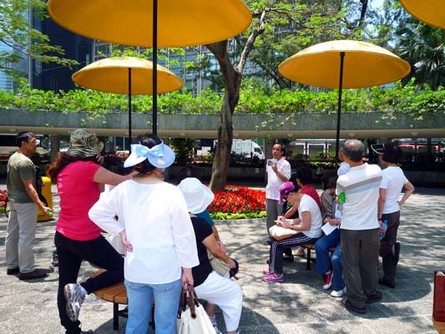
Heritage Walk: Sham Shui Po with Alex Hui

Art and architecture of the 21st century often look into asking questions about the way people live, think and feel. Less emphasis is placed on things that bear reference to the theories or views of historical development of culture.

Sham Shui Po in Cantonese, means Deep Water Pier. Located in the heart of Kowloon, it is one of the oldest settlement districts in Hong Kong among the lowest median household income and with the highest percentage of elderly over 65 years. The residents of Sham Shui Po are quite transient in nature, yet the community, or “kaifong”, shows deep cultural roots and high neighbourhood spirit. This is quite similar to Chinatown or Harlem where people rarely stay for more than one generation, but the community characteristics remain unique and rich.

There are many interesting features in the area such as the street markets, stalls for fashion, accessories, second hand goods, chemical items and antique Chinese furniture outfits. Apliu Street is known to be the counterpart of Japan’s famous high tech Akihabara district with its computers and electronic products. Sham Shui Po is a jolly flea market lover’s haven with local “cha-chantang” or cafés freckled here and there. The street layout is interesting; with tenement housing and shop houses or “tong lau” of all vintages and there is even a special gem of a pawn shop.

During this walk, Alex will share his interesting insights with us on how the diverse colours of Sham Shui Po came into being, and he will probably kindle our thoughts on the controversial balance of handling urban decay and heritage conservation.

An architect with a keen interest in urban conservation, Alex Hui was a curator of The University of Hong Kong Museum and Art Gallery and Executive Director of the Hong Kong Art Centre.

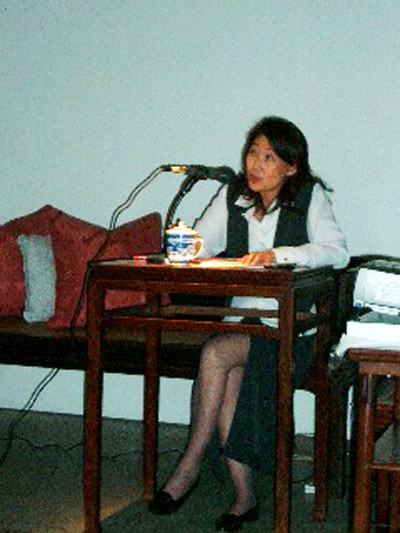
Talk: Ming Furniture with Grace Wu Bruce

Ming furniture, the classic furniture of China of the 16th and 17th centuries,
was a “discovery” of the 20th century. Lost during the Qing period (1644 – 1911), Ming furniture was rediscovered with China’s opening up in the 1980’s.
The furniture is mostly made from a tropical hardwood called huanghuali which
is a beautiful orange brown colour, and are rich in types. Striking in modernity and characterized by purity of line and simple designs,Ming furniture has captured the imagination of furniture designers, architects and is sought after by collectors and museums worldwide.

Grace Wu Bruce is a leading international dealer in Ming furniture and holds
exhibitions worldwide, including London, New York, Maastricht and Basel, Switzerland. Specializing in the finest examples of Chinese Furniture of the 16th and 17th centuries, her gallery was established in Hong Kong in 1987 and the clientele includes many international collectors and museums. The gallery recreates the ambience of Suzhou garden houses and offers a peaceful setting where visitors can browse and enjoy these timeless classics.
www.gracewu-bruce.com .

Grace Wu Bruce is recognized as an authority on Ming furniture and has catalogued exhibitions for various museums including Musée National des Arts
Asiatiques – Guimet, Paris (2003), the Palace Museum, Beijing (2006) and Art Museum, the Chinese University of Hong Kong (1991 and 2007). Publications include Chinese Classical Furniture, Oxford University Press, 1995 and Eternal Ming Furniture, Forbidden City Press, 2006.

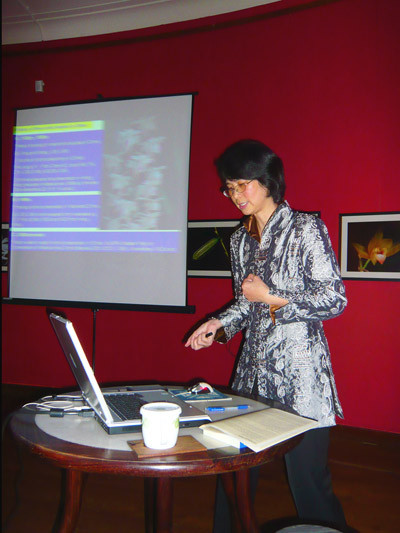
Lecture: Native Orchids in Hong Kong and Mainland China with Gloria Siu

Orchids have always held a fascination for people with their beautiful, colourful and unique flower structure. The diversity of the orchid family (orchidaceae) is rich and unique in China, as the country spans the tropical, sub-tropical and temperate zones. More than 1,200 species (of which about 450 species are endemic to China) in about 170 genera recorded so far, make Orchidaceae one of the top three families of flowering plants in China.

Many of them are famous worldwide. Hong Kong is a part of the South China region and is located in the inter-phase of the northern boundary of the tropics and southern boundary of the sub-tropics, and hence the diversity of native orchids is also rich. There are 123 species and 4 varieties in 54 genera of native orchids in Hong Kong, representing some 10% of the total number of orchid species found in China. A general introduction to native orchids in Hong Kong and Mainland China will be presented with picturesque orchid slides.

The speaker

Ms. Gloria Lai Ping Siu, Chairperson of East Asia Regional Orchid Specialist Group, Orchid Specialist Group, Species Survival Commission, the World Conservation Union (IUCN) and Vice-Chairman of Orchid Conservation Committee, China Wild Plant Conservation Association, PRC. She has focused on plant conservation, particularly on orchids in Hong Kong and Mainland China since 1996. She has contributed to books and journals such as Orchid Conservation in South China. In Proceedings of orchid evolutionary biology and conservation: from Linnaeus to the 21st century (2007; co-organized by the Royal Botanic
Gardens of Kew and the Linnean Society of London), A new species of Anoectochilus Blume (Orchidaceae) from China. Acta Phytotaxonomica Sinica 40(2): 164-166 (2002) and Paphiopedilum dianthum in south-west China. The Orchid Review 107(1129): 289-291(1999). She has widely lectured in research institutes, botanical gardens and conferences in China, U.K., Australia and France.

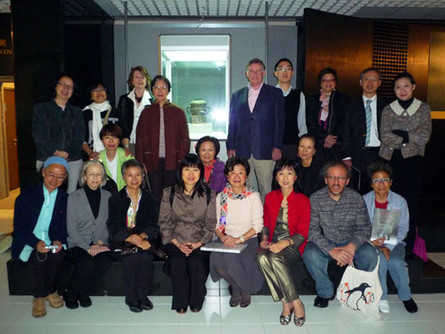
Gallery Walk and Lunch: Ancient Chinese Bronzes from the Shouyang Studio – The Katherine and George Fan Collection With Chair Professor Jenny So

Seventy ancient Chinese bronzes are selected from New York’s Shouyang Studio
collection. Together, they illustrate the development of bronze art and technology from the Xia to the Western Han dynasties in China. Including quite a number of inscribed pieces, the bronzes provide a wealth of information in understanding the lives in the ancient time. Jointly organized by the Art Museum of The Chinese University of Hong Kong, the Shouyang Studio and the Shanghai Museum, the exhibition travels to Hong Kong after a four-month display at the Shanghai Museum.

We will be guided by Jenny So, Chair Professor of the Fine Arts Department, and also Director of the Institute of Chinese Studies. Professor So received her Ph.D. from Harvard University, and before returning to CUHK, she was Senior Curator of Chinese Art at the Freer Gallery of Art and Arthur M. Sackler Gallery, Smithsonian Institution, Washington, D.C.. She lectures on the history of Chinese jades, Chinese bronzes and Methodology in Art-historical studies. Her research focuses mainly on art and archaeology from the prehistoric period through the Bronze Age, and cultural and artistic exchange between China and its neighbours over the ages. Professor So has also published numerous books and papers on these subjects.

We shall arrange a catered lunch in the Institute of Chinese Studies, a forefront academic centre in Hong Kong for international exchange and research. The institute emphasizes the application of scientific methodology in fostering the growth of modern Chinese culture.

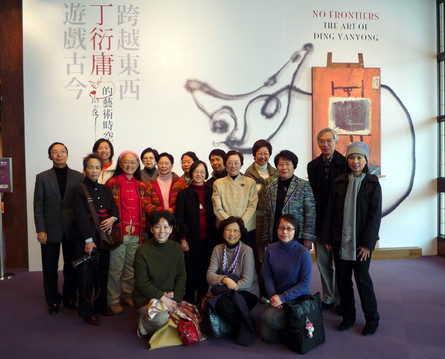
Tour: The Art of Ding Yanyong with Professor Mayching Kao in Cantonese

It is a rare privilege for members to have Professor Mayching Kao as our guide
at the exhibition No Frontiers: the Art of Ding Yanyong, which is being held at the Hong Kong Museum of Art from 19 December 2008 to 5 April 2009. This tour with Professor Kao is organized as a continuance of her lecture the day before on 10 January 2009. View,experience and enjoy the selection of Ding Yanyong’s ink and oil paintings from the collection of the Ding family as well as from various private collectors and institutions.

Ding Yanyong was born in the Guangdong province of China in 1902. Between
1919 and 1925, he studied modern art at the Tokyo College of Fine Arts and was particularly attracted to the works of Matisse and the Fauves. Although at first he studied oil painting, Ding subsequently turned to traditional Chinese painting. Ding’s unique style is perhaps best expressed in his paintings of animals, legends and opera singers. He brought his subjects to life with precise execution and his unparalleled mastery of the ink and brush.

Ding settled in Hong Kong in 1949. In 1956, he helped found a special art course at the New Asia College, the precursor of the Department of Fine Arts at the Chinese University of Hong Kong, where he taught until his passing in 1978.

Among the works on loan being shown at Master Ding’s retrospective at the Hong
Kong Museum of Art will be the following two paintings that the HKU Museum Society donated to UMAG in 1997.