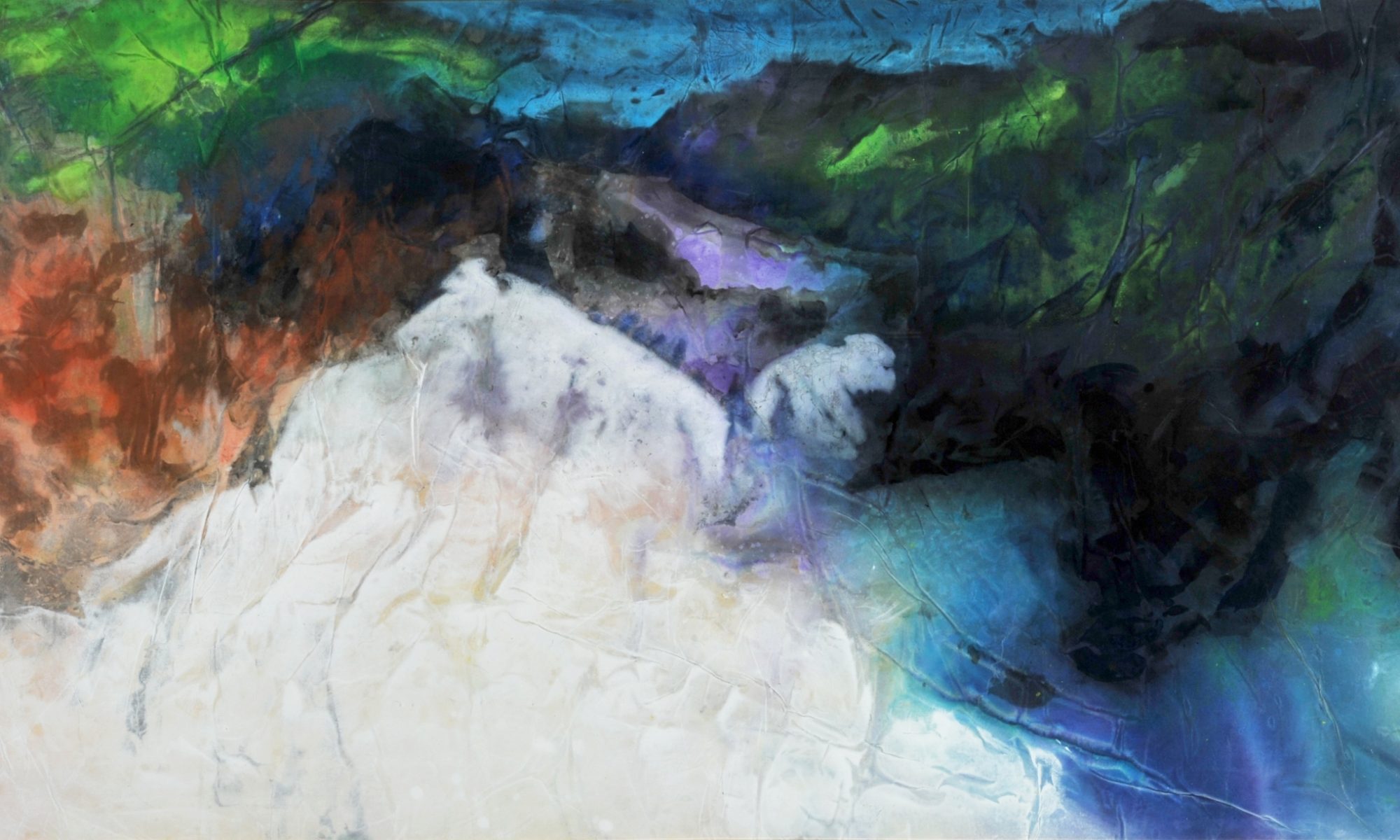
Joint UMAG Programme: Tradition to Contemporary: Ink Painting and Artistic Development in 20th-century China and The Companionship of Art II (ii) —Exhibition of Artworks by Ding Yanyong with Dr Fongfong Chen and Dr. Tang Wai Hung

On this Guided Tour, the HKU Museum Society will be taking you to not one but two exhibitions. The first is the current exhibition on ink painting “Tradition to Contemporary: Ink Painting and Artistic Development in 20th-century China” at the University Museum and Art Gallery (UMAG) with Dr. Fongfong Chen, and the second takes you to the Jao Tsung-I Petite Ecole to see “The Companionship of Art II (ii)—Exhibition of Artworks by Ding Yanyong” with Dr. Tang Wai Hung.  To register on-line, please visit: https://goo.gl/5knCLq

“Tradition to Contemporary: Ink Painting and Artistic Development in 20th-century China” is curated from artworks within the museum’s permanent collection, and trace the evolution of ink painting in Hong Kong, including many well-known masters that have helped to build the city’s art scene and museum collections. The exhibition offers audiences a broad overview of the provenance and aesthetic quality of individual works, and the cultural interactions among twentieth-century Chinese artists, curators, collectors and scholars in Hong Kong, mainland China and abroad.                             

“The Companionship of Art II” at the Jao Tsung-I Petite Ecole of The University of Hong Kong, displays artworks by four artists who had a profound friendship with Professor Jao Tsung-i between the 60s and 80s of the 20th century, including Liu Bing-heng (1915-2003), Ding Yanyong (1902-1978), Zhao Shao-ang (1905-1998), and Wu Hao (1930-2017). In this exhibition, most of the artworks are from the collection of Yun Quan Studio, and the collaborative painting with Professor Jao belongs to the Jao Tsung-I Petite Ecole of The University of Hong Kong, with most of the works dating from the 60s to the late 70s, containing his landscape, figure, bird-and-flower paintings, and cursive script calligraphy. Through these art pieces, art lovers are able to acquire a general idea about Ding’s unique style.

Resource Persons

Dr. Fongfong Chen is an Associate Curator at the University Museum & Art Gallery (UMAG) and an Honorary Assistant Professor at the Department of Fine Arts at the University of Hong Kong (HKU). She was a J.S. Lee Memorial Fellow (2013/2014) and a visiting scholar at the UC Berkeley Art Museum and Pacific Film Archive (BAMPFA), Berkeley, USA. Her research focuses on images of women and women’s fashions in different visual media in China from the eighteenth to the twentieth centuries. Her articles have appeared in academic journals and exhibition catalogues, including Ming Qing Yanjiu, Beauty Revealed: Images of Women in Qing Dynasty Chinese Painting, Der Perfekte Pinsel: Chinesische Malerei 1300-1900 (The Perfect Brush: Chinese Painting 1300-1900), and Hong Kong Visual Arts Yearbook 2008.

Dr. Tang Wai Hung is Deputy Director of the Jao Tsung-I Petite Ecole, The University of Hong Kong, and is an experienced art collector and connoisseur. He was a senior executive in several television corporations in Hong Kong and Macau, and managed the production of numerous programmes, including a series on the National Palace Museum in Taipei and Palace Museum in Beijing. He has lectured in a number of tertiary institutions. He is the author and editor of hundreds of publications on various subjects including Chinese painting.
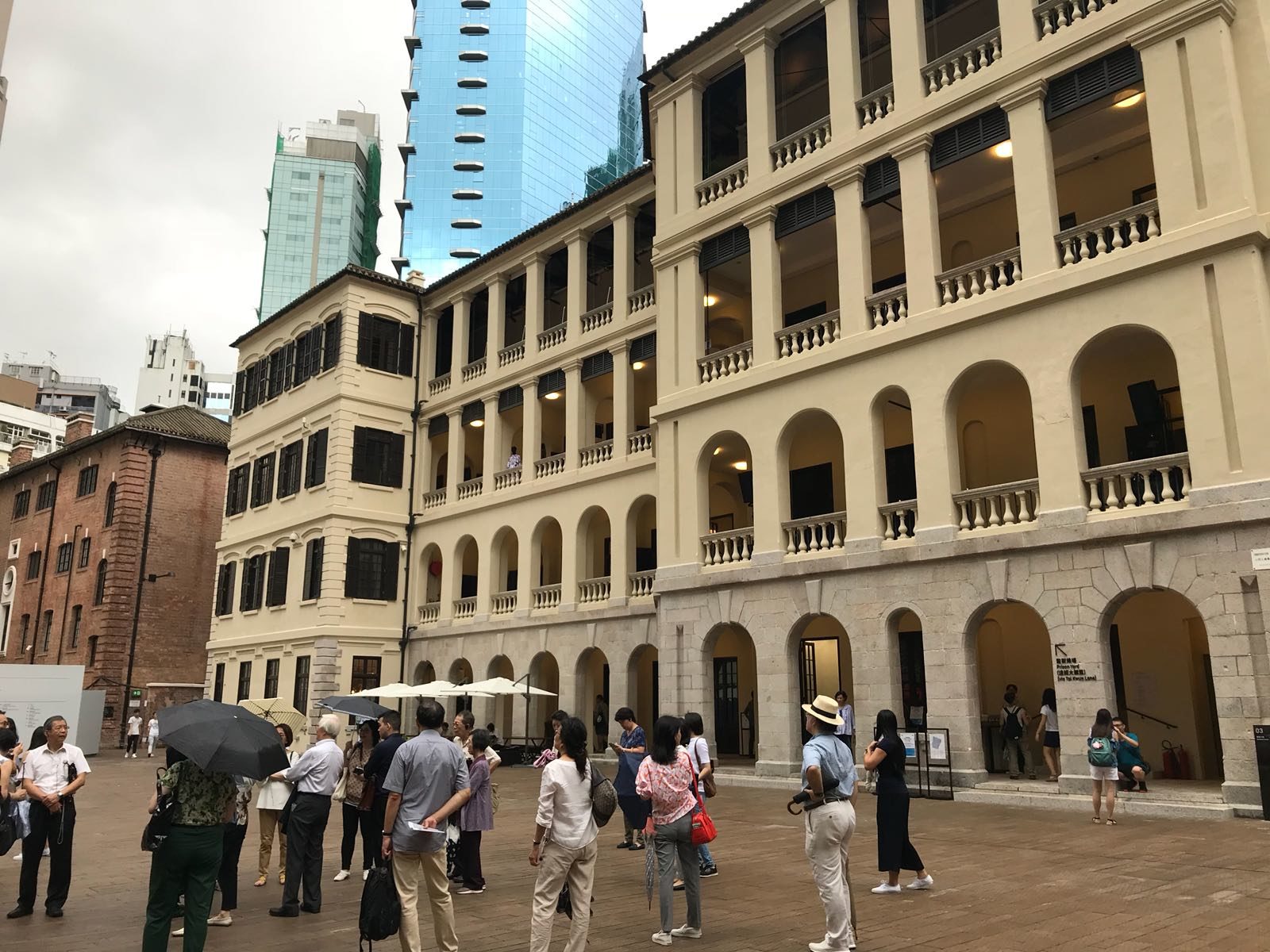
Guided Visit: Tai Kwun Centre for Heritage and Arts (former Central Police Station compound) with Brian Anderson

Tai Kwun is Hong Kong’s centre for heritage and arts. Situated at the meticulously restored Central Police Station compound, Tai Kwun is one of Hong Kong’s most significant revitalisation projects, with the three declared monuments of the former Central Police Station, Central Magistracy and Victoria Prison. The site is a unique mix of heritage and contemporary architecture. With a deep respect for authenticity, 16 heritage buildings have been meticulously restored for adaptive reuse. Two new additions were added, featuring designs inspired by the site’s historic brickwork.

Central Police Station – Completed in 1919, the Police Headquarters Block is one of the most impressive heritage buildings in Tai Kwun. Forming the public face of the complex, the north-side façade is a Neo-Classical revival while the south side features Classicist design. It was originally used for a variety of purposes ranging from dormitories, offices to a gymnasium.

Central Magistracy – The Former Central Magistracy is one of the most historically significant buildings on site. Originally established in the 1840s, it underwent two reconstructions. The current structure was built between 1912 and 1914. The colonial architecture was a symbol of the importance and power of the court. The building is notable for its connection to the police and prison functions that provided an “all-in-one” service.

Resource Person

Brian Anderson is Managing Partner of the Hong Kong office of PURCELL having joined the Practice in 1985. He is an Adjunct Associate Professor at The Chinese University of Hong Kong, and is a guest lecturer both in Hong Kong and at The Bartlett School of Architecture at University College London.

PURCELL was founded in 1947 following the aftermath of the Second World War in Europe, which left many thousands of derelict buildings in need of repair. PURCELL was one of very few architectural practices at this time engaged in what is now familiar to us as building conservation.  The challenges then, as now, were: what should be kept and what techniques should be used to achieve this objective?  In recent times, further questions have arisen as to how to adapt buildings to new uses in order to secure a sustainable future for them and for our historic cities.

Guided Viewing: Rue du Moulin Vert with Ms Catherine Kwai

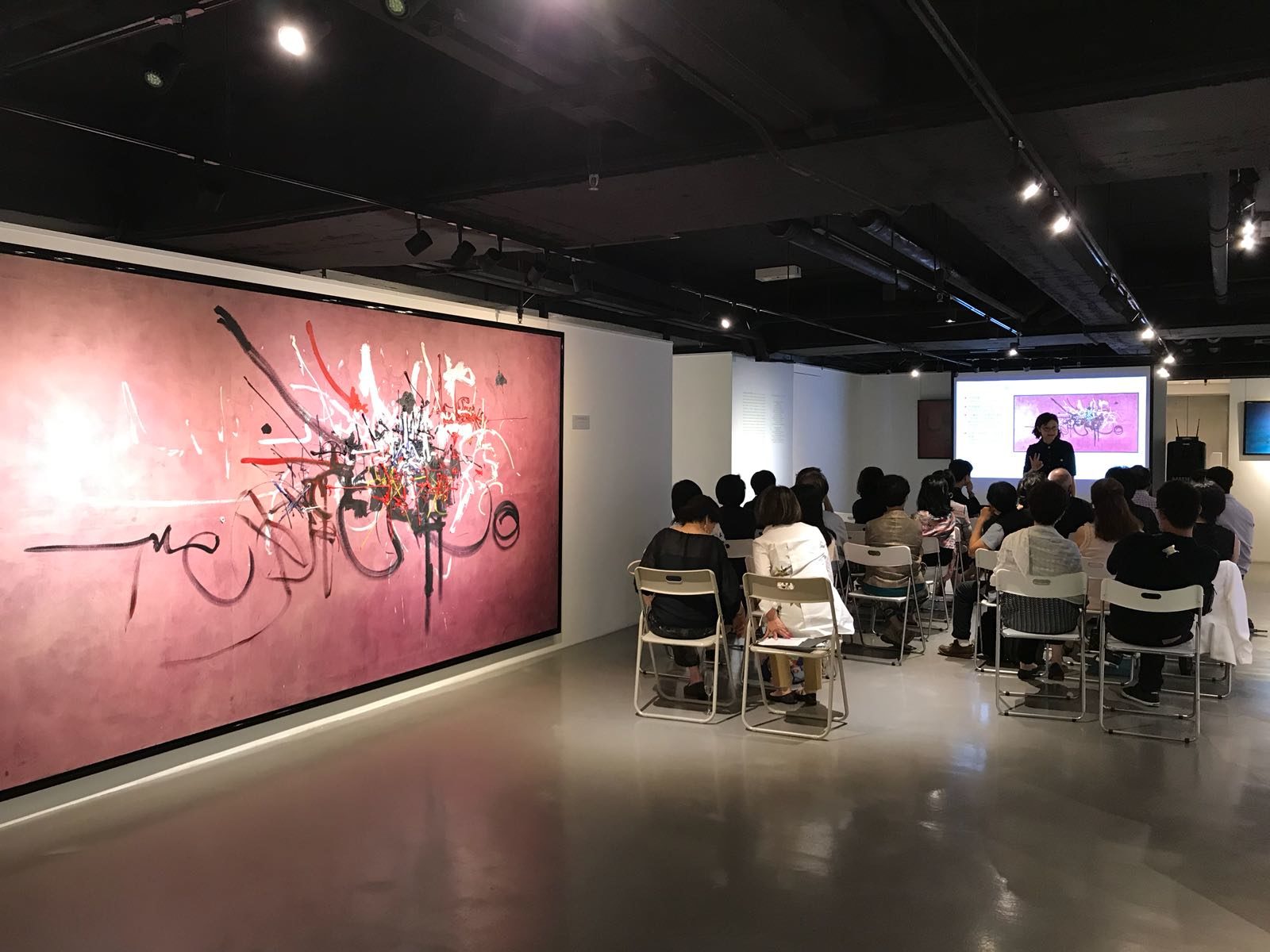
During the exhibition period of “Rue du Moulin Vert”, the associated project for French May 2018 organized by Kwai Fung Hin Art Gallery, an exhibition talk and guided tour will be held on Jun 7, 2018 (Thu) at 6 – 8 pm at Kwai Fung Hin Art Gallery.

In 1948, Zao Wou-ki (1920-2013) and his artist wife Lalan (1921-1995) moved to Paris from China, and settled at a studio on Rue du Moulin Vert in the 14th district. Since then, Zao befriended many French abstract artists whom occupied an important role in the development of post-war abstractionism, such as Pierre Soulages (1919-), Sam Francis (1923-1994), Nicolas de Staël (1914-1955) and Georges Mathieu (1921-2012).

The exhibition “Rue du Moulin Vert” specially puts together the distinctive works by Zao Wou-ki, Lalan and their internationally celebrated artist friends, providing an exceptional opportunity for the audience to appreciate the wonderful masterpieces, and to understand each artist’s concept of creation and their unique characteristics.

During the talk, Ms Catherine Kwai, founder of Kwai Fung Hin Art Gallery, will present an in-depth introduction of the works, the artists and their influence under the background and history of the Abstractionism in France.

Joint UMAG Programme: Guided Viewing: Bosshard in China With Dr Peter Pfrunder

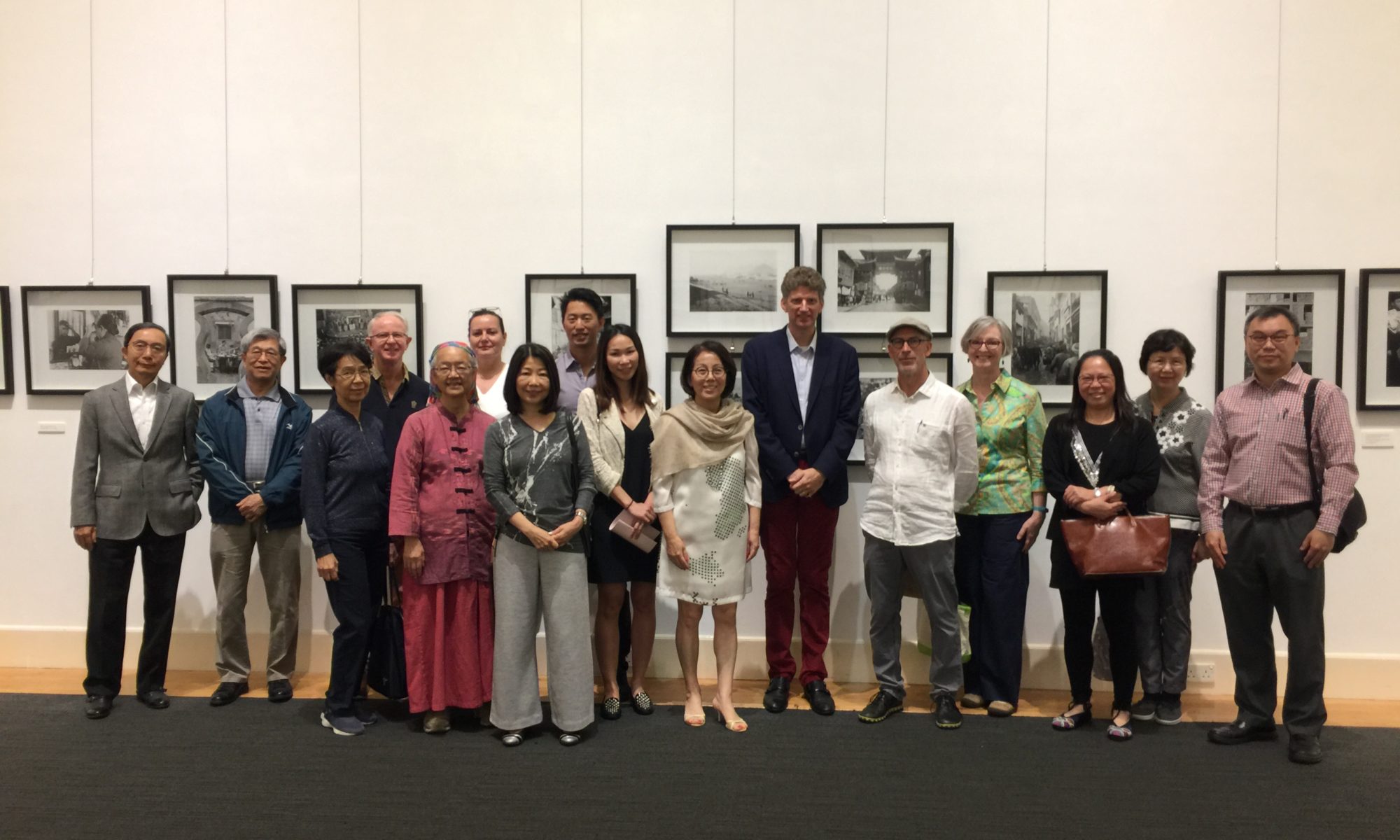
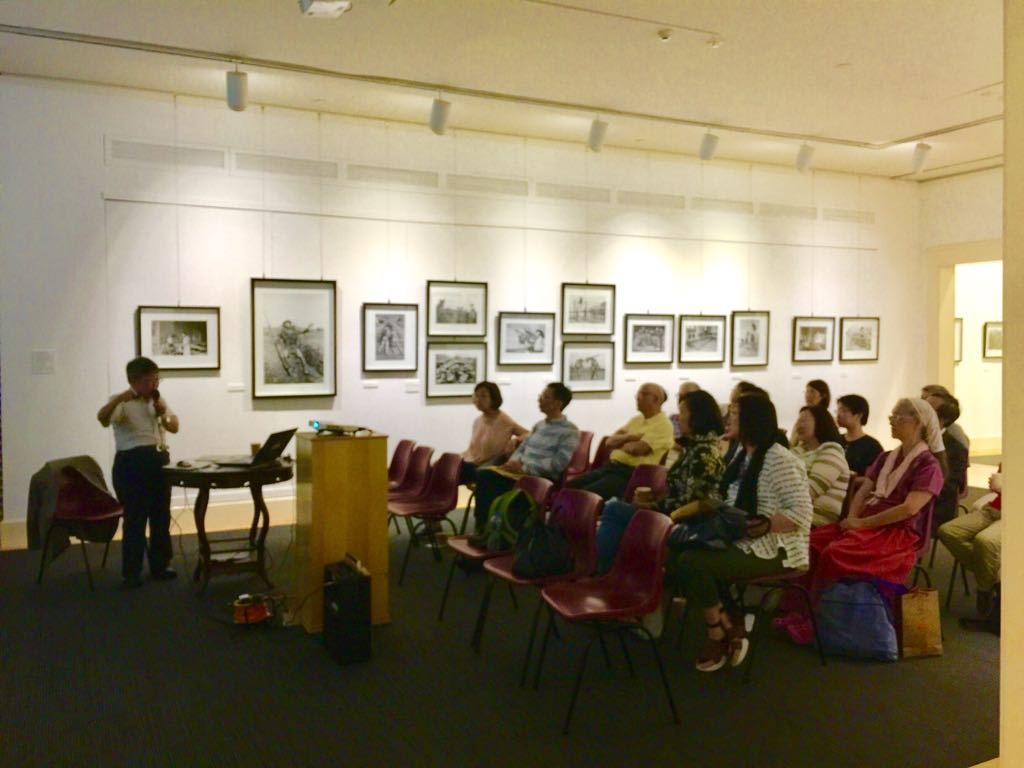
The Executive Committee is delighted to host a morning coffee with Dr Peter Pfrunder, the Director of Fotostiftung in Zurich. Dr Pfrunder will give us a guided tour of Bosshard in China, a comprehensive exhibition of photos and documentary films produced by Swiss photo journalist Walter Bosshard in China in the 1930s. This exhibition is supported by the Swiss Consulate in Hong Kong and the Museum Society as part of our 30th anniversary celebration.

Bosshard was one of the early and internationally famous journalist. He lived in China from 1933 through 1939 and travel extensively. The exhibition is organised in different parts and it gives insights into Bosshard’s travels and the city and landscapes he encountered, the social conditions he witnessed, and the political personalities he met. Among other famous personalities, Bosshard visited with Mao Zedong, and he took photographs and very early sound-less films to document him and his peers.

Following earlier exhibitions at UMAG of Magnum photographers and their oeuvres in the West, Bosshard in China exemplifies a contemporary’s work in East Asia, and documents the land and people during a time when China underwent much change. Also during that era, photo journalism was little developed, few journalists travelled as extensively as Bosshard did in China, and so his works testify to the kind of image of the East published photos disseminated in the West.
Resource Person
Dr. Peter Pfrunder, was born in Singapore and grew up in Switzerland. He studied German, as well as European and English literature in Zurich, Montpellier and Berlin. From 1995 until 1998, Pfrunder served as co-director of the Forum for Swiss History and the Schweizerisches Landesmuseum in Schwyz. Since 1998, he is the director and curator of the Fotostiftung Schweiz in Winterthur. He publishes extensively on photography and is specialist on photo journalist Walter Bosshard and his work.

Guided Viewing: Samson Young: Songs for Disaster Relief With Curator Ying Kwok

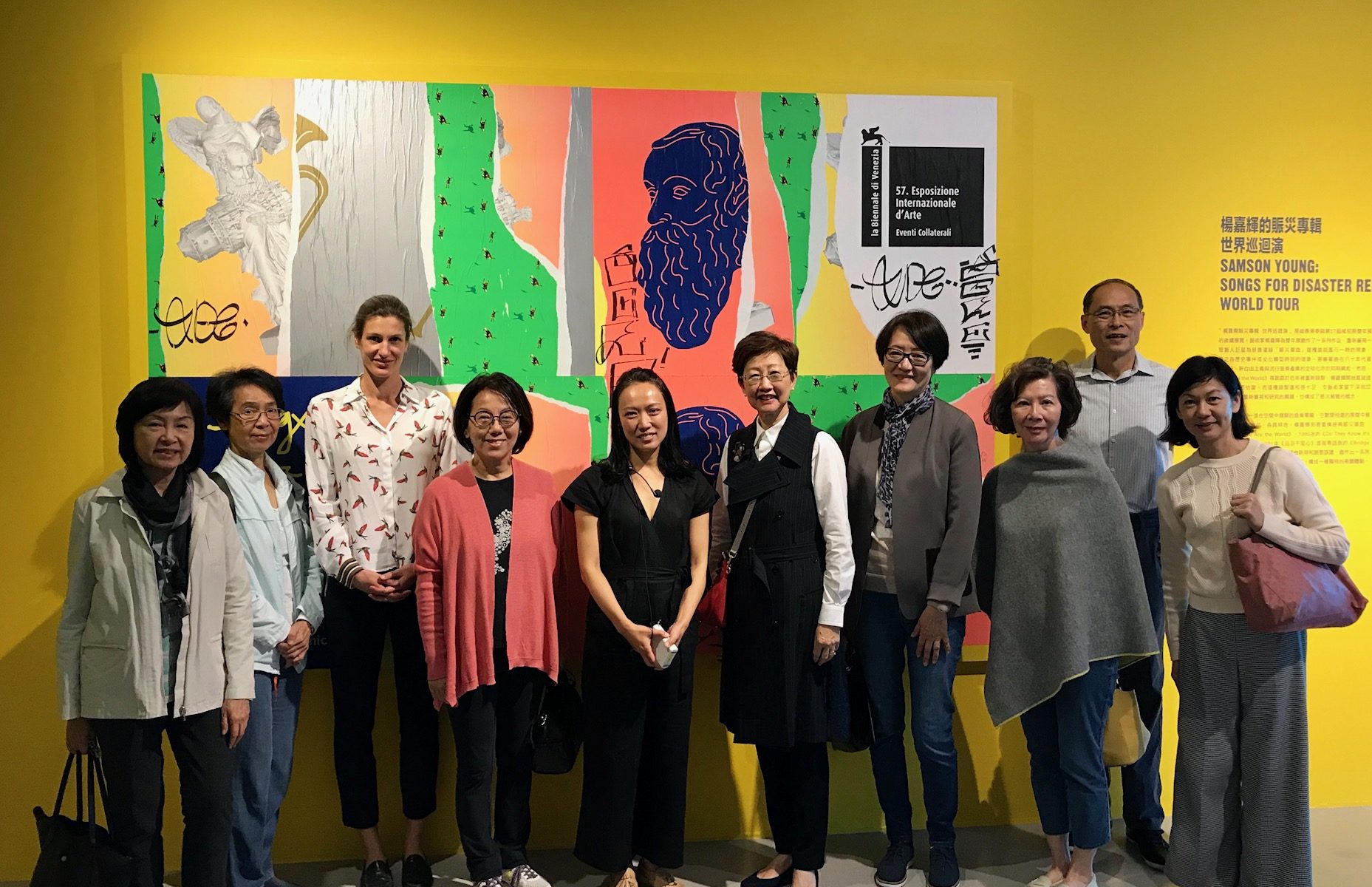
Samson Young: Songs for Disaster Relief is conceived by multidisciplinary artist Samson Young for the 57th International Art Exhibition at the Venice Biennale 2017. Featuring a series of sculptures, objects, videos, sound installations and site-specific pieces, the exhibition offers a unique audiovisual experience that re-examines the popularity of charity singles from the 1980s. Creatively repurposing and misreading iconic songs made by popular artists for charitable causes, Young draws on seemingly unrelated past and current events to explore the social, political, and philosophical implications of ‘charity singles’ in a cross-cultural context.

Our tour will be led by Curator of Hong Kong Pavilion at the Venice Biennale 2017 and M+ Guest Curator, Ying Kwok.

Resource Person
Ying Kwok is noted for her inventive curatorial approach, which is centered on “boundaries of collaboration” between curators, artists, and the wider community. Kwok is the sole curator at the Centre for Chinese Contemporary Art in Manchester in the UK between 2006 and 2012. Since 2013, Kwok became independence curator working internationally. She curated Collector Club in Oi, Hong Kong, co-curated Harmonious Society, as part of Asia Triennial Manchester 2014, From longing to belonging at Laznia Centre for Contemporary Art in Poland, No cause for alarm at La MaMa Galleria in New York. Kwok is the lead curator of LOOK International Photography Festival and curator for Hong Kong presentation in Venice Biennale 2017.

In 2014, Kwok was awarded the Asia Cultural Council Fellowship to carry out a five-month-long research on participatory and engagement projects in the US. To encourage critical thinking and initiating effective discussions in Hong Kong, Kwok founded Art Appraisal Club with a group of local art professional. The group provides regular exhibition reviews and their articles are published in magazines and various cultural networks. The group launched the bilingual bi-annual journal, Art Review Hong Kong in 2016.

Heritage Walk: Mui Wo with Mr. Bob Bunker and Mrs. Sally Bunker

Bob and Sally Bunker have called Mui Wo their home for years and are happy to share with us the beauty of the place.  Bob will walk us through some remaining old villages and Sally will show us flora and fauna of the area.  

This afternoon walk will take us off to areas rarely visited by many day trippers to Mui Wo!

Resource Persons

Born in UK 1949 and growing up in the country, Sally always had a hobbyist interest in the environment and the artistic representation of flora. An athlete and dancer, she took up physical education along with remedial child therapy, and specialized at secondary level.

Moving with family to Hong Kong 1979, Sally worked in P/E and environmental studies at kinder/primary level, before starting an International Kindergarten, and she obtaining her qualifications to be a Principal. Her curriculum emphasised environmental studies.

Having no training in botanical art-work, but having dabbled for 15 years, she was encouraged to take it up full time, so in 2002 she enrolled in a week’s course with Anne-Marie Evans, igniting new-found passion.  Obtaining a Distinction in the Society of Botanical Artists’s Long-distance Learning Course, her work has been exhibited at SBA’s annual exhibition ever since.

Seeking a worthwhile project, Sally is now working alongside Hong Kong University on a “heritage book” of 100 of the 360 species of indigenous, significant and endemic trees of the territory.  Illustrating seasonal changes of each tree needs “meeting” all her subjects, involving many hours of field-work, mainly on Lantau – Hong Kong’s lovely rural island where she now lives. A university professor is writing up the details of each tree; publication hopefully in a few years’ time, with more to follow!

Sally’s husband Bob, retiring after a career in finance, has spent many years involved in Green groups on Lantau, and has  deep interest in the island and its history.

Joint UMAG Programme: Contemporary Blue-and-White: Iznik Ceramics with artists Mehmet Gürsoy and Nida Olçar

The Executive Committee is delighted to host a morning coffee and guided tour with the artists Mehmet Gürsoy and Nida Olçar. To register on-line, please visit:

https://hkuems1.hku.hk/hkuems/ec_hdetail.aspx?guest=Y&ueid=56385

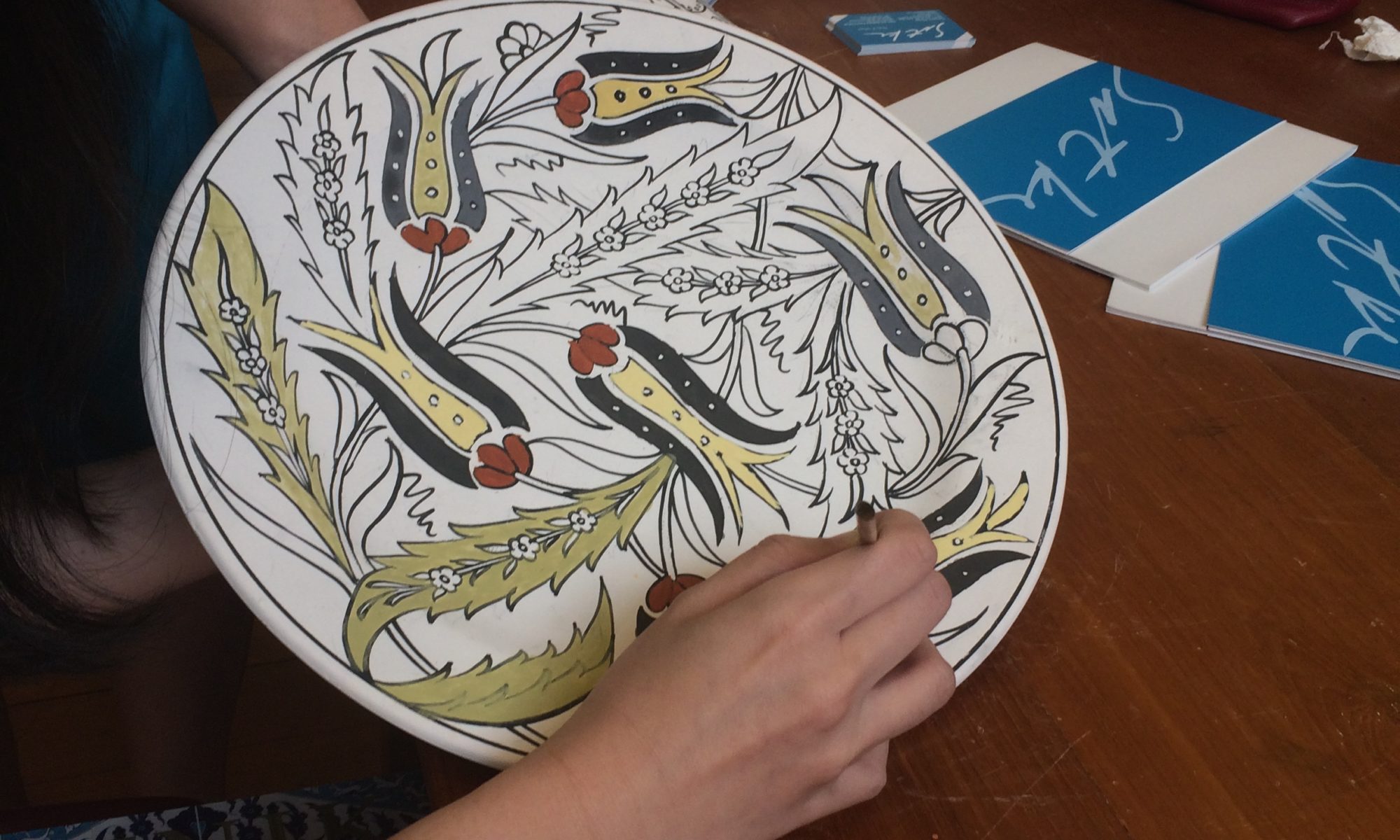
“Contemporary Blue-and-White: Iznik Ceramic by Mehmet Gürsoy and Nida Olçar” exhibits some forty Turkish ceramics by two well-known and award-winning contemporary potters. Both artists work in a traditional, yet also contemporary Iznic style. Mehmet Gürsoy was recognised as a UNESCO Living Human Treasure in 2010, while Nida Olçar, a much younger artist, continues the renowned workshop and ceramic style of her late father Sıtkı Olçar who was awarded the same prestigious UNESCO award in 2008.

Pre-Trip Lecture: Built Heritage in Northern Shanxi with Dr. Joseph Sun Pao Ting 丁新豹博士

This lecture is presented in conjunction with the Museum Society’s upcoming trip to Northern Shanxi with Dr. Joseph Ting. All are welcome to attend.

Shanxi province is well known for its rich historical and cultural heritage. China has at present a total of 4,296 gazetted national monuments, of which 452 are in Shanxi province, including some of the oldest and finest built heritage in China. Historically, northern Shanxi lies at the border between nomadic tribes from Mongolia and the agrarian Han Chinese. Historically the Great Wall running along the northern border of the province protected the land from the aggressive nomads.

Speaker

Dr. Joseph Ting majored in Chinese Literature and Chinese History from HKU and graduated with a BA degree in 1974. He was conferred an MPhil in 1979 and a PhD in 1989, both from HKU. Dr. Ting joined the Hong Kong Museum of Art as an Assistant Curator in 1979 and was appointed Chief Curator of the HK Museum of History in 1995. He retired in 2007 after serving for 28 years. He is currently an Honorary Assistant Professor in the School of Chinese at The University of Hong Kong, as well as an Adjunct Professor in the Department of History at the Chinese University of Hong Kong.

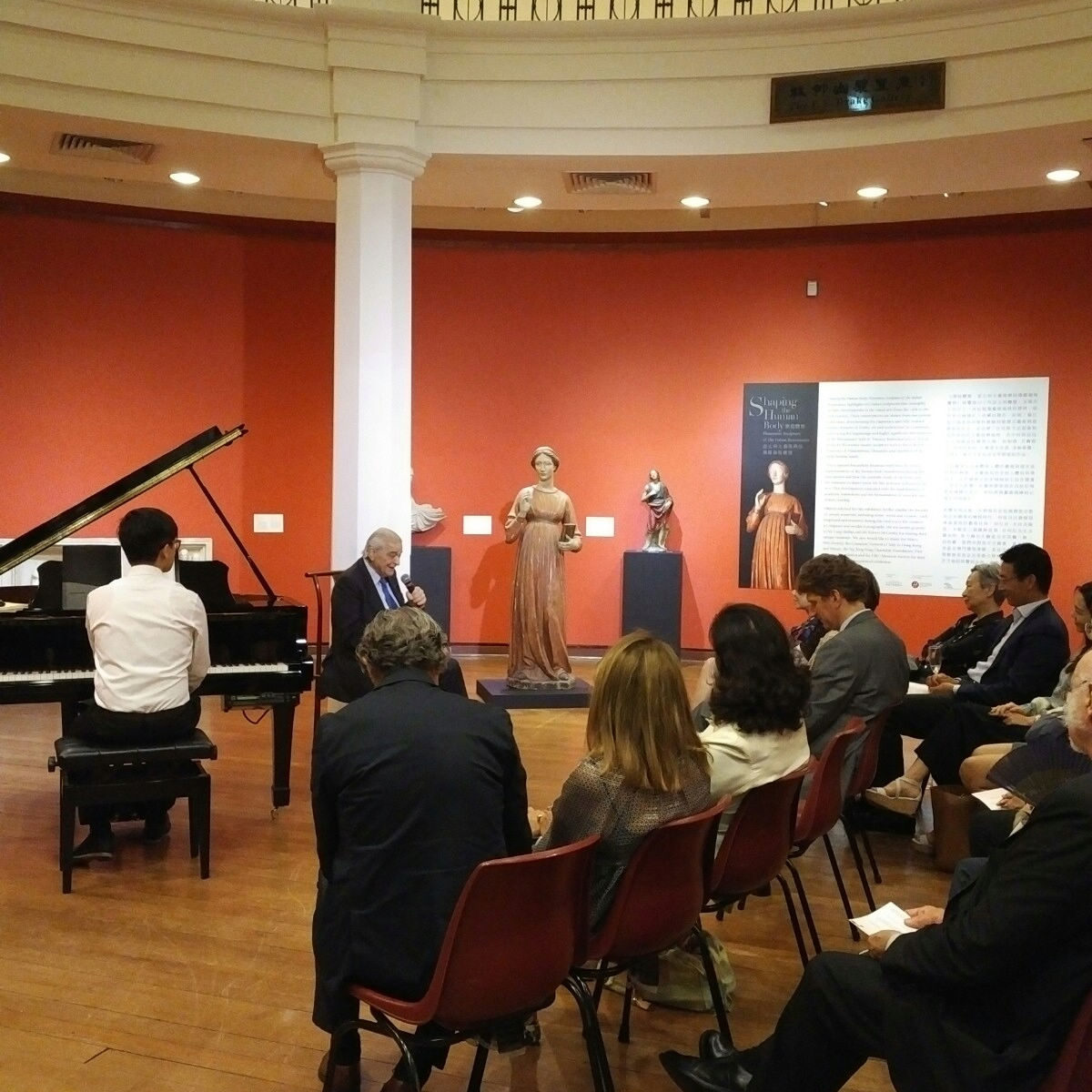
Joint UMAG Programme Shaping the Human Body: Florentine Sculpture of the Italian Renaissance With Luigi Bellini and Dr. Florian Knothe

The Executive Committee is delighted to host a morning coffee and guided tour with collector Luigi Bellini and UMAG Museum Director, Dr. Florian Knothe. To register on-line, please visit:

https://hkuems1.hku.hk/hkuems/ec_hdetail.aspx?guest=Y&ueid=56384

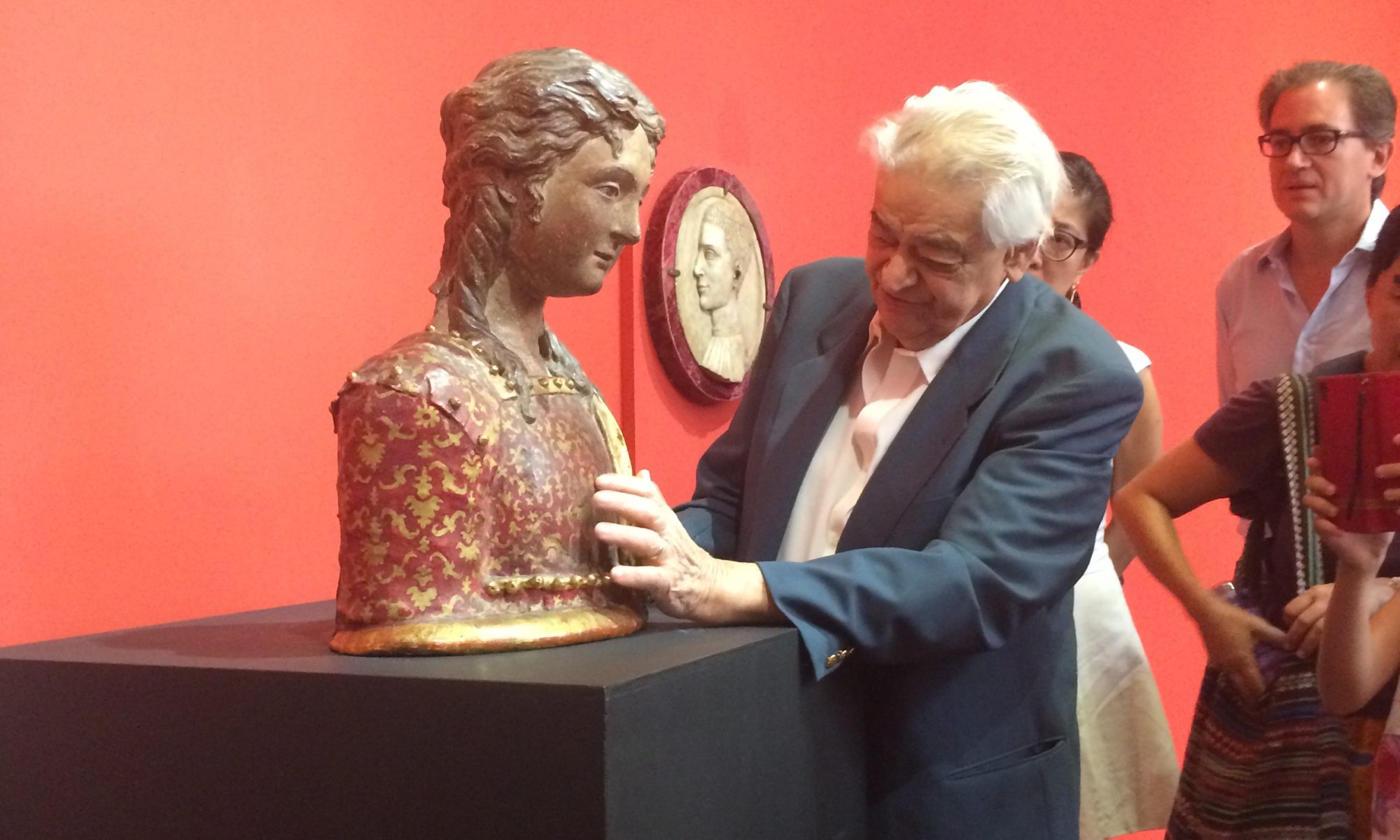
“Shaping the Human Body: Florentine Sculpture of the Italian Renaissance” highlights ten Italian sculptures that exemplify stylistic developments in the visual arts from the 14th to the 16th century. These masterpieces are drawn from two private collections, documenting the important and fully realised stylistic features of Gothic art and architecture in Lombardia — where the Cathedral of Milan stands as a celebrated monument of the time period and style — and tracing the beginnings and highly significant development of the Renaissance style in Tuscany.