‘Korean Contemporary Artists in the Global Art Scene’ with Jiyoon Lee & Seoul Auction’s Spring 2012 Exhibition

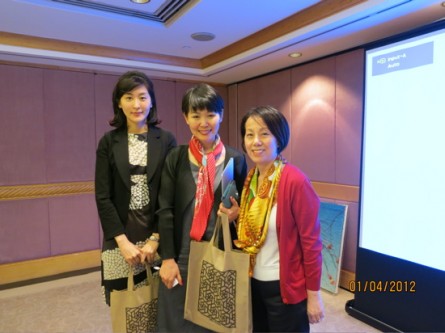
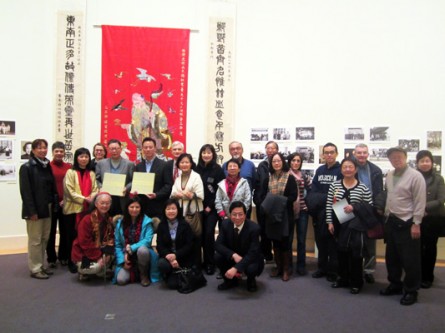
In commemoration of its 9th auction in Hong Kong, Seoul Auction is presenting a special lecture by the Korean curator, Jiyoon Lee on 'Korean Contemporary Artists in the Global Art Scene', followed by a guided tour of Seoul Auction's Preview Exhibition to our members.

The lecture will be an overview of major Korean contemporary artists and how they have come to prominence in today's international art scene. The preview exhibition of Seoul Auction will feature modern and contemporary art from major artists in Asia, as well as Europe and the US.

Established in 1998, Seoul Auction is the oldest and largest art auction firm in Korea. In 2008, the company opened a branch in Hong Kong, Seoul Auction HK Ltd., and since then, has successfully held eight major auctions dealing in global modern and contemporary art.

Speaker

Jiyoon Lee is an adjunct professor at Yonsei University, Seoul, Korea and the Founding Director of Suum Project, a contemporary art consultancy firm based in both Seoul and London. As one of the most recognized independent curators today, Lee has curated numerous exhibitions, including Korean Eye for the Saatchi Gallery, London and the Korean section of the Venice Biennale in 2009. Lee also serves as the Art Director for Art:Gwangju, a media-art fair based in Gwangju, Korea.

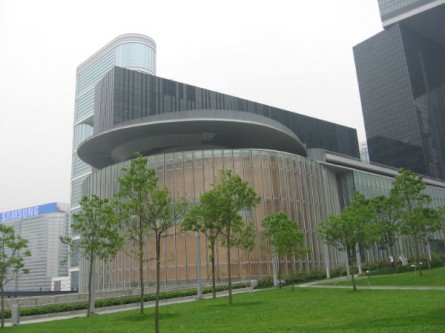
The Legislative Council Complex with LegCo Secretary General Pauline Ng

The new Legislative Council (LegCo) Complex is the first purpose-built building to house the Legislature of Hong Kong. The Complex comprises the Council Block, the Office Block and adjacent open spaces – the LegCo Square and the LegCo Garden. It is designed with the themes – "Doors Always Open", "Land Always Green", "Sky Will Be Blue" and "People Will Be Connected". Its architecture has a strong emphasis on vertical lines but also features integrative design elements of "square" and "round", symbolizing solemnity and prudence, openness and empathy.

As LegCo considers art to be a significant part of a vibrant and dynamic Hong Kong, the Complex houses a collection of artworks from local and international artists, including "The People" by Cornelia Erdmann, "Clouds and Mountain" by Koo Mei, "Centuries of Hong Kong" by Lam Tung Pang and "Huayuan" by Simon Heijdens.

Our visit will take us to the different halls where issues and policies about Hong Kong are debated and shaped. We shall meet with Legislative Council Secretary General Pauline Ng who will introduce us to the various functions of the Council and the special features of this new Complex.

Speaker

Pauline Ng has served in the Legislative Council Secretariat since 1994, after working 22 years in the Hong Kong Government. A recipient of the Chief Executive's Commendation for Government/Public Service in 1999, she has been director and member of several charitable trusts, Past President of Zonta Club of Hong Kong as well as an accomplished painter.

Shokunin and Flowers with T.K. Tan and Elaine Koo

In conjunction with our April trip, Spring Concerto in Kyoto with Shokunin and Flowers, there will be a pre-trip talk presented by resource persons T.K. Tan and Elaine Koo. Tan will enlighten us with insights about the shokunin and their influence on Japan; and Koo will offer an in-depth look into the annual Saga-Goryu Flower Festival. All are welcome to participate in this informative and interesting presentation.

T.K. Tan – Shokunin (職人)

In Japanese, the word, shokunin, refers to skilled manual workers who produce hand made consumer products, in contrast to modern industries and their mass production of goods, made possible by the industrial revolution. Words of a similar meaning could be found in different languages. However, it is probably only in Japan, and not in other countries, that the shokunin culture has managed to co-exist in the 21st century with top-end technology. Passed along through generations, the spirit of the shokunin is found in every aspect of Japanese life.

So what is shokunin culture? It is not just characterized by the consideration paid to the user's needs during the production process, but also the emphasis placed on both beauty and functionality of the final product. Shokunin culture is greatly influenced by the Japanese temperament and their view of the universe, believing that all things are inhabited by spirits, and thus have to be made and treated with great respect. Inspired by the passing of the seasons, the works of the shokunin often reflect the natural order of things – and beauty could be found in the smallest and simplest objects.

Tan is the Associate Head of the Centre for Language Studies, Hong Kong University's School of Professional and Continuing Education (HKU SPACE). Fluent in the Japanese language, he is a dedicated scholar who is devoted to promoting and furthering Japanese customs and ancient tradition.

Elaine Koo – Saga Goryu Flower Festival

Ikebana, the Japanese art of flower arranging, is known to have its roots in China. Ikebana Saga Goryu (嵯峨御流) started at Daikakuji (大覺寺), some 1,200 years ago by Emperor Saga in the 9th century. It aims to enhance the beauty of flowers as a classical art form, and to introduce an appreciation of their spiritual relevance into daily life.

In Kyoto, we shall see how Dongting Lake (洞庭湖), Buddhism, and notions of heaven, earth and man come enchantingly together at Daikakuji, the temple we shall visit for the Saga-Goryu Flower Festival.

Elaine Koo is a member of the HKU Museum Society and Past President of the Ikebana International HK. To help us better appreciate the Saga-Goryu Flower Festival, she will share some of the secrets and philosophy of this ancient school, and introduce us to several basic ikebana styles, their guidelines and meanings.

Jewish Synagogue Visit and Kosher Dinner for the Purim Festival

The Purim Festival celebrates Jewish survival, commemorating the story of how Esther saved the Jews of Persia in 4th century BCE, from an anti-Semitic prime minister, Haman. This story is read during the festival and celebrations include parades, plays, carnivals and a festive meal. Some of the food associated with the feast include challah, a long braided loaf of bread, and kreplach, a triangular shaped bread.

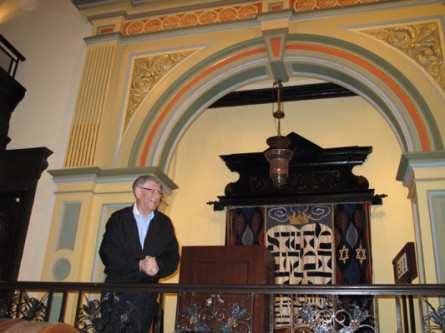
Celebrated every year on the 14th of the Hebrew month of Adar, this year's Purim Festival will be held on 7-8 March. The Society is privileged to organize a special visit on the eve of this celebration, to the Ohel Leah Synagogue, named for the mother of Jacob, Edward and Meyer Sassoon. The three brothers, among the earliest Sephardic merchants from India, donated the land; Jacob Sassoon donated the synagogue, designed by Leigh & Orange in Edwardian free classical style, in 1901.

Our visit to the synagogue will start with a short introduction on the history of the Jews in Hong Kong, followed by a tour of the synagogue and the various parts of this complex. We will taste a kosher dinner that includes a variety of vegetarian dishes in memory of Esther, who is a vegetarian. There will also be some meat dishes of fish, lamb and chicken.

Join us for what promises to be an enjoyable and enlightening evening, learning about the history of a distinguish community in Hong Kong!

Dr. Roslyn Lee Hammers, ‘Beyond Beauty – Regarding the Peony in the Tang to Yuan Dynasties’

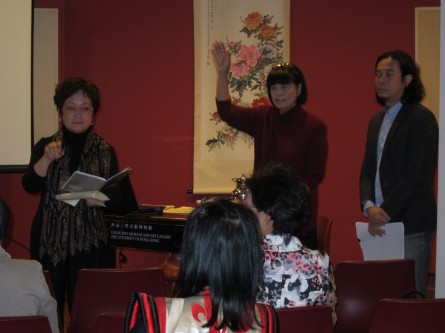
The peony, as a subject worthy of painting and poetry, has an extensive history in Chinese art and literature. As early as the Tang dynasty (618-907), the beauty of the peony incited great appreciation, even mania. In every March during times of peace, Luoyang experienced a carnival of peony extravaganza, as aficionados competed to create, own, and display the most sumptuous beauties. With such sensational attention, the peony became imbued with a wide range of associations. The allure of the flower, long associated with feminine seductiveness, inspired poems extolling its sensuous charms. For most admirers, the peony was celebrated in paintings, praised in poetry, and acclaimed in botanical studies. For others, however, the floral beauty was regarded with some reservations – a subject too seductive for proper scholarly attention or artistic expression. In this lecture, Dr. Roslyn Hammers will explore varying facets of peonies as presented in paintings, poetry and prose, in order to reclaim the complexities it evoked, as well as to consider the apprehension the blossoming temptress motivated.

Speaker
Dr. Roslyn Lee Hammers earned her PhD at the University of Michigan and teaches courses on Chinese painting, South Asian art, and Asian architectural history at the University of Hong Kong. She has published a volume entitled "Pictures of Tilling and Weaving: Art, Labor, and Technology in Song and Yuan China" (Hong Kong University Press, 2011), and other articles on the interactions between technology and artistic production. She was a Fellow at the Needham Research Institute, Cambridge University, U.K. as well as at the Freer and Sackler Galleries in Washington, D.C.

Asia Society Hong Kong Center’s Inaugural Exhibition ‘Transforming Minds – Buddhism in Art’ & Professor Puay-peng Ho ‘Devotion and Patronage: Why and How Buddhist Monasteries Were Built’

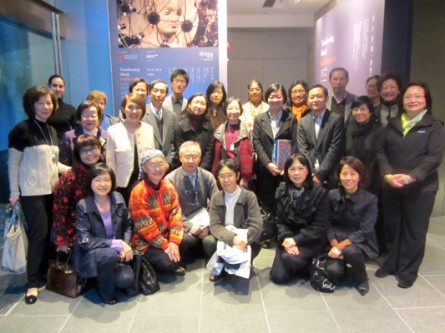
We're delighted to present a special tour of the new Asia Society Hong Kong Center's facility and its inaugural exhibition, Transforming Minds – Buddhism in Art, with their Assistant Gallery Manager, Dominique Chan. Following the tour, participants are invited to attend a lecture by Professor PP Ho, Devotion and Patronage: Why and How Buddhist Monasteries Were Built

Asia Society Hong Kong Center's Inaugural Exhibition

Asia Society is establishing a new home at a former explosives magazine/military site in Admiralty on Hong Kong Island, Hong Kong. The site has 4 historic buildings that were developed in several phases between the 1850s and 1920s. Two of the buildings, Magazine A and Magazine B, were used to produce and store explosives and ammunitions. They have now been transformed into a gallery space for exhibitions as well as a small theatre. The Center and an inaugural exhibition titled, Transforming Minds – Buddhism in Art, are set to open in early February 2012. The exhibition will showcase Buddhist works from the world-renowned Mr. and Mrs. John D. Rockefeller 3rd Collection of Asian Arts along with contemporary works by leading Asian and Asian-American artists that draw inspiration from one of the world’s great religions. The show asks the diverse local and international audiences visiting the new Asia Society Hong Kong Center Gallery to consider the ways in which Buddhist art has changed over time and space. Although originating in India, Buddhism travelled across Asia and was transformed by local cultures. Recently, a combination of individualism and an interest in Buddhist beliefs has impacted the artistic production of contemporary artists. This exhibition is a rare occasion to see examples of cultural adaptations and collective responses to Buddhism in pre-modern times as well as individualized responses to Buddhism in contemporary artistic practice. The exhibition will run from the 10 February to 20 May 2012.

Lecture with Professor Puay-peng Ho

Devotion and Patronage: Why and How Buddhist Monasteries Were Built

We appreciate Buddhist sculptures for their beauty in form and serenity in spirit. Obviously, there are more questions that we can ask about the sculptures presented at this exhibition. One may wonder where were they housed originally? How were they commissioned? What were the motives in sponsoring the making of these images? Likewise, similar questions can be asked of the Buddhist monasteries to tease out the social and devotional background of Buddhist establishments. This lecture will focus on China around the 6th-10th centuries to present a broad picture of patronage of monasteries and images at many levels of society, from the emperors to the aristocrats. It will highlight the connection between the form of Buddhist architecture and images, and the purpose of commissioning them. More than 50,000 state-registered monasteries can be found all over China dating to this time period, and the lecture will delineate the intersection between faith, devotion, patronage and the arts.

Professor Puay-peng Ho(何培斌教授) is Director of the School of Architecture and Director of the Centre for Architectural Heritage Research of The Chinese University of Hong Kong. He received his First Class Honours degree in Architecture from the University of Edinburgh and a Ph.D in Art History from the School of Oriental and African Studies, University of London. His thesis focused on Buddhist art and architecture of the Tang dynasty. Professor Ho is a member of the Royal Institute of British Architects and the Society of Architecture Historians. His research interests and publications are in the areas of Chinese art and architectural history, vernacular architecture, and architectural theory.

Imperial Monochrome Porcelains of the Yuan to Qing Dynasties with Richard Kan (簡永楨)

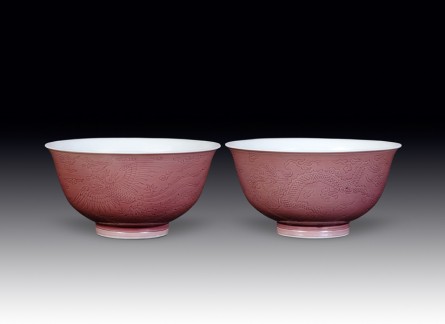
For over six centuries starting from the Yuan Dynasty, Jingdezhen has been the centre of Chinese porcelain production, particularly catering to the needs of the Imperial Court. Monochrome porcelain’s popularity had been recognized as early as the Five Dynasties, some 1000 years ago.

In this lecture, Richard W.C. Kan will showcase a selection of colours/hues of monochrome porcelains in a power-point presentation to demonstrate the effects from different firing temperatures. Emphasis will also be placed on specific achievements through the ages, including the simple taste of the early Ming emperors, the innovations of the mid-Ming Dynasty, and the ultimate success attained in the reigns of Kangxi, Yongzheng and Qianlong between the 17th and 18th centuries.

Kan will present an overview on the subject of imperial monochrome porcelains and discuss how such spectacular colours could have been developed in such an unpretentious art form.

Speaker:

Richard W.C. Kan (簡永楨) is a successful chartered engineer and a modern renaissance man whose interests include comparative philosophy, Chinese and European history, Greek numismatics, Chinese monochrome ceramics and photography.

In 2004, he was appointed Visiting Professor at the Academy of Chinese Culture, and was Project Director of a series of cultural symposiums in Beijing. He founded the Cambridge-China Development Trust with two Cambridge University professors and 15 major corporations to sponsor international forums for business, educational and cultural exchanges between China and Britain. He was also one of the forces in bringing Picasso's huge stage curtain “le Parade” to Hong Kong, attracting 2 million visitors within a period of 3 weeks.

In 2009, he embarked on a lecture tour to Oxford University, the Bibliotheque Nationale de France and Tuebingen University on the topic "An Attempt to Reconstruct Global Values by Drawing Reference from Confucianism on The Post-financial Crisis".

He is Governor of the Hong Kong Local Records Foundation and a member of the History Museum Advisory Panel for the HK government. He was a Title Sponsor for French May's film events. The Foreign Ministry and the Tourism Board of Mexico endorsed his solo photography exhibition titled "The Mayan Enigma" at the IFC in 2011.

His publications include History Re-stored: Ancient Greek Coins from the Zhuyuetang Collection; Shimmering Colours: Monochromes of the Yuan to Qing Periods – the Zhuyuetang Collection; A Festschrift on a Unique Lysimachus Hemidrachm (coauthored with Professor Francois de Callatay); and A Glimpse of the Mayan Civilization Through a Photographic Odyssey.

UMAG Exhibition: Virtuous Heritage – Xu Family of Guangzhou with Humphrey Hui and Danny Hui

The exhibition, "Virtuous Heritage: Xu Family of Guangzhou – Mandarins, Revolutionaries, Educators and Scientists" narrates the political evolution of China through the individual histories of the Xu clan in Southern China and its influence from the Qing dynasty to modern China.

The Xu (Hui in Cantonese) family migrated from Chaozhou in eastern Guangdong to the provincial capital Guangzhou in the early 19th century. Generations of the Xu family flourished in an extensive private residential compound known as Xudi, parts of which still stand today. Beginning from the late Qing period and through the Republican era to the present, members of the Xu family have been influential in charting the destiny of the Chinese nation.

Members of the Xu clan have served in many capacities, including Qing mandarins of various ranks; the first generation of the Chinese diplomatic corps; revolutionary military commanders; a martyr general of the 7th Red Army; celebrated poets; the wife of a literary giant; as well as important educators and scientists through the successive episodes of the Opium War, the Taiping Rebellion, the Reform Movement of 1898, late-Qing Constitutional Monarchy, 1911 Revolution, Sino-Japanese War, up to the formation of a new China.

This guided tour will be led by Xu clan descendants, Humphrey K.F. Hui and his nephew, Danny Hui. A long-standing member of the Min Chiu Society, Humphrey is a collector and an international speaker on Chinese arts. His collection of snuff bottles and other art objects have been exhibited in museums in Hong Kong, Australia, and the United States. Danny has been the Secretary-General of Guangzhou Xudi, The Xu Clansmen’s Association since 2006. His business careers include President of United Media Group Limited from 1981-1998, Senior Vice President, Head of TV Production of Columbia TriStar Television Asia, and Chief Executive Officer of Super Television of Taiwan from 1998-1999. Together, Humphrey and Danny will share personal stories about their distinguished family and its legacies in the political evolution of modern China.

Authentic Italian Home-style Cooking

Where do you go for good Italian food in Hong Kong?

To answer this question, Gabriella Giubilei, Museum Society member and a former Cultural Officer of the Consulate General of Italy responsible for promoting her country's very rich culture, has graciously agreed to show us her favourite trattoria, La Piazzeta. Together with the restaurant's chef and founder, Paolo Donati, they will create a special menu bursting with the flavours of Italy. Using fresh ingredients from his home country, Chef Donati will prepare a sumptuous meal with a variety of regional dishes. The menu will include three appetisers, three pasta dishes, one fish and meat, plus dessert. To top it off, a nice pairing of wine will complement our feast.

Do join us for an Italian evening of fun, good food and wine with fellow members – a prelude to our wine and truffle tour to Tuscany in October. Ciao!

Museum and Society – Social Ideologies of Museum Architecture with Dr. Lee Ho Yin (李浩然博士)

Overview:
This lecture gives an overview of the historical development of modern museum architecture and explains the social meaning inherent in the development of museum architecture, and how the architectural expressions of the museum typology are a direct reflection of social ideologies of different times.

Speaker:
Dr. Lee Ho Yin (李浩然博士) is the Director of Architectural Conservation Programme in the Department of Architecture at The University of Hong Kong.