Crystal Streams and Azure Skies: Narratives, Architecture, and the Landscape of Scotland and Ireland With Professor Puay-peng Ho

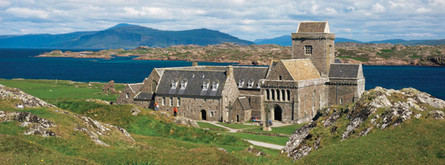
Is it possible to develop a symbiotic relationship between the land and the people who acted out their humble or colourful life on it? Particularly in the wild and rolling landscape of Scotland and Ireland, had the living pattern shaped by the land, or the land enhanced by human inhabitation? The castles or the ruined cathedral, the tartan or the poetry, the kings and the queens, the scholars and the merchants, the brutal and the romantic, imageries of all sorts will fill our mind when we take the country road or stay in the cities on this trip. In Edinburgh, we will take the Royal Mile between the castle and the palace, with a cathedral and the house of John Knox, the Scottish reformer of the Christian faith, lying in between. There is also a chance to look into the common tenement houses on either side of the main road, which, according to my structure professor, were the first skyscrapers in the world. The Georgian New Town of Edinburgh of the 18th century was a masterpiece of urban planning injecting a sense of civility in the townscape, as opposed to the organic old town, both were designated as UNESCO World Heritage sites. Beyond these imposing architectures, we will also be visiting art and architecture of the early 20th century in the works of Phoebe Anna Traquair, as well as the late 20th century in the new Scottish Parliament.

The landscape of rolling hills and tranquil lochs, dotted with castles and historic houses, were sites of battles and bloodshed. When driving through the history of the clans and king’s soldiers become vivid and come alive.

Now Nature hangs her mantle green
On every blooming tree
And spreads her sheets o’ daisies white
Out o’er the grassy lea
Now Phoebus cheers the crystal streams
And glads the azure skies
But nought can glad the weary wight
That fast in durance lies.

Robert Burns: Lament of Mary, Queen of Scots

In Glasgow, similar sphere of culture is expressed in the wealth the city has gathered in the form of many private art collections. In addition, similar to other European cities of the time, art deco design prevailed. Charles Rennie Mackintosh left behind a handful of buildings that expresses the ornamented spirit. The strong Celtic culture of Ireland versus invading Roman, Viking, Norman or English forces had created many encounters and conflicts that only ended in the past decades in Northern Ireland. And the architecture of grand institutions and humble tenements are suggestive of the struggles and achievement that is uniquely the culture of the land. This tour will present a kaleidoscope of architecture and landscape with a strong industrious spirit of people past.

Puay-peng Ho
Professor and Director, School of Architecture
Director, Centre for Architectural Heritage Research
The Chinese University of Hong Kong

Resource Person
Dr. Puay-peng Ho received his First Class Honours degree in Architecture from the University of Edinburgh and a Ph.D. in Art History from the School of Oriental and African Studies, University of London. His thesis was focused on Buddhist art and architecture of the Tang dynasty. Dr. Ho is a member of the Royal Institute of British Architects and the Society of Architectural Historians. Currently, he serves on Town Planning Board, Antiquities Advisory Board and History Museum Advisory Panel, and is Chairman of the Council of Lord Wilson Heritage Trust. His research interests and publications are in the areas of Chinese art and architectural history, vernacular architecture, and architectural theory. He is also involved in many architecture conservation projects in Hong Kong.
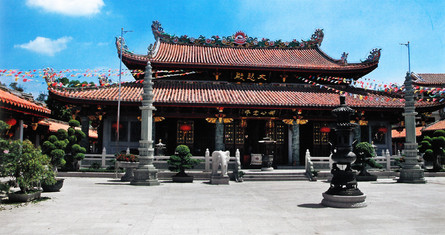
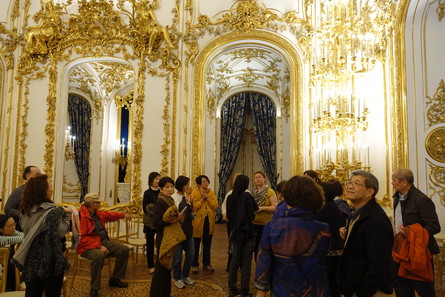
Chaozhou (潮州) – Shantou (汕頭) Architectural Excursion

This highly focused 3 day/2 night weekend-get-away tour to the Chaozhou-Shantou area of eastern coastal Guangdong led by Professor David Lung (龍炳頤) (HKU Architecture) and his good friend Mr. WU Guo Zhi (吳國智 Chaozhou conservation architect) will bring you the highlight of the architectural gems of the region.

The Chao-Shan region is well known for the production of the literati gentry and the merchant class. On the first day of this trip, we will be exploring the grand estate of the wealthy rice merchant, the Former Residence of Ci-Huang Chen (陳慈簧故居); it is the first of its kind of an overseas Chinese dwelling in the Lingnan area. This 500-room Chinese courtyard complex built in the early 20th century is decorated with the Art Nouveau ceramic tiles of European designs. In the evening after dinner, there will be leisure time for shopping and for tasting the Shantou snacks in the famous open food stalls.

We will spend the next full day exploring the historic city center of Chaozhou. Guang-ji Bridge (廣濟橋) is one of the four famed bridges in China. It was the first movable bridge built in Southern Song Dynasty (1171).

Kai Yuen Si (開元寺, 738) is well known for its vertical raft structural system; the only one of its kind found in Chinese monumental architecture.

The Lung Hu Rural Township (龍湖寨) is the home for migrant merchants who settled in the region since Song Dynasty; female ancestors were worshipped in the ancestral halls.

Yi-Lve Huang Ancestral Hall (已略黃公祠, 1887) has the most ornate wood carvings of the Qing classical style and is listed a National Cultural Heritage.

On the last day, before we head back for Hong Kong via the high speed rail, we will visit the privately funded Shantou University, showcasing of the modern-day Chaozhou-Shantou identity of the literati and the merchant tradition.

Resource Person
Lung, David P.Y. (龍炳頤)
Registered Architect, Professor of Architecture, Lady Edith Kotewall Professor in the Built Environment, David Lung is internationally recognized for his scholarship and work in the field of heritage conservation and World Heritage properties. He is instrumental in bringing to fruition three World Heritage Inscriptions: Historic City of Macao, Kaiping Diaolou and Villages, and the Historic Cities in the Straits of Malacca.

Wu Guo Zhi (吳國智)
Wu Guo Zhi is acclaimed for his scholarship and works in the field of conservation architecture in China.He is the chief conservation architect in Guangdong and one of the chief architects in the conservation of Hong Kong’s Po Lin Monastery. In Chaozhou, his works included the restoration of Guang-Ji Bridge, Pai-Fang Street and the Kaiyuan Temple and Ancestral Hall of Han Yu. A registered architect in China, Wu Guo Zhi is also a professor of architecture, senior engineer in architectural conservation, and authorized architect in the National Heritage Conservation (ICOMOS/CHINA) (中國古蹟遺址保護協會).

Eccentric Ebullience: Architecture and Nature in Austria and Slovenia With Professor Puay-peng Ho

The early 20th century was an exciting time for the development of art in Europe; the freedom and optimism allowed the artist to seek inspiration elsewhere and expression in non-classical forms. The high spirited epoch gave rise to an explosion of ideas in fine art, literature, music, product design and architecture. In all cases, ideas interflowed between these domains and the circle of creative minds influenced each other, with the result that similar messages were manifested in art and architecture alike.

The tour will focus on the art and architecture of Vienna, Graz and Ljubljana between 1897 – when Vienna Secession was formed – and 1940, at the beginning of World War II. We will trace the development of architectural styles through the works of Otto Wagner (1841–1918), Joseph Maria Olbrich (1867–1908), Adolf Loos (1870–1933) Josef Hoffmann (1870–1956), and Jože Plečnik (1872–1957). The distinguished volumetric form, elegant geometric lines, ebullient flowing space, sinuous natural motifs, riotous colours, and eccentric representations of their architecture made a concise journey through the major architectural movements of the early 20th century – beginning with stripped down Classicism, through Historicism, Art Nouveau or Jugendstil, early modernism, and eccentric post-modernism. In particular, the idea that architectural environment is a totality, Gesamtkunstwerk, resulted in the formation of communities of artists, designers and architects, such as the Secession and Wiener Werkstätte, for designing buildings, furniture, furnishings, silver, metal works and utensils as a holistic environment. As the highlight, we will trace the architectural expression of Jože Plečnik from Vienna to Ljubljana to explore this unusual creative mind in expressionism, culminating in the design for Žale, the city cemetery with individual buildings and chapels as representations of different architectural styles.

Resource Person
Professor Puay-peng Ho is Professor and Director of the School of Architecture, and Director of Centre for Architectural Heritage Research at The Chinese University of Hong Kong. He received his First Class Honours degree in Architecture from the University of Edinburgh and a Ph.D in Art History from the School of Oriental and African Studies, University of London. Professor Ho is a member of the Royal Institute of British Architects and the Society of Architectural Historians. Currently, he serves on the Town Planning Board, Antiquities Advisory Board and History Museum
Advisory Panel, and is Chairman of the Council of Lord Wilson Heritage Trust. His research interests and publications are in the areas of Chinese art and architectural history, vernacular architecture, and architectural theory. He is also involved in many architecture conservation projects in Hong Kong..

Reclaiming the City as Home – An Architecture Trip to Taichung & Tainan With Corrin Chan

Urbanization has reduced creativity, joy and the connection between ourselves and nature. Vast economic growth has led us to build more and more, higher and higher. Yet, at the same time, people are not happier and healthier with this growth. In recent years, instead of blindly developing, various cities have tried to re-capture the joy and enjoyment of the city through new architecture and urban design. We start looking into our own traditional, cultural, historical context while modernising our cities.

In this short trip to Taiwan, we begin by visiting the emerging new city Taichung, examining its effort in re-claiming the city for people. In the last two days, we will visit Tainan, the emerging ‘old’ city of Taiwan.

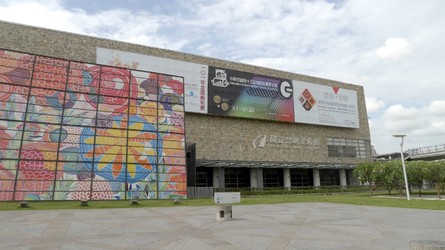
In Taichung, we will see how old buildings have been creatively rejuvenated. The emphasis on art and culture as forces of revitalisation will be obvious in the places we will visit. We visit the beautiful and serene Fu-Gui Sanyi Art & Culture Gallery (富貴三義館), the latest Asia Museum of Modern Art (亞洲現代美術館) by Tadao Ando and the newly opened Taichung Metropolitan Opera House (台中大都會歌劇院) by Toyo Ito. Miyahara (宮原眼科) and Ice-cream Parlour (第四信用合作社) are two excellent examples of transforming old buildings into up-beat fashionable hot-spots of the town. Fantasy Story Green Ray (范特喜綠光計畫), Taiwan Water Market (台水宿舍商場) and Chung Shun Market (忠信市場) are attempts in Taichung to rejuvenate old buildings and fabric as new living, shopping and art spaces.

After Taichung, we head to Tainan, the oldest city in Taiwan and a living museum for us to read into the history of Taiwan. Streets are important gathering places as they are like living rooms of the city. It is where we get together and feel connected. In this trip, we will visit Haian Road (海安路) where we will see the use of art to rejuvenate an old street, also Sheng Lung Street (神農街) and Jhenging Street (正興街). Along these streets, we can sense their warm and touching stories, their hardship and their new life. We see tea houses, book shops, cafés, Minshu (民宿), architect’s office and dining room for the community.

Resource Person
Corrin Chan is Director of AOS Architecture and is a registered architect in Hong Kong. She is vice-chair of Hong Kong Architecture Centre and Chair of Board of Internal Affairs of the Hong Kong Institute of Architects. She received her Master of Science in Architecture and Urban Design from Columbia University New York and Master in Architecture (Distinction) from the University of Hong Kong.

Corrin has had an extensive working experience in architecture and interior both in Hong Kong and in America. Corrin was involved in curating exhibitions, architecture book publications, writing articles on architecture, art installation works and collaborations with other disciplines. She has curated several exhibitions: ‘Reveal 築自室’, ‘朝行晚拆’,‘HK97 International Ideas Competitions’. She is co-author for several books: 〈2021 Emerging Hong Kong Young Architects〉, 〈空間的故事〉, 〈建築師的見觸思〉, 〈熱戀建築〉, 〈the 逼 City〉. Corrin has collaborated in spatial design for performances: ‘The Duras Project: Moderato Cantabile/ C’est Tout’, ‘Threshold’ in New York and ‘The Notes from a Schizophrenic City’.

Corrin loves to travel. She has led tours for the HKU Museum Society as well as for the Hong Kong Architecture Centre to Taiwan and Korea.

The Land Between the Celestial Empire and Central Asia With Dr. Joseph Ting

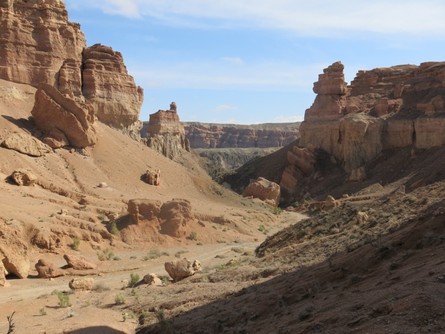
On this segment of the Silk Road, we are going to visit Southern Kazakhstan, the region connecting Xinjiang, China with Uzbekistan in Central Asia, traveling from River Ili to Amur Darya, visiting Issyk, Tamgaly, Talgar, Almaty, Taraz, Shymkent, Otyrar and Sayram along the way. Many of these towns were once important stops along the celebrated Silk Road, the major thoroughfare between East and West before the Great Discovery. The great Buddhist monk and traveller Xuanzang (玄奘) passed through the area in 630AD on his pilgrimage to India. The famous Battle of Talas when Tang forces were vanquished by an Arab army in 751AD, drove the Chinese out of Central Asia and resulted in the spread of Islam in the ensuing years. In 1222, Qiu Chuji (丘處機), the legendary Daoist master also set foot on this region on his way to Hindu Kush to meet with Genghis Khan.

This region is rich in history and culture. Nomads from the steppes and sedentary civilizations left behind petroglyphs, sites of worshipping places of Zoroastrianism, Nestorianism and Manichaeism, as well as mausoleums and magnificent mosques. Apart from rich cultural heritage, we will also appreciate the breathtaking scenery and unique geological formations of the region.

Resource Person
Dr. Joseph Sun Pao Ting (丁新豹博士) was born in Guangzhou and raised in Hong Kong. He majored in Chinese Literature and Chinese History at The University of Hong Kong (HKU) and graduated with a BA degree in 1974. He was conferred an MPhil in 1979 and a PhD in 1989, also from HKU.

Dr. Ting joined the Hong Kong Museum of Art as an Assistant Curator in 1979 and was appointed Chief Curator of the Hong Kong Museum of History in 1995. He retired in 2007 after serving for 28 years. He is currently an Honorary Assistant Professor in the HKU School of Chinese, and was an Honorary Research Fellow at the former Centre of Asian Studies. He is an Adjunct Professor in the Department of History at the Chinese University of Hong Kong and a Member, inter alia, of the Antiquities Advisory Board, the Lord Wilson Heritage Trust and the Education Bureau of Hong Kong.

Dr. Ting is an Honorary Advisor to the Hong Kong Museum of Art, the Hong Kong Museum of History, the Hong Kong University Museum and Art Gallery, the Shenzhen Museum and the Guangdong Provincial Museum. He is an Honorary Fellow of the HKU and Hong Kong Institute of Education.

Villas of the Italian Nobility – Verona and the Largo di Garda

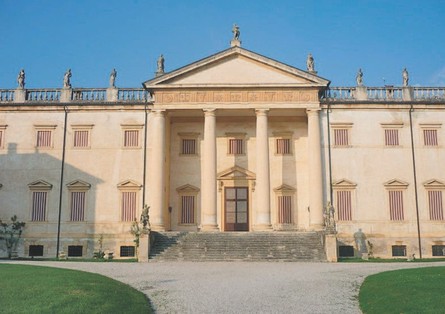
Verona, on the western edges of the Veneto, and the Lago di Garda, quite literally the border between the Veneto and Lombardy, remain exclusively outside traditional tourist destinations. Here, hidden amongst some of northern Italy’s most scenic landscapes, many of the Italian nobility chose to build, what are now little-known, architectural gems.

This tour is unique in that the important private homes that we shall be visiting are not usually open to the public. The owners, predominantly members of the Italian aristocracy, have very kindly agreed to open their homes to us on this occasion, and it is this rare opportunity that gives this exclusive tour its particular cache. Individual guided tours of these villas and palazzos, very often led by the owners themselves, some of whom have very kindly consented to host our group to lunches or dinners, will enable us to explore the rise of the nobility in this picturesque, often unexplored, region of northern Italy. In conjunction with short walking tours in Verona, the cultural capital of the area, our aim is to provide an understanding of the cultural developments of this little-studied, but extremely significant, region on the north-west hinterland of Italy’s Veneto.

Resource Person
Graduating in the 1970s, Michael Borozdin-Bidnell spent many years as a London-based interior designer, working internationally as a Senior Partner and travelling extensively in Europe, America and both the near and far East.

Becoming a Master of Science in the mid-1990s, he joined the Georgian Group, the UK National Amenity Society, a charitable organisation established in 1937 to campaign for the protection of 18th century and early 19th century buildings in England, as Head of Research and Information. Since then he has written and lectured extensively, both in the UK and overseas, as an architectural historian and has led overseas cultural tours in Europe for the past nine years. He is currently in the final year of a Doctorate in Architectural History.

Western Kyushu: The Land of Passion, Fire & Wind

Kyushu (九州) originally consisted of nine ancient provinces. Historically named Saikaido (西海道) it is Japan’s third largest island, located southwest of the main island Honshu (本州). It has seven prefectures; Fukuoka (福岡), Saga (佐賀), Nagasaki (長崎), Kumamoto (熊本), Oita (大分), Miyazaki (宮崎) and Kagoshima (鹿兒島). On this trip we will visit Fukuoka, Saga, and Nagasaki prefectures.

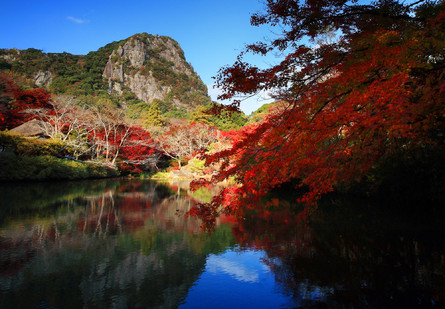
Kyushu, as an early center of Japanese civilization, has a population of around 13 million and offers many historic treasures, natural beauty and modern cities. With plentiful volcanic ash, Kyushu boasts an amazing selection of hot springs, as well as numerous pottery villages, especially around Karatsu (唐津), Imari (伊万里), and Arita (有田) in Saga prefecture.

With Nagasaki at its northwest, Kyushu was Japan’s first gateway to the outside world. Foreign influences from pre-historic continental cultures to the Portuguese galleons, present a great variety of historical interest. Mysterious stone Buddha, Korean pottery villages, remote crypto-Christian refuges and the ruins of a Dutch trading post testify to its volatile and fascinating history.

Fired from the earth and carved from the wind swept through the ages, Kyushu offers haunting landscapes, warm-hearted people with delicious food and drinks and colourful legacies from diverse cultures. Let us see the fire, listen to the wind and feel the passion of the land together.

Resource Person

Keiko Imai Packard spent over a decade in HK around the time of 1997. Enjoying an active life, she was chairman of the Friends of the Art Museum, CUHK while completing a Master of Philosophy degree in Japanese art at HKU. After her return to Japan, she took part in teaching a course on Japanese Culture and Society at the Temple University in Tokyo. She is the author of Old Tokyo, a book that details Tokyo’s evolvement from a Shogun capital of a closed society to its present status as the international capital of modern day Japan. Dedicated to global education, she writes about this topic in a leadership magazine, organizes educational programs for domestic and international markets, and hosts special groups for in-depth look of Japan.

Keiko is the Founder & Director of Knowledge Investment Programs of Japan (KIP http://www.kipprograms.org), and a registered non-profit organization that raises social awareness with a Japanese and global perspective for college students and young people. She is also the President of KIPP Programs (KIPP), a cultural consulting company and the Japanese Representative of Nano Japan Program, International Research Experience for Undergraduates (http://nanojapan.rice.edu/) and US students. Through her work with these programs, she has presented talks at universities, private businesses and public institutions.

“The Road to Champagne” A Gastronomic Wine Tour of Champagne and Burgundy with Mr. Wilson Kwok

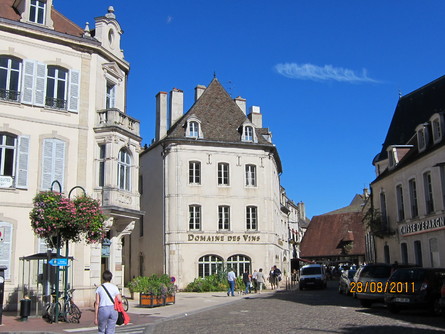
The University of Hong Kong Museum Society is pleased to present its second tour of the gastronomic wine regions of Champagne and Burgundy. Accompanied once again by internationally renowned food and wine connoisseur, wine judge and educator, Mr. Wilson Kwok, we will be visiting celebrated champagne cellars such as Moet Chandon, Dom Perignon, Salon and Deutz and important wineries such as Clos de Vourgeot and Domaine l’Arlot in Burgundy.*

Our gastronomic adventure will feature “Le Top of the Top” Michelin starred establishments such as Les Crayeres (2 stars), L’Assiette Champenoise (3 stars) and La Briqueterie (1 star) in Champagne and Jardin des Remparts (1 star) and Maison Lameloise (3 stars) in Burgundy. Once again, Wilson will be carefully selecting our menus to match perfectly the particular wines of the region.

*Visits to specific wineries are subject to final confirmation.

Resource Person
Wilson Kwok has one of the most impressive resumes in the food and wine industry in Hong Kong. Holding a Master’s Degree of Enology at the University of Bordeaux, France as well as a Grand Diploma from the Cordon Bleu de Paris, in France, he was knighted by the French Government as Chevalier de L’Ordre du Merite Agricole for his outstanding contribution to French cuisine and wine. He has served actively as a judge in wine competitions since 1994. In 1996 he became the first in Asia to be invited to be a Member of the Jury for the prestigious wine competition, the Citadelles du Vin which is held in Bordeaux every year. In 2000 he won the Sommelier of the Year in Hong Kong on Australian Wines.

As managing director of the W’s Group, Wilson oversees also the running of his flagship restaurant, W’s Entrecote. He has published a number of cookbooks (bilingual Chinese and English) as well as contributed columns to a number of monthly journals including “Wine Now” Monthly Magazine (Chinese) as well as in the South China Morning Post.

Wilson advised as well as co-hosted TVB Jade’s 6 episode series, “Wine Confidential”. More recently in October 2010, Wilson released in his own voice the first volume of an audio set of four wine glossary references spoken in six languages.

Nature, Culture and the Divine: In Search of the Sacred Path with Professor Puay-peng Ho

Pilgrimage is the oldest human activity bringing nature, culture and the divine together in a journey in search for spiritual union with the divine. Along this journey, nature and the divine are revered accompanied by cultural manifestations, such as rituals, art, and architecture. The journey allows one to search for spirituality, to rethink one's relationship with nature and the divine, and to understand oneself. The land of the divine is usually magical, mythical, and stunningly beautiful. This is Kii Peninsula, to the south of the Yamato plain where early capitals of Japan were located. Some of the earliest sites for pilgrimage relating to Shinto deities are located in Kumano, in the region of Wakayama, with mountains rising to great height meeting the gushing sea.

This tour will explore the mystery and sacredness of the land of Shinto legends and gods in Kumano, one of the three sites in Japan designated as UNESCO World Heritage, and the Grand Shrines of Ise. The tour will also survey some temples, and monasteries in Nara and Kyoto for Buddhist interpretation of nature and the divine, expressed in garden art and Pure Land monasteries. Pilgrimage to contemporary art sites will allow one to reconsider one’s relationship with nature and the divine through art, installation and contemporary architecture in Naoshima and its neighbouring islands. This is a journey connecting the ancient past to the present, connecting one with nature, and interpreting such relationship through art, culture and architecture.

Resource Person
Professor Puay-peng Ho is Professor and Director of the School of Architecture and Director of the Centre for Architectural Heritage Research, The Chinese University of Hong Kong. Professor Ho received his First Class Honours degree in Architecture from the University of Edinburgh and a PhD in Art History from the School of Oriental and African Studies, University of London. His thesis was focused on Buddhist art and architecture of the Tang dynasty. Professor Ho is a member of the Royal Institute of British Architects and the Society of Architectural Historians. Currently, he serves on the Town Planning Board, the Antiquities Advisory Board and the History Museum Advisory Panel, and is Chairman of the Council of Lord Wilson Heritage Trust. His research interests and publications are in the areas of Chinese art and architectural history, vernacular architecture, and architectural theory. He is also involved in many architecture conservation projects in Hong Kong.
The Crossroads of East and West A cultural trip to Georgia, Armenia and Azerbaijan with Dr Joseph Ting

Trip Overview

The forthcoming trip to Georgia, Armenia and Azerbaijan is meant to be a continuation of our visit to Uzbekistan last year. We travelled as far west as Khiva which is not far away from the east coast of Caspian Sea, and this year we continue with our journey exploring the land west of Caspian Sea.

The three small countries, Georgia, Armenia and Azerbaijan collectively known as Transcaucasia, are located south of the lofty Caucasus Mountains of Russia and north of the volcanic desserts at the border with Iran, and sandwiched by the Caspian Sea in the east and the Black Sea in the west. They are situated at the crossroads of Europe and Asia and have long been an important section of the Silk Road frequented by monks, warriors and merchants.

Georgians, Armenians and Azerbaijanis have their own indigenes ancient origins, tracing back to pre-historical times and each had its own golden age in history when their boundaries were expanded, trade flourished, and their literature and art reached great heights. However, their strategic geographical position combined with their exquisite beauty have attracted invaders from the ancient times to the modern day, including the Hittites, Assyrians, Scythians, Greeks, Romans and Persians in the ancient times to the Arabs, Turks and Mongols in the middle ages, and finally the Russians in the last two centuries. They became part of the USSR from 1921 to 1990. They regained their independence in 1991. Although they share borders with each other, each country has its own unique distinctive culture. Throughout history, they were influenced and enriched by the different cultures introduced by the powerful invaders, traces of which can be found in their languages, religions, cuisines, dresses and in particular, their architecture like churches, mosques, monasteries, castles, old towns preserved to this day, some of which are registered as World Heritage Sites by the UNESCO.

These include ruins of the Zvartnots Temple, considered pearl of the 7th Century architecture in Caucasus, Echmiadzin Cathedral, one of the oldest standing churches in Christendom, both in Armenia. Mtskheta, the ancient capital of Georgia with its architectural monuments, and the Bargrathi Cathedral and Gelati Temple are best examples of Georgian architecture at its height, just to name a few.

The three countries lie along the famous Silk Road which linked China with countries in Europe. Artashat, Tbilisi, Selim and Uplistsikhe were major stops in this important trade route and some caravanserai, built to accommodate travelers and merchants are preserved to this day.(Dr. Joseph Ting)

Resource Person

Dr. Joseph Sun Pao Ting was born in Guangzhou and raised in Hong Kong. He majored in Chinese Literature and Chinese History at HKU and graduated with a BA degree in 1974. He was conferred an MPhil in 1979 and a PhD in 1989, also from HKU.

Dr. Ting joined the Hong Kong Museum of Art as an Assistant Curator in 1979 and was appointed Chief Curator of the Hong Kong Museum of History in 1995. He retired in 2007 after serving for 28 years. He is currently an Honorary Assistant Professor in the HKU School of Chinese, and was an Honorary Research Fellow at the former Centre of Asian Studies.

He is an Adjunct Professor in the Department of History at the Chinese University of Hong Kong and a Member, inter alia, of the Antiquities Advisory Board, the Lord Wilson Heritage Trust and the Education Bureau of Hong Kong.

Dr. Ting is an Honorary Advisor to the Hong Kong Museum of Art, the Hong Kong Museum of History, the Hong Kong University Museum and Art Gallery, the Shenzhen Museum and the Guangdong Provincial Museum. He is an Honorary Fellow of the HKU and Hong Kong Institute of Education.