A Tour of Italy from 29th March to 7th April, 2018 with Prof. Puay-peng Ho

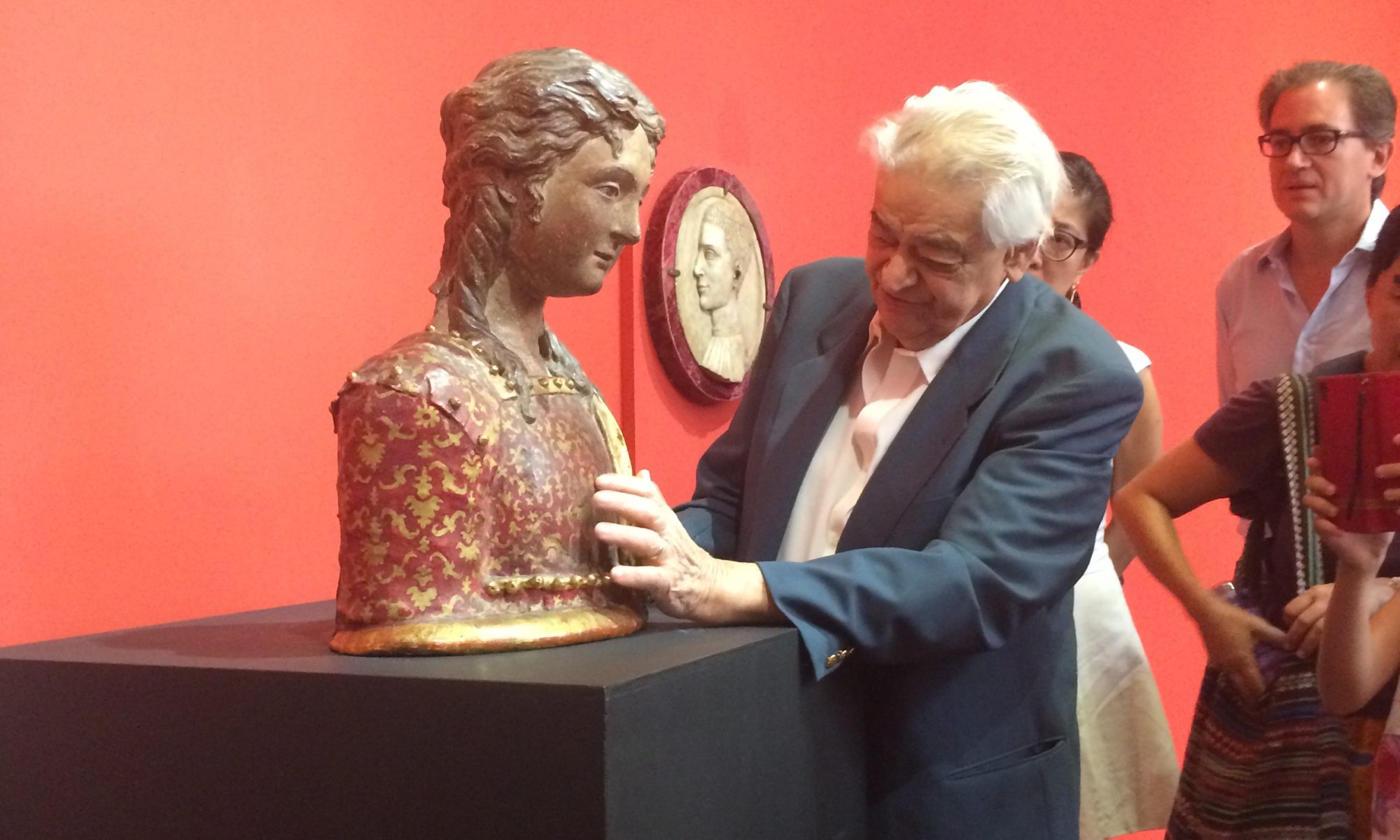
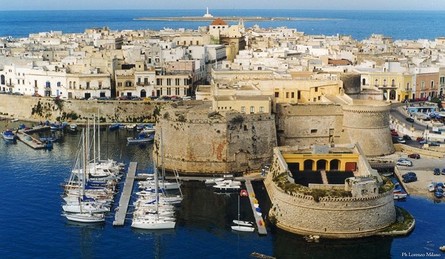
An incredible interweaving of races, civilizations and systems of government; an interesting fusion of customs and cultures; an amazing ever-changing landscape with stunning coastlines, whitewashed hill towns, citrus groves and turquoise seas are the attractions on this enchanting journey from Naples to the wonders of Puglia.

Naples, the capital of the Campania region, is Italy’s third largest municipality after Rome and Milan. Neápolis, the “new city” of the ancient Greeks, became the resplendent capital of Southern Italy which is still known as Magna Graecia today, as it was in ancient times. Greek settlements were established in the area since the second millennium BC. In the 6th century BC, Naples played a key role merging Greek culture into Roman society, eventually becoming a major cultural centre of the Roman Republic. It remained influential after the fall of the Western Roman Empire, serving as the capital city of the Kingdom of Naples from 1282 – 1816. By the 17th century, Naples had become Europe’s second largest city after Paris and the largest Mediterranean city with a population of around 250,000. It was a major cultural hub during the Baroque era and was home to artists, philosophers and writers. The classical world was in vogue following the rediscovery of the remarkably intact Roman ruins of Pompeii and Herculaneum and Naples went through a period of Neoclassicism. At the turn of the 20th century, “Liberty Napoletano”, a local version of Art Nouveau, developed in the city. Having long been a centre of art and architecture, Naples is dotted with Medieval, Baroque and Renaissance churches, castles and palaces. Covering an area of over 720 hectares, the sprawling Historic Centre of Naples was designated a UNESCO World Heritage Site in 1995. 

Magna Graecia, a term coined by the Romans, refers to the coastal areas of Southern Italy which were colonized by various ancient Greek citystates from the 8th to 5th centuries BC. Greek colonists selected the area due to the fertility of the land and its geographical position along the trade route of the Greeks, Etruscans and Phoenicians. During the late 5th century BC, there was increasing conflict with indigenous communities, in particular, the Oscan tribes based in the Apennine Mountains. As these peoples gradually migrated into the fertile plains, they became greatly influenced by the Greek political system of the polis or “city-state.” They readily adopted the polis model with its judicial, cultural and social structure, as well as the art, architecture, religion and even the language of the Greeks. In the following centuries, the settlements gradually came in contact with Rome and by 89 BC, all the cities of Magna Graecia were completely under Roman control. 

Resource Person 
Professor Puay-peng Ho is currently the Head of the Department of Architecture at the National University of Singapore. Previously he was Professor of Architecture at The Chinese University of Hong Kong. He received his First Class Honours degree in Architecture from the University of Edinburgh and a Ph.D. in Art History from the School of Oriental and African Studies, University of London. His thesis was focused on Buddhist art and architecture of the Tang dynasty. Dr. Ho is a member of the Royal Institute of British Architects and the Society of Architectural Historians. His research interests and publications are in the areas of Chinese art and architectural history, vernacular architecture, and architectural theory. 
Guided Viewing: Intimate Encounters: Handscrolls and Albums from the M K Lau Collection with Catherine Maudsley

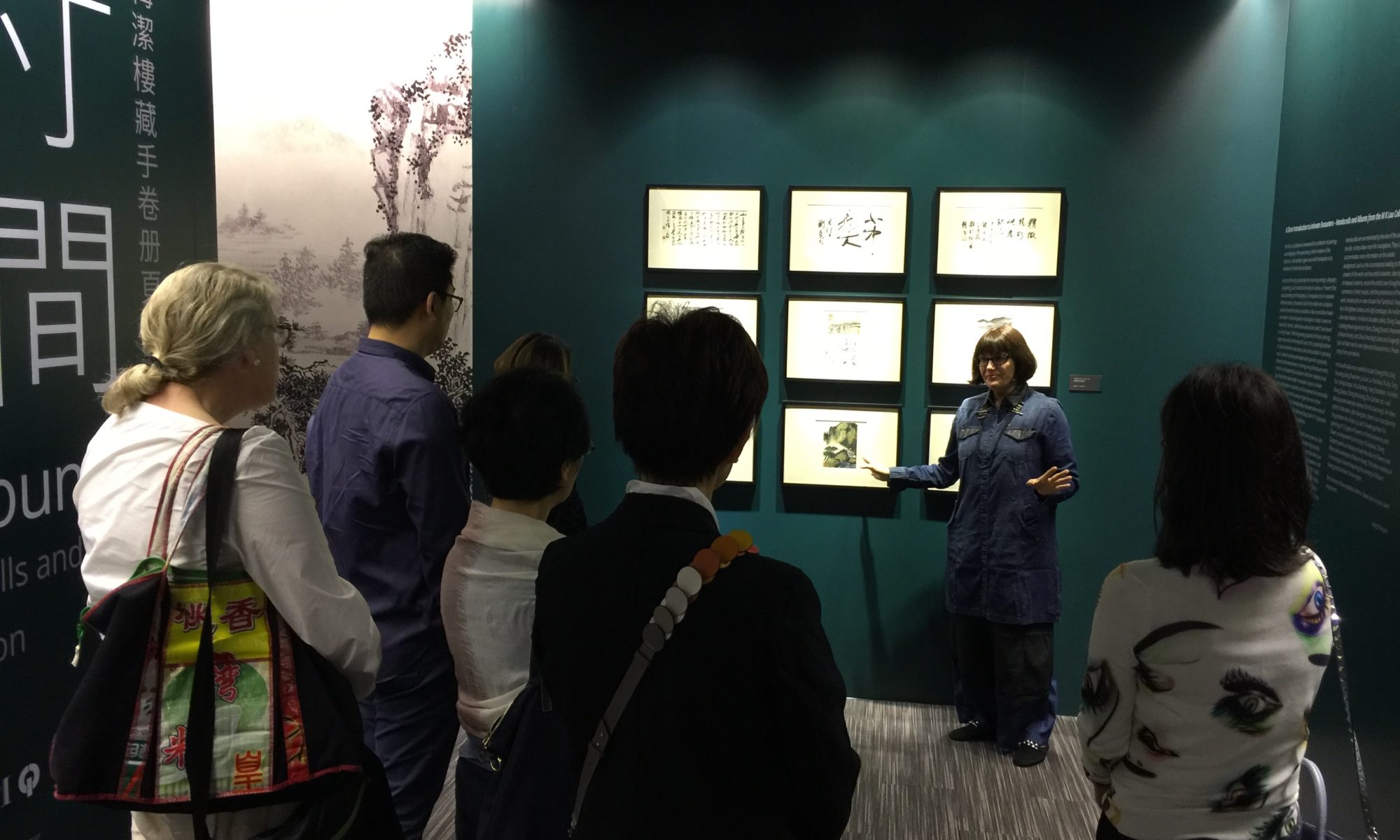
The M K Lau Collection, one of Asia’s finest private collections of 20th century brush and ink paintings is presenting “Intimate Encounters: Handscrolls and Albums from the M K Lau Collection” to showcase over 40 works that have rarely been shown to the public. The collection of world-class pieces by pre-eminent Chinese masters including Wu Changshuo, Wu Hufan, Pu Ru, Zhang Daqian and Lu Yanshao, embody the creative spirit and versatility of ink art over centuries.

These works are intimate and participatory formats of Chinese ink art – handscrolls are unrolled from right to left on a table, section by section, inviting the viewers to take an interactive journey, while albums are a group of distinct artworks brought together in a cohesive book form. The works will engage the viewer with a sense of surprise, discovery and excitement.

The show is a testament not only to the connoisseurship and scholarship of the M K Lau Collection, but also to the rich and endless stylistic variations of handscrolls and albums, encouraging visitors to immerse and appreciate art away from our contemporary culture of the instantaneous, returning instead to the leisurely enjoyment endowed upon art making and collecting in traditional times.

Resource Person
The HKUMS is delighted to present this guided tour with Catherine Maudsley, the Curator and Senior Advisor of the M K Lau Collection. Catherine is a Hong Kong-based art historian, art consultant, curator, educator and writer. A multiple award winner, she was a Connaught Research Scholar at the University of Toronto, a Canada-China Scholar in Beijing and a Commonwealth Scholar in Hong Kong. She has published and lectured extensively on Asian art and culture. She has taught at the Department of Fine Arts, The University of Hong Kong and has served on the Executive Committees of the University of Hong Kong Museum Society and the Hong Kong Oriental Ceramic Society and is a Council Member of the Hong Kong Art School.


Guided Viewing: The Blue Road: Mastercrafts from Persia With Dr. Yuka Kadoi

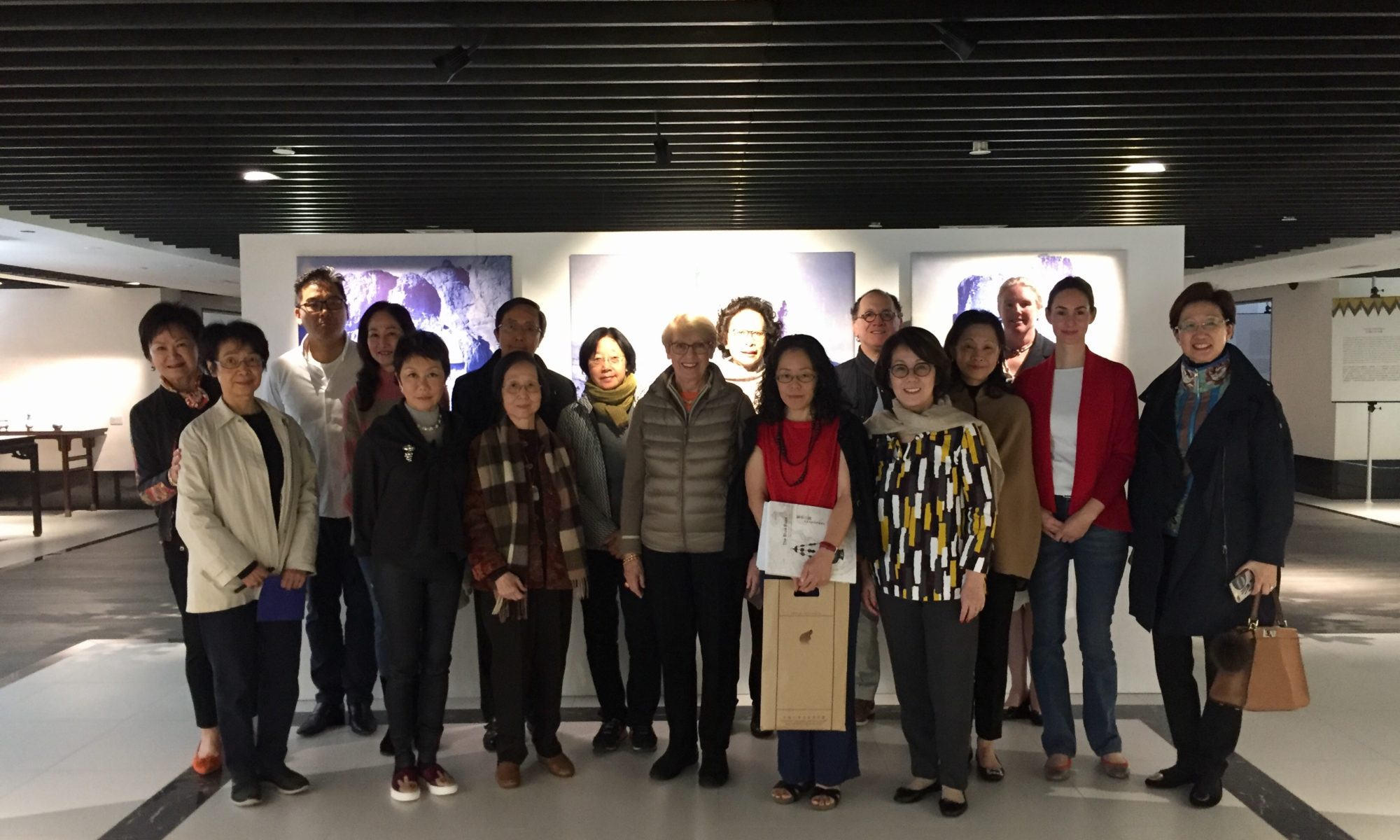
With support from the Liangyi Museum, the Executive Committee is pleased to organise a special guided tour with Dr. Yuka Kadoi, renowned Persian arts scholar and curator of “The Blue Road: Mastercrafts from Persia”. 

The exhibition features just under 100 highlight examples selected from institutions such as Oxford University’s Ashmolean Museum; London’s Victoria and Albert Museum; the Doris Duke Foundation for Islamic Art in Hawaii; and the David Collection in Copenhagen. The exhibition illuminates the significance of the colour blue in the visual and material culture of Iran. Using key examples of ceramics, textiles, glassworks and manuscript paintings, the exhibition demonstrates how the colour blue gained a timeless quality in impacting the Persian cultural domain and how it influenced the shaping of other artistic traditions in Asia and beyond. This exhibition will be one of the largest exhibitions on Persian art ever shown in Asia. 

Resource Person 
Dr Yuka Kadoi studied Islamic art at the University of Edinburgh and obtained her PhD in History of Art in 2005. Prior to returning to Edinburgh, she held curatorial and research positions in and out of the world of Islam, including at the Museum of Islamic Art in Doha and the Art Institute of Chicago. Yuka has also been awarded fellowships and grants by a number of international research funding bodies. 

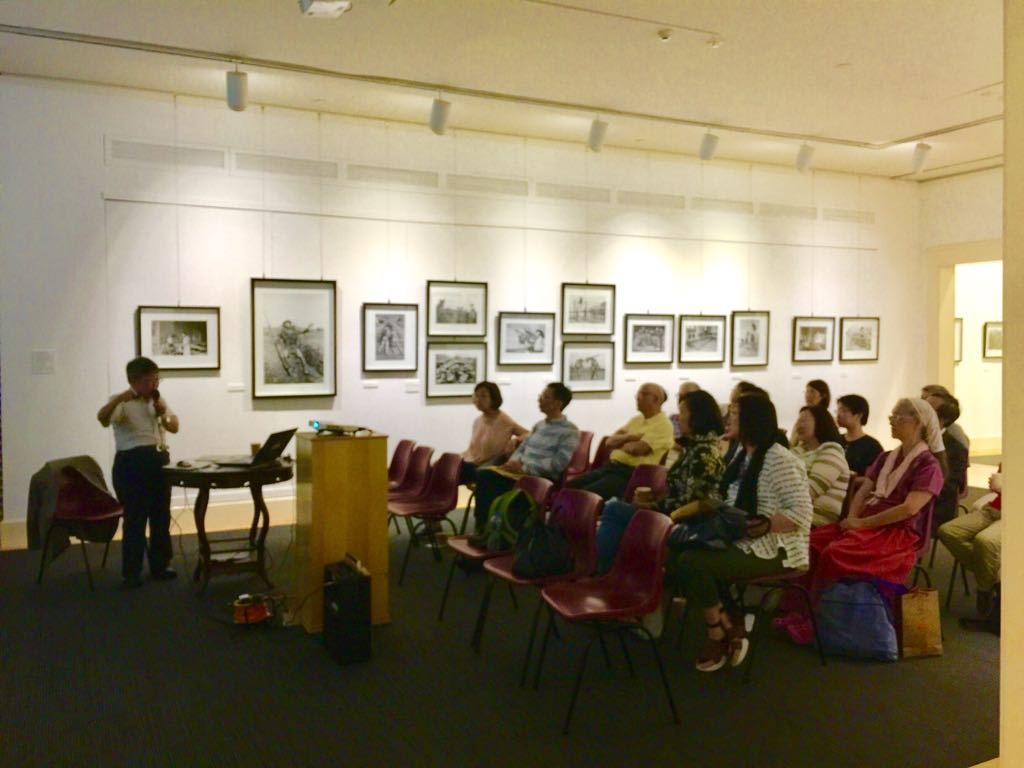
Pre-trip Lecture: Vernacular Splendour: Architecture of Southern Italy with Professor Puay-peng Ho

This lecture is presented in conjunction with the Museum Society’s upcoming trip to Southern Italy with Professor Puay-peng Ho. All are welcome to attend. 

Synopsis 
It is natural to associate Italy with the grandeur of its stately architecture, exquisite paintings of great masters, or magnificent sculpture adorning churches and public spaces. We flock to the likes of Florence, Rome, Milan or Venice and enjoy immersing in works by great Renaissance artists, architects and sculptors. However, these great works are all found in Northern Italy. In the south, in contrast, art and architecture are more rudimentary; they are raw but nevertheless powerful. There are also many works that reflect the rich and varied history of the southern half of the peninsula in vernacular form and local adaptation. This lecture will weave through the art and architecture of Southern Italy and highlight their characteristics vis-à-vis those from the north and outside cultures in similar period. 

Before the Romans extended power into the south, Apulia and Sicilia were colonized as part of Magna Graecia in the 8th century BCE. Greek art and architecture populated south Italy and the three Doric temples at Paestum dating to 6th to 5th century BCE testify to the majesty of the Greek culture. These buildings and other Greek remains must have inspired Marcus Vitruvius Pollio (c. 80-15 BCE) to compose De architectura upon which Renaissance architects formulated the rules for the elegant buildings serving the church, the powerful and the wealthy. The Romans extended their power to the south in 326 BCE and ruled till 476 CE. Through the excavations of the towns of Pompeii and Herculaneum that were submerged after the eruption of Mount Vesuvius in 79 CE, the richness of Roman residences in these commercial towns can be uniquely experienced. 

Southern Italy existed as a loose alliance of city states since the breakup of the Roman Empire. Much of the art and architecture from this period – from the humble stone trulli of Alberobello to the sumptuous 17th century façade of Santa Croce in Lecce – illustrate the rich influence of various outside cultures on the local practices. In modern history, Southern Italy was only integrated with the north in 1861 by King Victor Emmanuel II of the House of Savoy. Despite that, much of modern buildings in the south were adaptation of architectural design first seen in Germany, Austria and Northern Italy. With the overview of development of Southern Italian art and architecture over more than two millennia, the lecture will conclude by emphasizing the power of innovation in synthesizing various influences with vernacular traditions. 

Speaker 
Professor Puay-peng Ho is currently the Head of the Department of Architecture at the National University of Singapore. Previously he was Professor of Architecture at The Chinese University of Hong Kong. He received his First Class Honours degree in Architecture from the University of Edinburgh and a Ph.D. in Art History from the School of Oriental and African Studies, University of London. His thesis was focused on Buddhist art and architecture of the Tang dynasty. Dr. Ho is a member of the Royal Institute of British Architects and the Society of Architectural Historians. His research interests and publications are in the areas of Chinese art and architectural history, vernacular architecture, and architectural theory. 
Guided Viewing: Women in Art: Hong Kong With Eliza Gluckman

Join New Hall Art Collection Curator, Eliza Gluckman, for a tour of the exhibition at Sotheby’s and hear about the new research she has undertaken with the Asia Art Archive, about women artists in Hong Kong. Presented during the period of International Women’s Day, this exhibition of work by 10 artists covers the past 50 years of artistic development and creativity in Hong Kong. From ink to performance, they cross generations telling the story of women who have added to the creative landscape of Hong Kong. 

Au Hoi Lam, Rosamond Brown, Irene Chou, Choi Yan Chi, Fang Zhaoling, Ho Sin Tung, Ko Sin Tung, Jaffa Lam Laam, Angela Su to Doris Wong 

Importantly these diverse works show a breadth of experience, practice and ideas generated by women. There are, however, threads and commonalities – both clichés and facts – that arise every time a platform is raised to talk about ‘women artists’: recurring questions about representation and visibility in art history, public institutions and the market. 

At this time of monumental change for the visual arts in Hong Kong, the research findings enable conversation and debate on the visibility of the many women who shape, support and create the vibrant arts ecology of Hong Kong. 

Full details of the research lead by Phoebe Wong and New Hall Art Collection curator Eliza Gluckman, and supported by the HKU Museum Society, will be published in Yishu journal’s May/June 2018 edition and be available online through the Asia Art Archive and New Hall Art Collection websites. www.art.newhall.cam.ac.uk www.aaa.org.hk 

Speaker 
Eliza Gluckman is the Curator of the New Hall Art Collection at Murray Edwards College, University of Cambridge. She has an MA in Fine Art/ History of Art and an MA in Curating Contemporary Art (Royal College of Art). She has also worked in contemporary art for eighteen years, including in institutions such as Asia House and the Royal Society of Arts, and establishing a private institution and collection. In a freelance capacity Eliza has worked with the National Trust and museums including the Victoria and Albert Museum and Plymouth City Museum and Art Gallery. 

JOINT UMAG PROGRAMME – Guided Viewing: From Two Arises Three With Artists Michael Cherney and Arnold Chang, and Curator Tiffany Beres

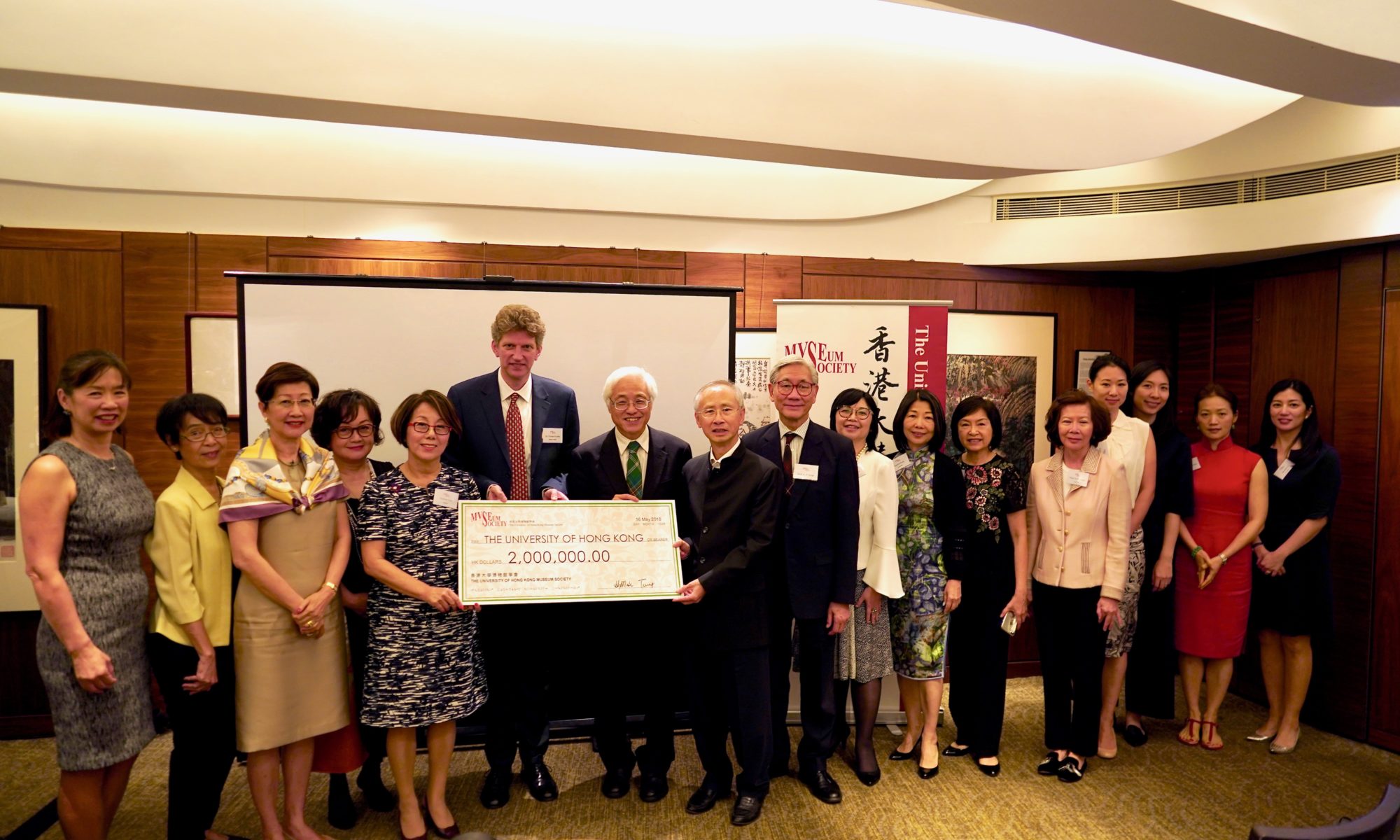
The Executive Committee is delighted to host a morning coffee and guided tour with the artists Michael Cherney and Arnold Chang, and curator Tiffany Beres of “From Two Arises Three”, an exhibition supported by the Museum Society to commemorate HKUMS 30th anniversary. To register on-line, please visit: https://hkuems1.hku.hk/hkuems/ec_hdetail.aspx?guest=Y&ueid=54681 

The exhibition highlights the extraordinary collaboration between artists Michael Cherney and Arnold Chang. The unbroken Chinese ink painting tradition, which has been perfected over the course of more than a millennium, continues its evolution into the present day, as evidenced by the current popularity of contemporary ink. Over the past couple of decades, there has been a dichotomy within Chinese contemporary art between purely contemporary works and those with a stronger connection to tradition. This division appears to be shrinking as traditional aesthetics merge with newer forms of media. The collaborative work of Arnold Chang and Michael Cherney is a particularly vivid example of this phenomenon. 

The title “From Two Arises Three” (二生三) comes from the Tao Te Ching (Dao De Jing) and describes how the works of two artists allow for the creation of a third space: 

The Tao gave birth to One. 
One gave birth to Two. 
Two gave birth to Three. 
Three gave birth to the Ten Thousand Things.

Special Event: Richter Meets Pärt Vox Clamantis – Concert at an Exhibition

With this special joint-concert and exhibition, Hong Kong Arts Festival, Goethe Institut, the University of Hong Kong Museum Society and the University Museum and Art Gallery of the University of Hong Kong bring together the works of German artist Gerhard Richter and Estonian composer Arvo Pärt in the space at the University Museum and Art Gallery. Curator Robert Storr, a distinguished scholar of Richter’s work, has selected works by the Artist to be projected along with Arvo Pärt’s music, live performed by the acclaimed vocal ensemble Vox Clamantis. This immersive and sensory performance, both an art exhibition and a concert, is not to be missed! 

Each performance will last approximately 30 minutes. A large turnout is expected. Please arrive early to avoid disappointment. 

Performers 
Vox Clamantis is a vocal ensemble that revolves around its leader Jaan-Eik Tulve. During the 20 years of its existence singers have come and gone, but one man and his vision of music has always been consistently in the centre. 

It all started with Gregorian chant, which Tulve studied in Paris in the 1990s. Back in Estonia he formed Vox Clamantis in 1996 to continue singing these old plainsongs that are the foundation of Western art music. The ensemble’s various line-ups were always like gatherings of kindred spirits, devotees to the idea that the essence of Gregorian chant can reach beyond its stylistic boundaries and freely blend with the music of modern ages and other cultures. 

Vox Clamantis’ connection to Arvo Pärt dates back to 1999 when the ensemble started to perform his organ piece “Annum per Annum” mixed with liturgical chant, and the composer was enthusiastic about their idea. Since then, the group’s contact with Pärt’s music has deepened. Today it is a relationship that is warm and friendly rather than just professional. 

Special Event: Meet-the-Artist: Vox Clamantis With Jaan-Eik Tulve

Join us after the 6pm concert and hear Jaan-Eik Tulve, Artistic Director and Conductor of Vox Clamantis share his thoughts on this artistic combination of Gerhard Richter’s artwork and Arvo Pärt’s music, described by The Guardian as “a match made in heaven”. 

Speaker 
The artistic director and conductor of Vox Clamantis Jaan-Eik Tulve graduated from Tallinn Conservatory in 1991 and specialized in Gregorian chant at Le Conservatoire National Superieur de Musique et de Danse de Paris. In 1992 Tulve became the conductor of the Cheour Gregorien de Paris and has appeared with the choir in many European countries. In 1996 he took up a position teaching Gregorian chant at the Estonian Academy of Music and at the same time formed the Vox Clamantis in Tallinn. Tulve has been awarded the Order of the White Star of the Republic of Estonia, the Order of Léopold of the Kingdom of Belgium and the Order of Arts and Letters of the French Republic. 

“Sparkling at 25” Silver Anniversary Gala Dinner

To celebrate the Museum Society’s silver anniversary, a special gala dinner “Sparkling at 25” will be held on Saturday, 23 March 2013 at the University’s historic Loke Yew Hall. The evening promises to be filled with fun and fellowship, sumptuous cuisine and wine, joyous entertainments, fabulous auction items and lucky draw prizes. It is a perfect time to gather with members and friends, and a good time to reflect – on the Society’s past achievements, present standing, and future directions. 

The Museum Society holds strong our mission as we enter the next twenty-five years. With UMAG’s new management and expansion plan, there is much that we can contribute to help it become a significant place on the world map of showcasing the culture of “East meets West”, “antiquity meets modernity”, mirroring the true image of our University and our city. The Museum Society also continues to pledge extended support to students through scholarship programmes, and to promote understanding and appreciation of art and culture through outreach community programmes. 

The proceeds raised from generous sponsorships and donations for the gala dinner and auctions will enable us to support important initiatives. Highlights from the live and silent auctions include paintings and sculptures from Jao Tsung-I, Liu Guosong, Li Shuang and Norman Ko; jewelleries from David Yurman, Kai-yin Lo and Etcetera Ltd; textiles and antiques; wine and travel packages; fashion and luxury goods. For a complete list, please visit our website www.hkums.com. Everyone is welcome to participate in the live and silent auctions through absentee bids. 

The Executive Committee wishes to express heartfelt thanks for all the support from members and friends, UMAG’s staff, University’s faculty and students. 

Come; let’s sparkle together in a life of joy – with art, friendship and philanthropy!

“Celebrations!” Gala Dinner for 100 at UMAG

A fundraising gala dinner to celebrate HKU 100th anniversary for 100 special guests at the Museum amongst 100 photo exhibits. 

The evening started with cocktails and viewing of the exhibition. A four-course dinner with and wines followed. 
Program: 
MCs – Carolyn Lu and Dr. Patrick Tong 
Welcome – Bonnie Huo 
Speech – Mrs. Ellen Tsui 
Champagne Toasting – All Committee 
Souvenir Presentation – to Judges Choices Photographers, Jurors, Sponsors and Advisors (presented by Jurors, Professor Lap Chee Tsui, Mrs. Ellen Tsui, Professor SP Chow) 
Percussion Performance – Louis Siu & Vicky Shin 
Games and Lucky Draw – Pansy Leung & Anna Yeung (drawn by Yeung Chun-tong, Professor SP Chow, Professor Lap Chee Tsui, Mrs. Ellen Tsui) 
Votes of Thanks – Yeung Chun-tong & Yvonne Choi 
Floral Design by Masao Mizukami 

Music and humour filled the evening, starting with Kool & the Gang’s “Celebration” and ending with Louis Armstrong’s “What a Wonderful World”, guests went home humming the tunes and carrying a complimentary copy of the gleaming “Celebrations!” photography book and a Museum journal. 

To order copies of the limited edition “Celebrations!” book published by HKU Museum Society, please go to DONATION in this website. All profits generated from the sale of this book will be donated to UMAG. The book will make a good gift for any happy occasion. It is also available at UMAG Bookstore, AO Photo Book Centers, and major bookstores in Hong Kong.