“Celebrations!” Photography Exhibition

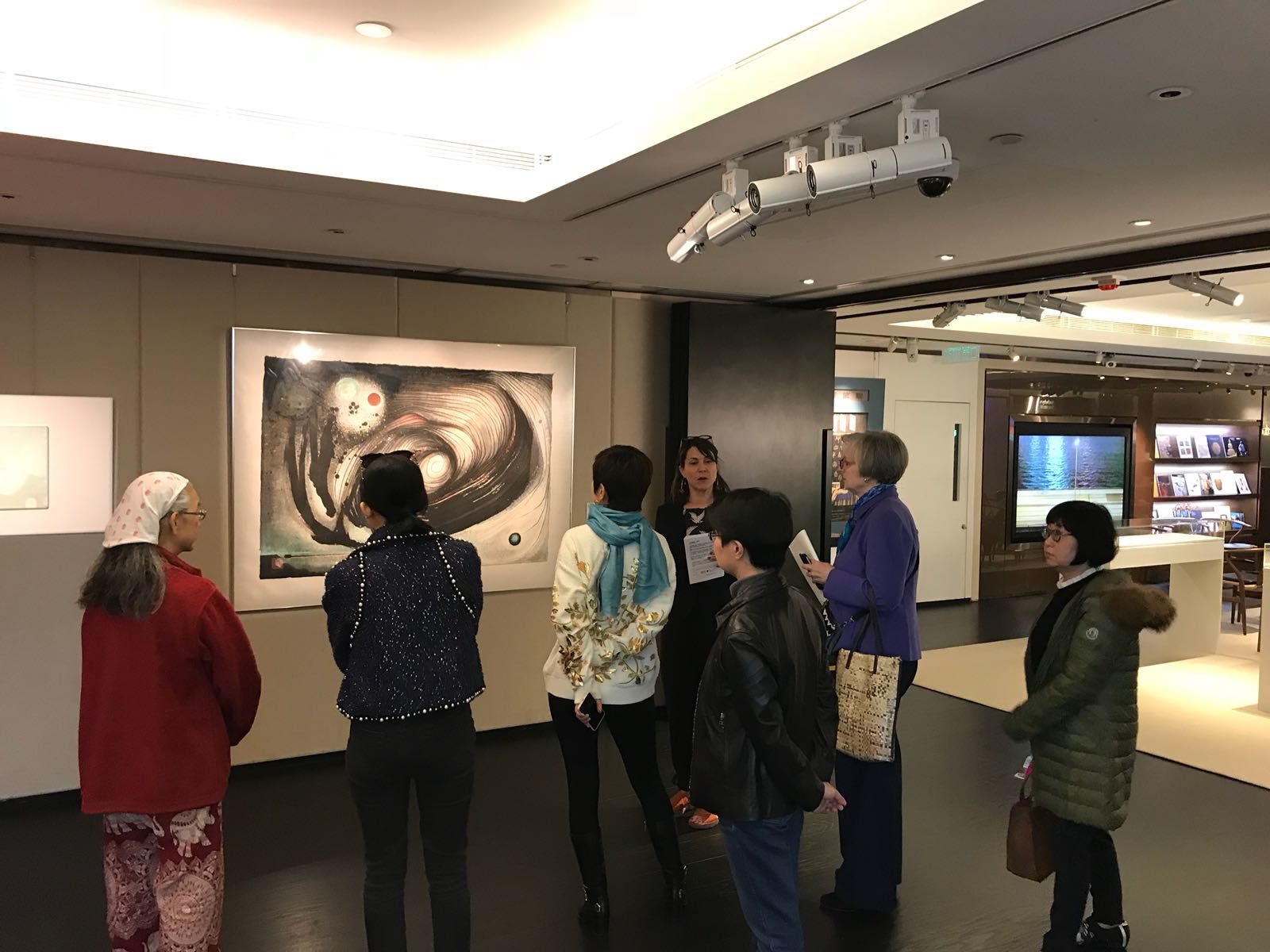
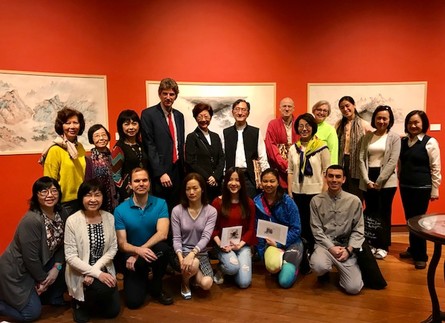
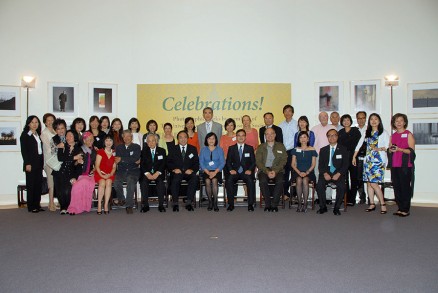
“Celebrations!”, a photography exhibition to mark HKU centenary. It features 100 best photography artworks selected from 773 entries submitted by the Society’s members. These colourful images follow the footprints in their travels and offer vivid views of the world in “celebrations”, at home and abroad. The submissions were organized and judged in three categories – “Landscape Symphony”, “Melodies of Life” and “The Sound of Silence”. Successful entries were chosen in a strictly name-blinded selection process by a jury panel comprised of 3 renowned photographers – Dr. Leo Wong, Dr. Wong How Man, Carsten Schael. 

The exhibition was curated by gallerist Catherine Kwai and UMAG Director Yeung Chung-tong. It also features an art installation titled “Ripples” by Masao Mizukami. “Celebrations!” is jointly presented by the Museum Society and UMAG, and runs from 12 October to 15 November 2011. 

Vice Chancellor Professor Lap Chee Tsui, Patron Mrs. Ellen Tsui and Sponsor Peter Lau were among the officiating guests. Immediately after the exhibition opening, a donation ceremony for the newly acquired woodcarving from the “Living World Series” by Juming followed. The membership cocktail reception was a happy and memorable event. 

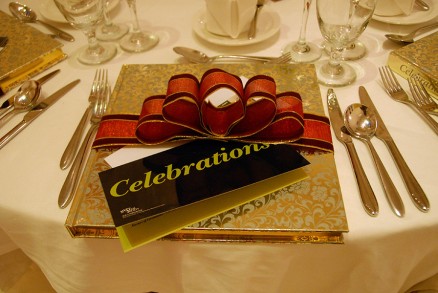
A limited edition of a beautiful commemorative photography book titled “Celebrations!” is published by the HKU Museum Society to support UMAG. To order, please see DONATION in this website. It is also available at UMAG Bookstore, AO Photo Book Centers as well as major bookstores in Hong Kong. 

HKU Museum Society 20th Anniversary Gala Dinner

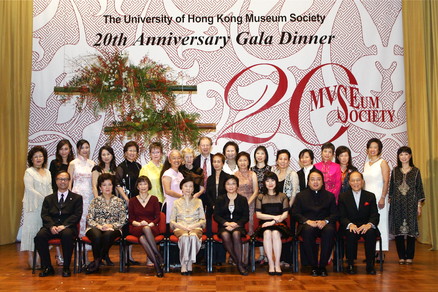
The University of Hong Kong Museum Society proudly celebrated its twentieth anniversary with a major fundraising Gala Dinner at the historic Loke Yew Hall on the 25 October 2008. The Gala Dinner, the culmination of a year of special events commemorating twenty years of active commitment to the University Museum and Art Gallery (UMAG), was attended by over 200 members and friends of the Society, including Founder Mrs. Margaret Wang. 

Enthusiastic members flew in from all over the world to specially attend this gala event: Singapore, England, Canada and the United States. Highlights of the evening included heart-warming speeches given by Patron Ellen Tsui, past and present Chairmen, Margaret Wang, Jean Ho and Margaret Yu. The evening included a memorable performance by distinguished operatic bass, Dr. Derek Anthony, and live auction by Christies. 

The Gala Dinner was a huge success, raising nearly $2 million through the generosity of members and sponsors. 

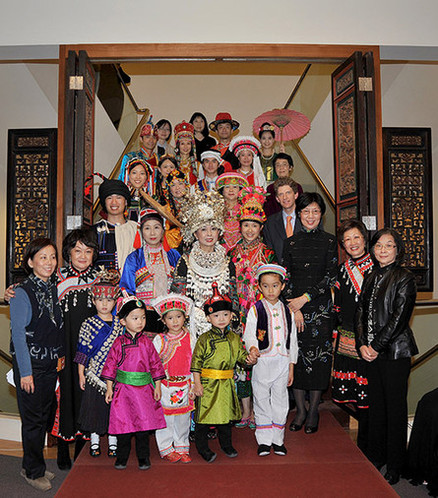
Embroidered Identities: Ornately Decorated Textiles and Accessories of Chinese Ethnic Minorities, Highlights from the Collection of Mei-yin Lee Exhibition Opening cum Members Day Costume Show

To celebrate art and friendship, members are invited to the opening reception of Embroidered Identities: Ornately Decorated Textiles and Accessories of Chinese Ethnic Minorities, Highlights from the Collection of Mei-yin Lee. The event will kick off with a fashion show of many of the dresses and accessories from the collection. Modelled by fellow members, everyone will have a close-up view of these intricate pieces and are welcome to try on a few for fun. Come join us in ethnic dress (from anywhere in the world) and bring along a friend to celebrate your Society membership. 

About the Exhibition 

Supported by the Museum Society to commemorate the Society’s 25th and the Museum’s 60th anniversaries, the exhibition demonstrates the wealth of colours, techniques and styles found in the on-going traditions of Chinese minority groups. Elaborately embroidered costumes and baby carriers, most of which originate from the Miao, Dong, Shui and Zhuang ethnic tribes of the south-western Chinese provinces of Guizhou, Yunnan and Guangxi are decorated with richly coloured, stitched and sewn ornamentations – and sometimes silver applications – indigenous to the particular culture and long-lived traditions they derive from. As some ethnic minorities lack a written script, the symbolism and colour-coding found in their textiles form a visual language that presents an important cultural and anthropological development and heritage still in practice today. 

Collector Mei-yin Lee is a Special Research Fellow of the Dunhuang Academy and an advisor to the HK Institute for the Promotion of Chinese Culture. She has conducted in-depth research on Chinese ethnic culture, Buddhist art and Chinese embroidery for many years.

Guided Visit: Minding the Digital and Values of Design at the Design Society and V&A Gallery in Shekou

On this excursion across the border, we will visit the Design Society and the V&A Gallery in Shekou, the very first museum dedicated to design in China. Housed in a new building designed by Pritzker Prize winning architect Fumihiko Maki, the Design Society will open with two inaugural exhibitions: “Values of Design” in the V&A Gallery and “Minding the Digital” in the Main Gallery. 

After arriving at the Shekou Ferry Terminal, our private coach will take us to the Design Society. 

Guided by Curator Carrie Chan, we will visit “Minding the Digital” in the morning. “Minding the Digital”, explores how design shapes the present and the future, positioning digital design as a platform to connect technology with human values. Through its presentation of a cross-disciplinary array of design, “Minding the Digital” embraces digitalization as a key innovative force. It is timely to ask how we can define this phenomenon in the most creative way. Design Society’s Senior Curator Carrie Chan will guide us through “Minding the Digital”. 

After lunch we will see “Values of Design” guided by Dr Luisa Elena Mengoni, Head of the V&A Gallery, Shekou, and Design Society Director Ole Bouman. This first exhibition at the V&A Gallery will consider how values drive design and how design is valued, as well as highlighting the key role that design plays in society. “Values of Design” has been curated and designed specifically for the V&A Gallery, Shekou at Design Society and will feature exhibits drawn from the V&A’s major collections of fashion, photography, furniture, product and graphic design, theatre and performance and will showcase objects that represent key turning points in the history of design against the backdrop of Shenzhen, a city in which design and manufacturing are developing at a rapid rate. 

The trip concludes when our private coach takes us back to Shekou Ferry Terminal for the ferry ride back to Hong Kong. 

Resource Persons 
Dr Luisa Elena Mengoni is Head of the V&A Gallery, Shekou at Design Society and coordinates in China the collaboration between the Victoria and Albert Museum (V&A) and China Merchants Shekou. She was Curator of Chinese art at the V&A, Curator of Chinese ceramics at the British Museum and British Academy Postdoctoral Fellow at University College London (UCL). She worked as consultant on World Bank heritage projects in Guizhou and Chongqing. Holding a degree in Chinese Studies from Università degli Studi L’Orientale (Napoli) and a PhD from University College London (UCL) she taught on Chinese art and archaeology, cultural heritage and museology at the V&A, UCL, SOAS, Christie’s Education and Sotheby’s Institute. Her latest publications focus on Chinese export art and global trade, collecting history, cultural heritage and Chinese crafts and design. 

Ole Bouman, former Creative Director of the Urbanism/Architecture Bi-City Biennale Shenzhen (2013-14), is now the director of Design Society, Shenzhen. Since mid 1990s Ole Bouman has shown outstanding achievements in writing, curating and teaching. He was the editor-in-chief of Volume, a magazine he co-founded with Rem Koolhaas and Mark Wigley. His publications include The Invisible in Architecture (coauthor, 1994) and Architecture of Consequence (2009). Between 2006 and 2013, Ole Bouman was the director of Netherlands Architecture Institute (NAI). He was involved in and curated Manifesta 3 (2000), the architecture Biennales of Shenzhen, São Paulo and Venice, etc. Besides, Ole Bouman taught architecture at the Massachusetts Institute of Technology. 

Carrie Chan is the Senior Curator at Design Society. In her capacity, she oversees content of exhibitions and public art at the institution. Have a dual background in communications and design, the Hong Kong native has wide-ranging experiences in creating cross-disciplinary design projects and exhibitions. She was most recently a lecturer at Hong Kong Design Institute, with active roles in academic publications, curriculum development, exhibitions and artist-in-residence programmes. Prior to that, she worked for British fashion label Boudicca on their fashion collections and creative exhibition projects in key galleries such as Haunch of Venison and Arnhem Mode Biennale. She was previously a features writer for South China Morning Post in Hong Kong. 

The Baden – Baden Festival’s 20th Anniversary: Russian music stars and Royal families – a trip to the Black Forest

HKU Museum Society is delighted to present a fundraising trip to Baden-Baden for our 30th Anniversary Endowment Fund. 

The Festival Hall Baden-Baden is turning twenty and will be presenting its audience with the very finest classical artists and timeless masterworks for its 2017/2018 anniversary year. 

Our program will feature the best of opera and concert: Adriana Lecouvreur (Music Director: Valery Gergiev) with Anna Netrebko in the title role. Celebrated Russian director Valery Gergiev will also conduct Rachmaninoff with young star Daniil Trifonov on the piano. 

Participants will also enjoy impressive views on several stops along the Schwarzwald Hochstrasse, covering the oldest, best known and perhaps even the most beautiful scenic route in the Black Forest. 

Fine English Art & Architecture – London & Somerset

England’s greatest cultural achievement, the place where its creative genius most truly flowered, is the country house – a living showcase for the architectural and artistic legacy of the nation’s grandest patrons. This tour, taking in both London and the delightful West Country, gives a unique insight into how the aristocracy lived both in town and country. After three days enjoying the unrivalled cultural riches of London we base ourselves at luxurious Ston Easton in Somerset, from where we venture out on excursions to country estates great and small and enjoy private hospitality – and musical recitals – in England’s two most delectable cathedral cities.

Heritage Walk: Island of Ma Wan 馬灣 (Ma’s Bay) with Dr. Stephen Davies

The island of Ma Wan 馬灣 (Ma’s Bay), which the British first recorded as either Cowhee or Toong-Shing-Ow-A in 1794 (without providing us with characters to give us a clue as to where the names came from), has had human settlement since c.4500 BP. Archaeological digs have recovered remains from the mid-Neolithic through to the early Bronze Age. Occupation in historic times has records from the Han through Tang Dynasties, but clear records from the period between the Tang and the Qing are less numerous. Certainly in 1794, when Alexander Dalrymple and Lt Henry William Parish, RN did a sketch survey of the island in the 10 gun brig, HMS Jackall, the smallest ship in the Macartney Embassy, the population was scant and the settlements (today’s Ma Wan and Tin Liu villages) extremely small. 

Memories today put the present settlements’ ages at around 250 years, dating them from the mid-18th century. It is likely that any settlements at the end of the Ming would have been completely cleared in the early Qing Dynasty’s Great Clearance 遷界令, c.1661-c.1669. For this the coast was cleared of people back to 50 li (c.32 km) from the sea, resulting in some 16,000 people from Xin’an County (the HK and Shenzhen regions) leaving their homes. In 1669 only some 1,650 folks returned, so repopulation of neither very fertile nor very extensive (c.2.6 sq. km.) Ma Wan was probably slow. 

The name Ma Wan is probably ancient and reflects the odd usage of the character 馬. The phoneme it represents – ma – is common in toponyms along the southern Chinese coast and appears in written form as one of three traditional characters representing that sound, the most common being 馬. One theory is that this represents a written Chinese form of a self-descriptor by southern China’s pre-Han indigenous coastal peoples. So where one sees it or its variants used, it supposedly means ‘Ma people found here’. It is possibly etymologically connected to the most common name for southern Chinese coastal peoples’ goddess, Mazu 媽祖, aka Tin Hau 天后, an alternative that may well be a post-Song Dynasty legitimation myth to harmonise sea goddess belief systems along China’s fairly recently completely assimilated coast. 

The island commands the choke points on the main route between Hong Kong and the Pearl River estuary leading to Guangzhou (Throat Gates Kap Shui Man 汲水門 and Kai Tap Mun 雞踏門 or Kai Tsap Mun 雞閘門, Chicken Leg Pass or Chicken Sluice Pass) – today the Ma Wan Channel 馬灣海峽. So when efforts were made to control opium smuggling into China from Hong Kong’s free port in the 1860s, the result was the creation of a Provincial likin 釐金 (also lijin) station in 1868 (or 1871 – the sources clash), that swiftly became a Chinese Imperial Maritime Customs station (CIMCS). Along with the establishment of similar stations in Kowloon City and Junk Island (Fat Tong Chau, 佛堂洲) this became part of what the Hong Kong government saw as the ‘blockade of Hong Kong’ – a state of affairs that grumbled on until Chefoo Convention of 1880. 

The customs station stayed in place until the granting of the lease on the New Territories in the Second Convention of Peking (Convention between the United Kingdom and China, Respecting an Extension of Hong Kong Territory) in June 1898. It closed down in October that year on the island’s cession to the British. Both the event of the CIMCS’ arrival and its departure are commemorated on steles close to the waterfront by the old village committee offices. 

Other sights in the village include the old Tin Hau Temple with its many commemorative plaques and ‘black’ Tin Hau effigy. The dragon boats on their trestles, waiting for June. The curious Mui Wai (梅尉) marker stone, being absorbed by a banyan tree’s roots, and purportedly representing some sort of relationship with Lantau’s Mui Wo (梅窩), since Mui Wai is an earlier version of the name. The ruins of the old CIMCS building and some remaining walls of old buildings, constructed from the Pearl River Delta’s famous blue-grey brick. The overgrown CIMCS contraband goods compound. The overlooked 1904 Kap Shui Man Pass lighthouse – a bit of a scramble – the 4th lighthouse built in HK waters, or 6th if one includes Waglan and Gap Rock. 

Ma Wan village was cleared of inhabitants in 2011 following the 2006 completion of the new Park Island development by Sun Hung Kai Properties. A soulless replacement ‘village’ had been built inland, completely blocked from breezes by the new luxury development, to which the villagers – not all of them happily or willingly – were moved. Since then the village has stood empty, quietly rotting away behind wire fence closures and ‘Keep Out. Government Land’ signs, with some villagers frequently returning to visit their old homes and to serve their old Tin Hau Temple 

Resource Persons 
Stephen Davies, a Briton with family connections to Hong Kong that go back to the early 1930s, served in the Royal Navy and Royal Marines (1963-67), briefly designed atlases, and taught sailing and mountaineering before falling of a cliff and having to be screwed back together (1967-68). After university in Wales and London (1968-74) he taught political theory at the University of Hong Kong (1974-89). From 1990-2003 he and his partner sailed 50,000 miles visiting 27 countries in their 38’ sailing sloop; useful background for a maritime historian. He was appointed the first Museum Director of the Hong Kong Maritime Museum in 2005. From 2005-2011 he built the collection and library, found the museum a new location, got government and donor funding for the expansion and relocation, and created the design and storylines for the new premises. He resigned in 2011 and was rehired as the museum’s first CSSC Maritime Heritage Research Fellow. From 2011-2013 he wrote the new gallery panel texts, chose objects for displays, wrote the captions, and scripted and co-produced the audiovisual displays. A published maritime historian, focused on Asian Seas and the interactions between the western and traditional Asian maritime worlds, he is now back at HKU as teacher on a course on the sustainable use of heritage buildings in the Department of Real Estate and Construction, of which he is an Honorary Professor. He is also an Honorary Fellow of the University’s Hong Kong Institute for the Humanities and Social Sciences and the Hon. Editor of the “Journal of the Royal Asiatic Society Hong Kong”. His most recent books are “Coasting Past: The last of South China coastal trading junks photographed by William Heering” (Hong Kong Maritime Museum 2013) and “East sails west: the voyage of the Keying, 1846-1855” (Hong Kong University Press 2014). He has just completed “Strong to Save: Maritime mission in Hong Kong from Whampoa Reach to the Mariners’ Club” to be published by Hong Kong City University Press in 2017 and is working on “Transport to another world: the life and times of HMS Tamar 1863-2015”. He continues as an active yachtsman and occasional TV presenter and journalist, and works with museums and heritage interests in China, Taiwan, Singapore and Hong Kong. 

Guided Visit: Miles upon Miles: World Heritage along the Silk Road With Dr. Joseph Ting

During the Western Han dynasty, Zhang Qian, a Chinese imperial envoy, was sent to Central Asia (traditionally known as the Western Regions) in the 2nd century BC. His mission provided the Chinese with knowledge about Central Asia and beyond, and opened up a trade network linking China to Central, West and South Asia, North Africa and areas lining the Mediterranean coast. Until the 16th century, this network had played a significant role in fostering the economic, cultural, religious and technological exchange among countries in the East and the West. This ancient trade route, known as the Silk Road, measured 10,000 kilometres from east to west, and 3,000 kilometres from north to south. In 2014 with the joint efforts of China, Kyrgyzstan and Kazakhstan, the Routes Network of Chang’an-Tianshan Corridor of the Silk Road stretching from Chang’an (present day Xi’an) in China to Central Asia was listed as UNESCO World Heritage, testifying to its historical and cultural significance. 

The focus of this exhibition is on the Routes Network of Chang’an-Tianshan Corridor of the Silk Road which spans four mainland provinces (Shaanxi, Henan, Gansu and Xinjiang), Kyrgyzstan and Kazakhstan. Showcasing some 160 cultural relics from China, Kyrgyzstan and Kazakhstan, the exhibition aims at illustrating the historical and cultural significance of this Routes Network. These exhibits include jadeware, textiles, sancai figurines, gold and silverware, bronze ware and large-scale murals. 

The Museum Society is delighted to have Dr. Joseph Ting guide us through this special exhibition. Please note this tour will be conducted in Cantonese. 

Resource Persons 
Dr. Joseph Ting majored in Chinese Literature and Chinese History from HKU and graduated with a BA degree in 1974. He was conferred an MPhil in 1979 and a PhD in 1989, both from HKU. Dr. Ting joined the Hong Kong Museum of Art as an Assistant Curator in 1979 and was appointed Chief Curator of the HK Museum of History in 1995. He retired in 2007 after serving for 28 years. He is currently an Honorary Assistant Professor in the School of Chinese at The University of Hong Kong, as well as an Adjunct Professor in the Department of History at the Chinese University of Hong Kong. 

Lecture & Dinner: “Painting a snake and adding some feet” – Rethinking Qiu Ying’s copying practice with Dr. Yeewan Koon

The HKU Museum Society is delighted to co-present this very special lecture and dinner at the residence of David Pong, Vice Chairperson of The Ink Society. 

Synopsis 
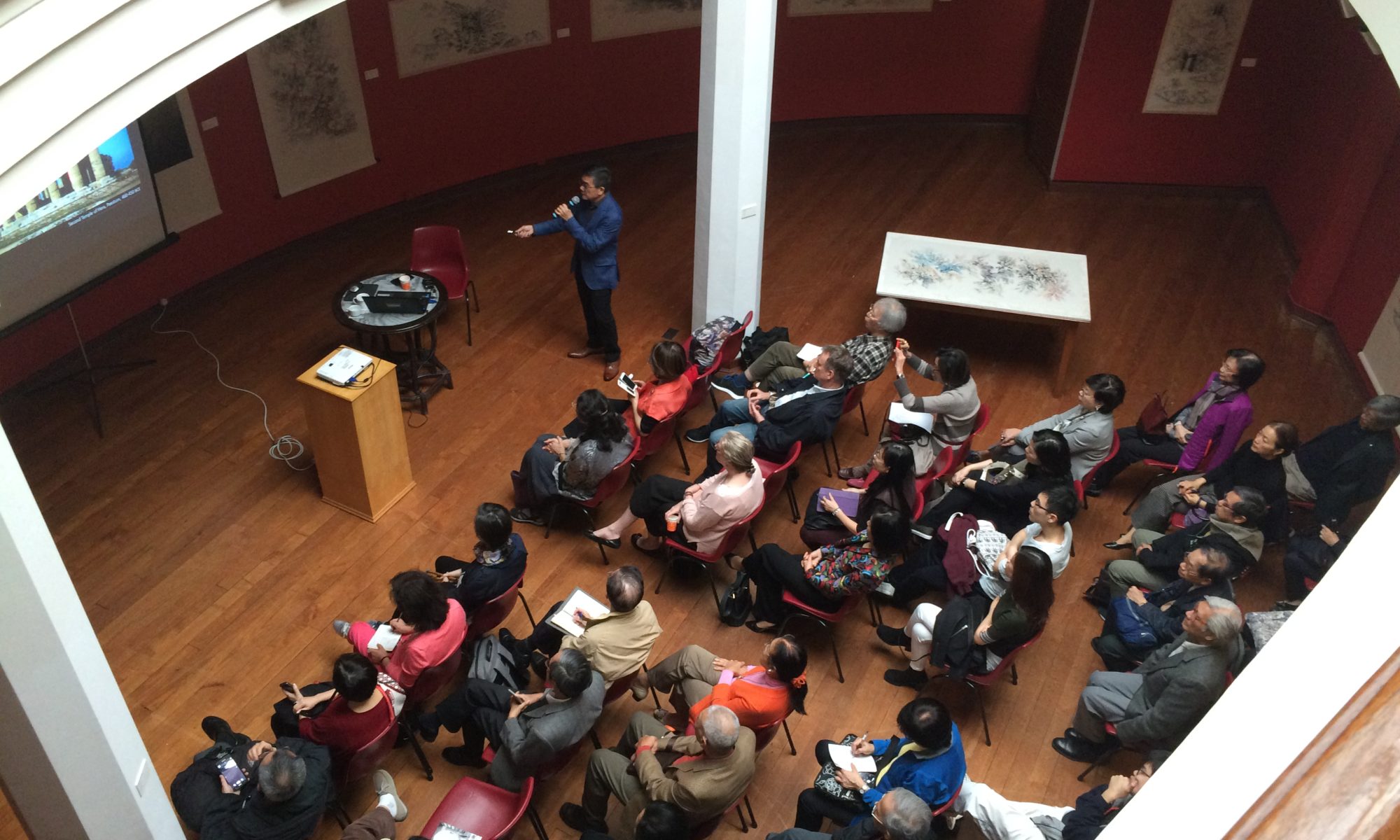
Qiu Ying, now much admired, was not always praised for his detailed style paintings. His critics have accused him of copying too much or for over-embellishment: “painting a snake and adding some feet.” This criticism deserves greater scrutiny given that in Chinese art we often emphasize the importance of copying as a form of learning and emulation as a measurement of artistic achievement. So what does it mean when a masterful artist is accused of over-copying? This lecture will tackle this question through close readings of some of Qiu’s famous works and propose that Qiu’s citation of past masters sometimes had less to do with emulation of masters, and more a method of creating a narrative that drew on the copied image’s status of being a version of the original. By examining this aspect of Qiu Ying’s copying practice – a form of self-knowing conceit of the copy – the speaker Dr. Yeewan Koon will be throwing light on how the knowledge of painting was shifting in Ming China. 

Jointly presented with The Ink Society. 

Speaker 
Dr. Yeewan Koon is associate professor at the University of Hong Kong. She has published numerous works including A Defiant Brush: Su Renshan and the Politics of Painting in 19th Century Guangdong, which examines how an iconoclastic artist responded to the violence of the Opium War. She has two new research projects: An analysis of the conceit of a copy in Ming China and the making of Canton as an imagined site in the eighteenth century. She is the recipient of several international research awards including fellowships from American Council of Learned Studies, Cambridge University (UK) and Columbia University (NYC). 

Home Visit: Morning Coffee with Rosamond Brown

Members are in for a special treat with this visit to the home of artist and collector Rosamond Brown. The house was originally built by a British architect in 1880 as his residence and later owned by the Shell Corporation until after the Second World War. Rosamond and her husband Charles, an architect, purchased the house in 1967 and have renovated the building and its accompanying garden over the years into a beautiful estate. 

Rosamond Brown is a painter. She first taught extra mural courses at HKU, and later at the University’s Art Faculty under John Prescott and Martha Lesser. She and her husband were friends with and collected works by Hon Chi Fun, Gaylord Chan, Cheung Yee, Lai Shu Kwan, Liu Guo Sung and Irene Chow. She is also involved in M+.