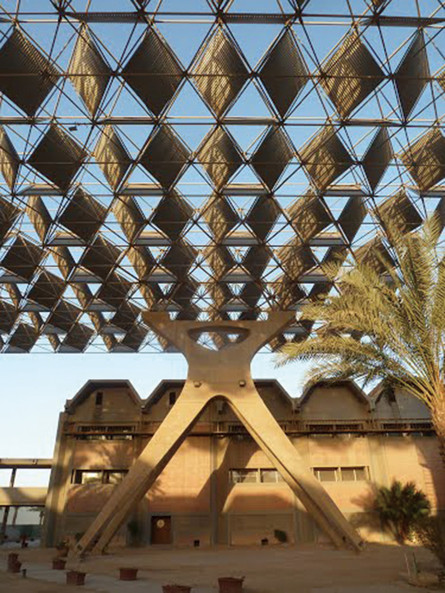
“Invaded, Looted and Returned: The Remarkable Story of the Loss and Restitution of the Treasures of Kuwait National Museum” With Kirsty Norman

Trained as an archaeological conservator at the British Museum and later specializing in Islamic ceramics, Kirsty Norman was Conservator for the al-Sabah Collection of Islamic Art in Kuwait for 16 years, from 1988 onwards. For three months of each year, Kirsty resided in Kuwait to work on this important and wide-ranging collection which belonged to members of the Kuwaiti ruling family, and which comprised part of the Kuwait National Museum.

In August 1990, the Iraqi army invaded Kuwait and over the following months the Iraqi government organised the systematic emptying of the major assets and institutions in the country, including Kuwait National Museum. All of the looted objects from the museum were taken to Baghdad. Kirsty, caught as she attempted to escape across the desert, was held hostage by the Iraqis to form part of a “human shield”.

After Kuwait was liberated in 1991, Kirsty travelled to Baghdad as a member of a specially created United Nations team to recover the stolen collections.

Against today’s setting of the destruction and looting of antiquities in Syria, Kirsty will describe the collections which she worked on in Kuwait, as well as detailing the remarkable recovery operation which took place after Kuwait’s liberation. Drawing from her hands-on experience with the restitution of Kuwait’s stolen treasures, she will discuss both the lessons learned and the reasons for the success of the operation.

Speaker
Kirsty Norman was born in Hong Kong, but is now based in London. She is an Honorary Lecturer at the Institute of Archaeology at University College London, where she teaches heritage management. In her earlier career of 25 years as an archaeological conservator, she trained at the British Museum, and then worked largely in Turkey and the Middle East, becoming freelance and combining a range of museum and excavation projects in Kuwait, Bahrain, the United Arab Emirates, Qatar, Oman and Turkey. Also during this period, she and her husband were in Hong Kong for four years, where she worked as a consultant for the Antiquities and Monuments Office on finds from sites excavated in advance of the building of Chek Lap Kok airport.

Kirsty was featured in a two part BBC Radio 4 programme called A Quiet Invasion. Programme 1 was based on the diary that Kirsty kept hour by hour through the first month of the invasion and occupation of Kuwait; in Programme 2 Kirsty talked to others who had been in Kuwait through the whole 6 month occupation 20 years on, to examine how it had affected them, and Kuwait. A Quiet Invasion won a bronze medal at the New York Festivals International Radio Program Awards.
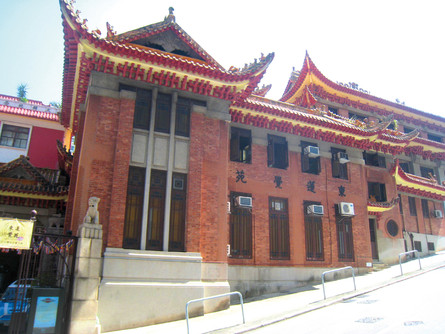
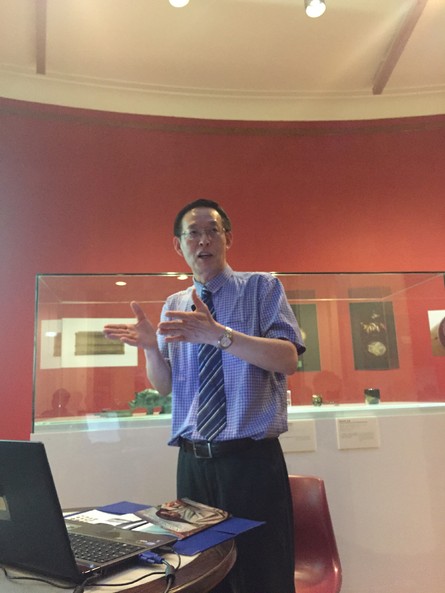
“Tung Lin Kok Yuen” With Dr. Joseph Ting

The Tung Lin Kok Yuen was founded by Clara Ho Tung, the wife of Sir Robert Ho Tung in 1935. Built in the ‘Chinese Renaissance’ style in vogue in the early Republican period, it is a gem in local architecture hidden in the midst of the bustling city. What made the monastery more unusual is the good collection of wooden plaques given by many a celebrated Chinese dignitaries active in the early part of the twentieth century, including Li Yuanhong (黎元洪), Zhang Xueliang (張學良), Kang Yuwei (康有為) and Wu Hanmin (胡漢民) who were all friends of Sir Robert Ho Tung, a wealthy and influential merchant in Hong Kong who was also interested in the politics in China. The wooden Buddhist sculptures in the monastery were commissioned in the 1930s and represent some of the best wood carvings by top Ningbo craftsmen rarely found in other Buddhist temples in Hong Kong.

Resource Person
We are privileged to have as our resource person, Dr. Joseph Ting. He majored in Chinese Literature and Chinese History from HKU and graduated with a BA degree in 1974. He was conferred an MPhil in 1979 and a PhD in 1989, also from HKU. Dr. Ting joined the Hong Kong Museum of Art as an Assistant Curator in 1979 and was appointed Chief Curator of the HK Museum of History in 1995. He retired in 2007 after serving for 28 years. He is currently an Honorary Assistant Professor in the School of Chinese at The University of Hong Kong, as well as an Adjunct Professor in the Department of History at the Chinese University of Hong Kong.

He is Honorary Advisor to many art and cultural institutions, including the University Museum and Art Gallery in HKU, the HK Museum of Art, the HK Museum of History, the Shenzhen Museum and Guangdong Provincial Museum. He is also a Member of the Antiquities Advisory Board, the Lord Wilson Heritage Trust and the Education Bureau of Hong Kong, an Honorary Fellow of the HKU and Hong Kong Institute of Education, and was an Honorary Research Fellow at the Centre of Asian Studies.

“French Missionaries and Cultural Exchange Between China and France During the Early Qing Dynasty” With Professor Shenwen Li

In 1687, five Royal Mathematicians (皇家數學家), dispatched as missionaries by King Louis XIV, arrived in China. Among them were Joachim Bouvet (白晉) and Jean-François Gerbillon (張誠), who were invited to stay in the court as Imperatorial Study Servants (御前侍讀), as the Kangxi Emperor was particularly fond of western scientific knowledge. From that same group, Jean de Fontaney (洪若翰), Louis le Comte (李明) and Claude de Visdelou (劉應) were given permission to preach across China. After this first mission, the number of French Jesuits coming to China increased, gradually becoming a significant missionary force. These individuals also made great contributions to the level of cultural exchange between China and France. They brought gifts selected by Louis XIV, and Joachim Bouvet, Jean de Fontaney and others returned to France with gifts for King Louis from the Kangxi Emperor, subsequently connecting these two famous monarchs. Furthermore, the missionaries introduced numerous western scientific technologies to China, which broadened China’s knowledge of France. Their letters—such as the widely circulated Lettres édifiantes et curieuses (耶穌會士書簡集)—and publications that include Louis le Comte’s Nouveau mémoire sur l'état présent de la Chine (中國近事報道) introduced Chinese society and culture to France and the whole of Europe. This development also had significant influence on the waves of French Chinoiserie and on the work of Enlightenment thinkers such as Voltaire (伏爾泰) and Montesquieu (孟德斯鳩).

Speaker
Shenwen Li is Professor in history and Director of the Centre d'études Québec-Chine at Laval University in Quebec, Canada, and Visiting Professor at Nankai Univesity in Tianjin, China. He specializes in Chinese history and in the multifaceted relationships between China and the Occident during the 17th and 18th centuries. He is a specialist of Jesuit culture and has published extensively on socio-cultural history of the Ming and Qing Dynasties.

“An Enchanting Evening of Opera Music” At the Great Eagle Centre Penthouse

The University of Hong Kong Museum Society is delighted to invite you to this special fundraising recital. Benefitting our 30th Anniversary Endowment Fund and under the direction of renowned bass Mr. Gong Dong Jian, the performances showcase ten talented soloists from Opera Hong Kong’s Jockey Club Young Artists Development Programme.

Performances include opera arias from Lucia di Lammermoor, Der Rosenkavalier, Lakmé, Candide, The Barber of Seville, and Semele.

Programme Director
Gong Dong Jian

Performing Artists
Dominique Chan (mezzo-soprano), Sammy Chien (baritone), Samantha Chong (mezzo-soprano), Frankie Fung (bass), Colette Lam (soprano), Alison Lau (soprano), Frankie Liu (tenor), Joyce Wong (soprano), Li Yang (soprano), and Chen Yong (tenor).

Performance and Venue Sponsor
Dr. K. S. Lo and Mrs. Feili Lo

HKUMS 30th Anniversary Endowment Fund will directly support the University Museum and Art Gallery (UMAG) and raise its level of excellence to place it as one of the leading teaching museums in Asia.

“Bonhams Auction 2016” With Victoria Huang

Bonhams Hong Kong will present a tightly-curated sale of Fine Chinese and Southeast Asian Paintings on 29 May 2016. Chinese masterpieces include works by Zhang Daqian 張大千, Lu Yanshao 陸儼少, Li Keran 李可染, Liu Haisu 劉海粟 and Huang Jun 黃均. Southeast Asian highlights encompass paintings by Adrien-Jean Le Mayeur de Merprès勒邁耶 and Bui Xuan Phai 裴春派.

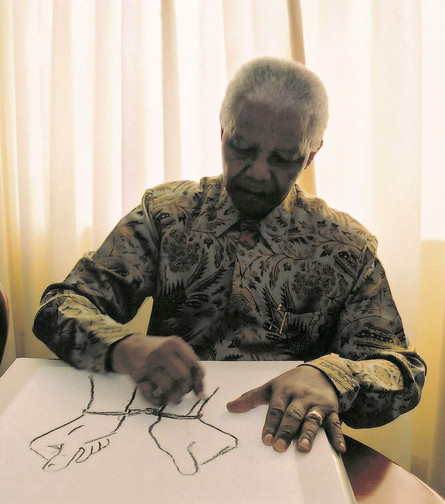
Notably, Bonhams will feature a rare artistic collaboration between Nelson Mandela 納爾遜 · 曼德拉 and Tan Swie Hian 陳瑞獻. Six powerful images of the hands and arms of Nelson Mandela sketched by the great politician himself – which were then lithographed and painted upon by acclaimed Singaporean artist Tan Swie Hian – will be sold as a set with a customised box and framed as a cohesive series. This set of six collectively known as The Nelson Mandela Unity Series, signed individually by both, is unique in medium, meaning and technique — original acrylic, ink and pencil over monochrome lithography. Tan reinforced Mandela's nobility of the human spirit by using Buddhist mudras (symbolic hand gestures) and Chinese calligraphy in the cursive script. This exceptional series was formerly in the collection of Nelson Rolihlahla Mandela, thereafter by direct descent to his eldest daughter Pumla Makaziwe Mandela.

Resource Person
Victoria Huang is currently based at the Bonhams Singapore office. She is responsible for the Asian painting portfolio as she develops her client base in Singapore and the region. Victoria has a BA degree in Asian Studies from Scripps College, California. In 1997, she received her MA in Art History and Archaeology from Columbia University, New York, where she specialised in Chinese paintings of the Ming and Qing dynasties. To increase her strategic understanding of art museum and gallery management, she completed her second MA degree at the University of Leicester, United Kingdom, in 2010, where she received distinction for her thesis on branding university museums.

In between her degrees, she worked in education and the arts. Victoria was an assistant curator at the Singapore Art Museum from 2005 to 2007, where she oversaw the development of artefact donations, prepared catalogue production and curated or jointly-curated exhibitions on Singapore and Southeast Asian art including Encounters: Southeast Asian Art in Singapore Art Museum Collection, Legends: Soo Bin's Portraits of Chinese Ink Masters and W.S. Hoong's Art of Seal-Carving: A Kong Chow Wui Koon Donation Exhibition. In 2012, she was selected by Singapore's Economic Development Board (EDB) and Bonhams to undergo specialist training in sourcing, authentication, valuation and cataloguing of classical and 20th Century Chinese paintings as well as Southeast Asian art under the 2-year Strategic Attachment and Training Programme funded by EDB.

“Rubbings and Chinese Calligraphy” (碑帖拓本與中國書法) With Professor Yunwoon Lee (李潤桓教授)

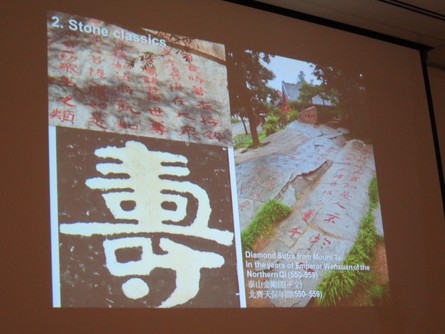
碑帖拓本為我國特有的一種保存及傳播文字的方法。“記功立石”、“立碑刻銘”、“縑竹易銷”,“金石難滅”,所以自古以來,文化的流傳,特別是大規模的工作都以石刻作為工具。儒家的漢代熹平石經,魏正始三體石經,釋家的北朝的佛經摩崖碑刻,多不勝舉,而其書寫文字更為書法範本的重要部份。其他如周石鼓、秦刻石、漢魏碑刻、隋唐名碑,更是中國書法藝術的瑰寶。自宋代的著名名人書法家墨跡上石,開將出現叢帖,宋太宗淳化秘閣法帖,實為法帖之袓。以後連綿不絕,更加影響歷代書法的發展。

不過書寫作品在上石傳刻的優劣與及原刻挖改或翻刻,乃至拓本傳拓時間的先後,早晚對觀者或學習者又有很大的影響。而作為文物,藝術品則拓本的真偽,孤本、善本、原刻本、翻刻本,其價值上下差落又極大。這些都是不能不注意的問題。

本講座會引用不同年代的書法拓本作例子,探討中國書法的歷史和書體發展脈絡。

In the past, rubbings were used as a way to preserve and disseminate texts and Chinese characters. For example, records of someone’s merits and important events were often cut into stone, which is inherently more long lasting than the more fragile silk and bamboo strips. Therefore, rubbings played an important role in the spread of culture in imperial China; in particular, with large-scale cultural projects that involve multiple texts.

Professor Lee will speak about the history of Chinese calligraphy, using rubbings as a way to illustrate different script-styles and their developments. The appreciation and authenticity of Chinese rubbings also will be covered.

Speaker
李潤桓教授畢業於新亞書院藝術系,獲香港中文大學學士及香港大學哲學碩士(中國美術)。李氏為前香港中文大學藝術系系主任、教授,香港中文大學文物館名譽研究員,現任香港特別行政區康樂及文化事務署博物館專家顧問(中國書畫)、中國書協香港分會特邀顧問、香港蘭亭學會藝術顧問、香港書法家協會藝術顧問。李氏著有:《李潤桓書畫集》、《國畫入門》(合著)、《倪瓚生平研究》、《倪瓚書跡研究》、〈傳世倪瓚書畫的幾個問題〉、〈沈周師承及其有關問題〉、〈淳化閣帖傳世宋本辨〉、〈楷書略說〉等。

Professor Yunwoon Lee graduated from the Department of Fine Arts, New Asia College of the Chinese University of Hong Kong (CUHK). He received an MPhil in Chinese Arts from the University of Hong Kong (HKU). He was Head and Professor of the Department of Fine Arts of CUHK, honorary research fellow of the Art Museum CUHK, and art advisor for the Hong Kong Arts Development Council (Dept. of Visual Arts). He is now Museum Expert Adviser (Chinese Painting and Calligraphy) of the Leisure and Cultural Services Department of HKSAR, special advisor to the Chinese Calligraphers Association of Hong Kong, and Art advisor for the Hong Kong Lan Ting Society and the Hong Kong Calligraphers’ Association.

“Masterpieces of British Silver: Highlights from the Victoria and Albert Museum” With Ben Chiesa

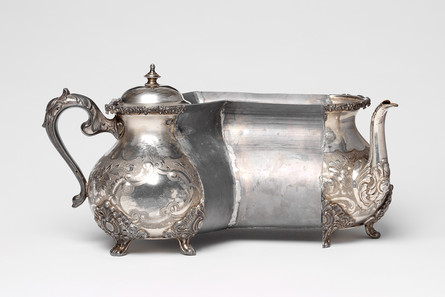
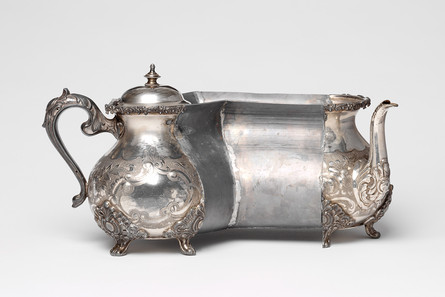
The contemporary expression of this tradition is explored through thirty-nine dramatic sculptural pieces from the V&A’s permanent collection, showcased alongside original designs and sketches. Ranging from the entirely abstract to the startlingly representative, conceptual and functional pieces by modern day masters of silver such as David Clarke, Michael Rowe, Gerald Benney and Michael Lloyd demonstrate the diverse influences from which contemporary silverwork in Britain draws inspiration – from the flowery ostentation of eighteenth century Rococo to the minimal simplicity of Scandinavian design.

“This is a unique opportunity to see masterpieces of silver from the privately assembled Gilbert Collection before the V&A’s Gilbert Galleries reopen to the public in London in November”, writes Dr Tessa Murdoch, Head of Metalwork Collections at the V&A. “The graceful silver swan epitomizes Arthur Gilbert’s taste; he collected the very best examples of historic silver from the famous London workshops of Paul de Lamerie and Paul Storr and from the most celebrated historic collections. William Beckford had his Chinese Qianlong coffee pots embellished with silver-gilt mounts in London in 1820. The Gilbert curators continue to add to this prestigious collection; their latest acquisition, a royal Christening gift presented in 1731 by King George II to his goddaughter Lady Emily Lennox, was purchased at Europe’s most famous art fair, TEFAF, Maastricht, 2014.”

Resource Person
Ben Chiesa is the curator of Liang Yi Museum, an institution dedicated to promoting design, craftsmanship and heritage in Hong Kong. Since joining the museum last year, he has worked on Scholars and Debutantes: A Contrast of Aesthetic and Opulent Luxuries as well as the newly opened Masterpieces of British Silver: Highlights from the Victoria and Albert Museum. He received his MA in art and archaeology from University College London in 2010.

Ben previously served as curator of cross-cultural art at the Asian Civilisations Museum, Singapore. His past exhibitions include China Mania! The Global Passion for Porcelain, 800-1900 and Auspicious Designs: Batik for Peranakan Altars. He co-authored several of the museum's major publications, including Enlightened Ways: Buddhist Art from Thailand and a catalogue accompanying Auspicious Designs. His research focuses on Chinese and Japanese furniture and decorative art made for export from the sixteenth to nineteenth century.

“Heritage Conservation and Private Museums” Guest Speaker – Pro-Vice-Chancellor Douglas So

The Executive Committee is delighted to present Mr. Douglas So, Vice-President and Pro-Vice-Chancellor of The University of Hong Kong in charge of institutional advancement as the guest speaker at this year’s AGM. With a passion for photography and heritage conservation, Douglas will share with us the journey of establishing the F11 Photographic Museum inside a Grade III heritage building in Happy Valley, including an overview of the history, the conservation philosophy and efforts, design, vision and mission, and the difficulties encountered.

The aim of the presentation is to generate thoughts and ideas on the way forward for heritage conservation and revitalisation, as well as a discussion on the opportunities arising from an increasing number of private museums in Hong Kong and the challenges they face.

Speaker
Douglas So is the Vice-President and Pro-Vice-Chancellor of The University of Hong Kong in charge of institutional advancement. Trained as a solicitor, Douglas is admitted to practice in Hong Kong, as well as in England and Wales.

Douglas is passionate about photography and heritage conservation. He has been collecting cameras, photographs and photo books for nearly 20 years. During his tenure as Executive Director, Charities at the Jockey Club from 2010-2014, he was involved in a number of projects relating to arts, culture and heritage including the Central Police Station, Le French May, Hong Kong Arts Festival and various major exhibitions across Hong Kong.

Douglas is the founder and director of F11 Photographic Museum (www.f11.com), which resides in a Grade III heritage building at 11 Yuk Sau Street in Happy Valley. Opened in September 2014, F11 is the first and only museum in Hong Kong dedicated to the promotion and appreciation of photography. There are exhibitions on photographs, cameras and books, as well as seminars and master classes, held at F11 periodically.

Douglas is also keen to serve the community. Currently, he serves on a number of boards and committees including the HK Community Chest, UNICEF, HK Phil, HK Cyberport, Food Angel, History Museum Advisory Panel and Duchess of Kent Children’s Hospital.

FERGANA VALLEY: IN THE FOOTSTEPS OF ZHANG QIAN, A Cultural Trip to Kyrgyzstan & Uzbekistan With Dr. Joseph Ting

"Fergana Valley is an intermountain depression of 22,000 square kilometres located in Central Asia west of Xinjiang Province, China, south of the majestic Tian Shan range, and north of the Pamirs, covering part of present day Kyrgyzstan, Uzbekistan and Tajikistan. Melted snow from surrounding snow-capped mountains irrigates the land, making Fergana Valley one of the most fertile and densely populated areas in Central Asia."

"The history of Fergana Valley could be traced back to 500BC when it was part of the mighty Achaemenid Empire. Since then, it has come under the rule of Greco-Bactrian kingdom, Kushan, Sassanid, Hephthalite, Samanid, Karakhanid, the Mongols, and Russia. The land was divided up between Kyrgyzstan, Uzbekistan and Tajikistan when these countries declared independence in the early 1990s."

"The valley played a key role in the opening of the Silk Road. Zhang Qian, (張騫) a renowned diplomat, traveler and explorer, was dispatched by Emperor Wudi of Western Han dynasty (漢武帝) to Dayuan (大宛) in present day Fergana Valley to build an alliance with the Yuezhi (月氏), an Indo-European people, to fight against the aggressive nomadic Xiongnu tribes (匈奴) and to look for the legendary “blood-sweating horses” (汗血馬). While the plan did not materialize, Zhang Qian brought back invaluable information about Central Asia and beyond hitherto unknown to the Chinese imperial court. His exploration opened up ties between China and Central as well as Western Asia, thus initiated the development of the great Silk Road."

"Subsequent to our previous trips to Uzbekistan and Kazakhstan, we follow the footsteps of Zhang Qian to visit Fergana Valley in September this year. Major highlights of the trip would include among others, Issyk-kul, a scenic lake surrounded by the snow-capped Tian Shan mountains, the historical site of Suyab, (modern day Ak-Beshim), an ancient town along the Silk Road reputed to be the birth place of Li Bai, (李白), the romantic poet of the Tang dynasty, Osh, one of the oldest settlements in Central Asia, and a major trading post of the Silk Road, Andijan, located on the site of an ancient caravan route linking China with Central Asia and many other interesting and beautiful places."

Dr. Joseph Ting

Resource Person
The University of Hong Kong Museum Society is pleased to present the fourth of a series of Silk Road trips with Dr. Joseph Sun Pao Ting (丁新豹博士).

Dr. Ting graduated with a BA degree in Chinese Literature and Chinese History in 1974, was conferred an MPhil in 1979, and followed by a PhD in 1989 from The University of Hong Kong (HKU).

Dr. Ting began his professional career as Assistant Curator in 1979 at the Hong Kong Museum of Art, was appointed Chief Curator of the Hong Kong Museum of History in 1995 and retired in 2007 after serving for 28 years. He is currently an Honorary Assistant Professor in the HKU School of Chinese, and was an Honorary Research Fellow at the former Centre of Asian Studies. He is an Adjunct Professor in the Department of History at the Chinese University of Hong Kong and a Member, inter alia, of the Antiquities Advisory Board, the Lord Wilson Heritage Trust and the Education Bureau of Hong Kong.

Dr. Ting is the Honorary Advisor to the Hong Kong Museum of Art, the Hong Kong Museum of History, the Hong Kong University Museum and Art Gallery, the Shenzhen Museum and the Guangdong Provincial Museum. He is an Honorary Fellow of the HKU and Hong Kong Institute of Education.

Travel Grantee
In support of scholarship, the Museum Society is proud to fully sponsor Konstance Chuntung Li (李俊彤) to join this trip as a Travel Grantee. He received his BA degree with a double major in English Studies and Fine Arts in 2008 and a MPhil in 2012 from HKU. Konstance was a recipient of the COSF Award, China Oxford Scholarship Fund and completed his Master in Studies in Archeology from the Oxford University in 2015. His dissertation title was "Recent archaeological finds in China have provided a new perspective on the role of the Sogdians in Central Asia and China".

Masterpieces of British Silver: Highlights from the Victoria and Albert Museum With Ben Chiesa

The contemporary expression of this tradition is explored through thirty-nine dramatic sculptural pieces from the V&A’s permanent collection, showcased alongside original designs and sketches. Ranging from the entirely abstract to the startlingly representative, conceptual and functional pieces by modern day masters of silver such as David Clarke, Michael Rowe, Gerald Benney and Michael Lloyd demonstrate the diverse influences from which contemporary silverwork in Britain draws inspiration – from the flowery ostentation of eighteenth century Rococo to the minimal simplicity of Scandinavian design.

“This is a unique opportunity to see masterpieces of silver from the privately assembled Gilbert Collection before the V&A’s Gilbert Galleries reopen to the public in London in November”, writes Dr Tessa Murdoch, Head of Metalwork Collections at the V&A. “The graceful silver swan epitomizes Arthur Gilbert’s taste; he collected the very best examples of historic silver from the famous London workshops of Paul de Lamerie and Paul Storr and from the most celebrated historic collections. William Beckford had his Chinese Qianlong coffee pots embellished with silver-gilt mounts in London in 1820. The Gilbert curators continue to add to this prestigious collection; their latest acquisition, a royal Christening gift presented in 1731 by King George II to his goddaughter Lady Emily Lennox, was purchased at Europe’s most famous art fair, TEFAF, Maastricht, 2014.”

Resource Person
Ben Chiesa is the curator of Liang Yi Museum, an institution dedicated to promoting design, craftsmanship and heritage in Hong Kong. Since joining the museum last year, he has worked on Scholars and Debutantes: A Contrast of Aesthetic and Opulent Luxuries as well as the newly opened Masterpieces of British Silver: Highlights from the Victoria and Albert Museum. He received his MA in art and archaeology from University College London in 2010.

Ben previously served as curator of cross-cultural art at the Asian Civilisations Museum, Singapore. His past exhibitions include China Mania! The Global Passion for Porcelain, 800-1900 and Auspicious Designs: Batik for Peranakan Altars. He co-authored several of the museum's major publications, including Enlightened Ways: Buddhist Art from Thailand and a catalogue accompanying Auspicious Designs. His research focuses on Chinese and Japanese furniture and decorative art made for export from the sixteenth to nineteenth century.