Christie’s Autumn Auction Preview

For the coming autumn auction, we will be guided by two Christie's specialists, Sara Mao from Chinese Painting Department and Angel Yip from the Asian 20th Century and Contemporary Art Department. They will lead us through some of the highlights from the Chinese Painting, and the Asian 20th Century & Contemporary Art galleries. Highlights include Egret on Rock by Bada Shanren, Cursive Script Calligraphy by Wang Duo, Autumn Mountains attributed to Tang Yin, Mountain Streams by Yuan Jiang, as well as Bamboo attributed to Emperor Huizhong, and works by renowned 20th century artists including Zhang Daqian, Fu Baoshi, Xu Beihong, Qi Baishi, Lin Fengmian and Wu Guanzhong and much more.

Members and friends may stay on after the guided tour to view the other galleries.

Resource Persons
Sara Mao is a Specialist in Christie's Chinese Painting Department, with a strong background in Chinese Art. She obtained a Master in Literature in History of Art and Connoisseurship, with a concentration in Chinese Art from Christie's Education in London. She joined Christie's in 2008.

Angel Yip graduated from the Faculty of Arts of the University of Hong Kong, with a concentration in Asian Art History. She began her career in the auction field in 2011 and joined Christie’s as the Junior Specialist in the Asian 20th Century and Contemporary Art Department in 2015.

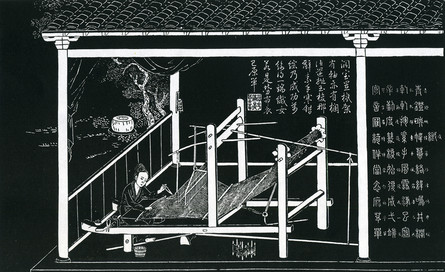
The Pictures of Weaving: In history and in The University Museum and Art Gallery

This talk is a rare opportunity to see an important work of art that dates to the Qianlong era, a scroll that has been seldom seen in public.

Two ink rubbings scrolls of the Pictures of Tilling and Weaving (or Gengzhi Tu 耕織圖) which were commissioned by the Qianlong emperor (1735-1796) have been joyfully reunited in the Huaihai Tang collection in Hong Kong. The project consists of the monumental reproduction of forty-eight scenes of agrarian labour and text related to them carved into forty-eight stone stele. Once the stones were carved, paper could be laid across them and then tapped with sponges full of ink to generate a black and white “rubbed” copy. In the case of the Qianlong rubbings, only two copies are known to exist with the Huaihai Tang version the sole complete copy.

This talk, focusing on the Pictures of Weaving, which will be on display, outlines the story of their production. According to Confucian Classics, silk is a lustrous fabric of divine inspiration. Various goddesses, sages and emperors and wives of sages or emperors are credited with inventing the processes needed to weave it. In contrast to these canonical textual references, during the 12th century, the Pictures of Weaving were inaugurated, designed to showcase the much more mundane steps undertaken by farming women in the manufacturing of bolts of silk. In the Qing era this genre experienced a vigorous revival stimulated by imperial patronage. This presentation introduces the implications of silk fabric within the history of China to then explore Qianlong’s motivations to commission paintings related to silk and its production. The talk concludes with a brief account of the provenance of the scroll, complete with a viewing of the scroll.

Speaker
Dr. Roslyn Hammers is an Associate Professor of art history in the Department of Fine Arts at The University of Hong Kong. She teaches courses on Chinese painting, South Asian art, and Asian architectural history. Her book entitled Pictures of Tilling and Weaving: Art, Labour and Technology in Song and Yuan China (Hong Kong University Press) was published in 2011. She is presently working on a study of Qing dynasty representations of agrarian labour.

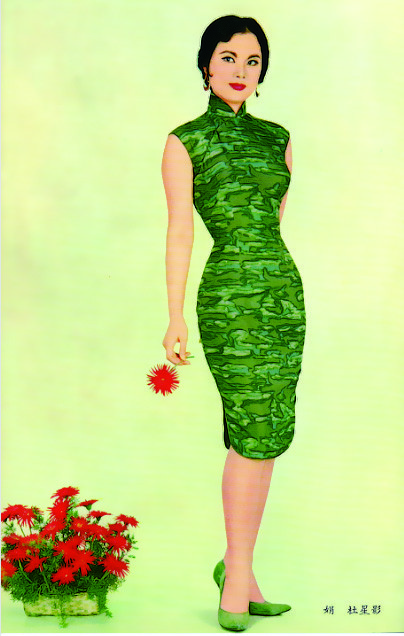
Learning from the 60s: Cheongsam as Daily Wear With Dr. Brenda Li

Cheongsam, a loaned word derived from a Chinese term literally meaning ‘long dress’, refers exclusively to a traditional Chinese female dress form that first came into vogue in Shanghai in the 1920s and saw its golden age in Hong Kong in the 1950s-1960s. Noted for its elegant body-hugging silhouette, exquisite Shanghainese tailoring, unique East-West appeal, amazing versatility and distinct national identity, this dress form was embraced by all local urban Chinese women in its heyday. Although the cheongsam ceased to be a mainstream outfit in Hong Kong after the 1970s, it continued to receive support from the local elite and on special occasions. The apparent revival of the cheongsam in the last two decades has seen this dress form in a new context and subjected to greater freedom of expression. However, reintroducing it back to our daily wardrobe has met many difficulties. Let’s see if the cheongsam images of the 1960s can throw some light
on this.

* Jointly presented with Cheongsam Connect.

雖然近年較多香港人使用「旗袍」一詞,其實「長衫」這地道說法在香港有悠久的歷史。戰前的「香港長衫」唯上世紀二十年代「上海旗袍」潮流馬首是瞻,但戰後卻能擺脫上海旗袍的影子而闖出新天地。大批南來的「上海裁縫」和他們的精湛「海派工藝」造就了二十世紀中葉香港長衫的「黃金時代」。長衫普遍成為香港城市女性的常服、便服及宴會服,將中華女性引以為傲的身分、端莊形象和東方美態發揮得淋漓盡致 。七十年代以後,雖然長衫不再是主流服,卻仍受不少精英階層的女性擁戴,並繼續成為喜慶宴會的最得體服裝。長衫潮流在二十世紀末明顯復甦,傳統與創新並存,中西更見融匯,然而要把長衫重新普及仍是困難重重。讓我們向上世紀中葉的光影圖像取經,看看有何玄機可以讓長衫重新回歸城中女性便服與常服的行列。

Speaker
Dr. Brenda Li holds a BA degree in Chinese literature and history from the University of Hong Kong and DPhil and MPhil degrees in Tibetan and Himalayan Studies from the University of Oxford. She is a multi-disciplinary scholar: Translator and writer in Chinese art and culture, project-based Researcher and Editor of the Hong Kong Museum of History and Hong Kong Heritage Museum, Instructor of Tibetan language and the ground breaking Certificate Course in Cheongsam Design and Production at HKUSPACE, and author of two books on Tibetan history and culture. She was Researcher of the exhibition “A Century of Fashion: Hong Kong Cheongsam Story” organised by the Hong Kong Museum of History in 2013. Dr. Li is an advocate of local cheongsam culture and she makes her own cheongsams.

講者簡介:
李惠玲為香港大學中國文學及歷史學士,英國牛津大學西藏與喜馬拉雅研究碩士與博士;資深中國文史美術翻譯及寫作人,藏學研究學者及作者,身兼多職及同時涉獵不同的學術範疇。現時為香港歷史博物館及香港文化博物館特約研究、翻譯及編校員,香港大學專業進修學院西藏語文導師,並為該學院新開創的「長衫製作及設計證書課程」講授香港長衫歷史和文化。曾為2013年香港博物館舉辦的「百年時尚:香港長衫故事」展覽作研究員並撰寫展覽目錄。李博士喜愛縫紉,所穿的長衫全是自己縫製,近年積極推廣本土的長衫文化。

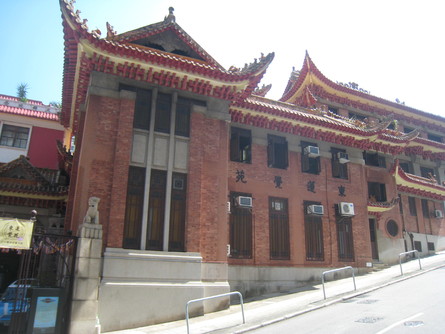
Guided Tour of Tung Lin Kok Yuen & F11 Photographic Museum

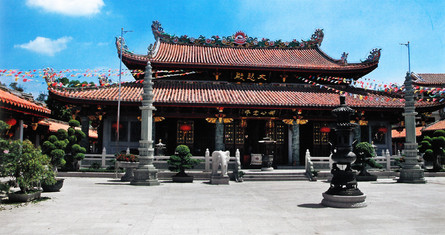
Happy Valley is a community of its own, with distinct character. It is one of the few neighborhoods in Hong Kong that retains its charm with human scale streets and urban landscape. It is also helped by the conservation of some of the neighborhood’s most interesting architecture. One of these is on the verge of a major study for a conservation project, and another was conserved and given a new lease of life.

Guided by Professor Puay-peng Ho, we will view the architectural and conservation aspects of the Tung Lin Kok Yuen and the F11 Photographic Museum, both buildings dating from the 1930s. Tung Lin Kok Yuen is a Buddhist establishment set up 80 years ago by Clara Cheung, wife of Sir Robert Ho Tung. It was the first Buddhist monastery on Hong Kong island dedicated to teaching the practices of Buddhism. The architecture has a distinctive Chinese flavour in line with some houses and churches built in the 1930s declaring a Chinese identity in a colonial society. The tour starts with a look at the building and the myriad of objects and plaques of historical significance in Tung Lin Kok Yuen. From there, we will walk to the F11 Photographic Museum, an Art Deco house which has undergone many changes in use and ownership. Meticulous conservation work was carried out to restore the building to its original design, while adapting it to the exact requirement of the new use.

The Chairman of Tung Lin Kok Yuen, Professor Lee Chack Fan will kindly welcome us and present an introduction about the monastery. A recipient of the Gold Bauhinia Star, Professor Lee was the former Pro-Vice-Chancellor of HKU and the Director of HKUSPACE, HKU, and the Director of Jao Tsung-I Petite Ecole and others.

At the F11 Photographic Museum, Mr. Douglas So, a new Pro-Vice-Chancellor of the HKU will also greet us and share his passion for conservation and photography. Mr. So was the Company Secretary and Executive Director of Charities at the HK Jockey Club. After leaving the HKJC, he founded the F11 Photographic Museum to promote photography and heritage conservation.

Resource Person
Professor Puay-peng Ho is the Director of Centre for Architectural Heritage Research at The Chinese University of Hong Kong. He serves on the Town Planning Board, the Antiquities Advisory Board and the History Museum Advisory Panel. His research interests and publications are in the areas of Chinese art and architectural history, vernacular architecture, and architectural theory. He is also actively involved in many architecture conservation projects in Hong Kong.

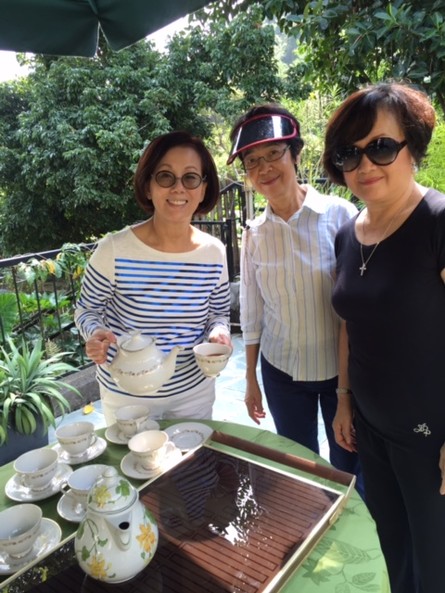
Saturday Morning with Barbara Park

Barbara Park moved from her home on the Peak where she lived for thirty-five years to a villa in Clearwater Bay last summer. Sadly, the main reason for the move is that this Peak home is now slated for demolition.

Her new home environment has a completely different microclimate, and she's been getting to grips with a long-neglected garden. Most of her collections (well known to many of our members) have fitted into the new house, and she welcomes us to see them on the 24 October.

Resource Person
Barbara Park is an Australian businesswoman who has lived in Hong Kong for fifty years, and is a Life Member of the HKU Museum Society.

She runs a business known as Plant-a-Park, designing and supplying man-made planting systems to commercial customers such as hotels, shopping malls, and casinos, from premises at 46 Peel Street, Central….look out for the elephant above the door.

She is a keen gardener, and has moved a year ago from Lugard Road, at the Peak, (with a totally shaded garden) to Clearwater Bay, and with a garden bathed in sunshine.

Her interests are Chinese porcelain, Asian handcrafts, especially puppets, food and wine, interior design and, of course, gardening. Members who are musically inclined are welcome to play on the 120-year-old Steinway.

The Art and Culture of Yixing Zisha Stoneware With Lai Suk Yee

Combining the treasures of two museums, this exhibition demonstrates and explores the artistic achievements and development of Yixing zisha stoneware, as well as its cultural significance and social impact. The exhibits include 168 items from the Bei Shan Tang Collection of the Art Museum of The Chinese University of Hong Kong and 50 items from the K.S. Lo Collection of the Flagstaff House Museum of Tea Ware, totalling 218 items. The exhibition is divided into two main themes. The first theme entitled – "The Culture and Connoisseurship of the Yixing Teapot" – is divided into seven sections: The Story of the Gongchun Teapot; Yixing Ware Dominates the Collecting Scene; Significance and Influence of Mansheng Teapots; Mengchen Teapots and Gongfu Tea; Elegant Works from the Late Qing Dynasty to Early Republican Era; The Modern Tradition; and Export Yixing Stoneware and Its Influence. The second theme centres on the uses of Yixing stoneware beyond tea culture, with special focus on archaistic vessels, elegant objects and naturalistic sculptures for the scholar’s studio.

Speaker
Lai Suk Yee is Researcher (Yixing Project) at the Art Museum, The Chinese University of Hong Kong. She was a graduate from the Department of Fine Arts, The Chinese University of Hong Kong. She then earned her MPhil degree from the School of Oriental and African Studies (SOAS), University of London. She has been working at the Art Museum since the late 1970s. She has rich experience in Chinese art exhibitions, contributing much to the exhibitions and providing academic research, entries and panel writing, translation and editing for the catalogues. In addition, she teaches in the Department of Fine Arts and the University's General Education programme. Lai Suk Yee’s research specialty is Chinese ceramics, and Yixing is her main interest. She has collaborated with Terese Tse Bartholomew on three Yixing ware exhibitions.

Chaozhou (潮州) – Shantou (汕頭) Architectural Excursion

This highly focused 3 day/2 night weekend-get-away tour to the Chaozhou-Shantou area of eastern coastal Guangdong led by Professor David Lung (龍炳頤) (HKU Architecture) and his good friend Mr. WU Guo Zhi (吳國智 Chaozhou conservation architect) will bring you the highlight of the architectural gems of the region.

The Chao-Shan region is well known for the production of the literati gentry and the merchant class. On the first day of this trip, we will be exploring the grand estate of the wealthy rice merchant, the Former Residence of Ci-Huang Chen (陳慈簧故居); it is the first of its kind of an overseas Chinese dwelling in the Lingnan area. This 500-room Chinese courtyard complex built in the early 20th century is decorated with the Art Nouveau ceramic tiles of European designs. In the evening after dinner, there will be leisure time for shopping and for tasting the Shantou snacks in the famous open food stalls.

We will spend the next full day exploring the historic city center of Chaozhou. Guang-ji Bridge (廣濟橋) is one of the four famed bridges in China. It was the first movable bridge built in Southern Song Dynasty (1171).

Kai Yuen Si (開元寺, 738) is well known for its vertical raft structural system; the only one of its kind found in Chinese monumental architecture.

The Lung Hu Rural Township (龍湖寨) is the home for migrant merchants who settled in the region since Song Dynasty; female ancestors were worshipped in the ancestral halls.

Yi-Lve Huang Ancestral Hall (已略黃公祠, 1887) has the most ornate wood carvings of the Qing classical style and is listed a National Cultural Heritage.

On the last day, before we head back for Hong Kong via the high speed rail, we will visit the privately funded Shantou University, showcasing of the modern-day Chaozhou-Shantou identity of the literati and the merchant tradition.

Resource Person
Lung, David P.Y. (龍炳頤)
Registered Architect, Professor of Architecture, Lady Edith Kotewall Professor in the Built Environment, David Lung is internationally recognized for his scholarship and work in the field of heritage conservation and World Heritage properties. He is instrumental in bringing to fruition three World Heritage Inscriptions: Historic City of Macao, Kaiping Diaolou and Villages, and the Historic Cities in the Straits of Malacca.

Wu Guo Zhi (吳國智)
Wu Guo Zhi is acclaimed for his scholarship and works in the field of conservation architecture in China.He is the chief conservation architect in Guangdong and one of the chief architects in the conservation of Hong Kong’s Po Lin Monastery. In Chaozhou, his works included the restoration of Guang-Ji Bridge, Pai-Fang Street and the Kaiyuan Temple and Ancestral Hall of Han Yu. A registered architect in China, Wu Guo Zhi is also a professor of architecture, senior engineer in architectural conservation, and authorized architect in the National Heritage Conservation (ICOMOS/CHINA) (中國古蹟遺址保護協會).
Journey to the East: Christianity in China in the Tang and Yuan Dynasties

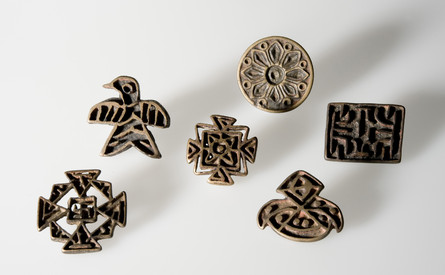
When Marco Polo described his travels across China in the late 13th century, he wrote of seeing “Nestorian” Christians in many towns, some of whom were high government officials. Scholars now know that this eastern form of Christianity was to be found in China already in AD 635. Besides the enigmatic crosses in the museum exhibit, other archaeological finds have slowly enlarged our knowledge of this movement. This illustrated lecture will trace the origins of this first appearance of Christianity in China, and describe what is known – and what remains unknown—about it.

Speaker
Dr. Glen L. Thompson is the Academic Dean and Prof. of New Testament and Historical Theology at the Asia Lutheran Seminary in Hong Kong. He has lectured internationally on the history and spread of Christianity, and the cultural exchanges resulting from it. He is an expert on the Church of the East (Jing Jiao-Nestorianism).

From River Ili to Syr Darya: The Land In Between With Dr. Joseph Ting 丁新豹博士

In conjunction with our autumn trip to Kazakhstan, the HKU Museum Society is organising a pre-trip lecture for the trip participants. However, please note that this PowerPoint presentation cum lecture by Dr Joseph Ting is open to everyone!

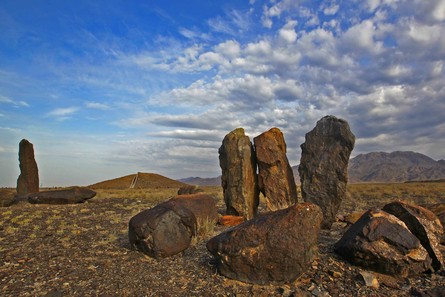
The stretch of land lying in between the two great rivers in Central Asia, located within present day Kazakhstan is rich in historical heritage as it was once a section of the celebrated Silk Road, the main thoroughfare of East and West in the olden days. Over two thousand years ago, it was the homeland of the Saka and Usun (烏孫) whose burial mounds, known as kargans are prominent sights in the Ili River basin. In one these kargans, archaeologists excavated bodies dressed in pieces of gold accompanied with horses adorned with deer horn. Known as the golden man of Issik, it is one of the greatest archaeological discoveries in Central Asia.

The legendary monk Xuanzang (玄奘) passed through present day southern Kazakhstan in his pilgrimage to India in 630 AD. He was greeted by the Kagan of the Gokturks, who controlled this section of the Silk Road at the time. It subsequently came under Chinese rule in 7th century when Tang power was at its height. But in 751AD, an allied Arab army vanquished Tang forces under the command of General Gao
Xianzhi, a Korean general, at Talas near present day Taraz, thus secured effective control over western central Asia. It was a turning point in history as it marked the decline of Chinese influence and the rise of Islam in central Asia. Shymkent, Otrar, Sayram and Turkestan in southern Kazakhstan were all caravan towns along the Silk Road which led to Tashkent and beyond. They flourished during the epochs of Karakhanid and Karakhitai but were razed to the ground by Genghis Khan’s forces. Remains of the Timurid period can still be seen.

Speaker
We are privileged to have as our guest speaker, Dr. Joseph Ting. He majored in Chinese Literature and Chinese History from HKU and graduated with a BA degree in 1974. He was conferred an MPhil in 1979 and a PhD in 1989, also from HKU. Dr. Ting joined the Hong Kong Museum of Art as an Assistant Curator in 1979 and was appointed Chief Curator of the HK Museum of History in 1995. He retired in 2007 after serving for 28 years. He is currently an Honorary Assistant Professor in the School of Chinese at The University of Hong Kong, as well as an Adjunct Professor in the Department of History at the Chinese University of Hong Kong.

He is Honorary Advisor to many art and cultural institutions, including the University Museum and Art Gallery in HKU, the HK Museum of Art, the HK Museum of History, the Shenzhen Museum and Guangdong Provincial Museum. He is also a Member of the Antiquities Advisory Board, the Lord Wilson Heritage Trust and the Education Bureau of Hong Kong, an Honorary Fellow of the HKU and Hong Kong Institute of Education, and was an Honorary Research Fellow at the Centre of Asian Studies.

Northern and Southern Ninepins With Professor Chan Lung-sang 陳龍生教授

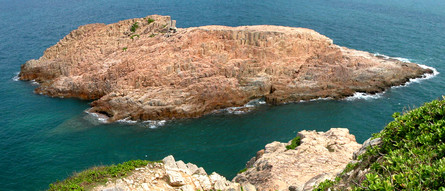
The Ninepin and Waglan Islands are the eastern-most islands in Hong Kong waters. Fabulous rock columns that formed 140 million years ago are exposed on the Ninepin Islands, a core area in the Hong Kong Geopark. The polygonal rock columns represent one of the few geological localities in the world where rock columns developed from cooling and contraction of volcanic ash. Remarkable features observed on the Ninepins include a giant rock slide and columns that have toppled and pointed sideways.

We will first land on the Northern Ninepin Island, take a short hike to view the hauntingly beautiful landscape on the island and learn about the geological formations. Boarding the boat once again, we then make another landing on Southern Ninepin Island.

Afterwards we will have a simple lunch on the boat while sailing towards Waglan Island. We’ll cruise around Waglan Island, viewing one of the oldest lighthouses and declared monuments in Hong Kong from our boat. In addition, we will observe some interesting sea arches and coastal features before returning to Central by about 17:00.

In case of adverse weather conditions or unfavourably high winds, we may have to modify or cancel the trip at the leader’s discretion.

Resource Person
We are very privileged to have Professor Chan Lung-sang (陳龍生教授) as the leader of the trip. Professor Chan is professor in Earth Sciences at the University of Hong Kong as well as College Principal of HKU SPACE Community College and HKU SPACE Po Leung Kuk Community College. He received his doctorate degree in geology from the University of California, Berkeley and is arguably the first Hong Kong native to receive formal training in geology. His research interests include tectonics of South China and Hong Kong, earthquake geology and applied geophysics. He is devoted to promoting Earth Science education, and has led field trips to South China, Tibet, Taiwan, North America, Australia, Italy, Cyprus, the Arctic region and Antarctica for students.