Journey to the East: Christianity in China in the Tang and Yuan Dynasties
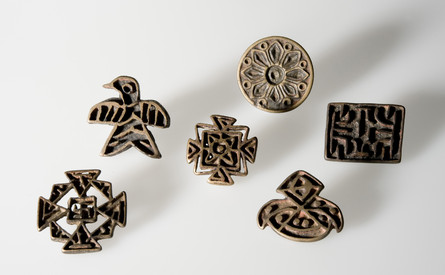
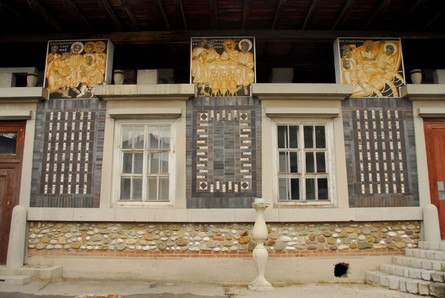
When Marco Polo described his travels across China in the late 13th century, he wrote of seeing “Nestorian” Christians in many towns, some of whom were high government officials. Scholars now know that this eastern form of Christianity was to be found in China already in AD 635. Besides the enigmatic crosses in the museum exhibit, other archaeological finds have slowly enlarged our knowledge of this movement. This illustrated lecture will trace the origins of this first appearance of Christianity in China, and describe what is known – and what remains unknown—about it.
Speaker
Dr. Glen L. Thompson is the Academic Dean and Prof. of New Testament and Historical Theology at the Asia Lutheran Seminary in Hong Kong. He has lectured internationally on the history and spread of Christianity, and the cultural exchanges resulting from it. He is an expert on the Church of the East (Jing Jiao-Nestorianism).

From River Ili to Syr Darya: The Land In Between With Dr. Joseph Ting 丁新豹博士

In conjunction with our autumn trip to Kazakhstan, the HKU Museum Society is organising a pre-trip lecture for the trip participants. However, please note that this PowerPoint presentation cum lecture by Dr Joseph Ting is open to everyone!

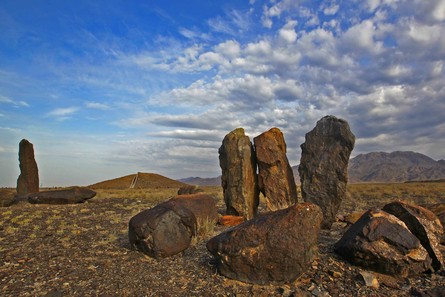
The stretch of land lying in between the two great rivers in Central Asia, located within present day Kazakhstan is rich in historical heritage as it was once a section of the celebrated Silk Road, the main thoroughfare of East and West in the olden days. Over two thousand years ago, it was the homeland of the Saka and Usun (烏孫) whose burial mounds, known as kargans are prominent sights in the Ili River basin. In one these kargans, archaeologists excavated bodies dressed in pieces of gold accompanied with horses adorned with deer horn. Known as the golden man of Issik, it is one of the greatest archaeological discoveries in Central Asia.

The legendary monk Xuanzang (玄奘) passed through present day southern Kazakhstan in his pilgrimage to India in 630 AD. He was greeted by the Kagan of the Gokturks, who controlled this section of the Silk Road at the time. It subsequently came under Chinese rule in 7th century when Tang power was at its height. But in 751AD, an allied Arab army vanquished Tang forces under the command of General Gao
Xianzhi, a Korean general, at Talas near present day Taraz, thus secured effective control over western central Asia. It was a turning point in history as it marked the decline of Chinese influence and the rise of Islam in central Asia. Shymkent, Otrar, Sayram and Turkestan in southern Kazakhstan were all caravan towns along the Silk Road which led to Tashkent and beyond. They flourished during the epochs of Karakhanid and Karakhitai but were razed to the ground by Genghis Khan’s forces. Remains of the Timurid period can still be seen.

Speaker
We are privileged to have as our guest speaker, Dr. Joseph Ting. He majored in Chinese Literature and Chinese History from HKU and graduated with a BA degree in 1974. He was conferred an MPhil in 1979 and a PhD in 1989, also from HKU. Dr. Ting joined the Hong Kong Museum of Art as an Assistant Curator in 1979 and was appointed Chief Curator of the HK Museum of History in 1995. He retired in 2007 after serving for 28 years. He is currently an Honorary Assistant Professor in the School of Chinese at The University of Hong Kong, as well as an Adjunct Professor in the Department of History at the Chinese University of Hong Kong.

He is Honorary Advisor to many art and cultural institutions, including the University Museum and Art Gallery in HKU, the HK Museum of Art, the HK Museum of History, the Shenzhen Museum and Guangdong Provincial Museum. He is also a Member of the Antiquities Advisory Board, the Lord Wilson Heritage Trust and the Education Bureau of Hong Kong, an Honorary Fellow of the HKU and Hong Kong Institute of Education, and was an Honorary Research Fellow at the Centre of Asian Studies.

Northern and Southern Ninepins With Professor Chan Lung-sang 陳龍生教授

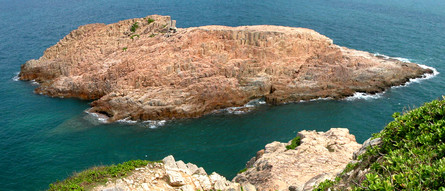
The Ninepin and Waglan Islands are the eastern-most islands in Hong Kong waters. Fabulous rock columns that formed 140 million years ago are exposed on the Ninepin Islands, a core area in the Hong Kong Geopark. The polygonal rock columns represent one of the few geological localities in the world where rock columns developed from cooling and contraction of volcanic ash. Remarkable features observed on the Ninepins include a giant rock slide and columns that have toppled and pointed sideways.

We will first land on the Northern Ninepin Island, take a short hike to view the hauntingly beautiful landscape on the island and learn about the geological formations. Boarding the boat once again, we then make another landing on Southern Ninepin Island.

Afterwards we will have a simple lunch on the boat while sailing towards Waglan Island. We’ll cruise around Waglan Island, viewing one of the oldest lighthouses and declared monuments in Hong Kong from our boat. In addition, we will observe some interesting sea arches and coastal features before returning to Central by about 17:00.

In case of adverse weather conditions or unfavourably high winds, we may have to modify or cancel the trip at the leader’s discretion.

Resource Person
We are very privileged to have Professor Chan Lung-sang (陳龍生教授) as the leader of the trip. Professor Chan is professor in Earth Sciences at the University of Hong Kong as well as College Principal of HKU SPACE Community College and HKU SPACE Po Leung Kuk Community College. He received his doctorate degree in geology from the University of California, Berkeley and is arguably the first Hong Kong native to receive formal training in geology. His research interests include tectonics of South China and Hong Kong, earthquake geology and applied geophysics. He is devoted to promoting Earth Science education, and has led field trips to South China, Tibet, Taiwan, North America, Australia, Italy, Cyprus, the Arctic region and Antarctica for students.

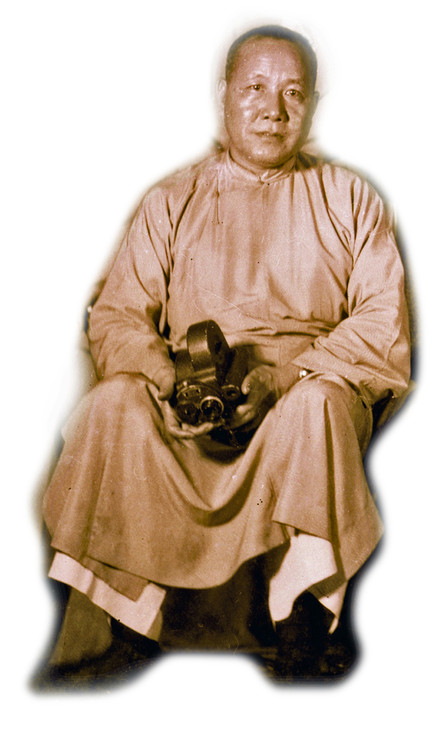
Through Grandfather’s Looking Glass: The Life and Times of Society in Hong Kong in the 1920s – 1930s with Andrew E. Tse

Since his retirement from the aviation industry in 2006, Andrew E. Tse has spent much of his time researching the history of his family, a Eurasian family which has played a prominent role in Hong Kong society since the mid 1800s. In documenting the family’s collection of personal photos, he came across an amazing collection of photos and film clips taken by his grandfather about to be sent to the trash man! Recognizing that this was a rare and invaluable historical record of the life and times in Hong Kong during a most tumultuous period in Chinese history, Andrew made it his personal mission to not only compile and categorize his grandfather’s old photos and film clips, but to conserve them for future generations.

When Andrew’s grandfather, Simon Tse Ka-po took up photography and cinematography in the early part of the 20th Century, it was considered to be an exceptional hobby. Movie films could not be developed locally and had to be sent all the way to San Francisco for processing. Accompanied by his camera, Tse Ka-po took it upon himself to record a variety of persons and events, including those considered significant such as the inauguration of the University of Hong Kong and Hong Kong & Shanghai Bank, as well as more usual family occasions such as tennis at the Kowloon Cricket Club and Sir Robert Ho Tung and his wife, Margaret’s 50th wedding anniversary party at the Peninsula Hotel.

Before his retirement, Andrew E. Tse was CEO of Macau’s East Asia Airlines, Hong Kong’s Heli Express and founder of Hong Kong Express Airways. He received both his university and post-graduate degrees in Canada. In sharing with us his compilation of his grandfather’s film clips and photos, Andrew will present a most fascinating overview of the life and times of Hong Kong in the 1920s and 1930s, essentially giving us a better understanding of the political and social sentiments of that era. As the Helena May was evident as the backdrop in many of the photos, it was only appropriate that Andrew’s presentation should also take place at the Helena May.

Let us go back in time to a more genteel era and have the pleasure of indulging in a cocktail and canapé reception at the elegant Blue Room of the Helena May!

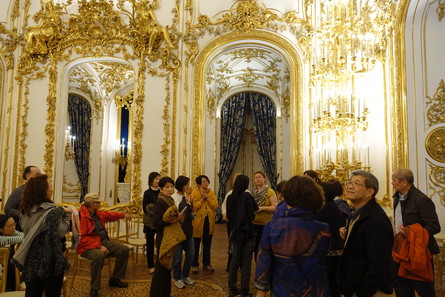
Eccentric Ebullience: Architecture and Nature in Austria and Slovenia With Professor Puay-peng Ho

The early 20th century was an exciting time for the development of art in Europe; the freedom and optimism allowed the artist to seek inspiration elsewhere and expression in non-classical forms. The high spirited epoch gave rise to an explosion of ideas in fine art, literature, music, product design and architecture. In all cases, ideas interflowed between these domains and the circle of creative minds influenced each other, with the result that similar messages were manifested in art and architecture alike.

The tour will focus on the art and architecture of Vienna, Graz and Ljubljana between 1897 – when Vienna Secession was formed – and 1940, at the beginning of World War II. We will trace the development of architectural styles through the works of Otto Wagner (1841–1918), Joseph Maria Olbrich (1867–1908), Adolf Loos (1870–1933) Josef Hoffmann (1870–1956), and Jože Plečnik (1872–1957). The distinguished volumetric form, elegant geometric lines, ebullient flowing space, sinuous natural motifs, riotous colours, and eccentric representations of their architecture made a concise journey through the major architectural movements of the early 20th century – beginning with stripped down Classicism, through Historicism, Art Nouveau or Jugendstil, early modernism, and eccentric post-modernism. In particular, the idea that architectural environment is a totality, Gesamtkunstwerk, resulted in the formation of communities of artists, designers and architects, such as the Secession and Wiener Werkstätte, for designing buildings, furniture, furnishings, silver, metal works and utensils as a holistic environment. As the highlight, we will trace the architectural expression of Jože Plečnik from Vienna to Ljubljana to explore this unusual creative mind in expressionism, culminating in the design for Žale, the city cemetery with individual buildings and chapels as representations of different architectural styles.

Resource Person
Professor Puay-peng Ho is Professor and Director of the School of Architecture, and Director of Centre for Architectural Heritage Research at The Chinese University of Hong Kong. He received his First Class Honours degree in Architecture from the University of Edinburgh and a Ph.D in Art History from the School of Oriental and African Studies, University of London. Professor Ho is a member of the Royal Institute of British Architects and the Society of Architectural Historians. Currently, he serves on the Town Planning Board, Antiquities Advisory Board and History Museum
Advisory Panel, and is Chairman of the Council of Lord Wilson Heritage Trust. His research interests and publications are in the areas of Chinese art and architectural history, vernacular architecture, and architectural theory. He is also involved in many architecture conservation projects in Hong Kong..

Bonhams Auction 2015 with Steven Zuo

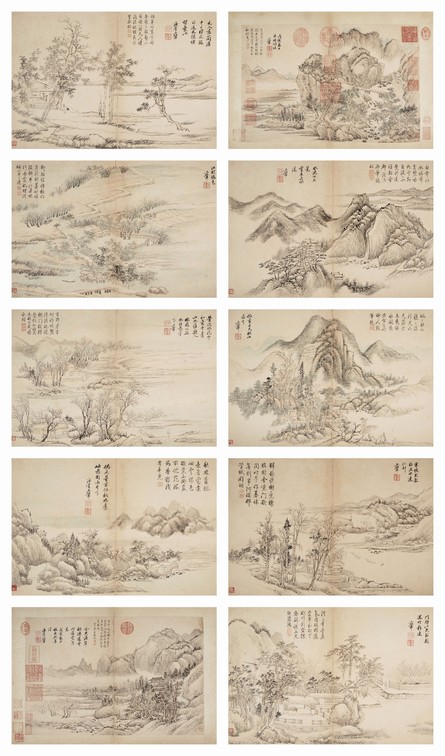
In conjunction with the spring auction of Bonhams, we are pleased to organise a guided walk to view Chinese Painting and Calligraphy with Steven Zuo (左昕陽先生), Director of Chinese Paintings, Bonhams Hong Kong.

Some of the highlights we will see include:
Wang Hui (1632–1717), "Landscape", 1698,
Ink and colour on paper, album of ten leaves.
Dated 1698. 25.7 x 39 cm
王翬 (1632–1717)
乾隆御題王翬山水冊,一六九八年作
水墨設色紙本  冊頁十開
25.7 x 39 厘米

Colophons inscribed by the Qianlong Emperor in 1773 with seals.
Published in "Qing Gaozong Yuzhi Shiwen Quanji" (A Complete Collection of Documented Literary Writings and Poems of Emperor Qianlong) "Yuzhi Shi Siji" (Imperial Poems, Collection 4), Juan 10 (Vol. 10), pp. 18-19.
一七七三年乾隆御題詩全文,著錄於《清高宗御製詩文全集》
「御製詩四集」卷十,頁十八至十九

There are also other artworks from influential painters, including Zhang Daqian
張大千, Huang Junbi 黃君璧, Fu Baoshi 傅抱石, Li Xiongcai 黎雄才, Cheng Shifa
程十髮 and Li Kuchan 李苦禪.

Resource Person
Steven Zuo joined Bonhams Hong Kong in January 2014 as Director of Chinese Paintings. He started his career at Bengbu Museum in An Hui Province in 1997 where he was a curator and researcher of Chinese paintings and calligraphy, focusing on authentication. He arranged exhibitions of Chinese paintings and calligraphy as well as archaeological discovery.

Steven has a MA in Art History from the Central Academy of Fine Arts in Beijing where he studied from 2003 to 2007. His academic area includes the authentication of Chinese paintings and calligraphy as well as the history of art collection.

In 2006, he worked as a specialist of Classical Chinese paintings at a leading Chinese auction house in Beijing, and was appointed Head of the Classical Chinese Paintings department in 2009. He was in charge of the department until December 2013, achieving many successful auction sales.

He has also set up exhibitions of Classical Chinese paintings and calligraphy at Poly Art Museum, including "Song Yuan Ming Qing – the important collection of Classical Chinese paintings and calligraphy".

Members and friends are welcome to view the other galleries after the tour.

Great Minds Think Alike – a study visit to the Liang Yi Museum

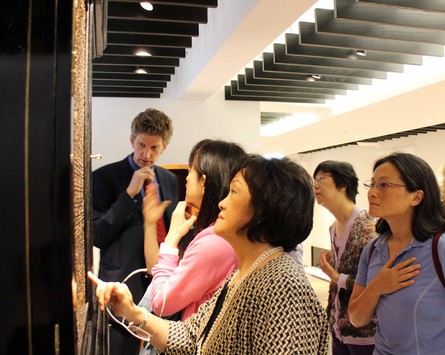
Liang Yi Museum curator Bonnie Lau and UMAG director Dr. Florian Knothe will guide you through the temporary special exhibition Great Minds Think Alike, currently presented in collaboration with Gallerie Kraemer, in Hong Kong’s recently opened and formidably presented private furniture museum. Experts of Chinese and French furniture, our guides will introduce the display of juxtaposed Chinese and French eighteenth-century pieces and explain the similarities and differences in design, material usage and manufacturing techniques.

For centuries, Europeans were enthusiastic about Chinese works of art they knew through rare imports and royal gifts. The French loved and assimilated Chinese art objects, pictorial themes and patterns, and sometimes turned them into French objets d’art by using lacquer panels on indigenous furniture or mounting porcelain vases with gilt bronze mounts. As much as the original Asian objects stimulated their imagination, the shape and décor of Chinese furniture found admirers and imitators in Paris, and increasing numbers of Western homes incorporated chinoiserie design in their interior decoration.

Resource Persons

Dr. Florian Knothe studies and teaches the history of decorative arts in the 17th and 18th centuries with particular focus on the social and historic importance of royal French manufacture. He has long been interested in the early modern fascination with Chinoiserie and the way royal workshops and smaller private enterprises helped to create and cater to this long-lasting fashion. Dr. Knothe is currently working on the scientific developments of glassmaking in Qing China, bringing together results from both historical and chemical analysis.

Dr. Knothe is the Director of the University Museum and Art Gallery and has honorary appointments in the University’s Fine Arts department as well as in the Institute of Humanities and Social Sciences. Dr. Knothe started his career at The Metropolitan Museum of Art focusing on European Sculpture and Decorative Arts. Later, Dr. Knothe was the curator of European glass at The Corning Museum of Glass overseeing the European and East Asian departments. There, he organized an exhibition on East Meets West, and afterward, lectured internationally on cross-cultural influences in art and workshop practices in Western Europe and East Asia.

Bonnie Lau joined the Liang Yi Museum at its inception and is in charge of the guided museum visits and organises its public lecture programmes. Majoring in business, she has extensive knowledge of Chinese furniture and cabinet making techniques as well as the traditional furniture business in Hong Kong.

From Modernist Rationality to Eclectic Plasticity: The Development of Architecture in Austro-Hungarian Empire in early 1900s With Professor Puay-peng Ho

Modernist architectural conception has a century-long history. Part of the early development of this stylistic movement can be traced to Vienna, the capital of the Austro-Hungarian empire. Here, modernist discourse in the art and architecture arose following theoretical underpinning from German architect-writers such as Gottfried Semper (1803-1879). Many stimulating exhibitions had been held on the theme of Vienna 1900, and parallel development in architecture radiating out to other cities of the large empire was equally exciting. In 1896, Otto Wagner (1841–1918) published “Moderne Architektur” both as a cornerstone for his newly appointed professorship in architecture at the Akademie der bildenden Künste Wien and as a manifesto for a new approach to architecture. The completion of the Vienna Secession building by Joseph Maria Olbrich signified the departure from the classical tradition in architecture. Interest at the time was on the nature of architecture, ornaments, construction, new materials, and the spirit of the age.

Presented in conjunction with the Museum Society’s upcoming cultural trip “Eccentric Ebullience: Architecture and Nature in Austria and Slovenia” with Professor Puay-peng Ho, this lecture will follow the development of the architectural style of the time by looking at the works of Wagner, Aldof Loos (1870–1933), Josef Hoffmann (1870–1956), and, last but not least, Jože Plečnik (1872–1957).

Speaker
Professor Puay-peng Ho is Professor and Director of the School of Architecture, and Director of Centre for Architectural Heritage Research at The Chinese University of Hong Kong. He received his First Class Honours degree in Architecture from the University of Edinburgh and a Ph.D in Art History from the School of Oriental and African Studies, University of London. Professor Ho is a member of the Royal Institute of British Architects and the Society of Architectural Historians. Currently, he serves on the Town Planning Board, Antiquities Advisory Board and History Museum Advisory Panel, and is Chairman of the Council of Lord Wilson Heritage Trust. His research interests and publications are in the areas of Chinese art and architectural history, vernacular architecture, and architectural theory. He is also involved in many architecture conservation projects in Hong Kong.

Visit to the Mountain Monastery of Tsz Shan (慈山寺) With Professor Puay-peng Ho

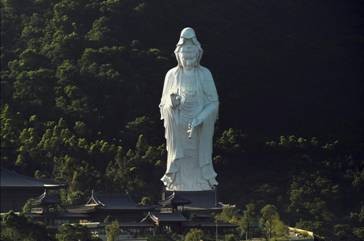
Tsz Shan Monastery (慈山寺), literally the Monastery of Mountain of Mercy, is a new Buddhist retreat designed to provide a tranquil environment for worship and meditation as well as for teaching and education. Set in the lush hillside at the foot of Pat Sin Leng in Tai Po, the design of the mountain retreat takes advantage of the setting and the view to the expansive Tolo Harbour providing many opportunities for meditation on the ground. The main group of buildings occupying the central position with a series of buildings and courtyard culminating at
the Great Buddha Hall evokes a quiet sense of majesty befitting the power of the Buddha. While the monastery emulates the ambience of a Tang dynasty building complex, with the buildings patterned after surviving buildings of the period in scale, proportion and outlook, the construction of these buildings utilizes modern technology. This is also the spirit behind the making of the colossal image of Guan Yin, rising 70 meters high from the base constructed with bronze pieces finished with a self-cleaning paint. We are delighted that Professor Puay-peng
Ho who is the chief consultant behind the architecture and sculpture of the monastery will guide us on the tour.

Resource Person
Professor Puay-peng Ho is Professor of the School of Architecture, and Director of Centre for Architectural Heritage Research at The Chinese University of Hong Kong. He received his First Class Honours degree in Architecture from the University of Edinburgh and a Ph.D in Art History
from the School of Oriental and African Studies, University of London. Professor Ho is a member of the Royal Institute of British Architects and the Society of Architectural Historians. Currently, he serves on the Town Planning Board, Antiquities Advisory Board and History Museum Advisory Panel, and is Chairman of the Council of Lord Wilson Heritage Trust. His research interests and publications are in the areas of Chinese art and architectural history, vernacular architecture, and architectural theory. He is also involved in many architecture conservation projects in Hong Kong.

Auctions in Asia Guest Speaker – Kevin Ching

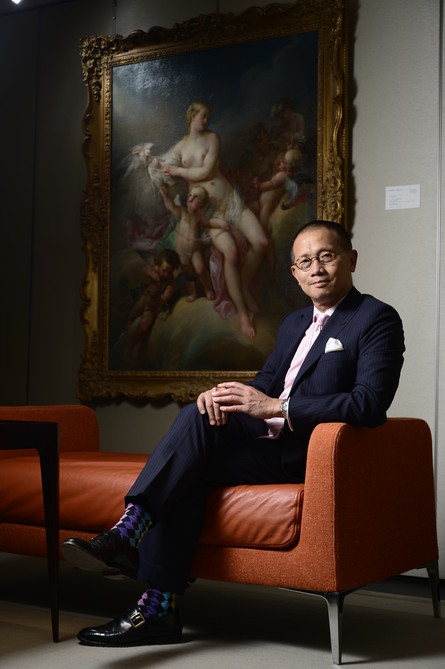
The Executive Committee is pleased to present Kevin Ching, Chief Executive Officer of Sotheby’s Asia as the guest speaker for this year’s AGM. A collector of Chinese jade, Kevin is a charismatic speaker who pens poems while flying and leaves them on the plane for others to discover. Never short on humour, he has taken comical pictures of himself in his hotel room, pretending to jump over Taiwan’s tallest building.

Speaking on Auctions in Asia, he will share with us what makes art valuable, and whether art is a form of investment. If so, how does it differ from the more conventional stock and real estate markets? As CEO for Sotheby’s in Asia for the past 9 years, Kevin has witnessed the phenomenal rise of Greater China to become one of the biggest markets in the art and auction world. He will share with us many of his interesting experiences, observations and world records.

Speaker
Kevin Ching was educated in Hong Kong and England, and holds a Master’s degree in Law from University of London. He studied English law, Soviet law, Air and Space law as well as Customary and Modern Chinese law. During his legal practice, he was a partner at Johnson Stokes & Master and Chief Representative of its Beijing office. He specialised in the areas of banking, international shipping, commercial law, investments in China as well as Sino-foreign joint ventures and arbitration.

Prior to joining Sotheby’s Asia, he was Board Executive Director and Legal Counsel for Dickson Concepts (International) Limited (1994–2006), in charge of the company’s legal and general business affairs, with special responsibilities in China. As Chief Executive Officer of Sotheby’s Asia since 2006, he is responsible for developing the strategic expansion in the region, particularly into mainland China.