Reclaiming the City as Home – An Architecture Trip to Taichung & Tainan With Corrin Chan

Urbanization has reduced creativity, joy and the connection between ourselves and nature. Vast economic growth has led us to build more and more, higher and higher. Yet, at the same time, people are not happier and healthier with this growth. In recent years, instead of blindly developing, various cities have tried to re-capture the joy and enjoyment of the city through new architecture and urban design. We start looking into our own traditional, cultural, historical context while modernising our cities.

In this short trip to Taiwan, we begin by visiting the emerging new city Taichung, examining its effort in re-claiming the city for people. In the last two days, we will visit Tainan, the emerging ‘old’ city of Taiwan.

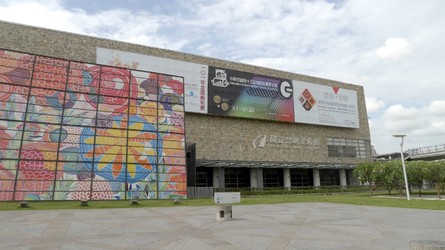
In Taichung, we will see how old buildings have been creatively rejuvenated. The emphasis on art and culture as forces of revitalisation will be obvious in the places we will visit. We visit the beautiful and serene Fu-Gui Sanyi Art & Culture Gallery (富貴三義館), the latest Asia Museum of Modern Art (亞洲現代美術館) by Tadao Ando and the newly opened Taichung Metropolitan Opera House (台中大都會歌劇院) by Toyo Ito. Miyahara (宮原眼科) and Ice-cream Parlour (第四信用合作社) are two excellent examples of transforming old buildings into up-beat fashionable hot-spots of the town. Fantasy Story Green Ray (范特喜綠光計畫), Taiwan Water Market (台水宿舍商場) and Chung Shun Market (忠信市場) are attempts in Taichung to rejuvenate old buildings and fabric as new living, shopping and art spaces.

After Taichung, we head to Tainan, the oldest city in Taiwan and a living museum for us to read into the history of Taiwan. Streets are important gathering places as they are like living rooms of the city. It is where we get together and feel connected. In this trip, we will visit Haian Road (海安路) where we will see the use of art to rejuvenate an old street, also Sheng Lung Street (神農街) and Jhenging Street (正興街). Along these streets, we can sense their warm and touching stories, their hardship and their new life. We see tea houses, book shops, cafés, Minshu (民宿), architect’s office and dining room for the community.

Resource Person
Corrin Chan is Director of AOS Architecture and is a registered architect in Hong Kong. She is vice-chair of Hong Kong Architecture Centre and Chair of Board of Internal Affairs of the Hong Kong Institute of Architects. She received her Master of Science in Architecture and Urban Design from Columbia University New York and Master in Architecture (Distinction) from the University of Hong Kong.

Corrin has had an extensive working experience in architecture and interior both in Hong Kong and in America. Corrin was involved in curating exhibitions, architecture book publications, writing articles on architecture, art installation works and collaborations with other disciplines. She has curated several exhibitions: ‘Reveal 築自室’, ‘朝行晚拆’,‘HK97 International Ideas Competitions’. She is co-author for several books: 〈2021 Emerging Hong Kong Young Architects〉, 〈空間的故事〉, 〈建築師的見觸思〉, 〈熱戀建築〉, 〈the 逼 City〉. Corrin has collaborated in spatial design for performances: ‘The Duras Project: Moderato Cantabile/ C’est Tout’, ‘Threshold’ in New York and ‘The Notes from a Schizophrenic City’.

Corrin loves to travel. She has led tours for the HKU Museum Society as well as for the Hong Kong Architecture Centre to Taiwan and Korea.
Visits to Sangwoodgoon (生活館) and Oi Yuen Villa (愛園別墅)

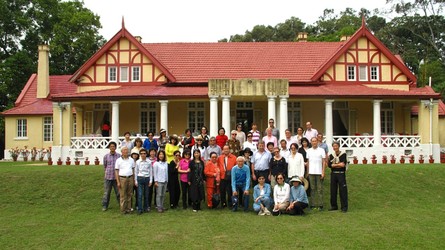
The Society is excited to present a day in the New Territories! We begin with a visit to Sangwoodgoon, an organic farm experimenting with new concepts in farming and healing our planet earth. Toting nature’s best, we will then visit Oi Yuen Villa, a private colonial estate once described as a “Ladies (Golf) Club House”. Under their veranda, we will enjoy a catered lunch of farm-to-table vegetables, freshly roasted piglets and some Hakka regional specialties.

Sangwoodgoon: A pioneer farming community for a sustainable future
Ghandi once said, “be the change you want to see in the world”. Sangwoodgoon (生活館) meaning “living pavilion” in Cantonese, lives the change they want to see in Hong Kong.

Established 4 years ago, Sangwoodgoon members have incorporated permaculture principles into farming, planting vegetables according to their seasonality and experimenting with rice plantation in order to create a Community-Supported Agriculture (CSA). Members began to develop their own interest and research field through regular farming routines. These included fermentation, photography, traditional food processing, agricultural history of Hong Kong, positive designs and film festivals. They strive to be a pioneer farming community preparing for the inevitable energy decline and its effect on global capitalism.
On a global level, Sangwoodgoon is part of a movement of small scale organic farmers who wish to lessen our civilization’s reliance on depleting natural resources and reduce dependency on industrial farming and its harmful effects to our planet.

On a local level, they are linked with groups of environmentalists who seek to preserve farmlands and natural reserves, not only to strive for a 30% vegetable self-sufficient target (current vegetable self-sufficient rate is 1.8%), but also to grow vegetables in ways that are healthy for human consumption, healthy for the soil, and healthy for the water, creating a sustainable way of living in harmony with nature.

On a human level, they wish to live a healthy and enriching lifestyle that builds a culture based on cultivating and sharing the planet’s environment with other plants, animals (humans being one of many), insects and micro-organisms. During this farm visit, you will witness how farmers experiment with new concepts of farming and heal the planet with every small step. After all, we as humans are part of nature.

Oi Yuen Villa
The Oi Yuen Villa (愛園別墅) was built before 1919 as a blend of Tudor and Classical architecture styles. Old records described it as the “Ladies Club House” which indicates that it might have been historically associated with the nearby Fanling Golf Club. It was owned by Jardine Matheson & Company Limited from 1922-1946. In 1957, it became the private residence of Mr. Hui Oi-chow (訐愛周, 1881-1966) and renamed Oi Yuen Villa.

A prominent businessman from Zhanjiang, Mr. Hui was a generous philanthropist active in charity and education in Hong Kong and China. In 1981 the Hui Oi Chow Science Building (許愛周科學館) at The University of Hong Kong was named in his honour. Today, his family continues his tradition of giving and service to the community. For our visit, the Hui family will kindly open their home to our members as part for our New Territories outing. The large estate with mature trees and open grounds will be a perfect setting to enjoy a lunch of delectable specialties and freshly harvested organic vegetables of the season – a rare farm-to-table treat for Hong Kong urbanites!

Asian Art Hong Kong with Yifawn Lee

The second edition of Asian Art Hong Kong (AAHK), a non-profit event organized and presented by Orientations magazine to celebrate Asian art, will take place on 2 – 11 April 2015. AAHK aims to promote high quality Asian art from the antiquities to the contemporary via a carefully designed series of events and programmes. With participation from the city’s foremost galleries, museums, institutions and auction houses, the week of talks, events, educational tours, and special exhibitions will bring together both public and professionals from across the globe. This year’s lecturers include Dr. Chen Shen of the Royal Ontario Museum and Vice-Director Wei Xuefeng of the Sichuan Museum. For details about the participants and events, please visit www.asianarthk.com.

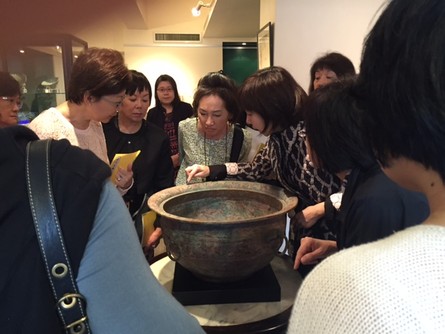
In this special tour Yifawn Lee, Founder of AAHK and Publisher of “Orientations” magazine, will take us to visit selected participating galleries. Featured will be highlights of Chinese furniture, Himalayan art, Chinese works of art and sculptures.

Resource Person
Yifawn Lee is the Publisher of “Orientations” magazine. She completed her BA at Columbia University with a double major in East Asian Languages and Cultures and Economics, and earned a Master’s in Economics from the London School of Economics and Political Science. She later moved to Hong Kong, working for a brief period in investment banking at Lehman Brothers. Having always been interested in Asian history, art and culture, she subsequently returned to London to study for a further MA in East Asian Art at Sotheby’s Institute of Art. Now as publisher of the 46 year-old "Orientations" magazine, she combines her business skillset with her passion for the arts.

3rd Edition of Art Basel in Hong Kong

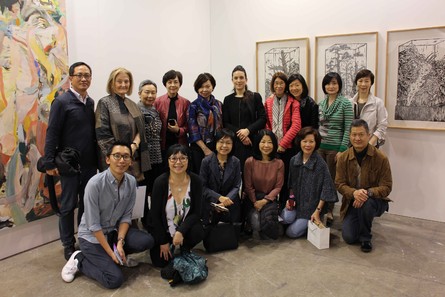
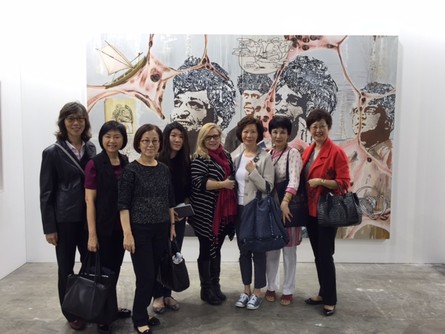
Considered to be one of the leading international art shows for contemporary art, Art Basel Hong Kong will be presenting its 3rd edition from the 15–17 March 2015 at the Hong Kong Convention and Exhibition Centre. With half of the participating galleries coming from Asia and Asia-Pacific, Art Basel in Hong Kong assumes a significant role in the international art world in providing a portal to the region’s local artists as well as giving overseas galleries a platform to show their highest quality works.

This most recent edition of Art Basel in Hong Kong will showcase both modern masters as well as emerging talents from both Asia and the West, as it traces twelve decades of art history across its six sectors: Galleries, Insights, Discoveries, Encounters, Magazines and Film. On display will be works from the 20th and 21st centuries by more than three thousand artists from Asia and around the world. For art collectors, artists, dealers, curators, critics and art lovers, Art Basel in Hong Kong promises to be a lively occasion for cross-cultural exchange.

AXA ART, the official provider of VIP tours for Art Basel in Hong Kong, has graciously agreed to arrange a special tour of the fair’s highlights for the Museum Society. As an established market leader in providing specialty insurance coverage for private and corporate collections, the AXA ART team comprises of dedicated international art specialists who will be expertly guiding our visit to Art Basel in Hong Kong. The guide will welcome our group at the VIP Collectors Lounge by giving us a quick overview of what we can expect to see during our specially guided tour of Art Basel in Hong Kong.

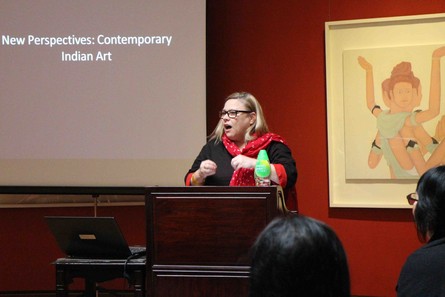
New Perspectives: Contemporary Indian Art – Part 2 With Dr. Kathleen Wyma

As a sequel to the public lecture on Saturday, 14 March 2015, Dr. Kathleen Wyma will guide us on a tour of the contemporary Indian art exhibited at the Art Basel in Hong Kong 2015.

Speaker
Dr. Kathleen Wyma is an Assistant Professor in the Department of Fine Arts at The University of Hong Kong. Her research focuses on post-1945 Indian art, with a special interest in issues of post-colonialism and the impact of intercultural exchange in an increasing globalized art world. She has published numerous articles, and exhibition catalogues, as well as curated a number of contemporary art exhibitions in India. Her forthcoming article, “Counter Praxis: The Indian Radical Painters and Sculptors Association” focuses upon a Kerala-based artistic collective who, through a series of exhibitions and interventions, raised questions about the theoretical and political assumptions of Indian contemporary art as it developed throughout the 1980s.

Villas of the Italian Nobility – Verona and the Largo di Garda

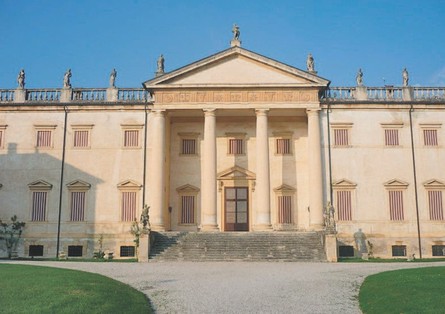
Verona, on the western edges of the Veneto, and the Lago di Garda, quite literally the border between the Veneto and Lombardy, remain exclusively outside traditional tourist destinations. Here, hidden amongst some of northern Italy’s most scenic landscapes, many of the Italian nobility chose to build, what are now little-known, architectural gems.

This tour is unique in that the important private homes that we shall be visiting are not usually open to the public. The owners, predominantly members of the Italian aristocracy, have very kindly agreed to open their homes to us on this occasion, and it is this rare opportunity that gives this exclusive tour its particular cache. Individual guided tours of these villas and palazzos, very often led by the owners themselves, some of whom have very kindly consented to host our group to lunches or dinners, will enable us to explore the rise of the nobility in this picturesque, often unexplored, region of northern Italy. In conjunction with short walking tours in Verona, the cultural capital of the area, our aim is to provide an understanding of the cultural developments of this little-studied, but extremely significant, region on the north-west hinterland of Italy’s Veneto.

Resource Person
Graduating in the 1970s, Michael Borozdin-Bidnell spent many years as a London-based interior designer, working internationally as a Senior Partner and travelling extensively in Europe, America and both the near and far East.

Becoming a Master of Science in the mid-1990s, he joined the Georgian Group, the UK National Amenity Society, a charitable organisation established in 1937 to campaign for the protection of 18th century and early 19th century buildings in England, as Head of Research and Information. Since then he has written and lectured extensively, both in the UK and overseas, as an architectural historian and has led overseas cultural tours in Europe for the past nine years. He is currently in the final year of a Doctorate in Architectural History.

The Land Between the Celestial Empire and Central Asia With Dr. Joseph Ting

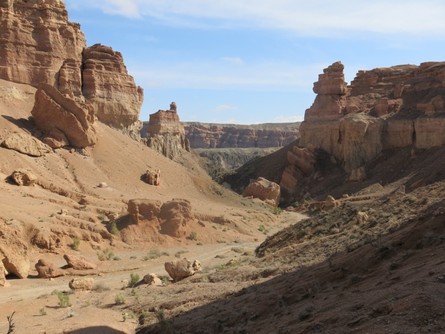
On this segment of the Silk Road, we are going to visit Southern Kazakhstan, the region connecting Xinjiang, China with Uzbekistan in Central Asia, traveling from River Ili to Amur Darya, visiting Issyk, Tamgaly, Talgar, Almaty, Taraz, Shymkent, Otyrar and Sayram along the way. Many of these towns were once important stops along the celebrated Silk Road, the major thoroughfare between East and West before the Great Discovery. The great Buddhist monk and traveller Xuanzang (玄奘) passed through the area in 630AD on his pilgrimage to India. The famous Battle of Talas when Tang forces were vanquished by an Arab army in 751AD, drove the Chinese out of Central Asia and resulted in the spread of Islam in the ensuing years. In 1222, Qiu Chuji (丘處機), the legendary Daoist master also set foot on this region on his way to Hindu Kush to meet with Genghis Khan.

This region is rich in history and culture. Nomads from the steppes and sedentary civilizations left behind petroglyphs, sites of worshipping places of Zoroastrianism, Nestorianism and Manichaeism, as well as mausoleums and magnificent mosques. Apart from rich cultural heritage, we will also appreciate the breathtaking scenery and unique geological formations of the region.

Resource Person
Dr. Joseph Sun Pao Ting (丁新豹博士) was born in Guangzhou and raised in Hong Kong. He majored in Chinese Literature and Chinese History at The University of Hong Kong (HKU) and graduated with a BA degree in 1974. He was conferred an MPhil in 1979 and a PhD in 1989, also from HKU.

Dr. Ting joined the Hong Kong Museum of Art as an Assistant Curator in 1979 and was appointed Chief Curator of the Hong Kong Museum of History in 1995. He retired in 2007 after serving for 28 years. He is currently an Honorary Assistant Professor in the HKU School of Chinese, and was an Honorary Research Fellow at the former Centre of Asian Studies. He is an Adjunct Professor in the Department of History at the Chinese University of Hong Kong and a Member, inter alia, of the Antiquities Advisory Board, the Lord Wilson Heritage Trust and the Education Bureau of Hong Kong.

Dr. Ting is an Honorary Advisor to the Hong Kong Museum of Art, the Hong Kong Museum of History, the Hong Kong University Museum and Art Gallery, the Shenzhen Museum and the Guangdong Provincial Museum. He is an Honorary Fellow of the HKU and Hong Kong Institute of Education.

New Perspectives: Contemporary Indian Art – Part 1 With Dr. Kathleen Wyma

In 2005, for the first time in the history of the prestigious Venice Biennale, India had its own pavilion. In the years since then, the profile and market value of contemporary Indian art has significantly increased. Indeed many international collectors first stood up and noticed the lucrative potential of contemporary Indian art when Christie’s (New York) placed Tyeb Mehta’s “Mahisasura” on the auction block in 2006, where it fetched US$1.58 million far surpassing the list value of US$600,000. India’s participation in international exhibitions and art fairs such as Art Basel and the recent arrival of its own homegrown art extravaganza, the Kochi Muziris Biennale, have fueled further interest. Although these events mark a recent change in international reception, contemporary art is not new to the subcontinent and it has a unique history that parallels the passage from colonialism to the present. With an eye on historical development and the importance of cultural context, this talk is designed as an introduction to the contemporary art of India.

Speaker
Dr. Kathleen Wyma is an Assistant Professor in the Department of Fine Arts at The University of Hong Kong. Her research focuses on post-1945 Indian art, with a special interest in issues of post-colonialism and the impact of intercultural exchange in an increasing globalized art world. She has published numerous articles, and exhibition catalogues, as well as curated a number of contemporary art exhibitions in India. Her forthcoming article, “Counter Praxis: The Indian Radical Painters and Sculptors Association” focuses upon a Kerala-based artistic collective who, through a series of exhibitions and interventions, raised questions about the theoretical and political assumptions of Indian contemporary art as it developed throughout the 1980s.

Saturday Guided Walk through Causeway Bay, Tin Hau and North Point With Cheng Po Hung (鄭寶鴻)

漫遊港島東區
多年來,香港大學美術博物館名譽顧問、著名香港歷史學家鄭寶鴻先生曾替我們導覽灣仔、跑馬地、銅鑼灣一帶。這次,鄭先生將會帶領我們探索港島東區:由銅鑼灣開始,經天后、至北角止,與大家一起回溯這個地區的起源及發展,以及街道命名的由來。

瀏覽街道及景點
高士威道:緬懷怡和東角貨倉、糖廠、鑄幣廠、東區遊樂場、渣甸紡織廠;途經舊避風塘、馬球場、民新片場、天后廟及虎豹別墅。

電器道:追憶戰後的花市、安樂園及廣生行的工廠、第二代電燈廠、屈臣氏汽水廠、蜆殼油庫、敬記船廠、七姊妹泳灘。

英皇道:憑弔兩旁的山崗、電車路的轉變、天后廟山、芽菜坑、炮台山;璇宮、皇都及新都城戲院;雲華、麗宮夜總會;月園遊樂場、名園遊樂場及名園西街;商務印書館及書局街和馬寶道、春秧街和四十間、聯益貨倉及和富中心、中巴車廠和港運城。

鄭先生沿途亦會介紹「小上海」的輝煌歲月,以及與我們分享當時的消費場所和名店、北角台和北角半山豪宅的故事及歷史。

Overview
Cheng Po Hung, UMAG honorary advisor and renowned Hong Kong historian will guide us through the districts of Causeway Bay, Tin Hau and North Point. This is a continuation of Cheng's previous walk where we explored Wanchai, Happy Valley and parts of Causeway Bay. This time we will meander through nooks and crannies of Causeway Road, Electric Road and Kings Road. He will share interesting tales about their landmarks, factories, cinemas and famous organisations. In particular he will talk about “Little Shanghai” a popular nickname for the North Point area, as well as the origin and historical development of these districts.

“Flowing Stories” – A Film by Jessey Tsang Tsui-Shan an ode to village life and a journey in search of Hong Kongers’ collective roots

The HKU Museum Society and the Jaderin Club are delighted to jointly present the private screening of Flowing Stories, winner of the Best Documentary Film at the 14th South Taiwan Film Festival by filmmaker Jessey Tsang Tsui-Shan.

Through the depiction of recurring partings and reunions of villagers and the intimate details of their lives, Flowing Stories examines issues about urban and rural development. Filmed on location in Hong Kong and in various cities in France and Great Britain, the film is an ode to village life and a journey in search of Hong Kongers’ collective roots. Tsang’s camera records the beautiful scenery and time-honored customs of a local village, as well as a once-a-decade village festival, which serves as a continuation of a tradition passed down through the generations and a testament to the loving bonds among family members. When people are facing so much uncertainty in today’s Hong Kong, the director reviews a village’s development and future progress to explore the meaning of home and diaspora.

Jessie Tsang Tsui-Shan who won the Best New Director of the 31st Hong Kong Film Award in 2012 will be present to talk about the making of this special film.