History’s Forgotten Men: A Sailor and an Artist in Mid-19th Century Guangdong with Dr. Stephen Davies and Dr. Yeewan Koon

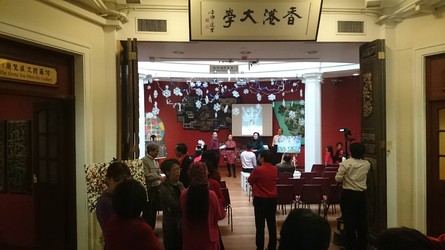
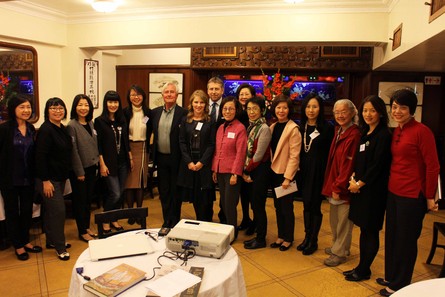
We are pleased to present a double lecture with Stephen Davies and Dr. Yeewan Koon at the historic Luk Yu Tea House in Central.

Synopsis
The period of 1840–60 in China is often seen through the lens of the Opium Wars, but there are also narratives of people outside the world of wars and diplomacy. Through the stories of two historically neglected individuals — Hesing, a Whampoa shipping man and Su Renshan, a Cantonese artist from the outskirts of Guangdong — this double lecture will show how mid-19th century Guangdong was a time of change and possibilities.

In his recent book, Dr. Stephen Davies recalls the story of a British purchased Chinese junk Keying and its voyage from Hong Kong to London where it was intended to be a traveling exhibition of Chinese items. In this talk, Dr. Davies draws attention to one of the junk’s Chinese crew members, Hesing, a man who was very much part of the fluid, multicultural, polyglot but very Cantonese world of the Huangpu (Whampoa) waterfront.

Dr. Davies traces Hesing’s story from when he first became part of the Keying project to landing in England, his reinvention of himself as a “5th rank mandarin” and his final story back in China. The treaty ports offered new opportunities. It was people like Hesing who seized them.

As Keying’s journey to America and Europe began in the Pearl River Delta area, a different story was unfolding at the edges of Guangdong city. Dr. Yeewan Koon relates the story of Su Renshan, an artist discontented with the pressures of being an elder son, challenged the structures of Confucian learning with his iconoclastic ink paintings.

This part of the talk will examine how Su’s radical reinterpretation of familiar iconographies and brushwork to show the limitations of traditional values placed on art and artists were at this moment of change. Su’s radical paintings showed the possibilities for later generations of modern Chinese art.

The lectures will be followed by a short discussion between the two speakers who will reflect on how examining marginal figures in history can reveal different types of insights into larger grand narratives of Chinese history.

Speakers
Dr. Stephen Davies is an Honorary Fellow of the Hong Kong Institute for the Humanities and Social Sciences. He is author of the book East Sails West: The Voyage of the Keying, 1846–1855 and currently writing the history of maritime mission in Hong Kong. He still teaches at HKU, is Hon. Editor of the Journal of the Royal Asiatic Society Hong Kong Branch, writes as a yachting journalist, is an occasional TV presenter, works with museums and heritage interests in China, Singapore and Hong Kong and is an active yachtsman.

Dr. Yeewan Koon is an Associate Professor in the Fine Arts Department at the University of Hong Kong. Her book, A Defiant Brush: Su Renshan and The Politics of Painting in Early 19th Century Guangdong (2014) situates an unusual artist in a larger world of art that includes export works and ink painting during the time of the Opium War. She is currently working on her new research on the “self-knowing copy” through case studies where copying was more than an act of learning, artistic transcendence, or for mass production, and reveals motives of wit, historical positioning and affectation.
Splendid Images: Chinese Painting from the Eryi Caotang Collection With Dr. Josh Yiu (姚進莊博士)

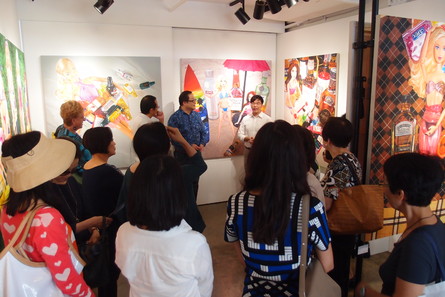
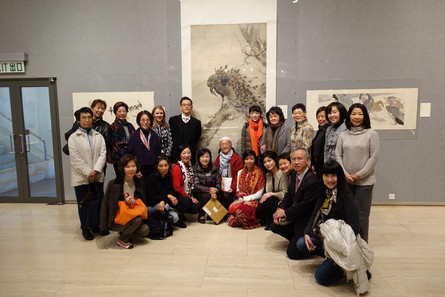
Having collected modern Chinese paintings for over four decades, the master of Eryi Caotang has assembled an extraordinary collection that provides an overview of the development of Chinese ink painting from the late 19th century to the 20th century. The exhibition features 71 masterpieces by well-known masters including Qi Baishi (1864–1957), Xu Beihong (1895–1953), Zhang Daqian (1899–1983), Lin Fengmian (1900–1990), Fu Baoshi (1904–1965), and Li Keran (1907–1989). Many were collected during the 1970s and 1980s, when China gradually recovered from the aftermath of the devastating Cultural Revolution and when Hong Kong’s economic boom fostered a demand for works of art. The master of Eryi Caotang was a typical Hong Kong businessman of that period whose success in business led, atypically, to his lifelong passion for Chinese painting and friendships with many prominent artists. As such, the collecting history in recent memory is intricately linked with the lives and practices of artists and the ties between Hong Kong and mainland China. His story will be featured in the accompanying catalogue.

Resource Person

We are delighted to present this guided tour with Dr. Josh Yiu (姚進莊博士), Associate Director of the Art Museum, The Chinese University of Hong Kong. He received his B.A. in Art History from the University of Chicago, and completed his doctorate at Oxford University. From 2006 to 2013, he served as the Foster Foundation Curator of Chinese Art at the Seattle Art Museum. A specialist in late imperial and modern Chinese art, his book publications include Writing Modern Chinese Art: Historiographic Explorations (2009) and A Fuller View of China: Chinese Art at the Seattle Art Museum (2014). He is also the Project Director and Co-editor (with Mimi Gates) of Uncover the Past: Chinese Painting and Calligraphy from the Seattle Art Museum Collection, an online catalogue that won the "Gold Muse Award for Online Presence" presented by the American Alliance of Museums in 2014. He has taught and lectured at various universities, including the University of Washington and The Chinese University of Hong Kong.

Sha Chau 沙洲, Tai O 大澳 and Western Waters with Professor Chan Lung-sang (陳龍生教授)

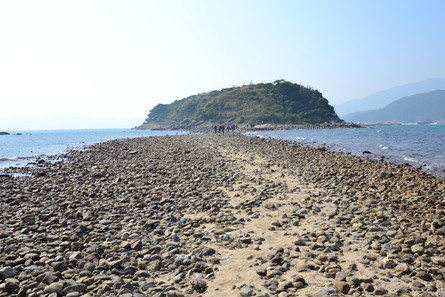
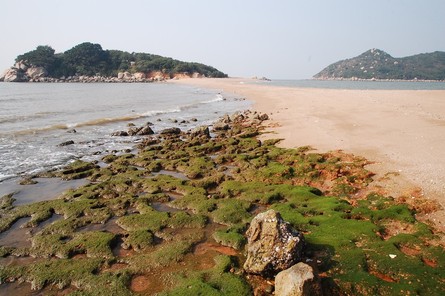
Sha Chau is one of the westernmost islands in Hong Kong with a long sand bar which is exposed at low tides. An extensive fault zone is also exposed on the island. Archeological artifacts of Neolithic age were unearthed on Sha Chau and the nearby islands. On this trip, Prof Chan will take the group along the western channel to describe the geology and morphology of the western parts of Hong Kong, discuss the archeology of the areas in context with the geology and rock formations, and hopefully see some white dolphins in action.

After exploring Sha Chau, we will ride to Tai O for a simple lunch. Afterwards, participants can return to Central with the group by 15:00 ferry or stay on your own and explore Tai O at your leisure.

Tai O is one of Hong Kong's old Tanka fishing villages with stilt houses that are interconnected to form a water-borne community. The former Tai O Police Station has been renovated into a boutique hotel and this might be another place to visit. You can even take a bus to see the Big Buddha, walk around the tea garden, view the sutra logs and meditate quietly in the Wisdom Path.

For those choosing to stay on, there are public buses or taxis to Mui Wo for a ferry (fast ferry takes half an hour and slow takes one hour) to Central. You can also catch a bus or taxi to Tung Chung to take the MTR back to Central.

In case of adverse weather conditions or unfavourably high winds, we may have to modify or cancel the trip at the resource person’s discretion.

Resource Person

We are very privileged to have Professor Chan Lung-sang (陳龍生教授) as the leader of the trip. Prof Chan is professor in Earth Sciences at the University of Hong Kong as well as College Principal of HKU SPACE Community College and HKU SPACE Po Leung Kuk Community College. He received his doctorate degree in geology from the University of California, Berkeley and is arguably the first Hong Kong native to receive formal training in geology. His research interests include tectonics of South China and Hong Kong, earthquake geology and applied geophysics. He is devoted to promoting Earth Science education, and has led field trips to South China, Tibet, Taiwan, North America, Australia, Italy, Cyprus, Arctic region and Antarctica for students.

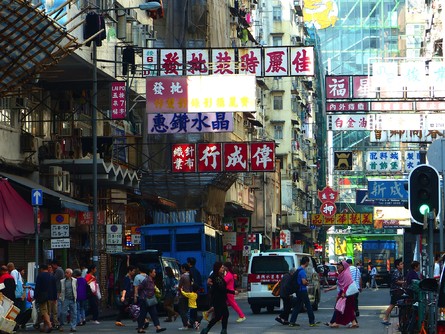
Sham Shui Po (深水埗) with Dr. Joseph Ting (丁新豹博士)

Sham Shui Po is one of the oldest districts in urban Kowloon. Located north of Boundary Street, it became part of British Kowloon after 1898. It developed into an industrial, commercial and residential district in the early 20th century. The Tin Hau Temple, the Police Station and Mei Ho House, the first generation of resettlement buildings in Hong Kong all bear witness to the reclamation and development of Sham Shui Po in the past 100 years. Many of the best preserved tenement buildings are found here, some of which are graded. In the nearby Sham Shui Po Park, on which the former Prisoners of War Camp stood, there are two memorials dedicated to the Canadian soldiers who sacrificed their life for the defense of Hong Kong during the Japanese invasion in December 1941.

Resource Person

Dr. Joseph Ting (丁新豹博士) majored in Chinese Literature and Chinese History and graduated from HKU in 1974. He was conferred an MPhil in 1979 and a PhD in 1989, both from HKU. Dr. Ting joined the HK Museum of Art as an Assistant Curator in 1979 and was appointed Chief Curator of the HK Museum of History in 1995. He retired in 2007 after serving 28 years. He is currently an Honorary Assistant Professor in the School of Chinese at The University of Hong Kong, as well as an Adjunct Professor in the Department of History at the Chinese University of Hong Kong.

He is Honorary Advisor to many art and cultural institutions, including the University Museum and Art Gallery in HKU, the HK Museum of Art, the HK Museum of History, the Shenzhen Museum and Guangdong Provincial Museum. He is also a Member of the Antiquities Advisory Board, the Lord Wilson Heritage Trust and the Education Bureau of Hong Kong, an Honorary Fellow of the HKU and Hong Kong Institute of Education, and was an Honorary Research Fellow at the Centre of Asian Studies.

Once Upon a Dream – A Musical Fest for Members and Family With C. Kenneth Lee

Dreams are successions of images, ideas, emotions, and sensations that occur involuntarily in the mind during stages of sleep. The content and purpose of dreams are not definitively understood, though they have been a topic of scientific speculation, as well as a subject of philosophical and religious interest.

As the Christmas holiday spirit envelopes us, C. Kenneth Lee returns to UMAG for Members’ Day with a new special holiday musical fest — Once Upon a Dream. Let us gather with family and friends to enjoy an interactive performance with songs we love to listen and sing-along to. The little ones would particularly enjoy Once Upon a Dream, White Christmas and Let it Go (from the movie Frozen). Come join us and dream together for peace and joy in our families and in this world.

Performer C. Kenneth Lee is the Music Director of Jaderin Voice Group, a Theater Acting Lab faculty at International Academy of Film and Television (IAFT), former TVB music director/composer/performer for over 100 TV episodes and TV commercials. Classically trained, he has received awards in both the contemporary and classical domains since 1992. In 2014, he won the F.P. People’s Choice Awards for Best Singer in Footloose: The Musical which ran for a week at The HK Cultural Centre.

A graduate from the California Institute of Art, Lee studied music under many international masters. He has performed internationally and was hailed by The Hong Kong Economic Journal as “a young musical prodigy”. Lee has released 4 solo CDs of his original compositions and has authored his first book, Selected Poems, Articles and Short Stories in 2010.

Lee also studied visual arts at California Institute of the Arts, HK PolyU School of Design, HK Arts School & HK Visual Arts Centre. He has collaborated with renown artists Meredith Monk and MOMA artist–T. Oyer. C. Kenneth Lee draws inspirations from Gerhard Richter, Willem de Kooning, Mark Rothko, Jackson Pollock and Andy Warhol. Some of his paintings have recently been exhibited at the Saatchi Gallery (UK) and the 2014 Independents Liverpool Biennial (UK).

Imperial Treasures: The Arts of the Russian Tsars With Dr. Florian Knothe

Tsar Peter the Great (1672–1725), of the celebrated Romanov dynasty ruled Russia from 1613 until the abdication of Tsar Nicolas II in 1917, amassing fine art collections that are the pride of the Hermitage and neighboring palaces. He established the autocratic imperial rule and played a major role in introducing his country to the Western state system and to European art. Saint Petersburg was named after him. French porcelain, German furniture and many other high quality objets d’art furnished their residences and attest to the truly international style the Russian Imperial family are known for.

In an attempt to study the meticulously executed artefacts and rich material culture of a gilded age, our tour of the exhibition will offer a glimpse of the opulence of the Russian court and the familial bonds exploited during the acquisition and commissioning of the finest art treasures and luxurious fashion of all times. Our event will commence with an introductory lecture and continue with a guided tour of the exhibition. The visit will conclude with an optional lunch on share-cost basis at a restaurant nearby.

Speaker

A scholar of Western European art, Dr. Knothe is the Director of the University Museum and Art Gallery (UMAG). He received his PhD with a thesis on the royal manufacture and production of art and propaganda in 17th century France. From 2005-2008, he worked as research fellow and associate in European Sculpture and Decorative Arts at The Metropolitan Museum of Art. During his appointment in 2009 as curator of European glass at The Corning Museum of Glass, he devoted time to research his long-established interests in cross-cultural influences in art and workshop practices in Western Europe and East Asia. This work culminated in his East Meets West exhibition in 2010, and related lectures and conference papers that were presented in the US, Europe, Asia and Africa. In his role as Director, Dr. Knothe aims to connect UMAG internationally so that future collection-oriented research and programming reflect the university’s unique geographic and cultural position between East and West.

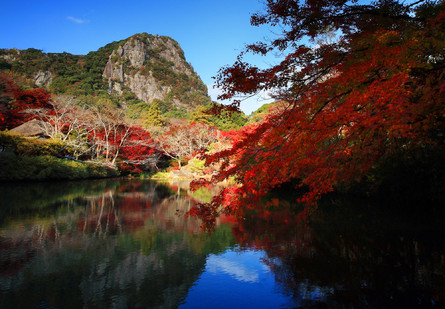
Western Kyushu: The Land of Passion, Fire & Wind

Kyushu (九州) originally consisted of nine ancient provinces. Historically named Saikaido (西海道) it is Japan’s third largest island, located southwest of the main island Honshu (本州). It has seven prefectures; Fukuoka (福岡), Saga (佐賀), Nagasaki (長崎), Kumamoto (熊本), Oita (大分), Miyazaki (宮崎) and Kagoshima (鹿兒島). On this trip we will visit Fukuoka, Saga, and Nagasaki prefectures.

Kyushu, as an early center of Japanese civilization, has a population of around 13 million and offers many historic treasures, natural beauty and modern cities. With plentiful volcanic ash, Kyushu boasts an amazing selection of hot springs, as well as numerous pottery villages, especially around Karatsu (唐津), Imari (伊万里), and Arita (有田) in Saga prefecture.

With Nagasaki at its northwest, Kyushu was Japan’s first gateway to the outside world. Foreign influences from pre-historic continental cultures to the Portuguese galleons, present a great variety of historical interest. Mysterious stone Buddha, Korean pottery villages, remote crypto-Christian refuges and the ruins of a Dutch trading post testify to its volatile and fascinating history.

Fired from the earth and carved from the wind swept through the ages, Kyushu offers haunting landscapes, warm-hearted people with delicious food and drinks and colourful legacies from diverse cultures. Let us see the fire, listen to the wind and feel the passion of the land together.

Resource Person

Keiko Imai Packard spent over a decade in HK around the time of 1997. Enjoying an active life, she was chairman of the Friends of the Art Museum, CUHK while completing a Master of Philosophy degree in Japanese art at HKU. After her return to Japan, she took part in teaching a course on Japanese Culture and Society at the Temple University in Tokyo. She is the author of Old Tokyo, a book that details Tokyo’s evolvement from a Shogun capital of a closed society to its present status as the international capital of modern day Japan. Dedicated to global education, she writes about this topic in a leadership magazine, organizes educational programs for domestic and international markets, and hosts special groups for in-depth look of Japan.

Keiko is the Founder & Director of Knowledge Investment Programs of Japan (KIP http://www.kipprograms.org), and a registered non-profit organization that raises social awareness with a Japanese and global perspective for college students and young people. She is also the President of KIPP Programs (KIPP), a cultural consulting company and the Japanese Representative of Nano Japan Program, International Research Experience for Undergraduates (http://nanojapan.rice.edu/) and US students. Through her work with these programs, she has presented talks at universities, private businesses and public institutions.

Boat Trip to Sharp Island (橋咀洲), High Island (糧船灣洲) and Kau Sai Chau (滘西洲) with Professor Chan Lung-sang (陳龍生教授)

Our boat trip starts from Sai Kung and brings us to Sharp Island (橋咀洲), High Island (糧船灣洲) and Kau Sai Chau (滘西洲). Professor Chan will discuss the nature and geological significance of the rock exposure on Sharp Island and introduce ideas pertaining to the geological history of Sai Kung. We will have a simple lunch in High Island. After lunch, we will cruise in the eastern waters, viewing natural scenery of Kau Sai Chau etc. The trip will also make a stop at an old temple on Kau Sai Village before heading back to Sai Kung.

In case of adverse weather conditions or unfavourably high winds, we may have to modify or cancel the trip at the resource person’s discretion.

Resource Person

We are very privileged to have Professor Chan Lung-sang (陳龍生教授) as the leader of the trip.

Professor Chan is Earth Sciences Professor of The University of Hong Kong and an expert in Hong Kong geology. He received his bachelor degree from Chinese University of Hong Kong and his PhD from the University of California at Berkeley. He taught for 10 years in the University of Wisconsin-Eau Claire and 18 years in the Science Faculty of The University of Hong Kong. His leadership in teaching and learning was recognized when he was awarded The University of Hong Kong’s Distinguished Teaching Award in 2009. A true believer of experiential learning, he has led many field trips around Hong Kong for the public and education sectors. He was invited to guest host the TV documentary series Vanishing Glacier in 2008 and most recently the Water of Life series.

Ceramic as an Art Form: From Domestic Goods to Modern Sculptures with Dr Florian Knothe

With the growing middle classes in the West from the time of the Industrial Revolution during the second half of the nineteenth century, design and art gained importance as they became available to a broader, more affluent society. Since then, the manufacturing and retail of ceramic dinner services, vases and other domestic goods reach unprecedented heights, and so the stylistic qualities of, now, mass-produced goods were both appreciated—and largely advertised and distributed—and criticised by more artistically-minded consumers who feared a loss of artistic and ’material’ value. Consequently, the Arts and Crafts Movement and later individual and group initiatives gained momentum and offered ‘honest’, hand-made alternatives to an ever-increasing clientele.

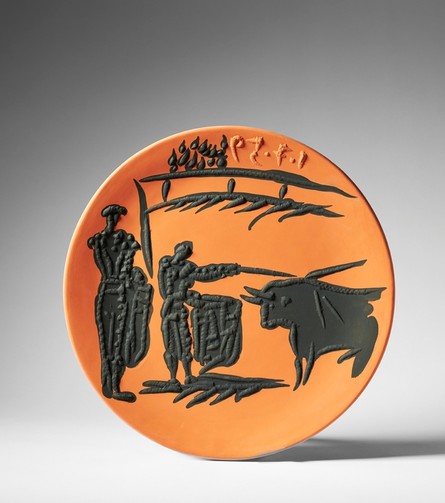
Art ceramics form a part of a larger group of media, such as furniture and textiles, and they present ceramic materials in different styles, manufacturing processes and, most importantly, as art. So strong grew the interest in artistic communities that masters of unrelated genre—including painters like Picasso—engaged with clay, and individually and in collaboration with experts created some of the most remarkable ceramic sculptures in recent design history. A material that began its fame in small and often vernacular workshops returned to the artists’ ateliers and regained importance as one of the supreme catalysts of artistic expression.

Speaker
A scholar of Western European art, Dr. Knothe is the Director of the University Museum and Art Gallery (UMAG). He received his PhD with a thesis on the royal manufacture and production of art and propaganda in 17th century France. From 2005-2008, he worked as research fellow and associate in European Sculpture and Decorative Arts at The Metropolitan Museum of Art. During his appointment in 2009 as curator of European glass at The Corning Museum of Glass, he devoted time to research his long-established interests in cross-cultural influences in art and workshop practices in Western Europe and East Asia. This work culminated in his "East Meets West" exhibition in 2010, and related lectures and conference papers that were presented in the US, Europe, Asia and Africa. In his role as Director, Dr. Knothe aims to connect UMAG internationally so that future collection-oriented research and programming reflect the university’s unique geographic and cultural position between East and West.

Guided Visit to PMQ

This site at 35 Aberdeen Street has had a long history. In 1889, the Central School was relocated here from Gough Street, the first school providing a Western education at the upper primary and secondary levels to Chinese students. Renamed Victoria College then Queen’s College, its alumni include some of Hong Kong’s most successful and influential business tycoons. Severely damaged during the Second World War, the building had to be demolished. In 1951, the site started its next incarnation as the Hollywood Road Police Married Quarters—the first dormitory for Chinese rank and file police officers. In 2009 the site was listed as one of eight projects under ‘Conserving Central.’ Architecturally, it represents the typical modern style commonly found in the post-WWII period, which is characterised by a functional and pragmatic approach on elevations and interior layout, with minimum decoration and spatial articulation.

Under a partnership between the HK Government and the Musketeers Foundation, a non-profit-making charity committed to promoting creativity, education, arts and
culture, the buildings have been retained, reinforced, refurbished and upgraded.
Renamed as PMQ, the site is now a hub for design and creative industries. A PMQ
representative will guide us through this facility, including the Heritage exhibition rooms, Taste Library, and several Design Studios. The visit will conclude with an optional lunch on share-cost basis at one of the restaurants at PMQ.