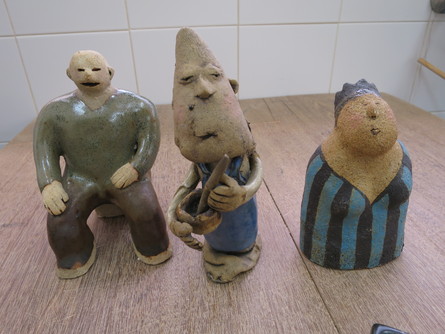
The Museum Society is delighted to organize a studio visit to prominent Hong Kong ceramicist Rosanna Li Wei Han. Her robust ceramic figurines are imbued with cultural and symbolic meaning inspired by the vitality of simple folks she encounters in her daily life. These can be seen in her "Café Acrobatic" exhibition where her troupe of “acrobats” performs their daily tasks with agility, grace and humour in Hong Kong “cha chaan teng”. In 2013, at the invitation of the Chinese Civilization Centre at City University, she presented a solo exhibition "Men and Women — This and Less" and dedicated her work to the thousands of panda-eyed, sleep-deprived people in our community. Recently, her large and site-specific “Happy Folks” greet visitors at the "Heaven, Earth and Man — A Hong Kong Art Exhibition" at the newly opened outdoor Art Square of the
Salisbury Garden at the HK Museum of Art.
Born in Hong Kong, Rosanna studied ceramics at the Hong Kong Polytechnic. She pursued her undergraduate studies in Art Education at the University of Liverpool, and earned a post-graduate Diploma in Art Education from the University of London. She also obtained a Master Degree in Educational Management from the Cheltenham & Gloucester College and a Master Degree in Cultural Studies from the Lingnan University. From 1990 to 2010 she taught in the School of Design, The Hong Kong Polytechnic University, while at the same time making successful endeavours in the art scene through her numerous exhibitions. Her works are widely collected by many museum and institutions in Asia. In 2013, she published her book "Mindless Mindfulness—Works of Li Wei Han Rosanna, Ceramics & Installations".
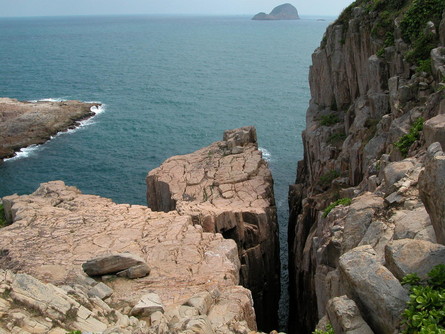
The Ninepin and Waglan Islands are the eastern-most islands in Hong Kong waters. Fabulous rock columns that formed 140 million years ago are exposed on the Ninepin Islands, a core area in the Hong Kong Geopark. The polygonal rock columns represent one of the few geological localities in the world where rock columns developed from cooling and contraction of volcanic ash. Remarkable features observed on the Ninepins include a giant rock slide and columns that have toppled and pointed sideways.
We will first land on the Northern Ninepin Island, take a short hike to view the hauntingly beautiful landscape on the island and learn about the geological formations. Boarding the boat once again, we then make another landing on Southern Ninepin Island.
Afterwards we will have a simple lunch on the boat while sailing towards Waglan Island. We’ll cruise around Waglan Island, viewing one of the oldest lighthouses and declared monuments in Hong Kong from our boat. In addition, we will observe some interesting
sea arches and coastal features before returning to Central by about 17:00.
In case of adverse weather conditions or unfavourably high winds, we may have to modify or cancel the trip at the leader’s discretion.
Resource Person
We are privileged to have as guest lecturer, Professor Chan Lung-sang (陳龍生教授) of the Earth Sciences of The University of Hong Kong. Professor Chan is an expert in Hong Kong geology. He received his bachelor degree from Chinese University of Hong Kong and his PhD from University of California at Berkeley. He taught for 10 years in the University of Wisconsin-Eau Claire and 18 years in the Science Faculty of the University of Hong Kong. His leadership in teaching and learning was recognized when he was awarded the University of Hong Kong’s Distinguished Teaching Award in 2009. A true believer of experiential learning, he has led many field trips around Hong Kong for the public and education sectors. He was invited to guest host the TV documentary series Vanishing Glacier in 2008 and most recently Water of Life.
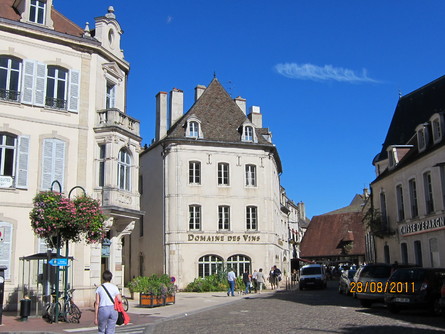
The University of Hong Kong Museum Society is pleased to present its second tour of the gastronomic wine regions of Champagne and Burgundy. Accompanied once again by internationally renowned food and wine connoisseur, wine judge and educator, Mr. Wilson Kwok, we will be visiting celebrated champagne cellars such as Moet Chandon, Dom Perignon, Salon and Deutz and important wineries such as Clos de Vourgeot and Domaine l’Arlot in Burgundy.*
Our gastronomic adventure will feature “Le Top of the Top” Michelin starred establishments such as Les Crayeres (2 stars), L’Assiette Champenoise (3 stars) and La Briqueterie (1 star) in Champagne and Jardin des Remparts (1 star) and Maison Lameloise (3 stars) in Burgundy. Once again, Wilson will be carefully selecting our menus to match perfectly the particular wines of the region.
*Visits to specific wineries are subject to final confirmation.
Resource Person
Wilson Kwok has one of the most impressive resumes in the food and wine industry in Hong Kong. Holding a Master’s Degree of Enology at the University of Bordeaux, France as well as a Grand Diploma from the Cordon Bleu de Paris, in France, he was knighted by the French Government as Chevalier de L’Ordre du Merite Agricole for his outstanding contribution to French cuisine and wine. He has served actively as a judge in wine competitions since 1994. In 1996 he became the first in Asia to be invited to be a Member of the Jury for the prestigious wine competition, the Citadelles du Vin which is held in Bordeaux every year. In 2000 he won the Sommelier of the Year in Hong Kong on Australian Wines.
As managing director of the W’s Group, Wilson oversees also the running of his flagship restaurant, W’s Entrecote. He has published a number of cookbooks (bilingual Chinese and English) as well as contributed columns to a number of monthly journals including “Wine Now” Monthly Magazine (Chinese) as well as in the South China Morning Post.
Wilson advised as well as co-hosted TVB Jade’s 6 episode series, “Wine Confidential”. More recently in October 2010, Wilson released in his own voice the first volume of an audio set of four wine glossary references spoken in six languages.
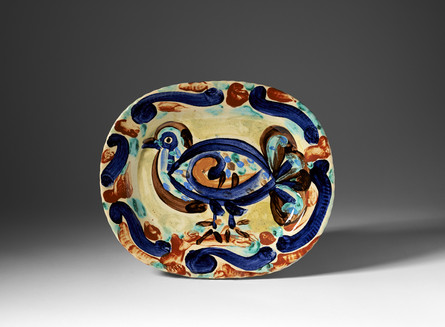
Do join us to bid a fond farewell to Picasso's ceramics from the Nina Miller Collection before its final closing. The evening starts with a wine-and-cheese reception where members and guests can toast to Picasso's artistic genius revealed in the beautifully sculpted and colourfully glazed ceramics. Co-curator of the exhibition, Dr. Alma Mikulinsky will present an insightful lecture on "Picasso's Ceramic Oeuvre: of Owls, Pigeons and Corrida" followed with a special guided viewing.
Synopsis
Pablo Picasso, originally known and celebrated as a painter, became a visionary
ceramic artist during the last three decades of his long and eventful life. In collaboration with ceramicists and sculptors, including Suzanne Ramié, Jules Agard and Julio Gonzales, he created an array of different forms and shapes of three-dimensional artworks, many of which served as sculptural canvas for his figurative paintings and ornate decorations. Many of the extraordinary and sometimes unique masterpieces the Spanish artist created are now part of the Nina Miller Collection and they are on display at UMAG this autumn. This talk offers insightful information on their origin and meaning, and it explains the sculptural and painterly decoration that set them apart.
In the south of France, the Spanish artist teamed up with Atelier Madoura and painted on both the ceramists standard forms fired and on artefacts Picasso helped to design—ones that show his individual style and relate to his painted and graphic oeuvre. In near series, the artist reinterprets objects and iconographic themes, elevating his newly adopted medium to rarely seen stature. Interesting hereby are his collaboratively produced sculptures, and the stylistic relationships across different media characteristic of Picasso’s distinct imprint and so iconic in the modern art of his day.
Speaker
Dr. Alma Mikulinsky is Assistant Professor of Modern and Contemporary Art History, at the Department of History, Duquesne University, Pittsburgh, USA and an independent curator working in North America, Europe, and Asia. Her PhD Dissertation (University of Toronto, 2011) was devoted to the photography of Pablo Picasso’s sculptures and she is currently working on a book manuscript titled Picasso on Display: The Public Life of Picasso’s Sculptures. She is the recipient of numerous awards and scholarships, among which a two-year post-doctoral fellowship as a research scholar at the Society of Scholars in the Humanities at The University of Hong Kong.
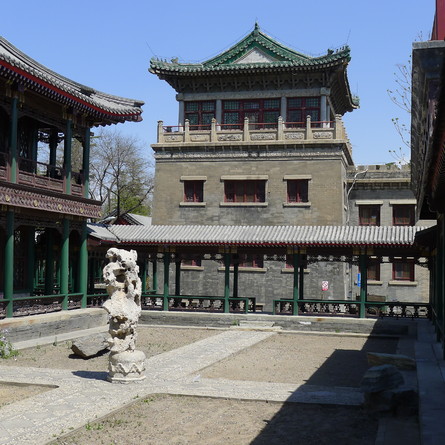
The policy of inculturation promoted by Pope Benedict XV in 1919 and implemented from 1922 in Republican China and Hong Kong by Archbishop Celso Costantini aimed to sinicise the Catholic mission and promote a Chinese Catholic church. Archbishop Costantini considered sinicising art and architecture a priority. Church architecture, as the most tangible expression of religion and identity in the public space, should express Chinese Christianity rather than Christianity imported by missionaries.
This lecture examines the paradigm shift of Catholic architecture in China and Hong Kong, from Western traditional models to Chinese-looking buildings, including modern structures in reinforced concrete. In 1926, the Vatican commissioned Father Adelbert Gresnigt, a Benedictine monk and artist, to define the “Sino-Christian style”. He designed several churches and educational buildings, his masterpieces being the Catholic University of Peking and the Regional Seminary of Hong Kong (present Holy Trinity Seminary at Aberdeen). This new style not only expressed Catholic Chineseness and modernity, but had to be different from the Protestants’ sinicised architecture. A debate, however, arose within the Catholic Church, many conservative missionaries arguing against the Sino-Christian style by referring to the preference of the Chinese Catholics for Western styles. An example of this debate happened in 1930 when St. Teresa’s Church Kowloon was designed.
From the early 1930s on, both the world economic crisis and growing political instability in China and Europe slowed down the architectural projects and redefined priorities. Contrary to architecture, the sinicisation of Christian art by Chinese artists and Western missionaries flourished until the 1940s.
Speaker
Dr. Thomas Coomans (PhD in art history and archaeology) is Associate Professor at the University of Leuven, Raymond Lemaire International Centre for Conservation, and Adjunct Assistant Professor at School of Architecture of The Chinese University of Hong Kong. His teachings include architectural history, theory and history of conservation. Combining research in western archives and fieldwork in
China, his present research and publications focus on the evolution of Christian church architecture in China from 1840 to 1950.
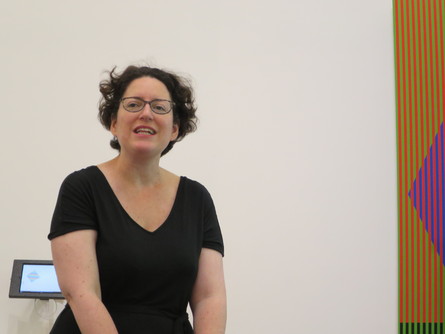
Fashion constitutes an important part of culture in every nation throughout history, and dressing is a vital expression of one’s individual personality in this modern world. Most people in Hong Kong wear western clothing, and looking into its roots of development is an interesting subject to explore.
In this lecture, Dr. Alicia Weisberg-Roberts will trace the development of dress in Western Europe, particularly in France and Britain, during the eighteenth century. She will examine the role of clothing and the textile trades in developing and defining national manufactures, political allegiances, and religious identity. Using garments, prints, drawings, painting and tracts from the period between 1660 and 1812, we will explore the impact of protectionism, industrialization and dissent in a period of burgeoning global exchange and international ferment.
Speaker
Dr. Alicia Weisberg-Roberts is an Honorary Assistant Professor at the University of Hong Kong where she teaches courses on European art and culture, including the history of fashion. Previously, she was Assistant Curator of Eighteenth- and Nineteenth-Century Art at the Walters Art Museum, Baltimore, and a Post-Doctoral Research Associate at the Yale Center for British Art. Her research focuses on the intersections of art, science and sociability in early-modern visual and material culture. She was co-editor and co-curator of "Mrs. Delany and Her Circle" (Yale, 2009) and has also contributed essays to "Horace Walpole’s Strawberry Hill" (Yale, 2009); "Knowing Nature: Art and Science in Philadelphia, 1740 to 1840" (Yale, 2011), and "Ways of Making and Knowing: The Material Culture of Empirical Knowledge" (University of Michigan Press, 2014). She is currently working on a book on cultural value of drawing in eighteenth-century France, as well as a project on the representation of non-European diplomats in seventeenth-century
Rome.
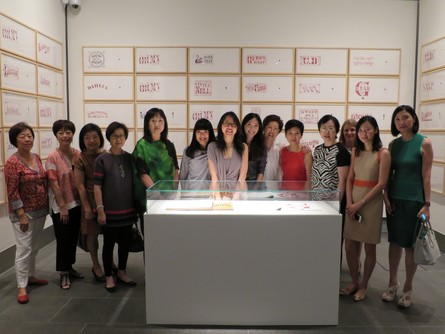
We are delighted to organize a guided tour with the curator of this exhibition, Dr. Yeewan Koon. This is the first major solo exhibition of Xu Bing in Hong Kong, featuring some of the latest works by this renowned artist. The exhibition presented at the Asia Society Hong Kong Center will demonstrate how the transformative powers of materials and communication can prompt reflections on our day-to-day lives, personal memories, and collective histories. For example, in "Background Story", Xu Bing uses natural raw materials such as sticks and leaves set in a light box, to create, through their shadows, traces that appear to be similar to ink strokes of a Qing dynasty painting. "Ground from the Book" is an interactive artwork revealing a system of “language” told through icons and symbols as a new mode of communication. Both works have earlier precedents and also speak to one another. They provide insight to Xu Bing’s open-ended approach to art as he works through his own metamorphosis.
Xu Bing was born in Chongqing, China in 1955. He studied printmaking and graduated from the Central Academy of Fine Arts (CAFA) in Beijing in 1981 followed with a MFA in 1987. In 1990, he moved to the United States after receiving an invitation from the University of Wisconsin-Madison. Nine years later, he was the recipient of the prestigious MacArthur Award. In 2008, he returned to Beijing to take up the position of Vice-President of CAFA. His works have been exhibited in major institutions including the Arthur M. Sackler Gallery and the Smithsonian Institution in the USA, the Joan Miro Foundation in Spain, as well as 45th and 51st Venice Biennales and the Biennale of Sydney. In January 2014, Taipei Fine Arts Museum held a retrospective exhibition of Xu Bing’s works.
Speaker
Dr. Yeewan Koon is Associate Professor of the Fine Arts Department at the University of Hong Kong. Her book, "A Defiant Brush: Su Renshan and The Politics of Painting in Early 19th Century Guangdong" (2014) maps out the changes in painting during the time of the Opium War. She is currently working on her new research on emulations and fabrications of paintings that challenge ideals of the originals.
Established in 1862, Queen’s College is one of the oldest schools in Hong Kong. On their campus in Tin Hau lies the clubhouse of the Queen’s College Old Boys’ Association. Exclusive to alumni members, their Chinese restaurant renowned for serving delicious seasonal dishes, is opening their doors to us for this special dinner. On the evening, we will dine on a multiple course seasonal menu, one that will be set just prior to the event ensuring the freshest of ingredients.
Do come and join us on this special occasion!
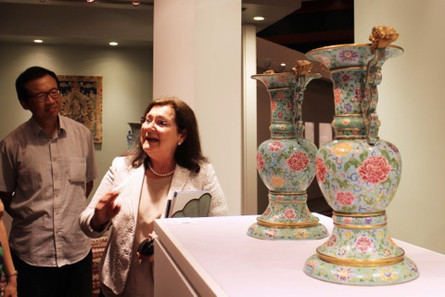
The Society is pleased to organise a gallery walk to view some of the exceptional works of art at Christie’s Spring Sales 2014. Rosemary Scott and Pola Antebi will guide us to view highlights from the Chinese Ceramics and Works of Art from this exhibition including some of the finest and rarest Ming and Qing dynasty porcelain and glass pieces, works of art for the imperial palace including a dazzling gilt-bronze vase inlaid with multi-coloured paste glass, rare imperial textiles, and much more. Members and friends are welcome to view the other galleries after the tour.
Rosemary Scott is Christie’s International Academic Director of Asian Art, who has successfully expanded Christie’s educational programs in Asian art, lecturing and conducting scholarly research for Christie’s Asian art sales worldwide. She holds an honors degree in Chinese Art and Archaeology from the University of London. Her career has spanned various important positions in her chosen field, including deputy keeper of the Burrell Collection, Glasgow, with curatorial responsibility for Oriental art; the curator of the Percival David Foundation, University of London; and head of the Museums Department of the School of Oriental and African Studies, University of London. Scott is also past president (2006-2009) of the London Oriental Ceramic Society.
Pola Antebi joined Christie’s Hong Kong in 1990. Since 2000, she has been the Department Head, as well as International Director of the Chinese Ceramics & Works of Art in Hong Kong, which has grown exponentially under her leadership. She travels extensively sourcing objects for sale, and has been instrumental in garnering some of the most prestigious private collections offered at Christie’s HK sales. Her areas of expertise include imperial ceramics, jades and works of art from the Yuan to the Qing periods. Antebi holds degrees in French Literature and Art History from the University of Vermont in the United States.