Through Grandfather’s Looking Glass: The Life and Times of Society in Hong Kong in the 1920s – 1930s with Andrew E. Tse

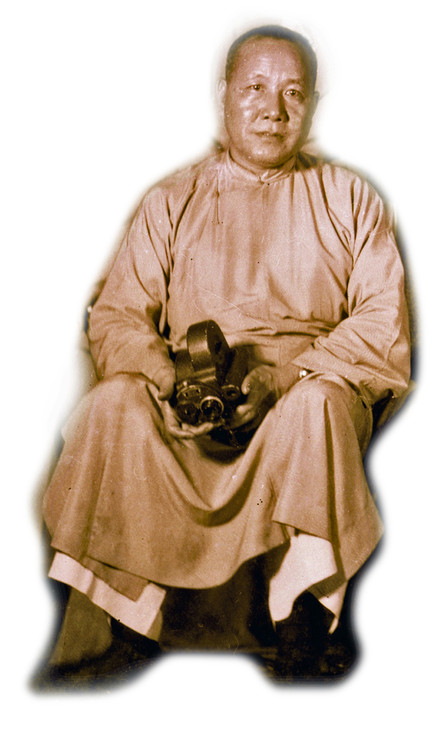
Since his retirement from the aviation industry in 2006, Andrew E. Tse has spent much of his time researching the history of his family, a Eurasian family which has played a prominent role in Hong Kong society since the mid 1800s. In documenting the family’s collection of personal photos, he came across an amazing collection of photos and film clips taken by his grandfather about to be sent to the trash man! Recognizing that this was a rare and invaluable historical record of the life and times in Hong Kong during a most tumultuous period in Chinese history, Andrew made it his personal mission to not only compile and categorize his grandfather’s old photos and film clips, but to conserve them for future generations.

When Andrew’s grandfather, Simon Tse Ka-po took up photography and cinematography in the early part of the 20th Century, it was considered to be an exceptional hobby. Movie films could not be developed locally and had to be sent all the way to San Francisco for processing. Accompanied by his camera, Tse Ka-po took it upon himself to record a variety of persons and events, including those considered significant such as the inauguration of the University of Hong Kong and Hong Kong & Shanghai Bank, as well as more usual family occasions such as tennis at the Kowloon Cricket Club and Sir Robert Ho Tung and his wife, Margaret’s 50th wedding anniversary party at the Peninsula Hotel.

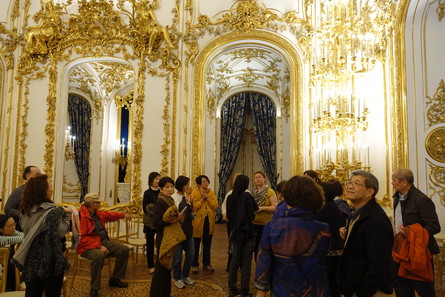
Before his retirement, Andrew E. Tse was CEO of Macau’s East Asia Airlines, Hong Kong’s Heli Express and founder of Hong Kong Express Airways. He received both his university and post-graduate degrees in Canada. In sharing with us his compilation of his grandfather’s film clips and photos, Andrew will present a most fascinating overview of the life and times of Hong Kong in the 1920s and 1930s, essentially giving us a better understanding of the political and social sentiments of that era. As the Helena May was evident as the backdrop in many of the photos, it was only appropriate that Andrew’s presentation should also take place at the Helena May.

Let us go back in time to a more genteel era and have the pleasure of indulging in a cocktail and canapé reception at the elegant Blue Room of the Helena May!

Eccentric Ebullience: Architecture and Nature in Austria and Slovenia With Professor Puay-peng Ho

The early 20th century was an exciting time for the development of art in Europe; the freedom and optimism allowed the artist to seek inspiration elsewhere and expression in non-classical forms. The high spirited epoch gave rise to an explosion of ideas in fine art, literature, music, product design and architecture. In all cases, ideas interflowed between these domains and the circle of creative minds influenced each other, with the result that similar messages were manifested in art and architecture alike.

The tour will focus on the art and architecture of Vienna, Graz and Ljubljana between 1897 – when Vienna Secession was formed – and 1940, at the beginning of World War II. We will trace the development of architectural styles through the works of Otto Wagner (1841–1918), Joseph Maria Olbrich (1867–1908), Adolf Loos (1870–1933) Josef Hoffmann (1870–1956), and Jože Plečnik (1872–1957). The distinguished volumetric form, elegant geometric lines, ebullient flowing space, sinuous natural motifs, riotous colours, and eccentric representations of their architecture made a concise journey through the major architectural movements of the early 20th century – beginning with stripped down Classicism, through Historicism, Art Nouveau or Jugendstil, early modernism, and eccentric post-modernism. In particular, the idea that architectural environment is a totality, Gesamtkunstwerk, resulted in the formation of communities of artists, designers and architects, such as the Secession and Wiener Werkstätte, for designing buildings, furniture, furnishings, silver, metal works and utensils as a holistic environment. As the highlight, we will trace the architectural expression of Jože Plečnik from Vienna to Ljubljana to explore this unusual creative mind in expressionism, culminating in the design for Žale, the city cemetery with individual buildings and chapels as representations of different architectural styles.

Resource Person
Professor Puay-peng Ho is Professor and Director of the School of Architecture, and Director of Centre for Architectural Heritage Research at The Chinese University of Hong Kong. He received his First Class Honours degree in Architecture from the University of Edinburgh and a Ph.D in Art History from the School of Oriental and African Studies, University of London. Professor Ho is a member of the Royal Institute of British Architects and the Society of Architectural Historians. Currently, he serves on the Town Planning Board, Antiquities Advisory Board and History Museum
Advisory Panel, and is Chairman of the Council of Lord Wilson Heritage Trust. His research interests and publications are in the areas of Chinese art and architectural history, vernacular architecture, and architectural theory. He is also involved in many architecture conservation projects in Hong Kong..

Bonhams Auction 2015 with Steven Zuo

In conjunction with the spring auction of Bonhams, we are pleased to organise a guided walk to view Chinese Painting and Calligraphy with Steven Zuo (左昕陽先生), Director of Chinese Paintings, Bonhams Hong Kong.

Some of the highlights we will see include:
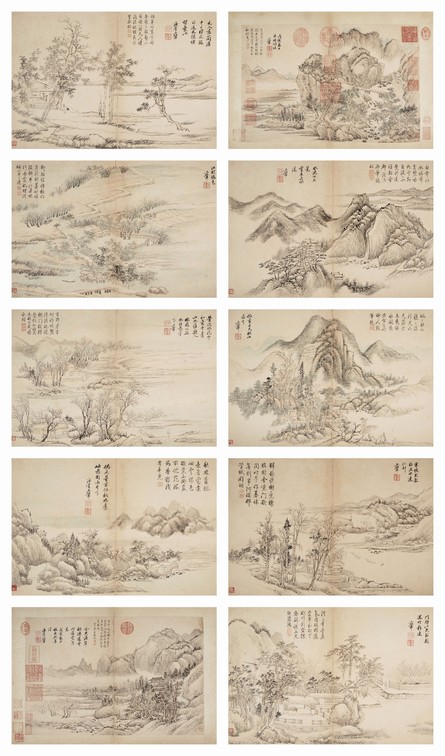
Wang Hui (1632–1717), "Landscape", 1698,
Ink and colour on paper, album of ten leaves.
Dated 1698. 25.7 x 39 cm
王翬 (1632–1717)
乾隆御題王翬山水冊,一六九八年作
水墨設色紙本  冊頁十開
25.7 x 39 厘米

Colophons inscribed by the Qianlong Emperor in 1773 with seals.
Published in "Qing Gaozong Yuzhi Shiwen Quanji" (A Complete Collection of Documented Literary Writings and Poems of Emperor Qianlong) "Yuzhi Shi Siji" (Imperial Poems, Collection 4), Juan 10 (Vol. 10), pp. 18-19.
一七七三年乾隆御題詩全文,著錄於《清高宗御製詩文全集》
「御製詩四集」卷十,頁十八至十九

There are also other artworks from influential painters, including Zhang Daqian
張大千, Huang Junbi 黃君璧, Fu Baoshi 傅抱石, Li Xiongcai 黎雄才, Cheng Shifa
程十髮 and Li Kuchan 李苦禪.

Resource Person
Steven Zuo joined Bonhams Hong Kong in January 2014 as Director of Chinese Paintings. He started his career at Bengbu Museum in An Hui Province in 1997 where he was a curator and researcher of Chinese paintings and calligraphy, focusing on authentication. He arranged exhibitions of Chinese paintings and calligraphy as well as archaeological discovery.

Steven has a MA in Art History from the Central Academy of Fine Arts in Beijing where he studied from 2003 to 2007. His academic area includes the authentication of Chinese paintings and calligraphy as well as the history of art collection.

In 2006, he worked as a specialist of Classical Chinese paintings at a leading Chinese auction house in Beijing, and was appointed Head of the Classical Chinese Paintings department in 2009. He was in charge of the department until December 2013, achieving many successful auction sales.

He has also set up exhibitions of Classical Chinese paintings and calligraphy at Poly Art Museum, including "Song Yuan Ming Qing – the important collection of Classical Chinese paintings and calligraphy".

Members and friends are welcome to view the other galleries after the tour.

Great Minds Think Alike – a study visit to the Liang Yi Museum

Liang Yi Museum curator Bonnie Lau and UMAG director Dr. Florian Knothe will guide you through the temporary special exhibition Great Minds Think Alike, currently presented in collaboration with Gallerie Kraemer, in Hong Kong’s recently opened and formidably presented private furniture museum. Experts of Chinese and French furniture, our guides will introduce the display of juxtaposed Chinese and French eighteenth-century pieces and explain the similarities and differences in design, material usage and manufacturing techniques.

For centuries, Europeans were enthusiastic about Chinese works of art they knew through rare imports and royal gifts. The French loved and assimilated Chinese art objects, pictorial themes and patterns, and sometimes turned them into French objets d’art by using lacquer panels on indigenous furniture or mounting porcelain vases with gilt bronze mounts. As much as the original Asian objects stimulated their imagination, the shape and décor of Chinese furniture found admirers and imitators in Paris, and increasing numbers of Western homes incorporated chinoiserie design in their interior decoration.

Resource Persons

Dr. Florian Knothe studies and teaches the history of decorative arts in the 17th and 18th centuries with particular focus on the social and historic importance of royal French manufacture. He has long been interested in the early modern fascination with Chinoiserie and the way royal workshops and smaller private enterprises helped to create and cater to this long-lasting fashion. Dr. Knothe is currently working on the scientific developments of glassmaking in Qing China, bringing together results from both historical and chemical analysis.

Dr. Knothe is the Director of the University Museum and Art Gallery and has honorary appointments in the University’s Fine Arts department as well as in the Institute of Humanities and Social Sciences. Dr. Knothe started his career at The Metropolitan Museum of Art focusing on European Sculpture and Decorative Arts. Later, Dr. Knothe was the curator of European glass at The Corning Museum of Glass overseeing the European and East Asian departments. There, he organized an exhibition on East Meets West, and afterward, lectured internationally on cross-cultural influences in art and workshop practices in Western Europe and East Asia.

Bonnie Lau joined the Liang Yi Museum at its inception and is in charge of the guided museum visits and organises its public lecture programmes. Majoring in business, she has extensive knowledge of Chinese furniture and cabinet making techniques as well as the traditional furniture business in Hong Kong.

From Modernist Rationality to Eclectic Plasticity: The Development of Architecture in Austro-Hungarian Empire in early 1900s With Professor Puay-peng Ho

Modernist architectural conception has a century-long history. Part of the early development of this stylistic movement can be traced to Vienna, the capital of the Austro-Hungarian empire. Here, modernist discourse in the art and architecture arose following theoretical underpinning from German architect-writers such as Gottfried Semper (1803-1879). Many stimulating exhibitions had been held on the theme of Vienna 1900, and parallel development in architecture radiating out to other cities of the large empire was equally exciting. In 1896, Otto Wagner (1841–1918) published “Moderne Architektur” both as a cornerstone for his newly appointed professorship in architecture at the Akademie der bildenden Künste Wien and as a manifesto for a new approach to architecture. The completion of the Vienna Secession building by Joseph Maria Olbrich signified the departure from the classical tradition in architecture. Interest at the time was on the nature of architecture, ornaments, construction, new materials, and the spirit of the age.

Presented in conjunction with the Museum Society’s upcoming cultural trip “Eccentric Ebullience: Architecture and Nature in Austria and Slovenia” with Professor Puay-peng Ho, this lecture will follow the development of the architectural style of the time by looking at the works of Wagner, Aldof Loos (1870–1933), Josef Hoffmann (1870–1956), and, last but not least, Jože Plečnik (1872–1957).

Speaker
Professor Puay-peng Ho is Professor and Director of the School of Architecture, and Director of Centre for Architectural Heritage Research at The Chinese University of Hong Kong. He received his First Class Honours degree in Architecture from the University of Edinburgh and a Ph.D in Art History from the School of Oriental and African Studies, University of London. Professor Ho is a member of the Royal Institute of British Architects and the Society of Architectural Historians. Currently, he serves on the Town Planning Board, Antiquities Advisory Board and History Museum Advisory Panel, and is Chairman of the Council of Lord Wilson Heritage Trust. His research interests and publications are in the areas of Chinese art and architectural history, vernacular architecture, and architectural theory. He is also involved in many architecture conservation projects in Hong Kong.

Visit to the Mountain Monastery of Tsz Shan (慈山寺) With Professor Puay-peng Ho

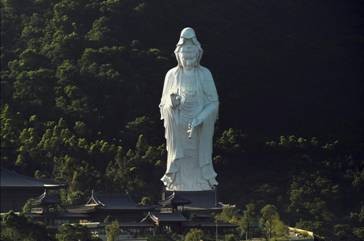
Tsz Shan Monastery (慈山寺), literally the Monastery of Mountain of Mercy, is a new Buddhist retreat designed to provide a tranquil environment for worship and meditation as well as for teaching and education. Set in the lush hillside at the foot of Pat Sin Leng in Tai Po, the design of the mountain retreat takes advantage of the setting and the view to the expansive Tolo Harbour providing many opportunities for meditation on the ground. The main group of buildings occupying the central position with a series of buildings and courtyard culminating at
the Great Buddha Hall evokes a quiet sense of majesty befitting the power of the Buddha. While the monastery emulates the ambience of a Tang dynasty building complex, with the buildings patterned after surviving buildings of the period in scale, proportion and outlook, the construction of these buildings utilizes modern technology. This is also the spirit behind the making of the colossal image of Guan Yin, rising 70 meters high from the base constructed with bronze pieces finished with a self-cleaning paint. We are delighted that Professor Puay-peng
Ho who is the chief consultant behind the architecture and sculpture of the monastery will guide us on the tour.

Resource Person
Professor Puay-peng Ho is Professor of the School of Architecture, and Director of Centre for Architectural Heritage Research at The Chinese University of Hong Kong. He received his First Class Honours degree in Architecture from the University of Edinburgh and a Ph.D in Art History
from the School of Oriental and African Studies, University of London. Professor Ho is a member of the Royal Institute of British Architects and the Society of Architectural Historians. Currently, he serves on the Town Planning Board, Antiquities Advisory Board and History Museum Advisory Panel, and is Chairman of the Council of Lord Wilson Heritage Trust. His research interests and publications are in the areas of Chinese art and architectural history, vernacular architecture, and architectural theory. He is also involved in many architecture conservation projects in Hong Kong.

Auctions in Asia Guest Speaker – Kevin Ching

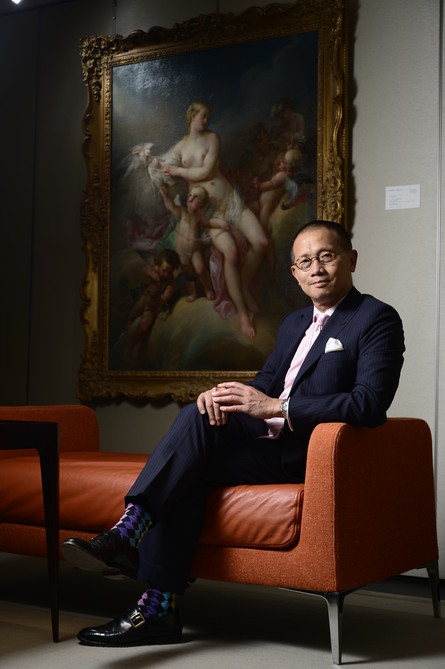
The Executive Committee is pleased to present Kevin Ching, Chief Executive Officer of Sotheby’s Asia as the guest speaker for this year’s AGM. A collector of Chinese jade, Kevin is a charismatic speaker who pens poems while flying and leaves them on the plane for others to discover. Never short on humour, he has taken comical pictures of himself in his hotel room, pretending to jump over Taiwan’s tallest building.

Speaking on Auctions in Asia, he will share with us what makes art valuable, and whether art is a form of investment. If so, how does it differ from the more conventional stock and real estate markets? As CEO for Sotheby’s in Asia for the past 9 years, Kevin has witnessed the phenomenal rise of Greater China to become one of the biggest markets in the art and auction world. He will share with us many of his interesting experiences, observations and world records.

Speaker
Kevin Ching was educated in Hong Kong and England, and holds a Master’s degree in Law from University of London. He studied English law, Soviet law, Air and Space law as well as Customary and Modern Chinese law. During his legal practice, he was a partner at Johnson Stokes & Master and Chief Representative of its Beijing office. He specialised in the areas of banking, international shipping, commercial law, investments in China as well as Sino-foreign joint ventures and arbitration.

Prior to joining Sotheby’s Asia, he was Board Executive Director and Legal Counsel for Dickson Concepts (International) Limited (1994–2006), in charge of the company’s legal and general business affairs, with special responsibilities in China. As Chief Executive Officer of Sotheby’s Asia since 2006, he is responsible for developing the strategic expansion in the region, particularly into mainland China.

Reclaiming the City as Home – An Architecture Trip to Taichung & Tainan With Corrin Chan

Urbanization has reduced creativity, joy and the connection between ourselves and nature. Vast economic growth has led us to build more and more, higher and higher. Yet, at the same time, people are not happier and healthier with this growth. In recent years, instead of blindly developing, various cities have tried to re-capture the joy and enjoyment of the city through new architecture and urban design. We start looking into our own traditional, cultural, historical context while modernising our cities.

In this short trip to Taiwan, we begin by visiting the emerging new city Taichung, examining its effort in re-claiming the city for people. In the last two days, we will visit Tainan, the emerging ‘old’ city of Taiwan.

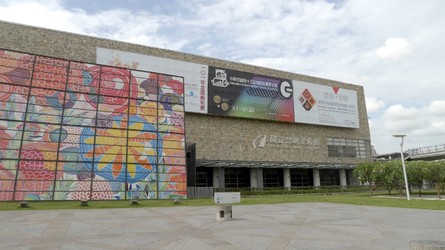
In Taichung, we will see how old buildings have been creatively rejuvenated. The emphasis on art and culture as forces of revitalisation will be obvious in the places we will visit. We visit the beautiful and serene Fu-Gui Sanyi Art & Culture Gallery (富貴三義館), the latest Asia Museum of Modern Art (亞洲現代美術館) by Tadao Ando and the newly opened Taichung Metropolitan Opera House (台中大都會歌劇院) by Toyo Ito. Miyahara (宮原眼科) and Ice-cream Parlour (第四信用合作社) are two excellent examples of transforming old buildings into up-beat fashionable hot-spots of the town. Fantasy Story Green Ray (范特喜綠光計畫), Taiwan Water Market (台水宿舍商場) and Chung Shun Market (忠信市場) are attempts in Taichung to rejuvenate old buildings and fabric as new living, shopping and art spaces.

After Taichung, we head to Tainan, the oldest city in Taiwan and a living museum for us to read into the history of Taiwan. Streets are important gathering places as they are like living rooms of the city. It is where we get together and feel connected. In this trip, we will visit Haian Road (海安路) where we will see the use of art to rejuvenate an old street, also Sheng Lung Street (神農街) and Jhenging Street (正興街). Along these streets, we can sense their warm and touching stories, their hardship and their new life. We see tea houses, book shops, cafés, Minshu (民宿), architect’s office and dining room for the community.

Resource Person
Corrin Chan is Director of AOS Architecture and is a registered architect in Hong Kong. She is vice-chair of Hong Kong Architecture Centre and Chair of Board of Internal Affairs of the Hong Kong Institute of Architects. She received her Master of Science in Architecture and Urban Design from Columbia University New York and Master in Architecture (Distinction) from the University of Hong Kong.

Corrin has had an extensive working experience in architecture and interior both in Hong Kong and in America. Corrin was involved in curating exhibitions, architecture book publications, writing articles on architecture, art installation works and collaborations with other disciplines. She has curated several exhibitions: ‘Reveal 築自室’, ‘朝行晚拆’,‘HK97 International Ideas Competitions’. She is co-author for several books: 〈2021 Emerging Hong Kong Young Architects〉, 〈空間的故事〉, 〈建築師的見觸思〉, 〈熱戀建築〉, 〈the 逼 City〉. Corrin has collaborated in spatial design for performances: ‘The Duras Project: Moderato Cantabile/ C’est Tout’, ‘Threshold’ in New York and ‘The Notes from a Schizophrenic City’.

Corrin loves to travel. She has led tours for the HKU Museum Society as well as for the Hong Kong Architecture Centre to Taiwan and Korea.
Visits to Sangwoodgoon (生活館) and Oi Yuen Villa (愛園別墅)

The Society is excited to present a day in the New Territories! We begin with a visit to Sangwoodgoon, an organic farm experimenting with new concepts in farming and healing our planet earth. Toting nature’s best, we will then visit Oi Yuen Villa, a private colonial estate once described as a “Ladies (Golf) Club House”. Under their veranda, we will enjoy a catered lunch of farm-to-table vegetables, freshly roasted piglets and some Hakka regional specialties.

Sangwoodgoon: A pioneer farming community for a sustainable future
Ghandi once said, “be the change you want to see in the world”. Sangwoodgoon (生活館) meaning “living pavilion” in Cantonese, lives the change they want to see in Hong Kong.

Established 4 years ago, Sangwoodgoon members have incorporated permaculture principles into farming, planting vegetables according to their seasonality and experimenting with rice plantation in order to create a Community-Supported Agriculture (CSA). Members began to develop their own interest and research field through regular farming routines. These included fermentation, photography, traditional food processing, agricultural history of Hong Kong, positive designs and film festivals. They strive to be a pioneer farming community preparing for the inevitable energy decline and its effect on global capitalism.
On a global level, Sangwoodgoon is part of a movement of small scale organic farmers who wish to lessen our civilization’s reliance on depleting natural resources and reduce dependency on industrial farming and its harmful effects to our planet.

On a local level, they are linked with groups of environmentalists who seek to preserve farmlands and natural reserves, not only to strive for a 30% vegetable self-sufficient target (current vegetable self-sufficient rate is 1.8%), but also to grow vegetables in ways that are healthy for human consumption, healthy for the soil, and healthy for the water, creating a sustainable way of living in harmony with nature.

On a human level, they wish to live a healthy and enriching lifestyle that builds a culture based on cultivating and sharing the planet’s environment with other plants, animals (humans being one of many), insects and micro-organisms. During this farm visit, you will witness how farmers experiment with new concepts of farming and heal the planet with every small step. After all, we as humans are part of nature.

Oi Yuen Villa
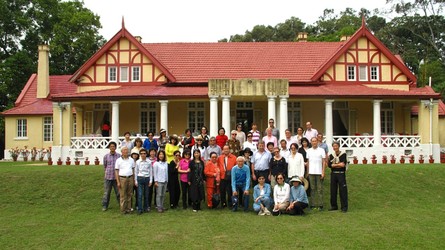
The Oi Yuen Villa (愛園別墅) was built before 1919 as a blend of Tudor and Classical architecture styles. Old records described it as the “Ladies Club House” which indicates that it might have been historically associated with the nearby Fanling Golf Club. It was owned by Jardine Matheson & Company Limited from 1922-1946. In 1957, it became the private residence of Mr. Hui Oi-chow (訐愛周, 1881-1966) and renamed Oi Yuen Villa.

A prominent businessman from Zhanjiang, Mr. Hui was a generous philanthropist active in charity and education in Hong Kong and China. In 1981 the Hui Oi Chow Science Building (許愛周科學館) at The University of Hong Kong was named in his honour. Today, his family continues his tradition of giving and service to the community. For our visit, the Hui family will kindly open their home to our members as part for our New Territories outing. The large estate with mature trees and open grounds will be a perfect setting to enjoy a lunch of delectable specialties and freshly harvested organic vegetables of the season – a rare farm-to-table treat for Hong Kong urbanites!

Asian Art Hong Kong with Yifawn Lee

The second edition of Asian Art Hong Kong (AAHK), a non-profit event organized and presented by Orientations magazine to celebrate Asian art, will take place on 2 – 11 April 2015. AAHK aims to promote high quality Asian art from the antiquities to the contemporary via a carefully designed series of events and programmes. With participation from the city’s foremost galleries, museums, institutions and auction houses, the week of talks, events, educational tours, and special exhibitions will bring together both public and professionals from across the globe. This year’s lecturers include Dr. Chen Shen of the Royal Ontario Museum and Vice-Director Wei Xuefeng of the Sichuan Museum. For details about the participants and events, please visit www.asianarthk.com.

In this special tour Yifawn Lee, Founder of AAHK and Publisher of “Orientations” magazine, will take us to visit selected participating galleries. Featured will be highlights of Chinese furniture, Himalayan art, Chinese works of art and sculptures.

Resource Person
Yifawn Lee is the Publisher of “Orientations” magazine. She completed her BA at Columbia University with a double major in East Asian Languages and Cultures and Economics, and earned a Master’s in Economics from the London School of Economics and Political Science. She later moved to Hong Kong, working for a brief period in investment banking at Lehman Brothers. Having always been interested in Asian history, art and culture, she subsequently returned to London to study for a further MA in East Asian Art at Sotheby’s Institute of Art. Now as publisher of the 46 year-old "Orientations" magazine, she combines her business skillset with her passion for the arts.