Asian Art Hong Kong (AAHK), a non-profit event organized and presented by Orientations magazine to celebrate Asian art, will take place on 3 – 12 April 2014. AAHK aims to promote high quality Asian art from the antiquities to the contemporary via a carefully designed series of events and programmes. With participation from the city’s foremost galleries, museums, institutions and auction houses, the week of talks, events, educational tours, and special exhibitions will bring together both public and professionals from across the globe. The varied educational programme will help raise interest and awareness of Asian art for a wider and particularly younger audience. (For details about the participants, please visit it www.asianarthk.com.)
In this special tour, Yifawn Lee, Founder of AAHK and Publisher of Orientations magazine, will take us to visit five of the participating galleries. Featured will be highlights of Chinese furniture, Himalayan art, Chinese jade carvings and Chinese contemporary art.
Yifawn Lee is the Publisher of Orientations magazine. She completed her BA at Columbia University with a double major in East Asian Languages and Cultures and Economics, and earned a Master’s in Economics from the London School of Economics and Political Science. She later moved to Hong Kong, working for a brief period in investment banking at Lehman Brothers. Having always been interested in Asian history, art and culture, she subsequently returned to London to study for a further MA in East Asian Art at Sotheby’s Institute of Art. Now as publisher of the 45 year-old Orientations magazine, she combines her skillset with her passion for the arts.
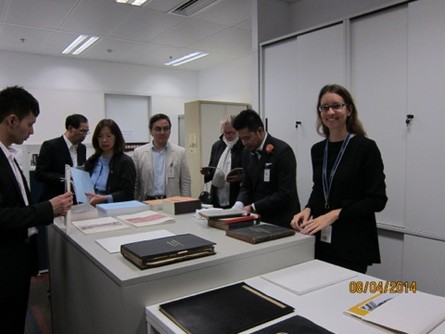
The Hong Kong Heritage Project (HKHP) is the archive of the Kadoorie family, their business and charitable activities. It holds the business and personal papers of the Kadoorie family spanning 100 years from 1880 – 1980, including the records of China Light and Power and The Hongkong and Shanghai Hotels, operators of The Peninsula Hotel. The archive also houses the records of the Jewish communities of Hong Kong and Shanghai since 1934 as well as agricultural records related to the activities of the Kadoorie Agricultural Aid Association (today’s Kadoorie Farm).
HKHP is located in the new China Light and Power Head Office in Hung Hom, Kowloon, on the site of the company’s former Hok Un Power Station (1921–1991). Guided by Amelia Allsop and Clement Cheung, the visit will feature a presentation introducing the story of the Kadoorie family’s early years in the Far East, including their early charitable activities in India, China and the Middle East, their public and political work in Hong Kong, and details of their lesser known business ventures. The talk will be followed by a display of the project’s historic records, when HKHP’s archivist will be on hand to discuss the work involved in preserving and cataloguing these items. Materials on display will include records from various Kadoorie business interests as well as those related to the charitable, public and political activities of the family.
Resource Persons
Amelia Allsop is the Business Research and Communications Manager of The Hong Kong Heritage Project (HKHP). She has worked at HKHP since its inception in 2007 and is responsible for the project’s business related research, writing and communications. Prior to joining HKHP, Amelia worked as a researcher for a Member of Parliament and on a Legislative Bill team in London. She also worked as a researcher and writer for two external corporate history publications in 2012 – 2013.
Clement Cheung is the Manager – Repository and Librarian of The Hong Kong Heritage Project (HKHP). He has worked at HKHP since its founding in 2007 and is responsible for preserving the archive’s extensive collection and maintaining its daily operations. Before joining HKHP, Clement worked in the field of information management for many years in both the private and public sectors.
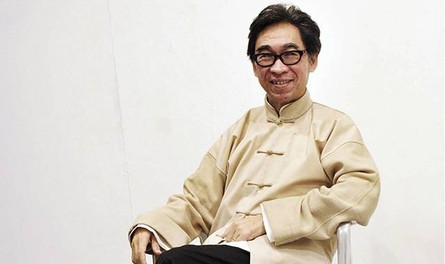
Chinese contemporary art has captured international attention, with surging price tags and expanding collector profiles. Why such popularity in the past 30 years? Hanart TZ Gallery, established just when Chinese contemporary art took off, celebrated their 30th anniversary with a special exhibition of 100 pieces of idiosyncratic artworks. We have invited their Gallery Director Johnson Chang to speak to us on the phenomenon of the Chinese contemporary art.
In Hanart 100: Idiosyncrasies, 100 art objects were specially selected to reflect a particular interpretation of Chinese modern art history, exploring the structure of the “Chinese contemporary”. Chang presents the concept of “3 Art Worlds”, believing that China’s ideological divide of the past century does not mean separate “Chinas”, but rather alternative perspectives to see art today. These “3 Art Worlds” include the globalized capital world of contemporary art (which is often recognized as the only international platform), the world of literati art (often structured as “traditional”) and the world of socialist art (usually characterized by a political undertone). “3 Art Worlds” examines the core of creation – from art familiar to the global capital world to art that pays homage to tradition to art from the socialist world.
Speaker
Johnson Chang (Tsong-zung Chang 張頌仁) is a curator, guest professor of China Academy of Art in Hangzhou, director of Hanart TZ Gallery (漢雅軒畫廊), and board member of Asia Art Archive. He has been actively curating exhibitions of Chinese art since the 1980s. His current research projects include: the “Yellow Box” series of projects about Chinese space and contemporary art practice (since 2004); and “Jia Li Tang” projects on Confucian rites and aesthetics (since 2012). Recent curatorial works include: Co-curator of Guangzhou Triennial 2008 “Farewell to Post-Colonialism”, Co-curator of the 9th Shanghai Biennale 2012, the “West Heavens” series of India-China art and intellectual exchanges (first presented on the platforms of Shanghai Biennale 2010, Guangzhou Triennial 2011 and Shanghai Biennale 2012), “Inter-Asia” forum of Asian modern thought (since 2012), and recently “Hong Kong Eye” (Saatchi Gallery, London 2012).
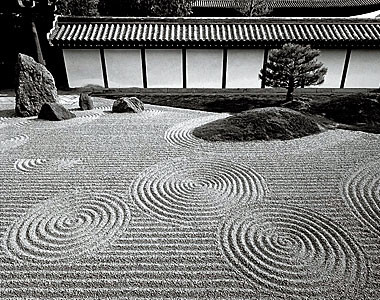
Pilgrimage is the oldest human activity bringing nature, culture and the divine together in a journey. Japanese culture expresses its long history of reverence for nature through rituals, art and architecture. Much of these expressions are encapsulated in ancient pilgrimages that are still very much alive today. This lecture will delineate the magical facet of Japanese culture by looking at the Kumano Kodo, a network of ancient pilgrimage paths linking Kyoto, Koyasan, and Grand Shrines of Ise at the tip of the Kii Peninsula. While the lecture might not be able to replicate the mystical experience, it will explore the depth of divine encounters in photos of the stunning landscape.
This lecture covers highlights from the Museum Society’s upcoming tour to Japan in May with Professor Puay-peng Ho. The beautiful visual presentation will be thought provoking and enlightening to everyone. Come, join us and be inspired!
Speaker
Professor Puay-peng Ho is Professor and Director of the School of Architecture, and Director of Centre for Architectural Heritage Research at The Chinese University of Hong Kong. He received his First Class Honours degree in Architecture from the University of Edinburgh and a Ph.D in Art History from the School of Oriental and African Studies, University of London. His thesis focused on Buddhist art and architecture of the Tang dynasty. Professor Ho is a member of the Royal Institute of British Architects and the Society of Architectural Historians. Currently, he serves on the Town Planning Board, Antiquities Advisory Board and History Museum Advisory Panel, and is Chairman of the Council of Lord Wilson Heritage Trust. His research interests and publications are in the areas of Chinese art and architectural history, vernacular architecture, and architectural theory. He is also involved in many architecture conservation projects in Hong Kong.
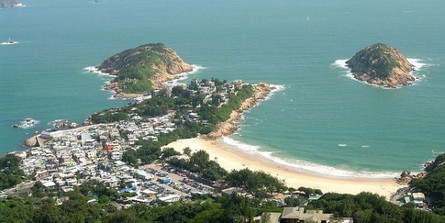
The Museum Society is delighted to organize a morning hike on the Dragon’s Back with our VC Professor Lap-Chee Tsui and his wife, our Patron Mrs. Ellen Tsui. Both are avid hikers who have treaded on many wonderful trails in Hong Kong. One of their favorites is the Dragon’s Back, a popular and scenic route on HK Island. In 2004, it was voted as the ‘Best Urban Hiking Trail in Asia’ by Time Magazine (Asia Ed.).
We will begin the hike through the entrance on Shek O Road near the To Tei Wan village and traverse through the rugged undulating spinal ridge of the Dragon’s Back. The trail offers spectacular views of Shek O, Tai Long Wan, Stanley, Tai Tam and the South China Sea. At the end of our hike, we will be rewarded with a delicious meal at one of the alfresco restaurants in the Shek O Village.
Needing little introduction, Professor Lap-Chee Tsui is the 14th Vice Chancellor of HKU, serving the University from 2002 to 31 March 2014. He is a renowned international scientist, having led groundbreaking research on human genetics. Mrs. Ellen Tsui has been the Museum Society’s 3rd and longest serving Patron, attending eleven of our Annual General Meetings. Devoted to building a strong HKU Family, they have enthusiastically supported the Museum Society in organizing numerous successful events at the University Lodge over the years. The Museum Society wishes them the best in their new endeavours.
Please join us for a day of great fun with our dear VC and Patron!
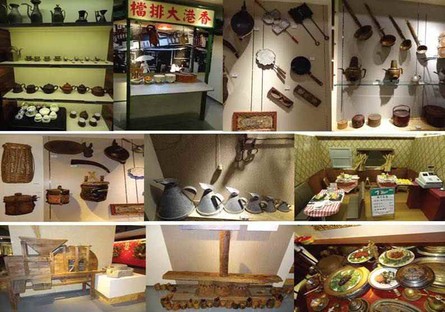
The Tao Heung Museum of Food Culture is dedicated to promoting the understanding and appreciation of the different food cultures of the world. The 8,000 square feet facility features various dining scenes to demonstrate how the culture and characteristics of food has evolved across different provinces in China. It presents an array of displays with informative narrative text, and exhibits of artefacts from different eras and regions, including cooking utensils, vessels, tableware, ingredients and seasonings – fully illustrating that the love and enjoyment of food is universal among all cultures.
The guided tour of the Tao Heung Museum of Food Culture will take about 1 hour 15 minutes. Afterward, a special lunch including some of the Restaurant’s specialities will be served in the private dining room of the Tao Heung Training Restaurant.
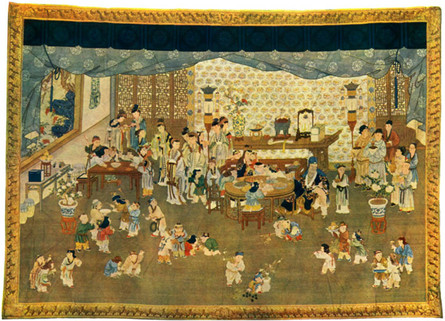
This lecture focuses on the visual relationship between woven panels and discusses cross-cultural influences in the weaving of tapestries in East and West. Whereas China has a rich tradition of producing colourful embroidered textiles, the weaving of tapestry, or kesi, was comparatively rare. During the Qing dynasty, European tapestries – then one of the most treasured of all art forms – became known in China through a diplomatic gift received by Qianlong in 1767. From then on, this ‘exotic’ set of textiles, together with a group of European Jesuit painters in the Imperial City, seems to have had an influence over Chinese kesi production and the introduction of linear perspective in painted as well as woven paintings.
Speaker
A scholar of Western European art, Dr. Knothe is the Director of the University Museum and Art Gallery (UMAG). He received his PhD with a thesis on the royal manufacture and production of art and propaganda in 17th century France. From 2005-2008, he worked as research fellow and associate in European Sculpture and Decorative Arts at The Metropolitan Museum of Art. During his appointment in 2009 as curator of European glass at The Corning Museum of Glass, he devoted time to research his long-established interests in cross-cultural influences in art and workshop practices in Western Europe and East Asia. This work culminated in his East Meets West exhibition in 2010, and related lectures and conference papers that were presented in the US, Europe, Asia and Africa. In his role as Director, Dr. Knothe aims to connect UMAG internationally so that future collection-oriented research and programming reflect the university’s unique geographic and cultural position between East and West.
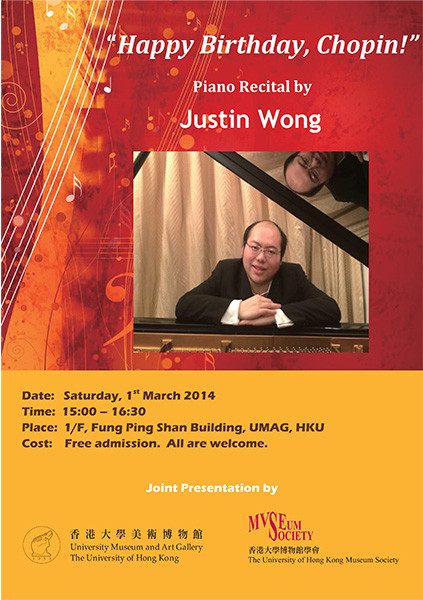
Frédéric François Chopin (1 March 1810 – 17 October 1849), was the composer of some of the most challenging and subjective music in the whole of the keyboard repertoire. Born in Poland and living most of his adult life in France, he started composing at the age of 7. He gave only 30 performances in his short 39-year life span, mainly in intimate salons of high society. His music ranged from patriotic, melancholy, passionate to simple and beautiful, bringing new life to Classical music in the 19th century. He was also known as a great teacher of piano.
Programme
On the anniversary of Chopin's birthday, Justin Wong will give a brief introduction about Chopin's life and works, and why he remains one of the most performed composers for pianists up until today. This will be followed by a recital of a selection of Chopin's piano pieces, as well as some pieces inspired by him.
Performer
Justin Wong is a popular pianist now based in Hong Kong who has performed to international acclaim. After winning multiple first prizes and a music scholarship to attend Winchester College, his piano performance training brought him to the Peabody Conservatory where he was mentored by Marian Hahn and Dr. Ernest Berretta. He has been greatly praised in masterclasses with V. Ashkenazy, Leon Fleisher and Emmanuel Ax, among others.
Justin is also a graduate of HKU in Law, but has chosen to dedicate wholeheartedly his time to his music profession. He is the Principal Organist for the Chinese services at St. John's Cathedral in Hong Kong. He has played in many cathedrals and churches throughout the world, on pipe organs, not just in liturgical performances, but also for special occasions like weddings, memorials and inaugurations. He has collaborated with many young talented musicians and artists, appearing in numerous solo performances in the US, UK and Hong Kong.
Featured on RTHK4 last year, Justin is highly regarded as a soloist, an accompanist and as a teacher. He takes pride in his students winning distinctions and music scholarships to top boarding schools every year. In addition to teaching masterclasses, he enjoys composing music.
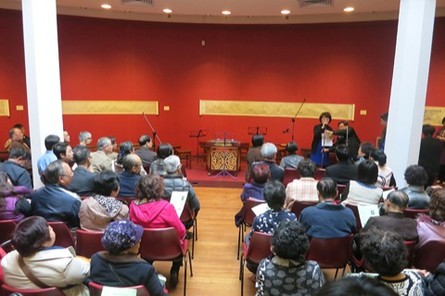
Maestro Leung Yee-chung (梁以忠1905-1974) was a versatile musician, composer and singer of Cantonese music and opera. Cantonese music broadly refers to the different vocal and instrumental genres popular in Guangdong; Cantonese opera is a theatrical art form that incorporates music, singing, acting, acrobats and martial arts to tell stories based on Chinese history, classics and myths.
Renowned as a Cantonese opera vocalist, Maestro Leung founded a unique school of vocal music (解心腔) characterized by the use of a flexible and sentimental voice that differs from the rhythm and expression of traditional singing. This new style has contributed significantly to the enrichment and development of Cantonese vocal music in Hong Kong.
Maestro Leung was also a violinist, famous for his ingenuities in playing a diverse range of Chinese musical stringed instruments, in particular, erxian (二弦), erhu (二胡) and small houguan (短筒喉管). Many of his instrumental compositions are frequently performed and widely recognized as famous Cantonese operatic fixed tunes (小曲) that have been commonly adopted into Cantonese opera.
Programme
To commemorate and celebrate Maestro Leung Yee-chung’s contribution to Cantonese music, we are delighted to present the following special programme
• A brief introduction to the “Five Instruments”
• Maestro Yu Qi-wei (余其偉), Head of the Department of Chinese Music,
Hong Kong Academy for Performing Arts and his team will perform selected
masterpieces from Maestro Leung Yeechung’s collection.
• Maestro Leung’s daughters, Leung So-kam (梁素琴) and Leung Chi-kit (梁
之潔) will demonstrate a session of the “Eight Famous Pieces”.
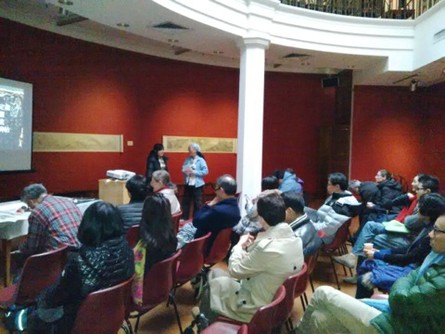
This lecture focuses on rubbings, which are one of the most influential art reproductions in China. The artistic value of calligraphic rubbings could be comparable to the original calligraphy yet not many people, including art historians, pay attention to this kind of art reproductions. In fact, rubbings occupied a central place in Chinese visual culture, and allowed the elite practices of calligraphy and antiquarianism to be shared with relatively wider audiences in imperial China. Now, however, esoteric rubbings are rarely displayed by the museums that house them. Why are rubbings, such as those of the Hong Kong University Museum & Art Gallery’s (UMAG) collection little known? By using selected rubbings from UMAG as examples, Dr. Sarah Ng will help us understand the significance of rubbings, their roles in the transmission of classical tradition, and how they can best be appreciated and used.
Instead of using traditional art historical approach such as authenticity and originality, the Q&A session of this talk will be a platform for art enthusiasts, artists, art historians and the public to discuss the issues on the transformation of Chinese art reproductions from a socio-cultural perspective.
Speaker
Dr. Sarah Ng received her doctorate in History of Art at the University of Oxford with a thesis on calligraphic rubbing collections in the Ming dynasty. She is a former visiting scholar at the Institute of History & Philology (IHP), the Institute of Modern History (IMH) at the Academia Sinica, and the Centre for Chinese Studies (CCS) in Taiwan. Her recent research is on Ming dynasty royal rubbing collections, and on modern paintings and calligraphy from the UMAG collection. She has a passion for the preservation and promotion of Chinese art and possesses a strong museum background with almost ten years of experience working and volunteering in various museums (the British Museum, Museum of London, the Rare Book Collection of UCL, Archaeological Museum in Greece, Hong Kong Museum of Art and the Art Museum CUHK, etc.) before joining UMAG as a research fellow.