Guided Viewing: A Different Kind of Art – Magnificent Jewels, Watch Spectacular, and Other Objet de Desir at Sotheby’s Hong Kong Sale at HKCEC
Please join us for an extraordinary spectacle of luxury in various forms.
Guided Viewing: “Ma Yansong: Landscapes in Motion” with Architect Simon Chan at Hong Kong Design Institute
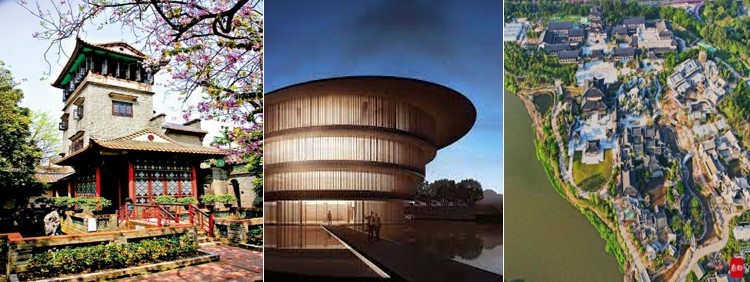
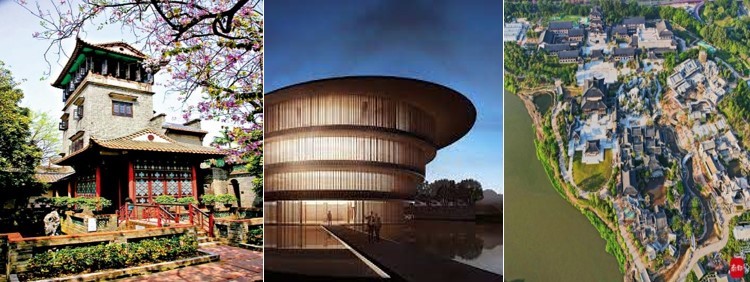
In collaboration with Shenzhen Museum of Contemporary Art and Urban Planning (MOCAUP) and the renowned architect Ma Yansong’s Architecture firm, the MAD Architects, the “Ma Yansong: Landscapes in Motion” exhibition aims to comprehensively explore Ma Yansong’s most representative urban architectural projects over the past two decades. Born in 1975 and graduated from Yale University in 2002, Ma Yansong founded MAD Architects (MAD) in 2004, a multinational firm that is committed to developing futuristic, organic, technologically advanced designs that embody a contemporary interpretation of the Eastern affinity for nature. This exhibition not only reveals Ma’s thought-provoking concepts and imaginative vision but also provides a glimpse into the future of urban civilization, showcasing a harmonious coexistence between urban landscapes, history, and the natural environment.
Speaker
Simon Chan is a Registered Architect in Hong Kong, Canada, and China, with over 23 years of experience. He holds a Bachelor of Architecture degree from the University of Toronto and a Master of Design from Hong Kong Polytechnic University. He has worked in New York, Toronto, and in Hong Kong for the past 17 years. Simon’s notable projects include the M+ Museum and the Hang Seng Bank Headquarters Revitalization in Hong Kong, Shenzhen Natural History Museum, Shenyang Kerry Center, University of Toronto Student Center, and the Shangri-la Center in Mongolia. He was an Assistant Professor at the University of Hong Kong and is currently teaching part-time in the University of Lincoln degree program at the Hong Kong Design Institute, and at Hong Kong Chu Hai College.
Photo Credit:
Courtesy of HKDI
Guided Visit to Art Central with Dr. Harald Kraemer at Central Harbourfront
Understanding Art Fairs – more than just a visit
At an art fair, there are countless works of art to discover at hundreds of galleries. How do you actually find what you like in this maze? How do I plan my tour? We will take a look behind the scenes and find out what strategies galleries use to attract our attention and market their artists. We will learn what collectors do to find the artwork of their choice and how artists use the fair as a platform to draw attention to themselves.
Speaker
Dr Harald P. Kraemer taught Art Market courses and wrote for many years about Art Basel and other art fairs for the Vienna-based online magazine Artmagazine. As a student, he had his first (painful) experiences as a gallery owner in his home town and later developed survival strategies for some artists in the art market. He currently teaches Museum Studies at HKU and works as an exhibition curator for UMAG.
Guided Visit to Art Basel with Dr. Harald Kraemer at Hong Kong Convention and Exhibition Centre
Understanding Art Fairs – more than just a visit
At an art fair, there are countless works of art to discover at hundreds of galleries. How do you actually find what you like in this maze? How do I plan my tour? We will take a look behind the scenes and find out what strategies galleries use to attract our attention and market their artists. We will learn what collectors do to find the artwork of their choice and how artists use the fair as a platform to draw attention to themselves.
Speaker
Dr Harald P. Kraemer taught Art Market courses and wrote for many years about Art Basel and other art fairs for the Vienna-based online magazine Artmagazine. As a student, he had his first (painful) experiences as a gallery owner in his home town and later developed survival strategies for some artists in the art market. He currently teaches Museum Studies at HKU and works as an exhibition curator for UMAG.
Studio Visit with Artist Marina Pang
The HKU Museum Society is delighted to be extended a visit to the private studio and gallery of artist Marina Pang, one of the Museum Society’s founding members.
Marina Pang was born in Hong Kong and obtained a bachelor’s degree in science and education in the U.S.A and Britain. She started her painting career when her sons left for England’s Public School and had a lot of time to pursue her favourite hobby – PAINTING.
She was fortunate to study under very famous masters in Chinese painting, Huang Chun Pi (黃君璧), Chao Shao An (趙少昂), He Bai Li (何百里), Song Yu Gui (宋雨桂), and calligraphy under Ou Da Wei (區大為). Her selected works were chosen for exhibition by the “Hong Kong Contemporary Art Awards” (an open art competition to all Hong Kong artists). Her works were chosen 5 times between 1994 and 2012. She held solo exhibitions in Hong Kong 5 times between 1994 and 2019.
Her style changes with time. The beginning was pure Chinese monochrome landscapes. As time goes on, she added colours (especially acrylics) to all her works, including flowers, fish, insects, birds, as well as landscapes, with a more loose and free approach. During our visit, she will demonstrate her techniques in putting to paper the beautiful images in her mind.
Guided Viewing: “Botticelli to Van Gogh: Masterpieces from The National Gallery, London” with Prof. Greg Thomas at Hong Kong Palace Museum
Organised by the Hong Kong Palace Museum and the National Gallery, London, this exhibition is the first showcase of the Gallery’s prestigious painting collection in Hong Kong. It features 52 of the world’s finest masterpieces painted by fifty influential artists, spanning more than 400 years of Western art history.
The paintings on view, dating to the 15th to early 20th century, encompass the most significant turning points in the history of art, from the Renaissance to impressionism and post-impressionism, represented by some of the world’s most revered artists, including Botticelli, Raphael, Titian, Caravaggio, Rembrandt, Goya, Turner, Constable, Monet, and Van Gogh.
Speaker
Professor Greg Thomas earned his Ph.D. in art history from Harvard University in 1995 and has taught at HKU since 1999. A specialist in 19th-century French painting, he has published Art and Ecology in Nineteenth-Century France: The Landscapes of Théodore Rousseau (Princeton UP, 2000) and Impressionist Children: Childhood, Family, and Modern Identity in French Art (Yale UP, 2010). Subsequent research has focused primarily on artistic interactions between Europe and China in the 18th and 19th centuries, including a current book project focused on the palace of Yuanmingyuan. At HKU, he teaches an introductory survey of western art history and advanced courses on 18th- and 19th-century art and architecture.
Photo Credit:
Sir Thomas Lawrence (1769–1830)
1825
Oil on canvas
NG 6692
© The National Gallery, London
Lecture & Lunch: Exploring Art and Architecture of Eastern Anatolia with Dr. Elvan Cobb and Prof. Puay-peng Ho at HKU
The HKU Museum Society is pleased to present two lectures in connection with the HKUMS‘s upcoming tour Awesome Antiquities: Exploring Art and Architecture of Eastern Anatolia. Members and Guests are welcome to attend this event.
Unearthing Mount Nemrut (by Dr. Elvan Cobb)
Mount Nemrut, nestled among the majestic Taurus Mountains, stands as one of Anatolia’s most iconic destinations. The tomb-sanctuary, known as the Hierotheseion, was established by King Antiochos I of the Commagene Kingdom during the 1st century BCE. It served as a significant testament to Antiochos’s endeavors to amalgamate the Greek and Persian pantheons, exemplifying the syncretic movements of the Hellenistic Era. Rediscovered in the late 19th century, the site was initially explored by German and later by Ottoman archaeologists. After a period of hiatus, archaeological work at the site resumed in the 1950s. Mount Nemrut was added to UNESCO’s World Heritage List in 1987. This presentation aims to provide a comprehensive overview of the site’s history, spanning from its inception to its archaeological exploration, all the way up to its inclusion on the World Heritage List.
Speaker
Dr. Elvan Cobb is a historian of the built environment, especially focusing on the histories of place in the Ottoman Empire and the modern Middle East. In her work, Dr. Cobb juxtaposes histories of space with histories of technology, archaeology, tourism, environment, and the senses. She is currently an assistant professor of history at Hong Kong Baptist University and serves as the assistant director of the Ararat Plain Southeast Archaeological Project in Armenia. She has received her doctorate in history of architecture and urban development from Cornell University and holds a master’s degree from the University of Pennsylvania in historic preservation.
Awesome Antiquities: Appreciating the Art and Architecture of Eastern Anatolia (by Professor Puay-peng Ho)
Eastern Anatolia (Türkiye) lies in the fertile plain in the upper reaches of the two great rivers of Euphrates and Tigris. Similar to lower Mesopotamia further south, which was the cradle of one of the 4 ancient riverine civilizations, the history of human habitation of Eastern Anatolia can be traced to the megalithic period. At Göbekli Tepe, a large circular ditch was unearthed containing massive stone pillars dating to around 11,000 years ago. Together with foundation of many houses, temples, and smaller structures, the settlement must be the earliest settlements excavated. In the historical periods, multiple cultural manifestations were developed over the past three millennia on this land. More than a few superpowers ruled this territory including the Hittite, Achaemenid, Macedonia Greek, Seleucid, Rome, Byzantium, Seljuk, and Ottoman empires. In addition, the territory was also subjected to several minor interludes of conquest, such as the Scythians and Mongolians from the Eurasian steppe, and the Timurid from Sogdiana. As such, the region was subjected to the cultural influences of the Assyrian, Greek, Seleucid, Roman, Steppe nomads, Persians, Armenians, Arabs, and Turks. With such a rich temporal and spatial intersection of people groups and cultures, the art of architecture of Eastern Anatolia has shown both local and foreign forms and spirits.
The monumental, memorial, trading, living, and religious architecture and artifacts are the canvases on which the contestation and mutual influences of cultures played out. In addition, the long and ancient history of the region gave rise to legendary and historical landmarks spotlighting major players on the historical stage. This lecture will string together some of these key landmarks that will highlight the long and varied art and architectural forms that will manifest the glorious tapestry of eastern Anatolia. These include: the city of Şanlıurfa which is said to be ancient Ur where Abraham, revered by Jewish, Christian, and Islamic religions, is said to have been born; the recently excavated mosaics of the Seleucid and Roman periods found mainly in houses of ancient Zeugma (3rd – 1st cent. BCE, present-day Gaziantep); the colossal statues of deities erected by King Antiochos in the 1st century BCE on Nemrut Dağ; the archaeological site of ancient city of Ani (7th-13th century), the many monuments of Islamic Seljuk and Ottoman Anatolia, such as the Ulu Cami Great Mosque (12th century), Cifte Minare Medrese (13th century), Zinciriye Medresesi (14th century), and Er Rizk Mosque (15th century), as well as many Christian and Orthodox architecture, such as Dayro d-Mor Gabriel Orthodox Monastery (4th-6th century), the monastery of Sumela (12th century), and the Church of St. Giragos (16th century). These impressive monuments weave together a tapestry of artistic and architectural forms reflecting the splendid cultural expression of the multiple civilisations on this ancient land.
Speaker
Professor Puay-peng Ho holds the UNESCO Chair on Architectural Heritage Conservation and Management in Asia. He is currently Professor at Department of Architecture, College of Design and Engineering at the National University of Singapore. Having close to 30 years of experience in the academia, Professor Ho’s main research interests are in architectural history and conservation practices, and how the knowledge can be translated in teaching and practice. Professor Ho is a conservation consultant, architect and adviser to some 100 conservation projects in Hong Kong and Singapore since 2003, including PMQ, Haw Par Villa, Comix Homebase, Oil Street Art Space, Court of Final Appeal, and New Campus for Chicago University Booth School. Professor Ho was also appointed to many public and private boards and committees in Hong Kong, including as Chairman of the Lord Wilson Heritage Trust, member of Town Planning Board, Antiquities Advisory Board, and currently a member of Senior Advisory Board of Global Heritage Fund and a Patron of the International Dunhuang Project of British Library.
Heritage Tour: Cha Kwo Ling 茶果嶺 with Historian Architect Edward Leung
The HKU Museum Society is delighted to organize a heritage tour to the largest of these villages, Cha Kwo Ling, with historian architect Edward Leung. During our visit, expert guides will take your through the village to see the remaining, inconspicuous yet historically and socially significant, temples, dwellings, workshops, shops, shrines, trees, streets and public-spaces, before they are either regrettably cleared, or, fortunately, partly kept in the process of imminent redevelopment for housing.
海彊礦場英雄村–末代城市村和她那悍衛海彊和礦場之人民
維港兩岸的香港城市,據舊日教科書所講,是英國人自 1841年接管香港後建造的。如今,經深入研究,我們得知事實並非如此:九龍山下熙熙攘攘的鄉鎮自10世紀已經成型,為宋朝末代皇帝服務,並在19世紀作為東西方貿易的重要港口,續而繁榮起來,並成為王朝的海防基地、是產鹽或產石之場所,甚至在戰後成為為手作工業中心。這些隱藏在我們城市的高樓大廈和繁忙的道路綱絡內的村居,是中式做型,用磚或花崗石牆和瓦頂建做的聚落,被政府稱為「寮屋建構」,什至「譴例建築」,在過去幾十年來被續步悄然清拆。現僅存的有竹園、牛池灣及茶果嶺三條城中村。而這三條村現也列入清拆計劃,往後香港便面臨沒有明顯見證這些人民英雄歷史的遺跡。香港大學博物館學會在此邀請有心人士參加最後一次參觀這三條村落中最大的一條:茶果嶺村,看看這些僅存的、不起眼但存著重要歷史價值的寺廟、住宅、工作坊、商店、神襢、樹木、街道和公共空間。它們大部分已經被例入即將進行清拆項目,以便房屋發展。或者,市民對?著保育歷史表態,有重要意義的地部分還能幸免剷走,保留給後代-系列能清楚解讀的香港典故。
Speaker
Edward Leung is an architect with experience in conserving historic architecture, including an award winning Adaptive Reuse design and many other restoration projects in China and Hong Kong. Apart from being the former Chairman of the Heritage Conservation Committee of Hong Kong Institute of Architects (HKIA) and the Academic Director of HKU Space Cultural Heritage Management Programme, he also regularly delivers lectures and papers on local historic architectural topics.
Talk: “Hero-Village of Coast and Quarry – The Last Urban Village and Her Peoples Who Defended Our Coast and Quarry for Centuries” with Historian Architect Edward Leung at UMAG
The City of Hong Kong on both sides of the harbour, was built by the British since their occupation in 1841, as told by text books for schools in Hong Kong over many decades. We now know that this is not truthful history. Bustling townships and villages beneath the Kowloon Hills have taken roots since the 10th century, serving the last emperors of the Song Dynasty. They prospered in the 19th century as a key port for the East-West trade, as a coastal defense out-post for the Chinese dynasties, as a centre of salt and stone production and, as a handicraft industrial hub after the War. These settlements of Chinese houses, of brick/stone-walls and tiled-roofs hidden amongst urban high-rises and overwhelmed by the denser and denser network of roads and highways, the government calls “Squatter-Structures”. They were silently cleared over the past decades. Little is now left to testify the heroic history of these peoples of the early Chinese settlements. There are three remaining urban villages: Chuk Yuen, Ngau Chi Wan and Cha Kwo Ling.
海彊礦場英雄村–末代城市村和她那悍衛海彊和礦場之人民
維港兩岸的香港城市,據舊日教科書所講,是英國人自 1841年接管香港後建造的。如今,經深入研究,我們得知事實並非如此:九龍山下熙熙攘攘的鄉鎮自10世紀已經成型,為宋朝末代皇帝服務,並在19世紀作為東西方貿易的重要港口,續而繁榮起來,並成為王朝的海防基地、是產鹽或產石之場所,甚至在戰後成為為手作工業中心。這些隱藏在我們城市的高樓大廈和繁忙的道路綱絡內的村居,是中式做型,用磚或花崗石牆和瓦頂建做的聚落,被政府稱為「寮屋建構」,什至「譴例建築」,在過去幾十年來被續步悄然清拆。現僅存的有竹園、牛池灣及茶果嶺三條城中村。而這三條村現也列入清拆計劃,往後香港便面臨沒有明顯見證這些人民英雄歷史的遺跡。香港大學博物館學會在此邀請有心人士參加最後一次參觀這三條村落中最大的一條:茶果嶺村,看看這些僅存的、不起眼但存著重要歷史價值的寺廟、住宅、工作坊、商店、神襢、樹木、街道和公共空間。它們大部分已經被例入即將進行清拆項目,以便房屋發展。或者,市民對?著保育歷史表態,有重要意義的地部分還能幸免剷走,保留給後代-系列能清楚解讀的香港典故。
Speaker
Edward Leung is an architect with experience in conserving historic architecture, including an award winning Adaptive Reuse design and many other restoration projects in China and Hong Kong. Apart from being the former Chairman of the Heritage Conservation Committee of Hong Kong Institute of Architects (HKIA) and the Academic Director of HKU Space Cultural Heritage Management Programme, he also regularly delivers lectures and papers on local historic architectural topics.