Dr. Roslyn Lee Hammers, ‘Beyond Beauty – Regarding the Peony in the Tang to Yuan Dynasties’

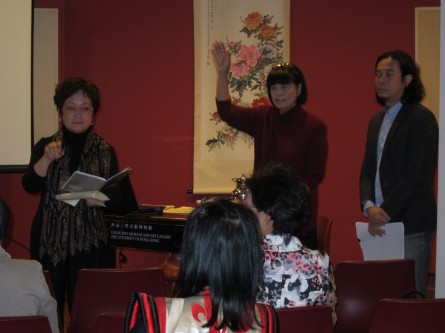
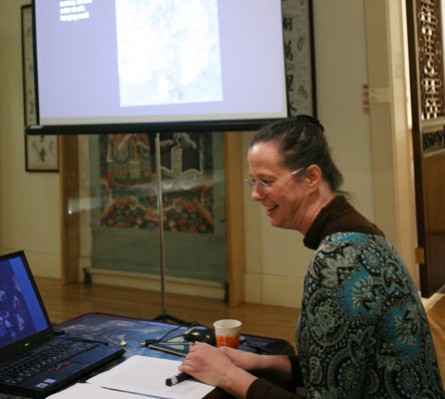
The peony, as a subject worthy of painting and poetry, has an extensive history in Chinese art and literature. As early as the Tang dynasty (618-907), the beauty of the peony incited great appreciation, even mania. In every March during times of peace, Luoyang experienced a carnival of peony extravaganza, as aficionados competed to create, own, and display the most sumptuous beauties. With such sensational attention, the peony became imbued with a wide range of associations. The allure of the flower, long associated with feminine seductiveness, inspired poems extolling its sensuous charms. For most admirers, the peony was celebrated in paintings, praised in poetry, and acclaimed in botanical studies. For others, however, the floral beauty was regarded with some reservations – a subject too seductive for proper scholarly attention or artistic expression. In this lecture, Dr. Roslyn Hammers will explore varying facets of peonies as presented in paintings, poetry and prose, in order to reclaim the complexities it evoked, as well as to consider the apprehension the blossoming temptress motivated.

Speaker
Dr. Roslyn Lee Hammers earned her PhD at the University of Michigan and teaches courses on Chinese painting, South Asian art, and Asian architectural history at the University of Hong Kong. She has published a volume entitled "Pictures of Tilling and Weaving: Art, Labor, and Technology in Song and Yuan China" (Hong Kong University Press, 2011), and other articles on the interactions between technology and artistic production. She was a Fellow at the Needham Research Institute, Cambridge University, U.K. as well as at the Freer and Sackler Galleries in Washington, D.C.

Asia Society Hong Kong Center’s Inaugural Exhibition ‘Transforming Minds – Buddhism in Art’ & Professor Puay-peng Ho ‘Devotion and Patronage: Why and How Buddhist Monasteries Were Built’

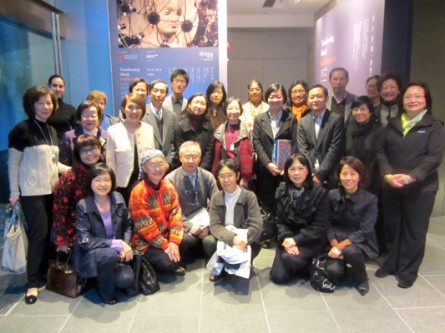
We're delighted to present a special tour of the new Asia Society Hong Kong Center's facility and its inaugural exhibition, Transforming Minds – Buddhism in Art, with their Assistant Gallery Manager, Dominique Chan. Following the tour, participants are invited to attend a lecture by Professor PP Ho, Devotion and Patronage: Why and How Buddhist Monasteries Were Built

Asia Society Hong Kong Center's Inaugural Exhibition

Asia Society is establishing a new home at a former explosives magazine/military site in Admiralty on Hong Kong Island, Hong Kong. The site has 4 historic buildings that were developed in several phases between the 1850s and 1920s. Two of the buildings, Magazine A and Magazine B, were used to produce and store explosives and ammunitions. They have now been transformed into a gallery space for exhibitions as well as a small theatre. The Center and an inaugural exhibition titled, Transforming Minds – Buddhism in Art, are set to open in early February 2012. The exhibition will showcase Buddhist works from the world-renowned Mr. and Mrs. John D. Rockefeller 3rd Collection of Asian Arts along with contemporary works by leading Asian and Asian-American artists that draw inspiration from one of the world’s great religions. The show asks the diverse local and international audiences visiting the new Asia Society Hong Kong Center Gallery to consider the ways in which Buddhist art has changed over time and space. Although originating in India, Buddhism travelled across Asia and was transformed by local cultures. Recently, a combination of individualism and an interest in Buddhist beliefs has impacted the artistic production of contemporary artists. This exhibition is a rare occasion to see examples of cultural adaptations and collective responses to Buddhism in pre-modern times as well as individualized responses to Buddhism in contemporary artistic practice. The exhibition will run from the 10 February to 20 May 2012.

Lecture with Professor Puay-peng Ho

Devotion and Patronage: Why and How Buddhist Monasteries Were Built

We appreciate Buddhist sculptures for their beauty in form and serenity in spirit. Obviously, there are more questions that we can ask about the sculptures presented at this exhibition. One may wonder where were they housed originally? How were they commissioned? What were the motives in sponsoring the making of these images? Likewise, similar questions can be asked of the Buddhist monasteries to tease out the social and devotional background of Buddhist establishments. This lecture will focus on China around the 6th-10th centuries to present a broad picture of patronage of monasteries and images at many levels of society, from the emperors to the aristocrats. It will highlight the connection between the form of Buddhist architecture and images, and the purpose of commissioning them. More than 50,000 state-registered monasteries can be found all over China dating to this time period, and the lecture will delineate the intersection between faith, devotion, patronage and the arts.

Professor Puay-peng Ho(何培斌教授) is Director of the School of Architecture and Director of the Centre for Architectural Heritage Research of The Chinese University of Hong Kong. He received his First Class Honours degree in Architecture from the University of Edinburgh and a Ph.D in Art History from the School of Oriental and African Studies, University of London. His thesis focused on Buddhist art and architecture of the Tang dynasty. Professor Ho is a member of the Royal Institute of British Architects and the Society of Architecture Historians. His research interests and publications are in the areas of Chinese art and architectural history, vernacular architecture, and architectural theory.

Imperial Monochrome Porcelains of the Yuan to Qing Dynasties with Richard Kan (簡永楨)

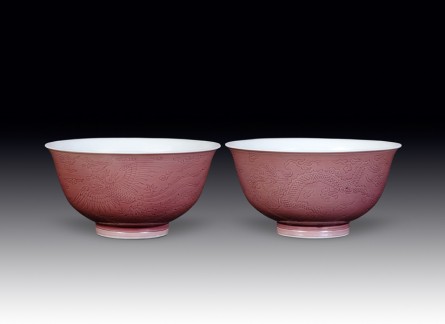
For over six centuries starting from the Yuan Dynasty, Jingdezhen has been the centre of Chinese porcelain production, particularly catering to the needs of the Imperial Court. Monochrome porcelain’s popularity had been recognized as early as the Five Dynasties, some 1000 years ago.

In this lecture, Richard W.C. Kan will showcase a selection of colours/hues of monochrome porcelains in a power-point presentation to demonstrate the effects from different firing temperatures. Emphasis will also be placed on specific achievements through the ages, including the simple taste of the early Ming emperors, the innovations of the mid-Ming Dynasty, and the ultimate success attained in the reigns of Kangxi, Yongzheng and Qianlong between the 17th and 18th centuries.

Kan will present an overview on the subject of imperial monochrome porcelains and discuss how such spectacular colours could have been developed in such an unpretentious art form.

Speaker:

Richard W.C. Kan (簡永楨) is a successful chartered engineer and a modern renaissance man whose interests include comparative philosophy, Chinese and European history, Greek numismatics, Chinese monochrome ceramics and photography.

In 2004, he was appointed Visiting Professor at the Academy of Chinese Culture, and was Project Director of a series of cultural symposiums in Beijing. He founded the Cambridge-China Development Trust with two Cambridge University professors and 15 major corporations to sponsor international forums for business, educational and cultural exchanges between China and Britain. He was also one of the forces in bringing Picasso's huge stage curtain “le Parade” to Hong Kong, attracting 2 million visitors within a period of 3 weeks.

In 2009, he embarked on a lecture tour to Oxford University, the Bibliotheque Nationale de France and Tuebingen University on the topic "An Attempt to Reconstruct Global Values by Drawing Reference from Confucianism on The Post-financial Crisis".

He is Governor of the Hong Kong Local Records Foundation and a member of the History Museum Advisory Panel for the HK government. He was a Title Sponsor for French May's film events. The Foreign Ministry and the Tourism Board of Mexico endorsed his solo photography exhibition titled "The Mayan Enigma" at the IFC in 2011.

His publications include History Re-stored: Ancient Greek Coins from the Zhuyuetang Collection; Shimmering Colours: Monochromes of the Yuan to Qing Periods – the Zhuyuetang Collection; A Festschrift on a Unique Lysimachus Hemidrachm (coauthored with Professor Francois de Callatay); and A Glimpse of the Mayan Civilization Through a Photographic Odyssey.

UMAG Exhibition: Virtuous Heritage – Xu Family of Guangzhou with Humphrey Hui and Danny Hui

The exhibition, "Virtuous Heritage: Xu Family of Guangzhou – Mandarins, Revolutionaries, Educators and Scientists" narrates the political evolution of China through the individual histories of the Xu clan in Southern China and its influence from the Qing dynasty to modern China.

The Xu (Hui in Cantonese) family migrated from Chaozhou in eastern Guangdong to the provincial capital Guangzhou in the early 19th century. Generations of the Xu family flourished in an extensive private residential compound known as Xudi, parts of which still stand today. Beginning from the late Qing period and through the Republican era to the present, members of the Xu family have been influential in charting the destiny of the Chinese nation.

Members of the Xu clan have served in many capacities, including Qing mandarins of various ranks; the first generation of the Chinese diplomatic corps; revolutionary military commanders; a martyr general of the 7th Red Army; celebrated poets; the wife of a literary giant; as well as important educators and scientists through the successive episodes of the Opium War, the Taiping Rebellion, the Reform Movement of 1898, late-Qing Constitutional Monarchy, 1911 Revolution, Sino-Japanese War, up to the formation of a new China.

This guided tour will be led by Xu clan descendants, Humphrey K.F. Hui and his nephew, Danny Hui. A long-standing member of the Min Chiu Society, Humphrey is a collector and an international speaker on Chinese arts. His collection of snuff bottles and other art objects have been exhibited in museums in Hong Kong, Australia, and the United States. Danny has been the Secretary-General of Guangzhou Xudi, The Xu Clansmen’s Association since 2006. His business careers include President of United Media Group Limited from 1981-1998, Senior Vice President, Head of TV Production of Columbia TriStar Television Asia, and Chief Executive Officer of Super Television of Taiwan from 1998-1999. Together, Humphrey and Danny will share personal stories about their distinguished family and its legacies in the political evolution of modern China.

Authentic Italian Home-style Cooking

Where do you go for good Italian food in Hong Kong?

To answer this question, Gabriella Giubilei, Museum Society member and a former Cultural Officer of the Consulate General of Italy responsible for promoting her country's very rich culture, has graciously agreed to show us her favourite trattoria, La Piazzeta. Together with the restaurant's chef and founder, Paolo Donati, they will create a special menu bursting with the flavours of Italy. Using fresh ingredients from his home country, Chef Donati will prepare a sumptuous meal with a variety of regional dishes. The menu will include three appetisers, three pasta dishes, one fish and meat, plus dessert. To top it off, a nice pairing of wine will complement our feast.

Do join us for an Italian evening of fun, good food and wine with fellow members – a prelude to our wine and truffle tour to Tuscany in October. Ciao!

Triple Treats in Macau: Macao Art Museum with Yeung Chun-tong (楊春棠), Gourmet Lunch at Don Alfonso, and Macau Heritage Walk & Talk with Dr. Francisco Pinheiro

Part 1:
The exhibition, "Beauty & Entirety: Ceramics of the Song Dynasty from the Palace Museum", showcases 187 pieces of exquisite imperial and folk ceramics of the Song Dynasty (960 – 1279 AD) from the Beijing Palace Museum collection. Wares from imperial palaces, made by the five famous (official) kilns of Song, as well as ceramics of distinctive features produced by various folk kilns will be exhibited. The collection offers an overview of ceramics produced at the peak of Chinese ceramic art history.

We are delighted to have Yeung Chun-tong (楊春棠), Director of The University Museum and Art Gallery guide us on a tour of this exhibition. Yeung obtained his BA and MPhil from HKU and has worked at UMAG for 35 years. He is Honorary Associate Professor in the Fine Arts Department of HKU, teaching Chinese Material Culture and Museum Studies.

Part 2:
We will savor a gourmet lunch at Don Alfonso, Macau's two-star Michelin restaurant serving fine Southern Italian cuisine by Chef Alfonso Laccarino.

Part 3:
Dr. Francisco Viseu Pinheiro of the Civic and Municipal Affairs Bureau in Macau, will guide us on a tour in St. Augustine's Square, including St. Augustine’s Church, Dom Pedro V Theatre and Sir Robert Ho Tung Library. He will also give a presentation on the Macau UNESCO heritage sites and their application to qualify for this prestigious designation.

2011 Shenzhen & Hong Kong Bi-City Biennale of Urbanism/Architecture in Shenzhen with Joan Leung

“The theme for the 2011-12 edition of the Shenzhen Biennale is rooted in the very conception of the event, which first appeared in 2005. Uniquely, this biennial exhibition features not only architecture but urbanism, which is rarely addressed in such event. The combination is immensely appropriate, as these two human activities are inseparable even if they are often treated as separate disciplines. Throughout history, they have been totally interdependent in the transformation and growth of human settlements. Hence, the theme: Architecture creates cities. Cities create architecture.” – Terrence Riley

Terrence Riley is the Chief Curator of the 2011 Shenzhen & Hong Kong Bi-City Biennale of Urbanism/Architecture, and an internationally recognized leader in the design and development of cultural facilities and programs. He has been involved with the renovation and expansion of many prominent museums, including the Museum of Modern Art (New York). In this Biennale, he and his international curatorial team bring together over 100 architects, curators and other creative individuals to present exhibits/dialogues about the relationship between architecture and urbanism on a global and contemporary scale, in the context of sustainability and vitality.

The HKU Museum Society and the Friends of the HK Art Museum jointly present the tour of this Biannale. We will be guided by HK architect Joan Leung, a graduate with a M. Arch degree from MIT, and a former faculty of HKU Architecture Department until she founded Lotus Architects Ltd in 1987 with her late husband, Professor Eric Lye, Dean and Head of HKU Architecture Department. Since then, she has done many notable projects, including the Clubhouse at the Arch, which won the Grand Award of Quality Building Award for 2008. She is a member of the West Kowloon Cultural District Advisory Committee, and the Heritage and Conservation Committee, and publishes papers on architecture education, interior architecture and green building.
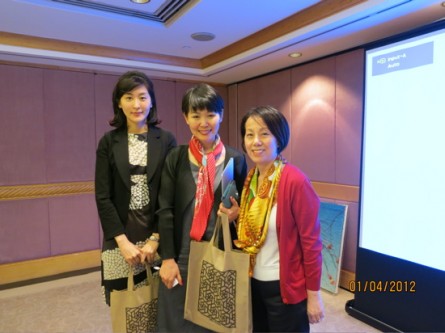
The day's itinerary will include visit to the Biennale, lunch and a stop to an interior furnishings outlet before heading home.

Museum and Society – Social Ideologies of Museum Architecture with Dr. Lee Ho Yin (李浩然博士)

Overview:
This lecture gives an overview of the historical development of modern museum architecture and explains the social meaning inherent in the development of museum architecture, and how the architectural expressions of the museum typology are a direct reflection of social ideologies of different times.

Speaker:
Dr. Lee Ho Yin (李浩然博士) is the Director of Architectural Conservation Programme in the Department of Architecture at The University of Hong Kong.

Tung Lung Chau and Po Toi Island with Professor Chan Lung-sang (陳龍生教授)

Overview:

We began our HKU Museum Society activities last year with an outdoor trip to the Sai Kung Rock Region. This year, it is fitting to continue this tradition of discovering the great natural beauty of Hong Kong in Tung Lung Chau (東龍洲) and Po Toi Island (蒲台島) again with Professor Chan Lung-sang.

We will walk to the largest ancient rock carving in Hong Kong on Tung Lung Chau, located just east of Victoria Harbour. The distance of the walk is about 2 km round trip. If time and weather conditions permit, we will ride to the Ninepin Islands to view the sea arch and spectacular coastal landforms of this area.

Lunch and a walk will be arranged in Po Toi, a small island just 3 km off the southeastern coast of Hong Kong Island. Many of the rock formations have been poetically named Turtle Rock, Monk Rock, etc, although admittedly, one has to have a huge dose of imagination to envision the various shapes that they were named for. We will learn about rock formation and rock history from Professor Chan. The rugged coastline has been hewn from continuous pounding of the waves below the cliffs. Like most islands, there is a Tin Hau Temple, where in the old days, fishermen prayed for good harvests and safe journeys. The trip will end at about 5 pm when we disembark in Aberdeen.

Resource Person:
Professor Chan Lung-sang (陳龍生教授) is an expert in Hong Kong geology. He received his bachelor degree from Chinese University of Hong Kong and his Ph.D from University of California at Berkeley. He taught for 10 years in the University of Wisconsin-Eau Claire and 17 years in the Science Faculty of the University of Hong Kong. His leadership in teaching and learning was recognized when he was awarded the University of Hong Kong's Distinguished Teaching Award in 2009. A true believer of experiential learning, he has led many field trips around Hong Kong for the public and education sectors. He was invited to guest host the TV documentary series 'Vanishing Glacier' in 2008 and 'Water of Life' recently.

Central to Western District with Cheng Po Hung (in Cantonese) 中西區古蹟遊 – 鄭寶鴻帶領

由香港大學博物館名譽顧問、著名香港歷史學家鄭寶鴻先生帶領,同遊香港的心臟地帶 — 中西區。隨著時代變遷、社會進步,真是「古今多少事、都付笑談中」。漫步在新舊交錯的中西區建設中,鄭先生將會給我們講解今昔典故,奕奕如生。

途經:中環外商及華人的銀行區、貿易中心、早期的戲院、中環街市一帶雲集的茶樓和食肆。

上環文咸東街的華人金融區、早期華人活動場所及果欄的「十王殿廣場」、上環街市、華人貿易巨擘的「南北行」及「鹹魚欄」、「國家醫院」所在的「雀仔橋」、「掘斷山街」(荷李活道) 、 早期名為「佔領角」的「大笪地」(荷李活公園)、東華醫院、文武廟、皇仁書院等。

最後,經歌賦街往蓮香茶樓品茗特別預定的懷舊點心。

With the cool weather of December, we have invited UMAG honorary advisor and Hong Kong historian Cheng Po Hung to lead a walking tour through the Central and Western Districts where the juxtapositions of old and new, East and West are clear testimonials of the growth and development of Hong Kong. Starting from Statue Square, Cheng will recount stories as we cover landmarks from banking and trading, cinemas, hospitals, temples, markets and restaurants before ending at Lin Heung Tea House for some nostalgic dim sums.

Do join us for this trip down memory lane to revisit the past, face the present, and consider what’s ahead.