Studio Visit with Eddie Lui

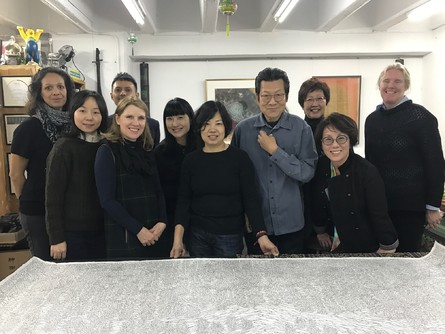
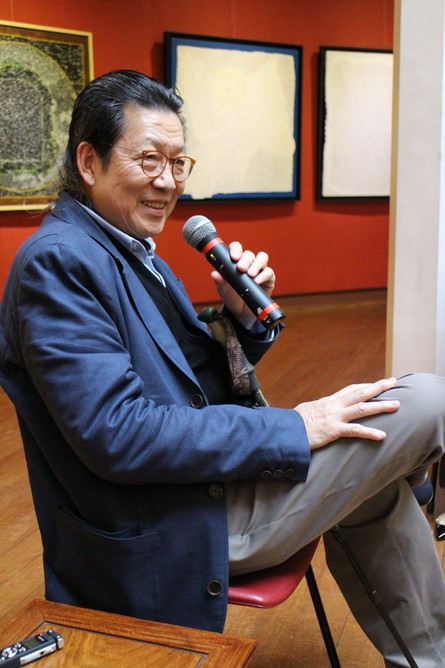
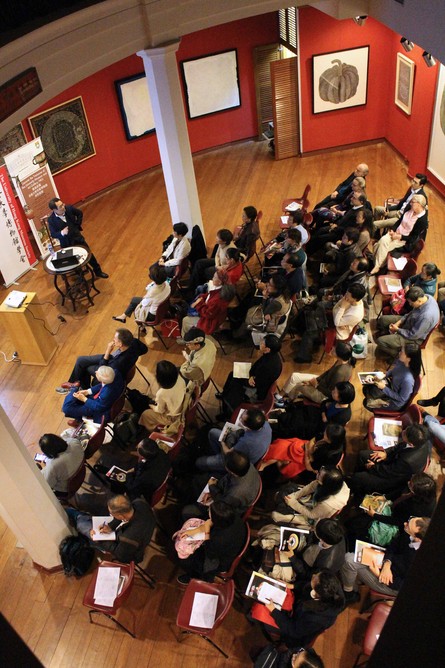
In conjunction with Hong Kong painter and sculptor Eddie Lui’s exhibition at UMAG, the Museum Society is delighted to organize an afternoon tea with Eddie at the his studio.

In the early 1970s, Lui completed an art and design course with the Department of Extra-Mural Studies at The University of Hong Kong (now HKU SPACE), before he studied a one-year contemporary ink painting programme with Hong Kong ink painters Lui Shou-kwan (1919–1975), Wucius Wong (b. 1936), and others. Since then, Lui has developed his own individual style, displayed his deeply felt admiration for nature, and created a new language of naturalistic as well as abstract motifs. As a draftsman, painter and sculptor—Lui is one of the founders of contemporary art in Hong Kong.

Inspired by the naturalism of America-born painter Georgia O’Keefe (1887–1986) as well as steeped in the tradition of Chinese bird-and-flower painters, Lui depicts exotic fruit and vegetables full of life and symbolism. His artworks, whether in ink, gouache, Japanese handmade paper on canvas, or sculpted in clay, are reminiscent of poetry that connects us humans with nature and appeals to our senses.

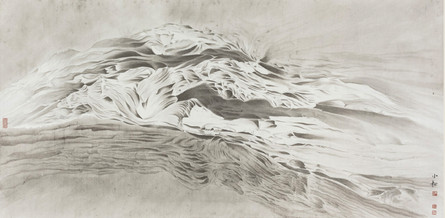
Over the years, Lui’s palette changed and the often bright and flamboyant colours gave way to more muted monochrome ink. At the same time, in artworks large and small, the fine execution of each detail and the certainty with which the artist’s brush moves remain of the highest quality. A generation younger than his master Lui Shoukwan and other influential ink painters, such as Hon Chi Fun (b. 1922) and Liu Kuosung (b. 1932), Lui himself became a gifted teacher who instructed students and helped develop New Ink Painting as a discipline.

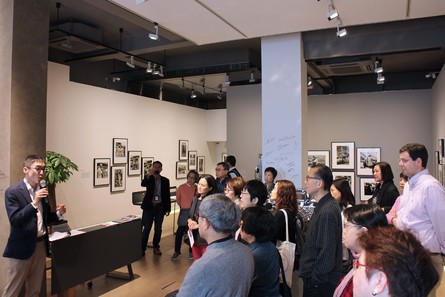
Guided Viewing and Talk: “1952 Hong Kong” with Mr. Douglas So and Dr. Joseph Ting

Join us for a Sunday visit to F11! The Museum Society is delighted to have Mr. Douglas So guide us through the photographic exhibition 1950s Hong Kong, to be followed by a talk by Dr. Joseph Ting on Crisis and Opportunities: Hong Kong in the 1950s.

“Exhibition – 1950s Hong Kong”
After working in Japan for 10 months, Magnum photographer Werner Bischof and his wife, Rosellina, arrived in Hong Kong by sea in May 1952. He spent two months working on photo-documentation of the then British Colony which was suffering deeply from the embargo America and the United Nations had imposed on China due to the
Korean War.

The 85 photos selected for this exhibition constitute a lively documentary of the 1952 Hong Kong where extremes abound. Bischof’s photos revealed Hong Kong as a rapidly growing community in search of a delicate balance between East and West, old and new, affluence and otherwise, with a strong common desire to begin a new page in this haven of hope.

“Talk – Crisis and Opportunities: Hong Kong in the 1950s”
In the aftermath of destruction brought about by war and the Japanese occupation, Hong Kong slowly recovered in the late 1940s. Before long, civil war broke out in Mainland China, and thousands of Chinese fled to Hong Kong, causing the population to soar. The local Chinese had to settle down and call Hong Kong their home after the founding of the Communist regime in China and the subsequent closure of the border. Meanwhile the Korean War broke out in 1950, Hong Kong’s entrepôt trade received a fatal blow as a result of the embargo enforced by the United Nations. Under such circumstances, the colonial government began to formulate long term plans and policies regarding housing, education and social service, as well as promoting local industry to cope with these traumatic changes, thus laying the foundation for rapid developments in the following decades.

Resource Persons
Mr. Douglas So obtained his Bachelor of Laws (LL.B.) and Postgraduate Certificate in Laws (PCLL) from The University of Hong Kong (HKU). He became a solicitor of Hong Kong in 1993. Douglas practised commercial law, corporate finance, as well as mergers and acquisitions before joining The Hong Kong Jockey Club (HKJC) as Legal Counsel in 2000. Until his recent resignation, Douglas was the Vice-President and Pro-Vice-Chancellor (Institutional Advancement) of the University of Hong Kong. Douglas founded F11 Foto Museum in a Grade III heritage building in Happy Valley in 2014 to promote photography, heritage conservation and private museums in Hong Kong.

Dr. Joseph Ting majored in Chinese Literature and Chinese History at The University of Hong Kong (HKU) and graduated with a BA degree in 1974. He was conferred an MPhil in 1979 and a PhD in 1989, also from HKU. Dr. Ting was appointed Chief Curator of the Hong Kong Museum of History in 1995 and retired in 2007 after serving for 28 years. He is currently an Honorary Assistant Professor in the HKU School of Chinese, and was an Honorary Research Fellow at the former Centre of Asian Studies. He is an Adjunct Professor in the Department of History at the Chinese University of Hong Kong and a Member, inter alia, of the Antiquities Advisory Board, the Lord Wilson Heritage Trust and the Education Bureau of Hong Kong.

Made in Hong Kong Ceramics Factory: Archaeological Exhibition of the Majestic Chemical Art Craft Manufacture in Lei Yue Mu and Tour of Lei Yue Mun With Professor Sharon Wong Wai-yee and Ms. Kikki Lam

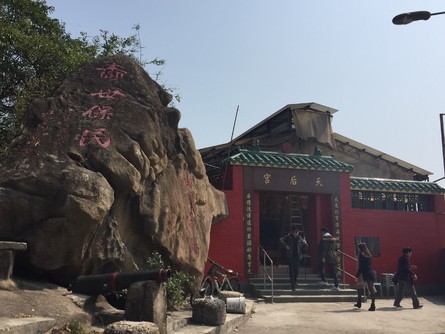
In March this year, 20 undergraduate students from the Preserving Cultural Heritage course and several research postgraduate students at The Chinese University of Hong Kong conducted a field trip in Lei Yue Mun under the guidance of Professor Sharon Wong. The research topic was preserving the Hong Kong ceramics factory site and its intangible cultural heritage — ceramics craftsmanship from Jingdezhen to Hong Kong. After the field trip, 8 undergraduate and postgraduate students volunteered, conducting archaeological fieldwork and artifact analysis, and then curated an exhibition supported by Jockey Club Lei Yue Mun Plus and The Lord Wilson Heritage Trust. This exhibition presents the rise and fall of the ceramics industry in Hong Kong during the late colonial period from an archaeological perspective; multiple interpretations of ceramic objects: from fake antiques, handicrafts, movie props to archaeological artifacts, and how the ceramic factory played a role in the daily lives of the Lei Yue Mun community and the "Hollywood of the East" during the 1960s to 1970s.

This will be followed by a guided walk exploring Lei Yue Mun village, its history and development over the years. We will conclude with an optional lunch in one of the seafood restaurants inside the village.

Resource Persons
Professor Sharon Wong will lead the guided visit and talk about the exhibition behind the scenes. She is an assistant professor from the Department of Anthropology at The Chinese University of Hong Kong. She studied Southeast Asian archaeology and cultures and received her PhD in Southeast Asian Studies from the National University of Singapore. She was originally trained in archaeology and was awarded her Master from the School of Archaeology and Museology in Peking University. Dr. Wong serves on the Antiquities Advisory Board and is a Museum Expert Adviser (Archaeology), Leisure and Cultural Services Department. She is currently working on an intangible cultural heritage project on Hong Kong traditional ceramic crafts sponsored by The Lord Wilson Heritage Trust and a Khmer-Chinese ceramics research project in Angkor, Cambodia funded by the University Grants Committee, Hong Kong.

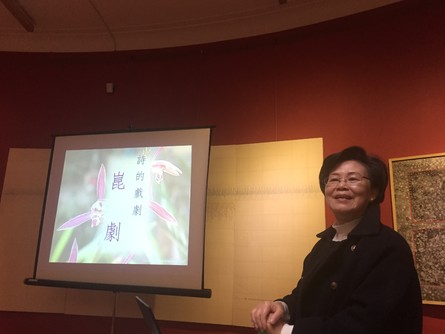
Kunqu: An Introduction With Cheung Lai-chun

Kunqu (崑曲) is a form of Chinese musical drama. But it is more than just drama: it is a combination of play, opera, ballet, poetry recital, and musical recital.

The name Kunqu refers, strictly speaking, to the musical element of this art form, and is connected with the fact that one of the principal types of regional music that went into the making of Kunqu came from the district of Kunshan (崑山) (near Suzhou, in modern Jiangsu Province). This type of regional music goes back to the fourteenth century. It was given shape in the sixteenth century by Wei Liangfu and others, who combined it with three other forms of southern music and with northern tunes from the drama of the Yuan dynasty (1279–1368). Wei Liangfu (魏良輔) and his collaborators standardized the rules of rhyme, tones, pronunciation, and notation, making it possible for this regional form of music to become a national standard. By the end of the sixteenth century, Kunqu spread from the Suzhou region to the rest of China, and became the most prestigious form of Chinese drama.

Music is an essential element of Kunqu, but it differs from Western opera in that there are no individual composers in the Western sense; the author of the drama chooses from an existing repertory, according to fixed conventions, as the tunes exist not in isolation but in sequences. There is a delicate relation between words and tunes: Chinese is a tonal language, every word has a “melody," as it were, and the musical air is superimposed on the word melody, without interfering with it.

In addition to music and words, there is the third element of dance movements and gestures, all rigidly stylized. The three elements work in harmony to convey the meaning and the aesthetic effect desired. Stage equipment is kept to a minimum. There is no curtain, and few props: sometimes a table and a chair. The stage setting, like the costumes, is not meant to be realistic. The actors appeal to the audience’s imagination and conjure up a scene or a setting (such as a door, a horse, a river, a boat) with words, gestures, and music.

Speaker
Cheung Lai-chun began learning the qin (古琴) under Madame Tsar Teh yun in 1976, and Kunqu (崑曲) under Ms Le Yiping in 1988. She is currently a part-time instructor in the Department of Chinese Language and Literature of the Hong Kong Baptist University, teaching the Art of Kunqu. She is also a member of the Commission for the Research and Promotion of Kunju of the Hong Kong Institute for Promotion of Chinese Culture, a researcher at the Centre for Chinese Cultural Heritage of the Hong Kong Baptist University, and chairman of the Concordia Kunqu Society of Hong Kong. In recent years, she has been dedicated to the exploration of traditional Chinese vocal art. She gave vocal interpretations in three recent publications in Hong Kong, one of which is The Vocalisation of the Ci Poems of Jiang Kui(白石詞擬唱), published by the Department of Chinese Language and Literature of Hong Kong Baptist University, and the other is the vocal interpretation of Kunqu in the CD accompanying An Anthology of Notated Northern and Southern Ci Music in Nine Modes: A Critical Edition with Commentary(新定九宮大成南北詞宮譜譯註), a nine-volume series published by the Music Department of the Chinese University of Hong Kong, and also the vocal interpretation of Gem of Ci Poetry Music(宋韻遺珍), published by The Commercial Press.

Art Totems Bridging East & West: Eddie Lui’s Four Decades of Artistic Pursuit With Eddie Lu

The Museum Society is delighted to invite artist Eddie Lui to guide us through this exhibition of his work of artworks documenting his long and distinguished career.

In the early 1970s, Lui completed an art and design course with the Department of Extra-Mural Studies at The University of Hong Kong (now HKU SPACE), before he studied a one-year contemporary ink painting programme with Hong Kong ink painters Lui Shou-kwan (1919–1975), Wucius Wong (b. 1936), and others. Since then, Lui has developed his own individual style, displayed his deeply felt admiration for nature, and created a new language of naturalistic as well as abstract motifs. As a draftsman, painter and sculptor—Lui is one of the founders of contemporary art in Hong Kong.

Inspired by the naturalism of America-born painter Georgia O'Keeffe (1887–1986) as well as steeped in the tradition of Chinese bird-and-flower painters, Lui depicts exotic fruit and vegetables full of life and symbolism. His artworks, whether in ink, gouache, Japanese handmade paper on canvas, or sculpted in clay, are reminiscent of poetry that connects us humans with nature and appeals to our senses.

Over the years, Lui’s palette changed and the often bright and flamboyant colours gave way to more muted monochrome ink. At the same time, in artworks large and small, the fine execution of each detail and the certainty with which the artist’s brush moves remain of the highest quality. A generation younger than his master Lui Shou-kwan and other influential ink painters, such as Hon Chi Fun (b. 1922) and Liu Kuosung (b. 1932), Lui himself became a gifted teacher who instructed students and helped develop New Ink Painting as a discipline.

Bauhaus in Hong Kong: 20th-Century Architectural Heritage With Dr. Lee Ho Yin

In Hong Kong, the form of architecture associated with “Bauhaus” is much misunderstood and often misidentified. The irony is that such form of architecture is all around us in Hong Kong. Since its inception in the early 20th century, Bauhaus architecture continues to exercise its influence in the shaping of our built environment to this day. The question is: what is Bauhaus architecture, and what are its influences in Hong Kong? The speaker Dr. Lee Ho Yin, a co-founder of Hong Kong’s tertiary-level architectural conservation education in Hong Kong, will provide the answers in this delightful lecture.

Jointly presented with the Hong Kong Arts Festival

Speaker
Dr. Lee Ho Yin, Associate Professor, Head of the Division of Architectural Conservation Programmes, HKU. He is a co-founder of Hong Kong’s first postgraduate and undergraduate programmes in architectural conservation, and appears regularly in public lectures and the mass media to speak on architectural conservation matters.

Rising above Adversity: Treasures from The Kinsey African American Art & History Collection

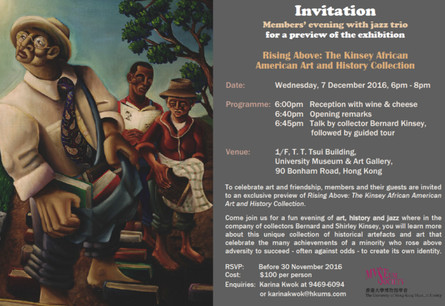
To celebrate art and friendship, members are invited to a preview of Rising above Adversity: Treasures from The Kinsey African American Art & History Collection. Come join us for an evening of art, history and jazz where in the company of collectors Bernard and Shirley Kinsey, you will learn more about this unique collection of historical artefacts and art that celebrate the many achievements of a minority who rose above adversity to succeed – often against odds – to create its own identity and to participate in the American Dream.

Resource Person
Bernard W. Kinsey is the president and founder of KBK Enterprises, Inc., a management consulting firm with extensive experience and success providing advice and counsel to senior-level executives. Kinsey also enjoyed a 20-year association with the Xerox Corporation and was one of the pioneers in breaking down racial barriers in corporate America.

For the past 7 years, Bernard Kinsey and his wife Shirley have focused their attention on The Kinsey Collection, their national touring museum exhibit of African American art and history dating back to 1600. The collection has been viewed by over 3 million visitors, was on display at the Smithsonian National Museum of American History in Washington, DC and is currently on national tour in a partnership with Wells Fargo.

Mr. Kinsey received his bachelor’s degree from Florida A&M University (FAMU) and his MBA from Pepperdine in 1973. He has received honorary doctorates from both FAMU and Alabama A&M University.

1908 Hong Kong Revisited With Cheng Po Hung(鄭寳鴻)

Overview
On a journey into Hong Kong’s past, renowned Hong Kong historian Cheng Po Hung will take us through the exhibition of early photographic images: Pictures of the Past: Hungarian Photographer Dezső Bozóky in Hong Kong 1908.

In an ever more developed Hong Kong, Hungarian Photographer Dezső Bozóky’s beautiful black-and-white and hand-coloured pictures of the past present historic documents that offer insights into the bustling merchant town, cultural mixed society and lush natural landscape that Bozóky encountered. With scarcer photographic material at hand, Bozóky’s images displayed a foreign world to his compatriots at home where they formed an enormous treasure trove of information in Budapest of the early 1900s and do, indeed, do so today.

Christie’s Autumn Auctions With Sara Mao

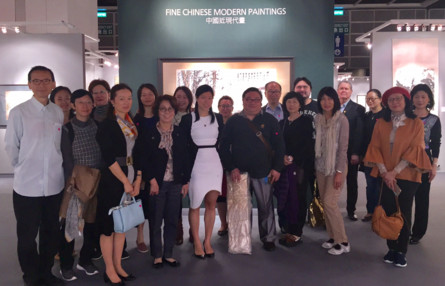
In celebration of Christie’s 250th global anniversary, Christie’s presents a broad selection of selling and non-selling exhibitions during its Autumn Auctions in November 2016. Guided by Sara Mao, the tour will introduce highlights from The Pioneers – a first-of-its-kind auction in Asia focused on pioneering modern & contemporary Chinese artists who ushered in an era of artistic evolution, as well as highlights from A Meticulous Pursuit – a special curated selection of works on the theme of gongbi within the Fine Chinese Modern Paintings auction.

Resource Person
Sara Mao is a Specialist in Christie’s Chinese Paintings department, based in Hong Kong. Her primary responsibilities include business development, client advisory, catalogue preparation and market analysis, with a focus on Chinese Modern Art.

After receiving her B.A. in Philosophy & English Literature at the University of York (UK), Sara acquired her Graduate Diploma in Law from BPP Law School (UK) and a M. Litt in History of Art and Connoisseurship, with a concentration in Chinese art, from Christie’s Education in London. An active member of the Hong Kong art community, Sara serves as a Director of the Education Development Foundation Association (HK) and was an Executive Committee member of the Friends of the Hong Kong Museum of Art (2010-2013).

Port Island and Tolo Channel With Professor Chan Lung-sang

The Museum Society is delighted to have Professor Chan Lung-sang once again take us out on a boat trip to start off the new year. Tolo Channel in north-eastern New Territories is deservedly a geological showcase of Hong Kong’s Global Geopark. Professor Chan, arguably the person most knowledgeable of Hong Kong geology, will take us backwards in time, making landings at rarely visited sites to explore the fascinating stories behind the rock exposures.

On this trip, we will visit Harbour Island (白沙洲) and Port Island (赤洲) or Nai Chung (泥涌) – exact landing sites depend on weather conditions that day. Stopping at Tap Mun (塔門), we will have a simple seafood lunch before heading to heading to Double Haven (印洲塘) and at either Sai Lau Kong (西流江), the last authentic fishing village in HK, or Hung Shek Mun (紅石門). The group will return to Ma Liu Shui Pier by 5:30 pm

The trip includes a 30 min walk at each of the landing sites. The walks are rated easy to moderate in difficulty. Good walking/hiking shoes are recommended.

In case of adverse weather or unfavourable high winds, we may have to modify or cancel the trip at the leader’s discretion.

Resource Person
We are very privileged to have Professor Chan Lung-sang (陳龍生教授) as the leader of the trip. Professor Chan is professor in Earth Sciences at the University of Hong Kong as well as College Principal of HKU SPACE Community College and HKU SPACE Po Leung Kuk Community College. He received his doctorate degree in geology from the University of California, Berkeley and is arguably the first Hong Kong native to receive formal training in geology. His research interests include tectonics of South China and Hong Kong, earthquake geology and applied geophysics. He is devoted to promoting Earth Science education, and has led field trips to South China, Tibet, Taiwan, North America, Australia, Italy, Cyprus, the Arctic region and Antarctica for students.