Triple Treats in Macau – Macao Art Museum with Professor Jenny So, Lunch and Heritage Walk with Dr. Francisco Pinheiro

Overview:
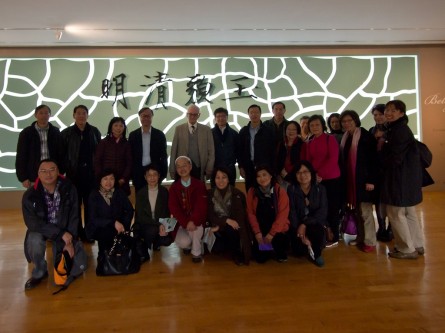
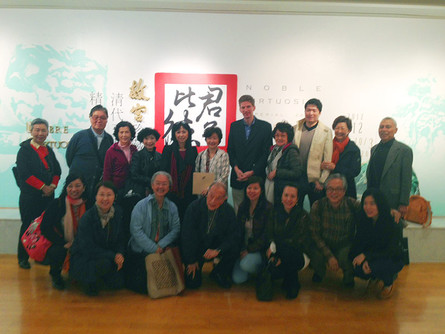
Our morning begins with a visit to the Macao Art Museum's special exhibition, 'Noble Virtuosity: Imperial Jades of the Qing Dynasty' with Professor Jenny So. This exhibition is the major highlight of the annual MAM series of exhibitions, showcasing 134 items of Qing imperial jade from the Palace Museum.

After the guided tour, we will lunch at The Eight, a 2 star Michelin restaurant with delectable Chinese dishes.

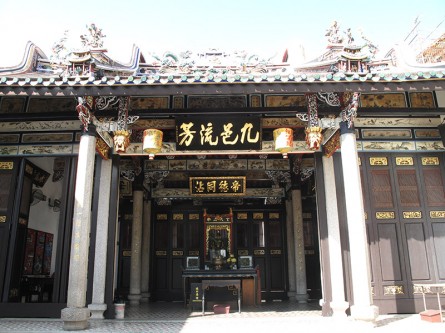
In the afternoon, Dr. Francisco Pinheiro of the Civic and Municipal Affairs Bureau will take us on a walk through some of the city's historical buildings, such as São Domingos, San Kia Vui Kun Temple (near St Domingos Market) and the Cathedral. He will explain the historical function and design of the squares opposite these churches. We will take the 5:15 p.m. ferry back to Hong Kong.

Resource Persons
Professor Jenny So received her Ph.D from Harvard University in 1982. She is an art historian specializing in ancient Chinese bronzes and jades. Before returning to Hong Kong, she was Senior Curator of Chinese Art at the Freer Gallery of Art and Arthur M. Sackler Gallery, Smithsonian Institution, Washington D. C. She joined the Department of Fine Arts at the Chinese University of Hong Kong in 2001, lecturing on the history of Chinese jades, Chinese bronzes and Methodology in Art-historical studies, as well as supervising M. Phil. and Ph.D students. Professor So is also past Director of the Institute of Chinese Studies.

Dr. Francisco Pinheiro obtained his Ph.D at the Tokyo Institute of Technology, Japan in 2006. He works as a technical advisor at Macao’s Municipal and Civic Bureau (IACM). He is also Adjunct Professor at the University of Saint Joseph (USJ) and part-time lecturer at the Tourism Formation School (IFT). He worked in several historical rehabilitation projects and research in Macao, China and in Portugal. Some of these sites were included by UNESCO as part of Macau World Heritage. His current research interest is in comparative history analysis: Roman-Han Civilization, Portuguese-Chinese, and East-West Culture.
‘Lan Xang, The Kingdom of a Million Elephants’ – A Tour of Laos with Catherine Maudsley

The official history of Laos is conventionally traced to the establishment of the kingdom of Lan Xang by Fa Ngum in 1353, although human settlement in the region dates back many centuries BC. The most famous evidence of the region's prehistory is the site of the huge stone mortuary jars found on the north-central Xieng Khouang Plateau, in what is now known as the Plain of Jars. Little, however, is known about the society, which created the jars dated from the first century BC.

The last king of Lan Xang was Surigna Vongsa. He ascended the throne in 1637 and his reign was regarded as the golden age in Laotian history. After his death in 1694, the country was split into the three separate kingdoms of Champasak, Wieng Chan, now called Vientiane, and Luang Prabang. Laos became a French protectorate in 1893 when these kingdoms united to form the country known as Laos today. It briefly gained independence in 1945 after Japanese occupation, but returned to French rule until it was granted autonomy in 1949. Laos became independent in 1953 with a constitutional monarchy under Sisavang Vong. Shortly afterward, a long civil war ended the monarchy and the Communist Pathet Lao came to power in 1975.

Laos is a single-party socialist republic. The Lao People's Democratic Republic forms a land bridge between its neighbours, China, Vietnam, Cambodia, Thailand and Myanmar. Theravada Buddhism is the dominant religion for approximately 60 percent of the population. In rural areas, communities share everything and live together; the Lao word for 'mine' and 'yours'is the same.

This trip is designed to cover the cultural and historic highlights of Laos from south to north. Discover inimitable charm and serendipity as we travel to Champasak, Vientiane and Luang Prabang. By the end of the tour, as the tranquil pace of life in Laos takes hold, we would surely understand the meaning of bo phan yan – the pragmatic philosophical maxim of the Lao people to conciliate the immense complexities of life, loosely translated as – "don't worry, be happy".

The trip is now full. We are grateful to members for their enthusiastic participation which gives our committee a greater incentive to plan for more exciting trips in the future. Thank you!

PENANG: A Visit to Historic George Town with Dr. Wong Yee Tuan (黄裕端) and Mr. Tan Yeow Wooi (陳耀威)

Our fall trip to Malaysia takes us to the island of Penang, to visit historic George Town, which was listed as a UNESCO World Heritage Site in July 2008. This gem city has colonial architecture, Chinese shop houses, Christian churches, Muslim mosques, and Indian and Buddhist temples over one hundred years old. In fact, in a street aptly named Harmony Street, we see Kapitan Keling Mosque, St. George's Church, the Goddess of Mercy Temple, and Sri Maha-Mariamman Temple. Dr. Wong Yee Tuan and Mr. Tan Yeow Wooi will take us down memory lane and explain how these four different religious houses of worship came to be on the same street in the past and co-exist until today.

Another intriguing street is Armenian Street. How did this country way out in the Caucasus region come to have her name on this island in Asia? Our hotel, E&O, continues this theme of historic George Town. What is the full name of E&O and why was it named thus? A look at the architecture will show European and Moorish influences. Dr. Wong will enlighten us on the background of this hotel and her historical anecdotes.

We will be visiting some of the older Chinese clan houses and Dr. Wong will lecture us on the history of the Chinese arrival on the island and how they settled down and made their homes here. Terms like Baba, Nyonya, and Peranakan, etc will be explained. Mr. Tan, an experienced architect and conservationist of historical buildings, will introduce and explain the different architectural designs and styles of the clan houses and shop houses.

Culinary art is also an important part of the Penang culture. Our two resource persons will highlight the various cultural influences on the special taste of Penang cuisine. Both experts will share with us interesting stories while we savour the delicious fare that has made Penang justly famous!

“A Vigneto with a View” – A Gastronomic Wine Tour of Tuscany and Piedmont

Giuseppe Verdi could not have said it better; "You may have the universe if I may have Italy." The Ancient Greeks called Italy, Enotria to describe its renown for producing extraordinary wines.

As part of our wine tour series, the Society is pleased to present "A Vigneto (Vineyard) with a View", a gastronomic wine tour of Tuscany and Piedmont with internationally renowned food and wine connoisseur, wine judge and educator, Wilson Kwok.

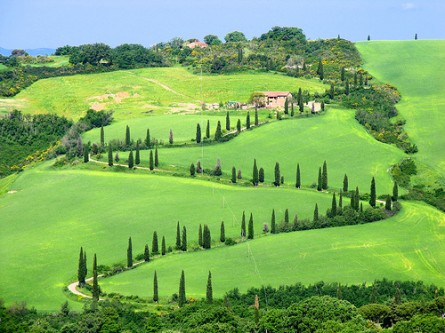
Tuscany, known for its fabulously rolling hills and charming medieval towns, has been involved in wine production since the time of the ancient Etruscans who viewed the vine as a sacred plant. Winemaking evolved over the centuries as the Romans, Christian monks in the Middle Ages and the noble classes during the Renaissance introduced new practices. Many Tuscan wines have had a wide following outside Italy since the 16th Century; Chianti was popular in the English court from the 17th Century onwards.

Surrounded on three sides by the Alps, Piedmont is a land of spectacular mountains and romantic medieval castles. Home to the famous white truffles, Piedmont is often described as the 'Burgundy of Italy' as gourmet travelers flock from all over the world to enjoy the region's outstanding cuisine and boutique wines. Winemaking is very much a part of daily life as vineyards are usually small and family owned. Therefore, wine production in general tends to be microscopic.

Together with Wilson Kwok, we will be visiting producers of top Italian wines, Brunello and Chianti in Tuscany and Barbaresco and Barolo in Piedmont. Our group will be joining in the excitement of Piedmont's white truffle festival by participating in a live truffle hunt, visiting the famous Alba white truffle market, as well as partaking in a special white truffle dinner.

Myanmar (Burma) The Golden Land

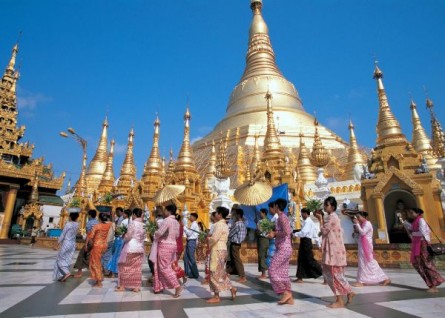
This trip takes us on a journey to discover this beautiful golden land called Myanmar (Burma). We will learn and open our own eyes to its diversity, cultures, values and religion – Buddhism. Politics is still a sensitive subject but with the recent release of Aung San Suu Kyi from house arrest and new elections, there is hope that the military controlled civil government is taking a step in the right direction. The golden land awakes from its long slumber.

This comprehensive trip covers all the major sights in Yangon, Mandalay, Bagan and Inle Lake, culminating with the Phaung Daw Oo Pagoda Festival where the four venerated Buddha statues are moved by the Royal Barge led by a procession of leg rowing long boats from one village to the next.

Dr. Wong How Man (explorer/writer/photographer), Founder and President of the China Exploration and Research Society will specially welcome us to CERS' innovative project to bring back and rear Burmese Cats in the beautiful setting of the Intha Heritage House (The Cat Gallery)

The trip is now full. We are grateful to members for their enthusiastic participation which gives our committee a greater incentive to plan for more exciting trips in the future. Thank you!

‘Spring Concerto in Kyoto with Shokunin and Flowers’

What is shokunin?

The hands of the craftsman moving magically are the result of long years of honing intricate techniques. Even the rhythmic motion of fingers grasping tools has an inspiring beauty. Artisans with such skills, as well as possessing a fundamental knowledge in selecting the best raw materials, along with an unerring eye for a beautiful finish and an enduring belief in honest work are the genuine, irreplaceable treasures of Japan. They are the true artisans – shokunin (職人).

Since ancient times they are deemed to be possessed with legendary expertise. There is a saying that they are "embraced by the hands of God". The traditional shokunin's skills, intertwined with their in-depth influence from Mother Nature create a "congenial harmonious relationship" (親和關係) between the two. Man and nature co-mingle and sympathize with each other to create the beauty in the craftsmanship. In this world, the word shokuninkatagi (職人氣質) conveys the essence of their spirit. It means the seeking of one's own skill with unwavering perseverance, no allowance for carelessness, and no regard for any financial rewards. Thus, the revered shokunins are honoured as national treasures.

Kyoto, the ancient imperial capital of Japan and home to many of these unique artisans, is one the last places in Japan where this age-old tradition is still in practice. It is the ideal place for us to capture the spiritual and artistic elements of the shokunin. The works of these unfailing craftsmen can be found not only in the most well known of crafts such as kimono making, gold leaf guilding, doll making, sake production and kaiseki cuisine, but also in areas such as rice paper, bamboo, lacquer, belts, musical instruments, printing, fans, umbrellas, seals and weaving. The list continues to include even the most unexpected crafts one can think of. By learning about the artistry, the way of living and the philosophy of the Japanese craftsmen, we may be able to get a glimpse of the true Japan.

We are privileged to have T.K. Tan leading this trip. Tan is the Associate Head of the Centre of Language Studies, University of Hong Kong's School of Professional and Continuing Education (HKU SPACE). He is an aficionado of Japan and Japanese studies. He is fluent in the Japanese language and is conversant with Japanese culture and traditions and has led many study groups to Japan over the years. He is a dedicated scholar who is devoted to promoting and furthering Japanese customs, its heritage and ancient tradition.

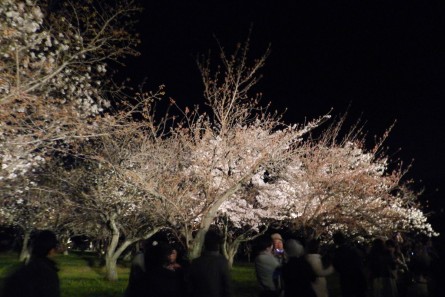
Our visit is timed perfectly with the flowering of the cherry blossom, which is richly symbolic and often utilized in Japanese art. The Sakura Festival offers a spectacular backdrop to a city of unique historic beauty and to revisit this, as many do, is testimony to its true standing.

We are also honoured that Elaine Koo, a member of the HKU Museum Society, and Past President of the Ikebana International HK Chapter, has agreed to be our host for the famous annual Saga-Goryu Flower Festival on our visit there.

The trip is now full. We are grateful to members for their enthusiastic participation which gives our committee a greater incentive to plan for more exciting trips in the future. Thank you!

‘An Art Fair to Remember’ Visiting TEFAF Maastricht 2012, & Berlin with Professor Puay-peng Ho

An exciting trip to Europe has been organized in spring to coincide with The European Fine Art Fair (TEFAF), which will be held in Maastricht from 16th to 25th March 2012. TEFAF made its debut in 1988, presenting primarily old masters' works. Apart from these masterpieces, more than 30,000 works of art, including porcelain, sculptures, jewellery, photographs, glass, drawings, prints and classical antiquities will be exhibited at this year's Fair. Participants will attend the exclusive champagne Gala Preview to mark TEFAF's 25th anniversary on 15th March 2012.

Occupying over 31,000 sq.m. of space at the Maastricht Exhibition & Congress Centre, TEFAF is often regarded as a museum showcasing a myriad of exquisite museumquality items covering the past 7,000 years. Robin Markbreiter, Director and Executive Editor of Arts of Asia Publications Ltd., will introduce us to prominent gallery owners and exhibitors when he guides us through the premises.

The highlights of Berlin, selected by Professor Puay-peng Ho, Director of School of Architecture, The Chinese University of Hong Kong, include the Neues Museum, Berlinische Galerie, Reichstag, Memorial for the Murdered Jews of Europe, Humboldt-Box, Berlinische Galerie and Hamburger Bahnhof. But the ultimate highlight of the Berlin tour is the rare privilege to view the treasures and wall paintings kept in the vault of the Dahlem Museum fur Asiatische Kunst, which German explorers took from Central Asian expeditions conducted in the early 20th century. Our program also gives us the opportunity to attend a concert by the Berliner Philharmoniker.

Enroute, attractions include UNESCO World Heritage sites, historical landmarks, modern architecture, famous museums exhibiting artists and paintings of world renown, not to mention the opportunity to savour the fine culinary traditions of legendary chefs in restaurants located in Luxembourg, Germany and The Netherlands.

The trip is now full. We are grateful to members for their enthusiastic participation which gives our committee a greater incentive to plan for more exciting trips in the future. Thank you!

2011 Shenzhen & Hong Kong Bi-City Biennale of Urbanism/Architecture in Shenzhen with Joan Leung

“The theme for the 2011-12 edition of the Shenzhen Biennale is rooted in the very conception of the event, which first appeared in 2005. Uniquely, this biennial exhibition features not only architecture but urbanism, which is rarely addressed in such event. The combination is immensely appropriate, as these two human activities are inseparable even if they are often treated as separate disciplines. Throughout history, they have been totally interdependent in the transformation and growth of human settlements. Hence, the theme: Architecture creates cities. Cities create architecture.” – Terrence Riley

Terrence Riley is the Chief Curator of the 2011 Shenzhen & Hong Kong Bi-City Biennale of Urbanism/Architecture, and an internationally recognized leader in the design and development of cultural facilities and programs. He has been involved with the renovation and expansion of many prominent museums, including the Museum of Modern Art (New York). In this Biennale, he and his international curatorial team bring together over 100 architects, curators and other creative individuals to present exhibits/dialogues about the relationship between architecture and urbanism on a global and contemporary scale, in the context of sustainability and vitality.

The HKU Museum Society and the Friends of the HK Art Museum jointly present the tour of this Biannale. We will be guided by HK architect Joan Leung, a graduate with a M. Arch degree from MIT, and a former faculty of HKU Architecture Department until she founded Lotus Architects Ltd in 1987 with her late husband, Professor Eric Lye, Dean and Head of HKU Architecture Department. Since then, she has done many notable projects, including the Clubhouse at the Arch, which won the Grand Award of Quality Building Award for 2008. She is a member of the West Kowloon Cultural District Advisory Committee, and the Heritage and Conservation Committee, and publishes papers on architecture education, interior architecture and green building.

The day's itinerary will include visit to the Biennale, lunch and a stop to an interior furnishings outlet before heading home.

Triple Treats in Macau: Macao Art Museum with Yeung Chun-tong (楊春棠), Gourmet Lunch at Don Alfonso, and Macau Heritage Walk & Talk with Dr. Francisco Pinheiro

Part 1:
The exhibition, "Beauty & Entirety: Ceramics of the Song Dynasty from the Palace Museum", showcases 187 pieces of exquisite imperial and folk ceramics of the Song Dynasty (960 – 1279 AD) from the Beijing Palace Museum collection. Wares from imperial palaces, made by the five famous (official) kilns of Song, as well as ceramics of distinctive features produced by various folk kilns will be exhibited. The collection offers an overview of ceramics produced at the peak of Chinese ceramic art history.

We are delighted to have Yeung Chun-tong (楊春棠), Director of The University Museum and Art Gallery guide us on a tour of this exhibition. Yeung obtained his BA and MPhil from HKU and has worked at UMAG for 35 years. He is Honorary Associate Professor in the Fine Arts Department of HKU, teaching Chinese Material Culture and Museum Studies.

Part 2:
We will savor a gourmet lunch at Don Alfonso, Macau's two-star Michelin restaurant serving fine Southern Italian cuisine by Chef Alfonso Laccarino.

Part 3:
Dr. Francisco Viseu Pinheiro of the Civic and Municipal Affairs Bureau in Macau, will guide us on a tour in St. Augustine's Square, including St. Augustine’s Church, Dom Pedro V Theatre and Sir Robert Ho Tung Library. He will also give a presentation on the Macau UNESCO heritage sites and their application to qualify for this prestigious designation.

A Weekend Escape to Taipei with Professor Peter Lam (林業強教授) – TRIP FULL

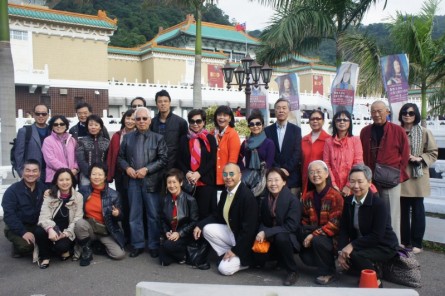
Professor Peter Lam (林業強教授) will lead us on a trip to Taipei for the exhibition, "Emperor Kangxi and the Sun King Louis XIV: Sino-Franco Encounters in Arts and Culture (康熙大帝與太陽王路易十四特展)". We shall view some of the most iconic pieces associated with these two imperial personages. Although separated by a vast distance, they shared a love of beauty and used the resources they have at their disposal to create beautiful objects for their enjoyment.

The National Palace Museum in Taipei (NPM) has one of the greatest collections of Chinese cultural artifacts in the world. Many of the treasures came from the Chinese mainland, especially from Beijing during the time of tumultuous social changes. Since its founding, the NPM has grown in collection and scope, including research, preservation, education, cultural exchange and public service.

We are very privileged to have as our guest lecturer, Professor Peter Y.K. Lam. A graduate from the Percival David Foundation of Chinese Art, School of Oriental and African Studies, University of London, Peter Lam is an art historian as well as a museum professional. His scholarly works on Chinese ceramics, calligraphy rubbings and the decorative arts are widely published. He began his museum career at the Urban Council City Hall Museum and Art Galleries in the early 1970’s working under James Watt, who founded the Art Museum at the Chinese University of Hong Kong. After a very short period at the City Hall, he joined the Chinese University of Hong Kong and has been there for the past thirty-nine years and is currently its Director/Professor. Peter Lam is a long time member of the Min Chiu Society, a prestigious collectors’ club in Hong Kong, a council member of the Chinese Society of Ancient Ceramics in Beijing, and Honorary Fellow of the Palace Museum, Beijing, and a former chairman of the Archaeological Committee of the Antiquities Advisory Board, Hong Kong SAR Government.

The trip is now full. We are grateful to members for their enthusiastic participation which gives our committee a greater incentive to plan for more exciting trips in the future. Thank you!