(CANCELLED)”Magical Majestic MONGOLIA” with Catherine Maudsley

Catherine Maudsley is a HK based art historian, art consultant, curator, educator and writer.

The recipient of over twenty awards for exceptional achievement, Catherine was a Connaught Research Scholar at the University of Toronto, a Canada-China Scholar at the Central Academy of Fine Arts, Beijing, and a Commonwealth Scholar at the University of Hong Kong. She has taught at the Dept. of Fine Arts, HKU and has served on the Executive Committee of the HKU Museum Society, the Oriental Ceramic Society of Hong Kong and as a Council Member of the Hong Kong Art School.

Catherine is deeply fascinated by the religion and art of Mongolia. As a long-term member of the global organisation, Foundation for the Preservation of the Mahayana Tradition (FPMT), she will lead us on a visit to Ganden Do Ngag Shedrub Ling, FPMT Mongolia Dharma Center in Ulaanbaatar to learn about the resurgence of religion in Mongolia since its repression under the nation’s communist regime. Since 1995, when Catherine went to San Francisco to see the landmark international exhibition Mongolia: The Legacy of Chinggis Khan at the Asian Art Museum, she has been captivated by the sincerity, finesse and sophistication of sculpture by Zanabazar (1635-1723) whose work we will see at The Fine Arts Zanabazar Museum.

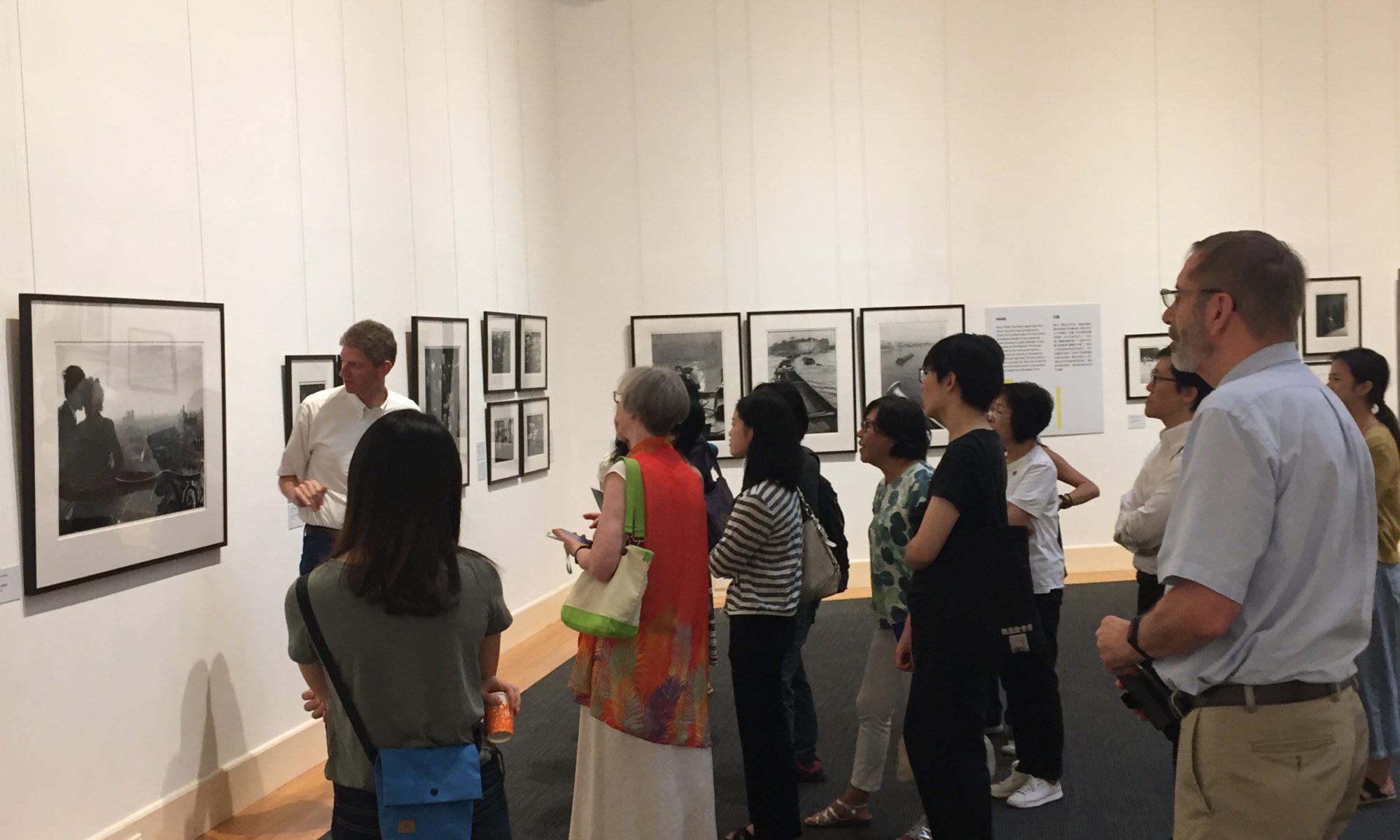
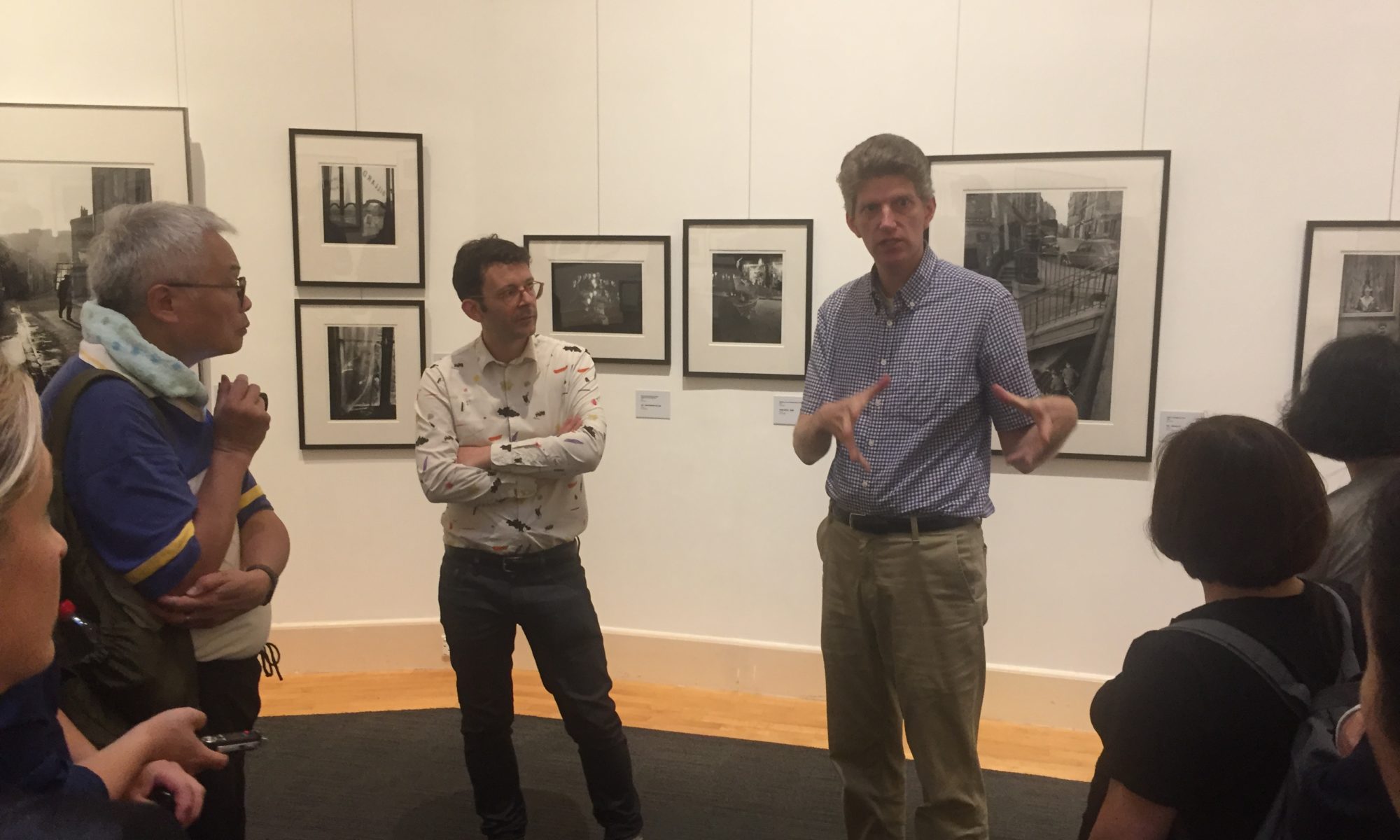
Joint UMAG Programme – Guided Tour: “From Paris to Venice: A photographic journey by Willy Ronis” with Mr Matthieu Rivallin and Dr Florian Knothe

Reporter, industrial photographer and illustrator, Willy Ronis (1910–2009) was one of the key figures of twentieth-century French photography. For eight decades, from the 1930s to the 2000s, he pointed his camera lens at the French people, criss-crossing the streets of the capital or the south of the country. Carefully selected from the enormous oeuvre Ronis left behind, the exhibition at the University Museum and Art Gallery offers an overview of the famous photographer’s work, the photographic genre he helped to create and the iconic views and pictorial compositions that assisted formulating the romantic imagery of Paris and other places that we hold dear today.

This guided tour will be led by co-curators Matthieu Rivallin and Florian Knothe who will speak about the life of Ronis and his image composition.


Image: Little Parisian. Willy Ronis, 1952. Photo credit: Willy Ronis, Ministère de la Culture / Médiathèque de l’architecture et du patrimoine / Dist RMN-GP ©️Donation Willy Ronis 

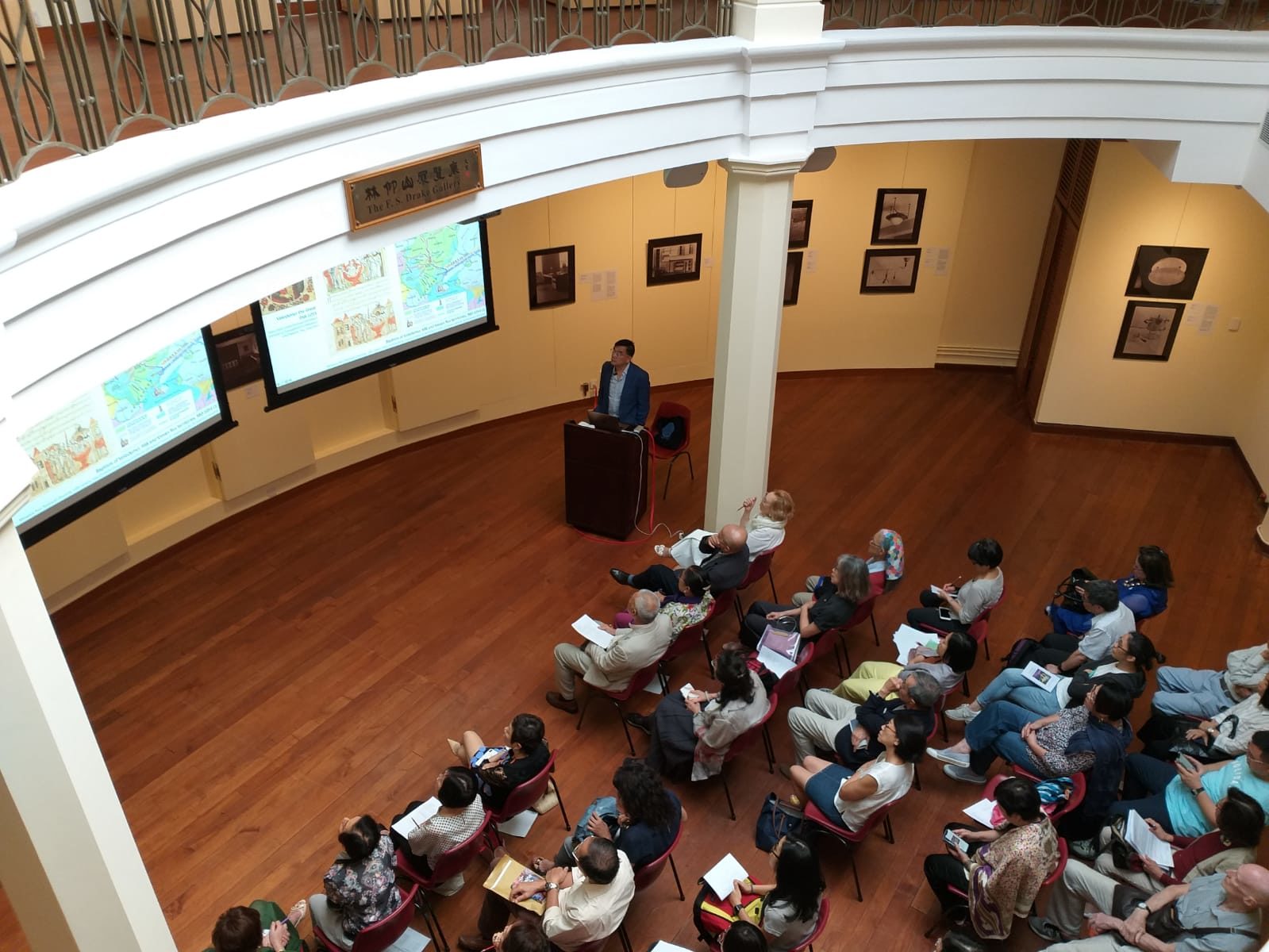
Joint-UMAG Programme – “In Pursuit of Identity: The Art and Architecture of Ukraine” with Professor Puay-peng Ho

The construction of a cultural identity can be an extremely long and bumpy journey.  The journey for constructing racial or national identity is a process which is even more unexpected and certainly unconscious.  The case in point is that of Ukrainian identity.

Situated at the crossroads between East and West, the land of the present-day Ukraine had been occupied by different empires, people groups or tribes.  They left their marks on the land and its culture through the richness of art and architecture.  The Ukrainians forged their own identity in the last 30 years since becoming independent from the Soviet Union, resulting in religious re-awakening and cultural alignments.  One of the most powerful symbols is the reconstruction of the Ukrainian Orthodox Church which looks towards the Byzantium connections rather than the Russian tradition.  This is expressed through church architecture and the murals and icons housed in the churches from the 11th– 12th centuries.  Such iconic programming can be traced to Byzantium liturgy and its meaning made fresh in the 20th century.  Likewise, the adoption of Western spirit of Renaissance and Baroque sensibilities can be seen played out in major metropolises in Ukraine.  Most interestingly, modernity in art and architecture is explored through paintings, poster design, theatre and dance, as well as Art Deco architecture of Lviv and Soviet Constructivist architecture of Kyiv.

This lecture will describe, by highlighting key issues and examples, the journey in pursuit of Ukrainian identity.

Speaker

Professor Puay-peng Ho is currently the Head of the Department of Architecture, School of Design and Environment, National University of Singapore.  Previously, he was Professor of Architecture at The Chinese University of Hong Kong.  He received his First Class Honours degree in Architecture from the University of Edinburgh and a Ph.D. in Art History from the School of Oriental and African Studies, University of London.                                             


Guided Viewing: “Tsz Shan Monastery” Buddhist Art Museum with Professor Puay-peng Ho (Member only)

Professor Puay-peng Ho will guide us on a tour of the newly opened Tsz Shan Monastery Buddhist Art Museum. More details on date, cost and transportation will be forthcoming.

Nestled in the hills of Pat Sin Leng in Hong Kong’s New Territories, Tsz Shan Monastery covers half a million square feet (4.7 hectares). Built by a foundation set up by Hong Kong entrepreneur Li Ka-shing, the monastery opened its gates to the public in 2015. Beneath its signature 76-metre (249 ft) tall Guan Yin statue, sits a Buddhist Art Museum, which houses a collection of 100 Buddha statues, along with 43 hand-copied Dunhuang sutras exhibited.

Resource Person

Professor Puay-peng Ho is currently the Head of the Department of Architecture, School of Design and Environment, National University of Singapore. Previously he was Professor of Architecture at The Chinese University of Hong Kong. He received his First Class Honours degree in Architecture from the University of Edinburgh and a Ph.D in Art History from the School of Oriental and African Studies, University of London. His thesis was focused on Buddhist art and architecture of the Tang dynasty. He is a member of the Royal Institute of British Architects and the Society of Architectural Historians. Currently, Professor Ho is Chairman of the Council of Lord Wilson Heritage Trust and serves on the Town Planning Board, the Antiquities Advisory Board and the History Museum Advisory Panel. He is also involved in many architecture conservation projects in Hong Kong.

Guided Viewing: “HSBC Archives” with Thomas Warren & Florence Lo

HSBC Archives contains some of the best business and arts collection in the world, including annual reports, minute books, accounting ledgers, correspondences, photographs, cartoons, films, advertisements, banknotes and oral history. These records do not only reflect the colourful history of HSBC, but also capture the social, economic and political developments of Hong Kong and the wider region.

The Archives Gallery and Repository tour tells the story of HSBC’s rich and eventful heritage in Hong Kong and the Asia-Pacific region through rare objects, virtual galleries and interactive displays. The tour will provide visitors with an opportunity to learn about the bank’s invaluable contributions to Hong Kong and to feel connected to the people who influenced HSBC’s story. After experiencing the Gallery, visitors are then taken ‘behind the scenes’ into the Repository to learn about the inner workings of an archive and see more examples of archive materials and artworks.

Our tour will be led by Thomas Warren, History and Art Manager and Florence Lo, Community and Education Manager of the HSBC Archives Gallery and Repository. As part of HSBC’s commitment to share their rich history with the community, the HSBC Archives do not charge any entrance fees. The cost for this tour is charged at the discretion of the HKU Museum Society to support art and cultural programmes at UMAG and the wider community.

Guided Viewing: “The Hong Kong Jockey Club Series A History of the World in 100 Objects from the British Museum” with Rose Lee

The Hong Kong Jockey Club Series – A History of the World in 100 Objects from the British Museum is jointly presented by the Leisure and Cultural Services Department and the Trustees of the British Museum, jointly organised by the Hong Kong Heritage Museum and the British Museum and solely sponsored by The Hong Kong Jockey Club Charities Trust.

The exhibition originated from a popular radio programme of the BBC with the British Museum, telling the story of human civilization using 100 objects selected from the encyclopedic collections of the British Museum. Unlike traditional narratives that focus on selected periods or cultural zones, this exhibition reviews the common stories of human development in a new perspective. Tracing human activity from 2 million years ago to the present, the stories behind the objects reveal how mankind in various areas and cultures shared similar aspirations and development in aspects of power, belief, art, trading and technology. Through this broadened vision, visitors may gain new inspiration about the world we live.

Exhibits are selected from various geographical areas, showing man-made objects, not only exquisite art pieces, but a larger proportion being daily utensils and implements, currency, scientific instruments and ritual items that have been used. Highlights include the first human stone tool from Africa, the evidence of first city from Iraq’s The Standard of Ur, Fifty Manillas involved in the slave trade, Ship’s chronometer from HMS Beagle of Darwin’s world voyage, Japanese artist Hokusai’s famous woodblock print Under the Wave off Kanagawa from the series “36 Views of Mt Fuji”, and the issue of LGBT rights conveyed in the work of David Hockey, a contemporary artist. Each object tells a story that invites you to travel in time and to a curious corner of the world.

Resource Person

Lee Wing Chong Rose

Our tour will be led by Ms. Rose Lee, Assistant Curator at the Hong Kong Heritage Museum. Ms. Lee graduated from the Fine Arts Department, University of Hong Kong. In her role as Assistant Curator (Art) at the Leisure and Cultural Service Department, Ms. Lee has worked at the Hong Kong Museum of Art looking after collections of Chinese Antiquities, Tea Ware, and Historical Pictures and is currently in charge of the Chao Shao-an Gallery and T. T. Tsui Gallery of Chinese Art at the Hong Kong Heritage Museum. Ms. Lee has handled major exhibitions including “Studio Ghibli Layout Designs: Understanding the Secrets of Takahata and Miyazaki Animation” and “The Pride of Lingnan: In Commemoration of the 110th Birthday of Chao Shao-an”.

Annual General Meeting: “One Belt and One Road – Historic Review and Future Prospects” with Guest Speaker Professor Lee Chack Fan

We regret to announce that due to unforeseen circumstances, Professor Wang Gungwu is not able to come to Hong Kong to deliver his talk at our AGM.  However, we are pleased to welcome Professor Lee Chack Fan who will give a talk on One Belt and One Road – Historic Review and Future Prospects.  He will present a historic outline of the Silk Road on land and sea, including trade, migration of people, cultural exchanges and the spread of religions. Future development of these regions under the Belt and Road initiative will be briefly examined. 

Speaker

Professor Lee Chack Fan is currently the Director of Jao Tsung-I Petite Ecole, HKU; Professor Emeritus, Honorary University Fellow, and former Pro-Vice-Chancellor of HKU. He graduated from HKU in 1968 (Civil Engineering with first class honour). He is Hong Kong Fulbright distinguished scholar; GBS; SBS; JP; Academician, Chinese Academy of Engineering; Fellow, Canadian Academy of Engineering; Fellow and past-president, Hong Kong Academy of Engineering Sciences; currently engaged in Belt and Road infrastructure projects planning and technical assessments.

Joint UMAG Programme – Guided Viewing and Carving Demonstration: “Picturing the Bauhaus : Erich Consemüller‘s Photography of the World’s Most Famous Design School” with Dr. Florian Knothe and “Art of the Iron Brush: Bamboo Carvings from the Ming and Qing Dynasties” with Ben Chiesa

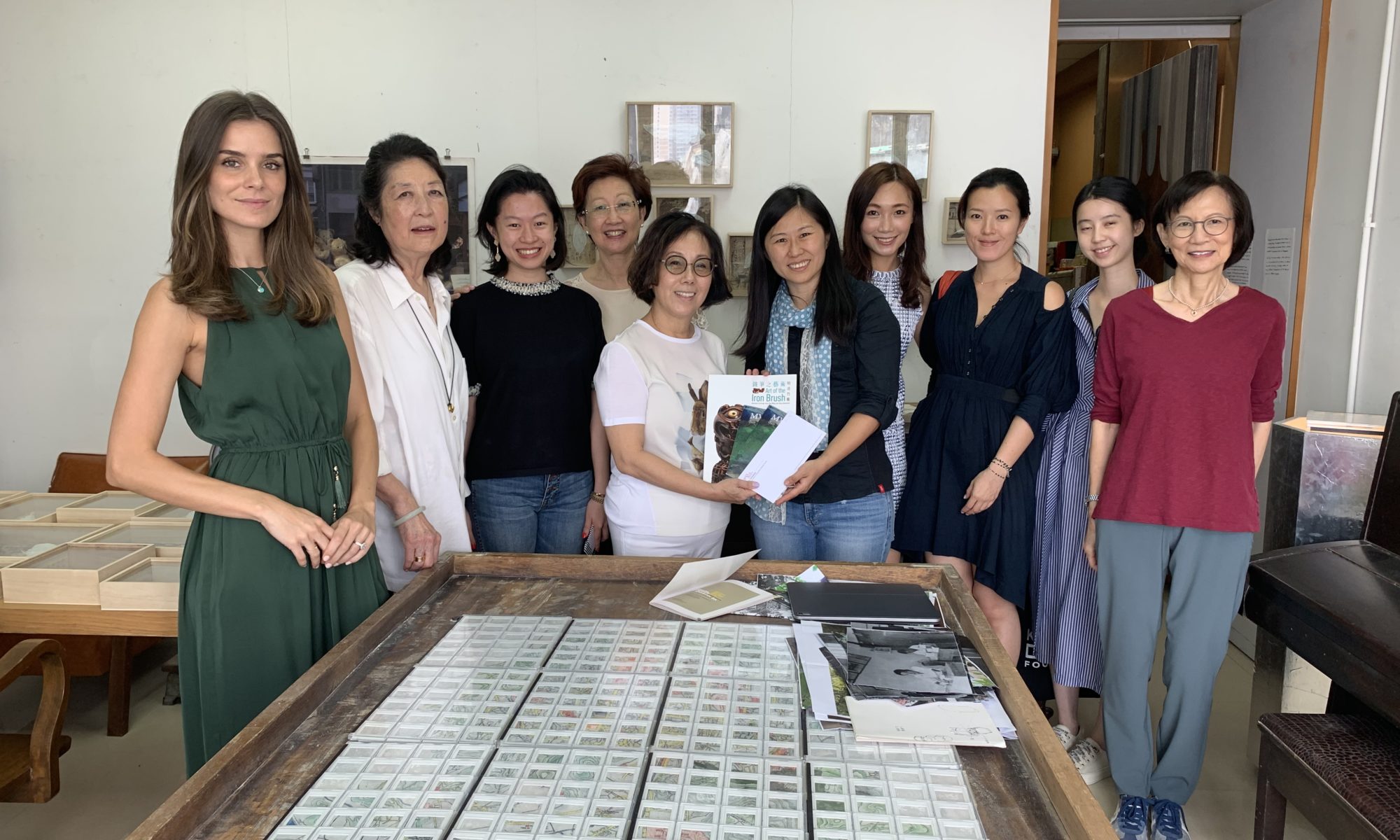
The HKU Museum Society and the University Museum and Art Gallery are pleased to arrange a guided viewing of two exhibitions, Picturing the Bauhaus: Erich Consemüller‘s Photography of the World’s Most Famous Design School and Art of the Iron Brush: Bamboo Carvings from the Ming and Qing Dynasties. This will be followed with a bamboo and wood carving demonstration and talk (in Cantonese) with Master Carver Cheung, one of the carvers of the Wisdom Path in Lantau Island.

Picturing the Bauhaus: Erich Consemüller‘s Photography of the World’s Most Famous Design School

The University Museum and Art Gallery has collaborated with the Klassik Stiftung Weimar, the Goethe-Institut Hong Kong and the School of Creative Media, City University of Hong Kong, on the exhibition Picturing the Bauhaus: Erich Consemüller‘s Photography of the World’s Most Famous Design School. This collaboration will present the documentary photography of Erich Consemüller as an introduction to the famed German design and architecture school that is celebrating its 100 anniversary this year. Consemüller (1902–1957) recorded the artists, their workshops, designs and artefacts, as well as the students and their daily lives on campus from 1926 to 1927, when the Bauhaus school was in its prime and located in Dessau.

Art of the Iron Brush: Bamboo Carvings from the Ming and Qing Dynasties

Durable, flexible and abundant in nature, bamboo has been used as a material and a subject in Chinese art for millennia. At first woven into baskets, containers and other everyday objects during the Neolithic period, over successive centuries bamboo came to be used in increasingly sophisticated ways, at the same time attaining numerous symbolic meanings. Because it bends in a storm but does not break, it was particularly associated with the integrity and personal virtue of the scholarly elite, who embraced its symbolic value by planting bamboo in their courtyards, observing it in the wild, and by producing, acquiring and displaying delicate bamboo objects suitable for various scholarly pursuits, such as painting and calligraphy.

During the Ming dynasty (1368–1644), scholarly and imperial patronage transformed bamboo carving into a major art form. Scholar-carvers and workshops centred around Jiading (in present-day Shanghai) and Jinling (now Nanjing) produced large numbers of brush pots, wrist rests, miniature landscapes, figurines and other objects. Many bamboo carvers also worked in other materials soft enough to be manipulated with the ‘iron brush’—a term for knives and other carving tools used by literati to transfer their brushwork aesthetic to other media—including boxwood, rhinoceros’ horns and ivory, which shared a kind of loose identity under the heading of diaoke (‘carving’ in modern Chinese). Small in scale yet teeming with life, the works in this exhibition reflect both prodigious technical skill and great imaginary involvement, because of the unique shapes and contortions of the materials involved.

Wood and bamboo carving demonstration

During the carving demonstration, carver Master Cheung Sing Hung ( 張醒熊, also known as 酉星) will display some special carving tools and demonstrate wood and bamboo carving techniques and processes. Master Cheung is a renowned sculptor and calligrapher who has won numerous prizes in woodcarving and calligraphy. He acts as President of the Chinese Character Society of Hong Kong and was master woodcarver for Wisdom Path ( 心經簡林) in Lantau Island in 2004-2005.

Resource Persons

Dr. Florian Knothe studies and teaches the history of decorative arts in the 17th and 18th centuries with particular focus on the social and historic importance of royal French manufacture. He has long been interested in the early modern fascination with Chinoiserie and the way royal workshops and smaller private enterprises helped to create and cater to this long-lasting fashion.

Dr. Knothe worked at The Metropolitan Museum of Art focusing on European Sculpture and Decorative Arts, and on European and East Asian glass at The Corning Museum of Glass, before joining The University of Hong Kong, where he now serves as Director of the University Museum and Art Gallery.

Benjamin Chiesa is Assistant Curator at the University Museum and Art Gallery. He was previously Assistant Curator of Cross-cultural Art at the Asian Civilisations Museum, Singapore. His research focuses on hybridity and artistic exchange between China, Japan and Europe in the eighteenth and nineteenth centuries, with a particular focus on ceramics and silverware made for export to the West. His publications include Objectifying China: Ming and Qing Dynasty Ceramics and Their Stylistic InfluencesAbroad, Auspicious Designs: Batik for Peranakan Altars and Devotion and Desire: Cross-cultural Art in Asia.
Guided Viewing – Two Exhibitions at CUHK Art Museum “For Blessings and Guidance: the Qianlong Emperor’s Design for State Sacrificial Vessels” with Collector Anthony Cheung and “Strokes of Wonder: Figure Painting by Ren Bonian from the National Art Museum of China” with Dr. Josh Yiu


For Blessings and Guidance: the Qianlong Emperor’s Design for State Sacrificial Vessels

With significant donations from Dr. Iain Clark and Mr. Anthony Cheung of Huaihaitang, the Art Museum at The Chinese University of Hong Kong now boasts the largest repository of Qing ritual vessels outside of the Palace Museum in Beijing. Made primarily of glazed porcelains after ancient bronzes, Qing ritual vessels have been overlooked by ceramics experts and bronze specialists. However, these objects were of utmost significance in activating state rituals during the Qing period. The Qianlong emperor took it upon himself to standardize the forms of these objects to ensure that the rites were performed properly. For Blessings and Guidance: the Qianlong Emperor’s Design for State Sacrificial Vessels investigates the production and function of this distinct group of objects and we will be led through the exhibition by Collector Mr. Anthony Cheung.

Strokes of Wonder: Figure Painting by Ren Bonian from the National Art Museum of China

Strokes of Wonder: Figure Painting by Ren Bonian from the National Art Museum of China is the first blockbuster exhibition of the ‘Shanghai school of painting’ pioneer in Hong Kong, featuring 82 paintings by Ren Bonian from the prestigious museum in Beijing. Credited as one of the most influential Chinese painters in recent memory, Ren’s artistic prowess inspired numerous later painters including Wu Changshi, Xu Beihong and Zhang Daqian. This exhibition will highlight Ren’s innovative brushwork in figure painting and creative adaptations of historical genres and popular tales, which endear him to generations of artists, collectors and casual art viewers. A rare portrait of Ren by Xu Beihong from the Xu Beihong Memorial Museum and an expressive sculpture by Director Wu Weishan will also be shown. We will be led through this exhibition by Museum Director, Dr. Josh Yiu.

Dr. Josh Yiu is the Director of the Art Museum. He received his B.A. in Art History from the University of Chicago, and completed his doctorate at Oxford University. From 2006 to 2013, he served as the Foster Foundation Curator of Chinese Art at the Seattle Art Museum. A specialist in late imperial and modern Chinese art, his publications include Writing Modern Chinese Art: Historiographic Explorations (Seattle: University of Washington Press, 2009) and Remembering Days Gone By: Chinese Painting and Calligraphy from the Seattle Art Museum Collection, an online catalogue sponsored by the J. Paul Getty Foundation. He has taught and lectured at various universities, including the University of Washington and the Seattle University.

Guided Visit: “A Story of Light: Hon Chi-fun |光的故事:韓志勳” with Choi Yan Chi

Asia Society Hong Kong is presenting A Story of Light, an exhibition of the ground-breaking Hong Kong artist Hon Chi-fun (1922 – 2019). As a postal inspector by trade, Hon is a self-taught artist who rose to prominence in the 1960s with his radical artistic experiments that combined international influences as a response to Hong Kong’s multi-cultural context. A Story of Light re-contextualizes the evolution of Hon Chi-fun’s practice by contrasting his continual fascination with light as both a material and subject with his deployment of various media and cultural influences. The exhibition presents over thirty artworks spanning four decades of his trailblazing practices in painting, printmaking, and photography.

Through considering the different ways Hon focuses on light in his work, one can discern his desire to resist being labelled or historicized. While Hon was undoubtedly informed by various dominant art movements, including Abstract Expressionism, Pop Art, and the New Ink Movement in Hong Kong, he created a visual language that uniquely expresses his multicultural influences and evolving viewpoints spanning multiple geographies and time periods. His diverse oeuvre, developed over years of experimentation and travel, addresses questions of cultural identity through a radical approach to materials and the use of new artistic techniques. For Hon, to be a Hong Kong artist is to remain porous and question boundaries between cultures, mediums, and within the self.

Renowned American light artist James Turrell will also be showing his work side by side Hon’s works, so as to enrich the topic of the exhibition. A Story of Light: Hon Chi-fun is co-curated by Katherine Don and Kaitlin Chan. We will be guided through the tour by Choi Yan Chi.

Resource Person

Choi Yan Chi is a retired Associate Professor of the Academy of Visual Art, Baptist University. She is also the co-founder of 1a Space. She was the first Hong Kong woman artist to show her works at the First Asia Pacific Triennial in 1993 at Queensland Art Gallery Australia. In the same year, she was given a solo exhibition at Haus der Kulturen der Welt (House of World Art) in Berlin Germany.