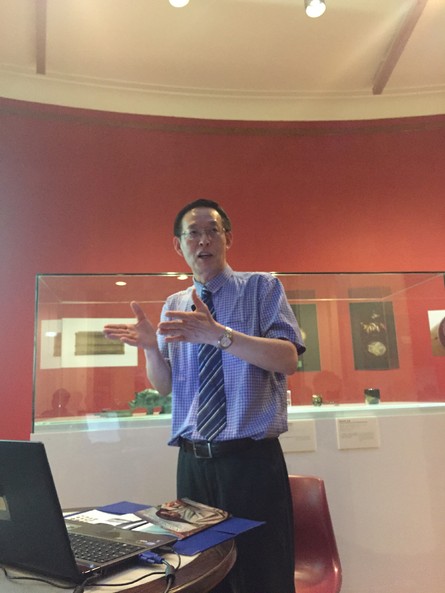
Inside the World of Gemstones With Yvonne Chu

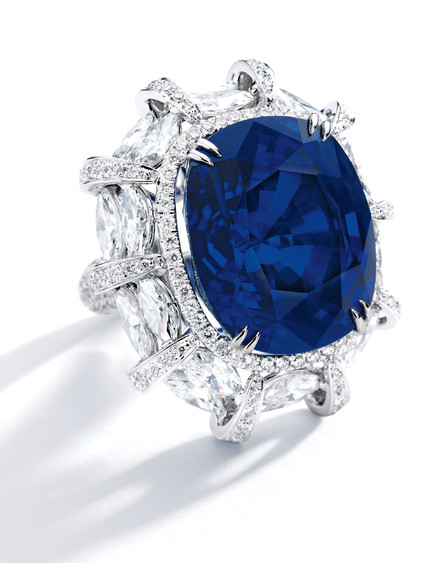
Through the ages, rubies, sapphires and emeralds have been the three most highly revered gemstones. They are an expression of wealth and power of the ruling class, demonstrating the opulence of their courts and richness of their nations, and also an ancient talisman, bringing luck or fortune. The tradition continues today as gems have been used as an inheritance, the transfer of wealth from one generation to another, a symbol of love, romance and devotion, to adorn oneself as Cleopatra, the maharajas and the Chinese Empresses have before us, or simply appreciated as masterpieces of art by the great joaillerie maisons and modern jewellery designers today.

Yvonne Chu will give an introduction to the appreciation of gemstones, the uniqueness of each gemstone and their important deposits, followed by a special handling session of gemstone highlights in the upcoming Sotheby’s Magnificent Jewels and Jadeite auction on 5 October 2016.

Speaker
Yvonne Chu is qualified Graduate Gemmologist with over ten years' experience in the gemstone and jewellery business, from teaching gemmology at GIA and Gübelin to running a retail chain in Mainland China and managing the operation of a high-end Hong Kong jewellery designer.

Ms. Chu is the Specialist of Sotheby's in Hong Kong. She was educated in Hong Kong, England and the United States, majoring in History from the University of California, San Diego.

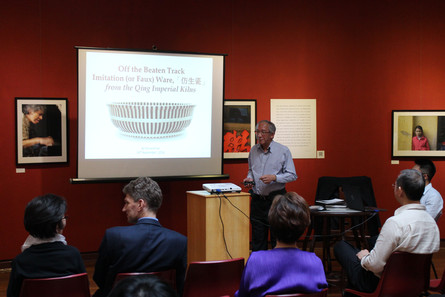
Imitation (or Faux) Ware (仿生瓷) from the Qing Imperial Kilns With Richard W. C. Kan

“Faux” is the French word for false. The adjective has been adopted into the English language to describe an imitation or ersatz good.

The French term “Faux” is actually quite misleading because the Qing Dynasty
artisans were not ‘faking’ porcelain pieces to deceive people into taking them for Ming or Yüan objects. Rather, their intention was to produce porcelain objects to look like, for instance, wood, stone, lacquer, jade, gold, flower, coral, bamboo, crab-shell, tea-dust, bronze, iron-rust, turquoise, Robin’s egg and many others. This was achieved by the application or painting of colour glazes or enamels onto a hard fired porcelain body via a second low firing. Reference books on Chinese ceramics or porcelain usually devote only one or two sentences to imitation ware (仿生瓷), complemented by several photographs at the most. There are a few, but shy away from discussions on the origin, glazes, techniques and the kiln masters credited with the creation of this most interesting and innovative ware which combines the skills of potting, firing, painting and the advancement of experiences gained from monochrome and polychrome productions.

This talk focuses on Qing Dynasty porcelain, the manufacture of imitation ware however goes back to several millennia if earthenware were included.

Speaker
Richard W. C. Kan comes from a line of light industrialists from the prefecture of Nan Hai in Guangdong, founders of the Nanyang Brothers Tobacco Company Limited. It is documented as one of the 100 most distinguished enterprises in China of the twentieth century. The family has taken a keen interest to promote Chinese culture and Confucianism, which is highlighted by the donation of 120,000 square feet of land at So Kon Po, Hong Kong, for the erection of a school and an assembly hall to commemorate Confucius.

Mr. Kan was educated in Hong Kong at St. Paul’s Co-educational College and in England at Repton School and Imperial School. He has been a chartered engineer for over 41 years with experience in civil engineering, town planning, infrastructural and land development projects.

Since 2004, he has been a member of the History Museum Advisory Board. He is also a member of the Hong Kong Local Records Foundation overseeing this project, which is aimed at documenting all trades, professions, and locals’ and foreigners’ contributions alike to the growth and vibrancy of Hong Kong.

Of the several hobbies cultivated over the decades, Richard has taken special interests in the collection of Chinese monochrome ceramics and ancient Greek coins. An exhibition entitled “History Re-stored: Ancient Greek Coins from the Zhuyuetang Collection”, complemented by a catalogue, was mounted at the Museum of History in 2004 and another one called “Shimmering Colours: Monochromes of the Yuan to Qing Periods, the Zhuyuetang Collection”, also complemented by a catalogue, was mounted at the Art Museum of the Chinese University of Hong Kong in 2005.
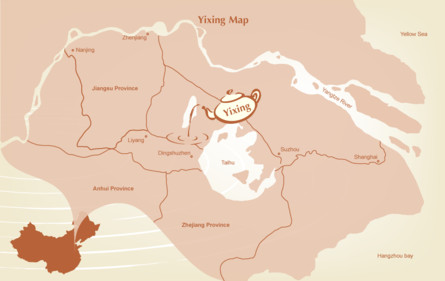
Yixing Teapots and Beyond : A Cultural Trip to Nanjing & Yixing with Ms. Lai Suk Yee 黎淑儀

Autumn would be the best season to visit Yixing 宜興, the town in the Lake Tai (Taihu) 太湖area in Jiangxu province 江蘇省. In the world of Chinese art, Yixing is most famous for its zisha 紫砂 (purple clay) teapots, which have been in production catering to and appreciated by literati and art collectors ever since the late Ming dynasty till nowadays, all through 500 years.

The Yixing teapot masters and their masterpiece teapots, of the past and in the modern, would be the main contents of this Yixing trip. Apart from visits to museums for teapots in the past, we will meet contemporary masters at their studios and stroll through markets for teapots of the modern. We will also enjoy tea in the bamboo grove, imitating and imagining the literati in the past – both tea and bamboo grove, though a bit less famous than teapots, enjoy great fame in Yixing. Moreover, Yixing in Autumn will bestow us not only the good weather, but also the fresh and delicious mitten crabs – what a treat!

Lai Suk Yee

Resource Person
Ms. Lai Suk Yee has been doing research on Yixing teapots 宜興茶壺 and the related art and culture for over 20 years. She has participated in organizing three major exhibitions, publishing books and writing articles on Yixing teapots at the Art Museum, The Chinese University of Hong Kong, while she was working there as assistant curator and then researcher. Suk Yee retired in August 2015, yet she continues on her research work on Yixing teapots. She is now appointed a Researcher of the Research Institute of Ceramics (Zisha) Culture at Yixing, a Researcher of The Hong Kong Ceramics Research Society in Hong Kong, and also a Museum Expert Adviser of the Leisure Cultural Services Department of Hong Kong Government.

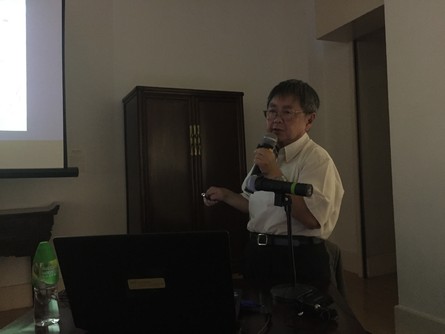
The Expedition of Zhang Qian and the Opening of the Silk Road With Dr. Joseph Ting

This talk is presented in conjunction with the Museum Society’s upcoming trip to the Fergana Valley: In the Footsteps of Zhang Qian with Dr. Joseph Ting.

At the time of Wudi(武帝157-81 BC)of the Han dynasty, the Western Region(西域)including present day Xinjiang and its western fringes were occupied by Wusun(烏孫), Yuezhi(月氏) and the powerful Xiongnu(匈奴)tribes. The trade routes from West Asia could only reach as far as Central Asia but no further. The Han empire then had little if any knowledge of Central Asia and beyond. The expedition led by Zhang Qian(張騫), the legendary envoy albeit failing in his original mission to seek alliance with the Yuezhi people to fight against the Xiongnu who were then the most powerful force in the territory, acquired detailed information on the Western Region including Bactria and Fergana, and thus opened up trade between China and Central Asia and beyond. The talk will give a detailed account of Zhang Qian's expedition, explaining the historical background of the expedition, the activities of the abovementioned tribes at the time, and discuss the impact of Zhang Qian's expedition.

Resource Person
We are privileged to have as our resource person, Dr. Joseph Ting. He majored in Chinese Literature and Chinese History from HKU and graduated with a BA degree in 1974. He was conferred an MPhil in 1979 and a PhD in 1989, both from HKU. Dr. Ting joined the Hong Kong Museum of Art as an Assistant Curator in 1979 and was appointed Chief Curator of the HK Museum of History in 1995. He retired in 2007 after serving for 28 years. He is currently an Honorary Assistant Professor in the School of Chinese at The University of Hong Kong, as well as an Adjunct Professor in the Department of History at the Chinese University of Hong Kong.

He is Honorary Advisor to many art and cultural institutions, including the University Museum and Art Gallery in HKU, the HK Museum of Art, the HK Museum of History, the Shenzhen Museum and Guangdong Provincial Museum. He is also a Member of the Antiquities Advisory Board, the Lord Wilson Heritage Trust and the Education Bureau of Hong Kong, an Honorary Fellow of the HKU and Hong Kong Institute of Education, and was an Honorary Research Fellow at the Centre of Asian Studies.

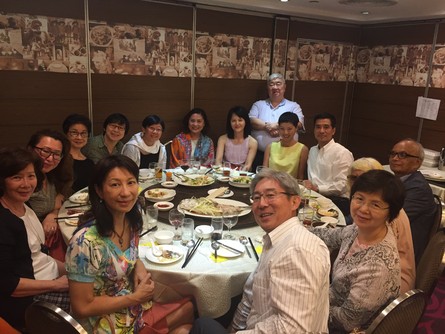
Tai Wing Wah Village Cuisine

Celebrity chef Hugo Leung Man To (梁文韜), better known as “To To” or “Brother To” is the managing director of Tai Wing Wah Restaurant. He is famous for his effort in enhancing and preserving traditional dishes and serving seasonal dishes. He sources local ingredients from small farms and food producers whenever possible and complements them with his insightful experience and innovations in cooking.

Leung has hosted TV shows and designed gourmet tours. He has written many books on cooking and food and is now writing weekly food columns for “The Hong Kong Economic Times”.

Do join us on this evening to try out his signature dishes of Five Flavours Soy Sauce Chicken, Steamed Grey Mullet with Salty Dried Lemon, Steamed Sponge Cake and many more other seasonal dishes specially designed for us by To To.

THE IMPERIAL SOUND OF MUSIC: A grand trip to the heart of Music, Arts and Culture, Germany and Austria

HKU Museum Society is proud to present our first fundraising trip for our 30th
Anniversary Endowment Fund.

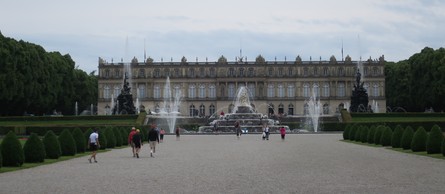
Together with HKUMS Past Chairman Jean Ho and So Me Travel we offer an exclusive music and culture trip to Austria and Germany for the occasion of the Salzburg Festival, often called the greatest festival of classical music in the world. “By invitation only", our members will be given access to places that are normally closed to the public. You will sleep and dine in a private palace by invitation of the owners. On your visits to art galleries, museums and castles, you will be introduced to the directors and owners and be given private tours by no other than leading experts in their field.

“20th Century Mexican Paintings” With Gregorio Luke

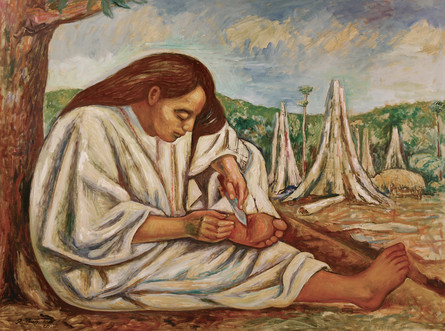
In conjunction with the upcoming 20th-century Paintings from the Zapanta Mexican Art Collection Exhibition, we are pleased to announce a lecture by Gregorio Luke on the artists and artistic movements in the show.More information about the event will follow.

Speaker
Gregorio Luke is an expert on Mexican and Latin American art and culture. Mr. Luke has presented over 1,000 lectures in museums and universities throughout Mexico, Europe and the United States, at institutions such as the Library of Congress, The Smithsonian Institution, the San Diego Museum of Art, the Detroit Institute of Art, and at universities such as Harvard, Columbia and Georgetown, among others.

He is the former Director of the Museum of Latin American Art in Long Beach, former Consul of Cultural Affairs of Mexico in Los Angeles and the First Secretary of the Embassy of Mexico in Washington D.C.

In 1995, Luke was honoured with the Irving Leonard Award by the Hispanic Society of the Library of Congress. In 2005, The Ebell Club of Los Angeles honoured him with a Lifetime Achievement Award. In 2006, he received the El Angel Award by the Bilingual Foundation of the Arts and in 2007 he was recognized by CATE (California Association of Teacher’s in English) for promoting literacy in public schools.

In 2008 Mr Luke received the Local Hero Award of KCET.

“Invaded, Looted and Returned: The Remarkable Story of the Loss and Restitution of the Treasures of Kuwait National Museum” With Kirsty Norman

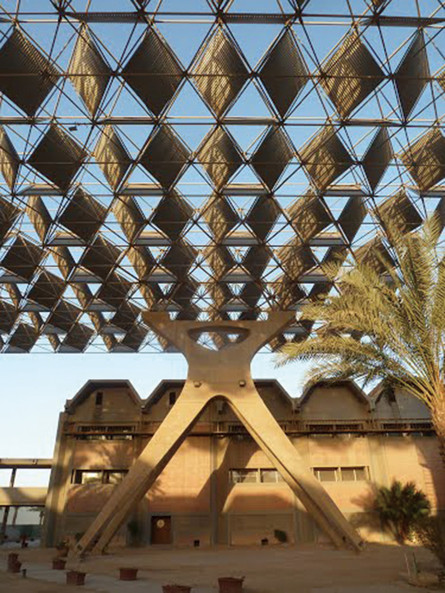
Trained as an archaeological conservator at the British Museum and later specializing in Islamic ceramics, Kirsty Norman was Conservator for the al-Sabah Collection of Islamic Art in Kuwait for 16 years, from 1988 onwards. For three months of each year, Kirsty resided in Kuwait to work on this important and wide-ranging collection which belonged to members of the Kuwaiti ruling family, and which comprised part of the Kuwait National Museum.

In August 1990, the Iraqi army invaded Kuwait and over the following months the Iraqi government organised the systematic emptying of the major assets and institutions in the country, including Kuwait National Museum. All of the looted objects from the museum were taken to Baghdad. Kirsty, caught as she attempted to escape across the desert, was held hostage by the Iraqis to form part of a “human shield”.

After Kuwait was liberated in 1991, Kirsty travelled to Baghdad as a member of a specially created United Nations team to recover the stolen collections.

Against today’s setting of the destruction and looting of antiquities in Syria, Kirsty will describe the collections which she worked on in Kuwait, as well as detailing the remarkable recovery operation which took place after Kuwait’s liberation. Drawing from her hands-on experience with the restitution of Kuwait’s stolen treasures, she will discuss both the lessons learned and the reasons for the success of the operation.

Speaker
Kirsty Norman was born in Hong Kong, but is now based in London. She is an Honorary Lecturer at the Institute of Archaeology at University College London, where she teaches heritage management. In her earlier career of 25 years as an archaeological conservator, she trained at the British Museum, and then worked largely in Turkey and the Middle East, becoming freelance and combining a range of museum and excavation projects in Kuwait, Bahrain, the United Arab Emirates, Qatar, Oman and Turkey. Also during this period, she and her husband were in Hong Kong for four years, where she worked as a consultant for the Antiquities and Monuments Office on finds from sites excavated in advance of the building of Chek Lap Kok airport.

Kirsty was featured in a two part BBC Radio 4 programme called A Quiet Invasion. Programme 1 was based on the diary that Kirsty kept hour by hour through the first month of the invasion and occupation of Kuwait; in Programme 2 Kirsty talked to others who had been in Kuwait through the whole 6 month occupation 20 years on, to examine how it had affected them, and Kuwait. A Quiet Invasion won a bronze medal at the New York Festivals International Radio Program Awards.

“Tung Lin Kok Yuen” With Dr. Joseph Ting

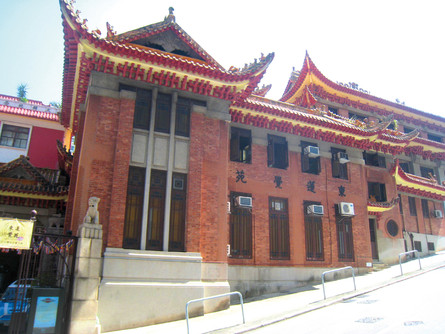
The Tung Lin Kok Yuen was founded by Clara Ho Tung, the wife of Sir Robert Ho Tung in 1935. Built in the ‘Chinese Renaissance’ style in vogue in the early Republican period, it is a gem in local architecture hidden in the midst of the bustling city. What made the monastery more unusual is the good collection of wooden plaques given by many a celebrated Chinese dignitaries active in the early part of the twentieth century, including Li Yuanhong (黎元洪), Zhang Xueliang (張學良), Kang Yuwei (康有為) and Wu Hanmin (胡漢民) who were all friends of Sir Robert Ho Tung, a wealthy and influential merchant in Hong Kong who was also interested in the politics in China. The wooden Buddhist sculptures in the monastery were commissioned in the 1930s and represent some of the best wood carvings by top Ningbo craftsmen rarely found in other Buddhist temples in Hong Kong.

Resource Person
We are privileged to have as our resource person, Dr. Joseph Ting. He majored in Chinese Literature and Chinese History from HKU and graduated with a BA degree in 1974. He was conferred an MPhil in 1979 and a PhD in 1989, also from HKU. Dr. Ting joined the Hong Kong Museum of Art as an Assistant Curator in 1979 and was appointed Chief Curator of the HK Museum of History in 1995. He retired in 2007 after serving for 28 years. He is currently an Honorary Assistant Professor in the School of Chinese at The University of Hong Kong, as well as an Adjunct Professor in the Department of History at the Chinese University of Hong Kong.

He is Honorary Advisor to many art and cultural institutions, including the University Museum and Art Gallery in HKU, the HK Museum of Art, the HK Museum of History, the Shenzhen Museum and Guangdong Provincial Museum. He is also a Member of the Antiquities Advisory Board, the Lord Wilson Heritage Trust and the Education Bureau of Hong Kong, an Honorary Fellow of the HKU and Hong Kong Institute of Education, and was an Honorary Research Fellow at the Centre of Asian Studies.

“French Missionaries and Cultural Exchange Between China and France During the Early Qing Dynasty” With Professor Shenwen Li

In 1687, five Royal Mathematicians (皇家數學家), dispatched as missionaries by King Louis XIV, arrived in China. Among them were Joachim Bouvet (白晉) and Jean-François Gerbillon (張誠), who were invited to stay in the court as Imperatorial Study Servants (御前侍讀), as the Kangxi Emperor was particularly fond of western scientific knowledge. From that same group, Jean de Fontaney (洪若翰), Louis le Comte (李明) and Claude de Visdelou (劉應) were given permission to preach across China. After this first mission, the number of French Jesuits coming to China increased, gradually becoming a significant missionary force. These individuals also made great contributions to the level of cultural exchange between China and France. They brought gifts selected by Louis XIV, and Joachim Bouvet, Jean de Fontaney and others returned to France with gifts for King Louis from the Kangxi Emperor, subsequently connecting these two famous monarchs. Furthermore, the missionaries introduced numerous western scientific technologies to China, which broadened China’s knowledge of France. Their letters—such as the widely circulated Lettres édifiantes et curieuses (耶穌會士書簡集)—and publications that include Louis le Comte’s Nouveau mémoire sur l'état présent de la Chine (中國近事報道) introduced Chinese society and culture to France and the whole of Europe. This development also had significant influence on the waves of French Chinoiserie and on the work of Enlightenment thinkers such as Voltaire (伏爾泰) and Montesquieu (孟德斯鳩).

Speaker
Shenwen Li is Professor in history and Director of the Centre d'études Québec-Chine at Laval University in Quebec, Canada, and Visiting Professor at Nankai Univesity in Tianjin, China. He specializes in Chinese history and in the multifaceted relationships between China and the Occident during the 17th and 18th centuries. He is a specialist of Jesuit culture and has published extensively on socio-cultural history of the Ming and Qing Dynasties.