3rd Edition of Art Basel in Hong Kong

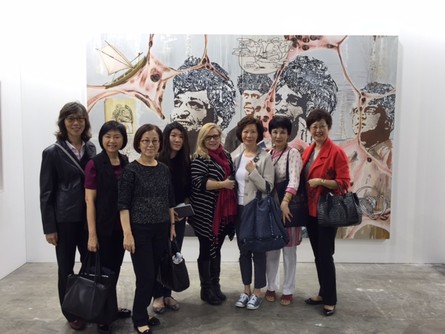
Considered to be one of the leading international art shows for contemporary art, Art Basel Hong Kong will be presenting its 3rd edition from the 15–17 March 2015 at the Hong Kong Convention and Exhibition Centre. With half of the participating galleries coming from Asia and Asia-Pacific, Art Basel in Hong Kong assumes a significant role in the international art world in providing a portal to the region’s local artists as well as giving overseas galleries a platform to show their highest quality works.

This most recent edition of Art Basel in Hong Kong will showcase both modern masters as well as emerging talents from both Asia and the West, as it traces twelve decades of art history across its six sectors: Galleries, Insights, Discoveries, Encounters, Magazines and Film. On display will be works from the 20th and 21st centuries by more than three thousand artists from Asia and around the world. For art collectors, artists, dealers, curators, critics and art lovers, Art Basel in Hong Kong promises to be a lively occasion for cross-cultural exchange.

AXA ART, the official provider of VIP tours for Art Basel in Hong Kong, has graciously agreed to arrange a special tour of the fair’s highlights for the Museum Society. As an established market leader in providing specialty insurance coverage for private and corporate collections, the AXA ART team comprises of dedicated international art specialists who will be expertly guiding our visit to Art Basel in Hong Kong. The guide will welcome our group at the VIP Collectors Lounge by giving us a quick overview of what we can expect to see during our specially guided tour of Art Basel in Hong Kong.

New Perspectives: Contemporary Indian Art – Part 2 With Dr. Kathleen Wyma

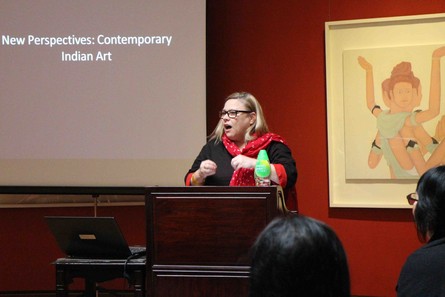
As a sequel to the public lecture on Saturday, 14 March 2015, Dr. Kathleen Wyma will guide us on a tour of the contemporary Indian art exhibited at the Art Basel in Hong Kong 2015.

Speaker
Dr. Kathleen Wyma is an Assistant Professor in the Department of Fine Arts at The University of Hong Kong. Her research focuses on post-1945 Indian art, with a special interest in issues of post-colonialism and the impact of intercultural exchange in an increasing globalized art world. She has published numerous articles, and exhibition catalogues, as well as curated a number of contemporary art exhibitions in India. Her forthcoming article, “Counter Praxis: The Indian Radical Painters and Sculptors Association” focuses upon a Kerala-based artistic collective who, through a series of exhibitions and interventions, raised questions about the theoretical and political assumptions of Indian contemporary art as it developed throughout the 1980s.

Villas of the Italian Nobility – Verona and the Largo di Garda

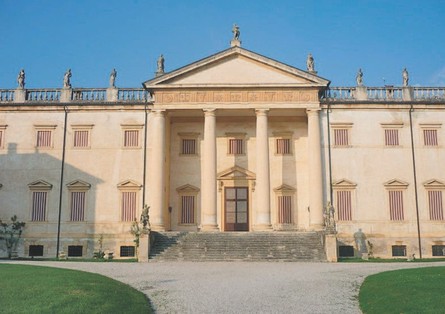
Verona, on the western edges of the Veneto, and the Lago di Garda, quite literally the border between the Veneto and Lombardy, remain exclusively outside traditional tourist destinations. Here, hidden amongst some of northern Italy’s most scenic landscapes, many of the Italian nobility chose to build, what are now little-known, architectural gems.

This tour is unique in that the important private homes that we shall be visiting are not usually open to the public. The owners, predominantly members of the Italian aristocracy, have very kindly agreed to open their homes to us on this occasion, and it is this rare opportunity that gives this exclusive tour its particular cache. Individual guided tours of these villas and palazzos, very often led by the owners themselves, some of whom have very kindly consented to host our group to lunches or dinners, will enable us to explore the rise of the nobility in this picturesque, often unexplored, region of northern Italy. In conjunction with short walking tours in Verona, the cultural capital of the area, our aim is to provide an understanding of the cultural developments of this little-studied, but extremely significant, region on the north-west hinterland of Italy’s Veneto.

Resource Person
Graduating in the 1970s, Michael Borozdin-Bidnell spent many years as a London-based interior designer, working internationally as a Senior Partner and travelling extensively in Europe, America and both the near and far East.

Becoming a Master of Science in the mid-1990s, he joined the Georgian Group, the UK National Amenity Society, a charitable organisation established in 1937 to campaign for the protection of 18th century and early 19th century buildings in England, as Head of Research and Information. Since then he has written and lectured extensively, both in the UK and overseas, as an architectural historian and has led overseas cultural tours in Europe for the past nine years. He is currently in the final year of a Doctorate in Architectural History.

The Land Between the Celestial Empire and Central Asia With Dr. Joseph Ting

On this segment of the Silk Road, we are going to visit Southern Kazakhstan, the region connecting Xinjiang, China with Uzbekistan in Central Asia, traveling from River Ili to Amur Darya, visiting Issyk, Tamgaly, Talgar, Almaty, Taraz, Shymkent, Otyrar and Sayram along the way. Many of these towns were once important stops along the celebrated Silk Road, the major thoroughfare between East and West before the Great Discovery. The great Buddhist monk and traveller Xuanzang (玄奘) passed through the area in 630AD on his pilgrimage to India. The famous Battle of Talas when Tang forces were vanquished by an Arab army in 751AD, drove the Chinese out of Central Asia and resulted in the spread of Islam in the ensuing years. In 1222, Qiu Chuji (丘處機), the legendary Daoist master also set foot on this region on his way to Hindu Kush to meet with Genghis Khan.

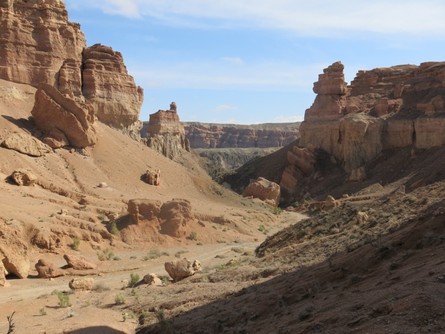
This region is rich in history and culture. Nomads from the steppes and sedentary civilizations left behind petroglyphs, sites of worshipping places of Zoroastrianism, Nestorianism and Manichaeism, as well as mausoleums and magnificent mosques. Apart from rich cultural heritage, we will also appreciate the breathtaking scenery and unique geological formations of the region.

Resource Person
Dr. Joseph Sun Pao Ting (丁新豹博士) was born in Guangzhou and raised in Hong Kong. He majored in Chinese Literature and Chinese History at The University of Hong Kong (HKU) and graduated with a BA degree in 1974. He was conferred an MPhil in 1979 and a PhD in 1989, also from HKU.

Dr. Ting joined the Hong Kong Museum of Art as an Assistant Curator in 1979 and was appointed Chief Curator of the Hong Kong Museum of History in 1995. He retired in 2007 after serving for 28 years. He is currently an Honorary Assistant Professor in the HKU School of Chinese, and was an Honorary Research Fellow at the former Centre of Asian Studies. He is an Adjunct Professor in the Department of History at the Chinese University of Hong Kong and a Member, inter alia, of the Antiquities Advisory Board, the Lord Wilson Heritage Trust and the Education Bureau of Hong Kong.

Dr. Ting is an Honorary Advisor to the Hong Kong Museum of Art, the Hong Kong Museum of History, the Hong Kong University Museum and Art Gallery, the Shenzhen Museum and the Guangdong Provincial Museum. He is an Honorary Fellow of the HKU and Hong Kong Institute of Education.

New Perspectives: Contemporary Indian Art – Part 1 With Dr. Kathleen Wyma

In 2005, for the first time in the history of the prestigious Venice Biennale, India had its own pavilion. In the years since then, the profile and market value of contemporary Indian art has significantly increased. Indeed many international collectors first stood up and noticed the lucrative potential of contemporary Indian art when Christie’s (New York) placed Tyeb Mehta’s “Mahisasura” on the auction block in 2006, where it fetched US$1.58 million far surpassing the list value of US$600,000. India’s participation in international exhibitions and art fairs such as Art Basel and the recent arrival of its own homegrown art extravaganza, the Kochi Muziris Biennale, have fueled further interest. Although these events mark a recent change in international reception, contemporary art is not new to the subcontinent and it has a unique history that parallels the passage from colonialism to the present. With an eye on historical development and the importance of cultural context, this talk is designed as an introduction to the contemporary art of India.

Speaker
Dr. Kathleen Wyma is an Assistant Professor in the Department of Fine Arts at The University of Hong Kong. Her research focuses on post-1945 Indian art, with a special interest in issues of post-colonialism and the impact of intercultural exchange in an increasing globalized art world. She has published numerous articles, and exhibition catalogues, as well as curated a number of contemporary art exhibitions in India. Her forthcoming article, “Counter Praxis: The Indian Radical Painters and Sculptors Association” focuses upon a Kerala-based artistic collective who, through a series of exhibitions and interventions, raised questions about the theoretical and political assumptions of Indian contemporary art as it developed throughout the 1980s.

Saturday Guided Walk through Causeway Bay, Tin Hau and North Point With Cheng Po Hung (鄭寶鴻)

漫遊港島東區
多年來,香港大學美術博物館名譽顧問、著名香港歷史學家鄭寶鴻先生曾替我們導覽灣仔、跑馬地、銅鑼灣一帶。這次,鄭先生將會帶領我們探索港島東區:由銅鑼灣開始,經天后、至北角止,與大家一起回溯這個地區的起源及發展,以及街道命名的由來。

瀏覽街道及景點
高士威道:緬懷怡和東角貨倉、糖廠、鑄幣廠、東區遊樂場、渣甸紡織廠;途經舊避風塘、馬球場、民新片場、天后廟及虎豹別墅。

電器道:追憶戰後的花市、安樂園及廣生行的工廠、第二代電燈廠、屈臣氏汽水廠、蜆殼油庫、敬記船廠、七姊妹泳灘。

英皇道:憑弔兩旁的山崗、電車路的轉變、天后廟山、芽菜坑、炮台山;璇宮、皇都及新都城戲院;雲華、麗宮夜總會;月園遊樂場、名園遊樂場及名園西街;商務印書館及書局街和馬寶道、春秧街和四十間、聯益貨倉及和富中心、中巴車廠和港運城。

鄭先生沿途亦會介紹「小上海」的輝煌歲月,以及與我們分享當時的消費場所和名店、北角台和北角半山豪宅的故事及歷史。

Overview
Cheng Po Hung, UMAG honorary advisor and renowned Hong Kong historian will guide us through the districts of Causeway Bay, Tin Hau and North Point. This is a continuation of Cheng's previous walk where we explored Wanchai, Happy Valley and parts of Causeway Bay. This time we will meander through nooks and crannies of Causeway Road, Electric Road and Kings Road. He will share interesting tales about their landmarks, factories, cinemas and famous organisations. In particular he will talk about “Little Shanghai” a popular nickname for the North Point area, as well as the origin and historical development of these districts.

“Flowing Stories” – A Film by Jessey Tsang Tsui-Shan an ode to village life and a journey in search of Hong Kongers’ collective roots

The HKU Museum Society and the Jaderin Club are delighted to jointly present the private screening of Flowing Stories, winner of the Best Documentary Film at the 14th South Taiwan Film Festival by filmmaker Jessey Tsang Tsui-Shan.

Through the depiction of recurring partings and reunions of villagers and the intimate details of their lives, Flowing Stories examines issues about urban and rural development. Filmed on location in Hong Kong and in various cities in France and Great Britain, the film is an ode to village life and a journey in search of Hong Kongers’ collective roots. Tsang’s camera records the beautiful scenery and time-honored customs of a local village, as well as a once-a-decade village festival, which serves as a continuation of a tradition passed down through the generations and a testament to the loving bonds among family members. When people are facing so much uncertainty in today’s Hong Kong, the director reviews a village’s development and future progress to explore the meaning of home and diaspora.

Jessie Tsang Tsui-Shan who won the Best New Director of the 31st Hong Kong Film Award in 2012 will be present to talk about the making of this special film.

History’s Forgotten Men: A Sailor and an Artist in Mid-19th Century Guangdong with Dr. Stephen Davies and Dr. Yeewan Koon

We are pleased to present a double lecture with Stephen Davies and Dr. Yeewan Koon at the historic Luk Yu Tea House in Central.

Synopsis
The period of 1840–60 in China is often seen through the lens of the Opium Wars, but there are also narratives of people outside the world of wars and diplomacy. Through the stories of two historically neglected individuals — Hesing, a Whampoa shipping man and Su Renshan, a Cantonese artist from the outskirts of Guangdong — this double lecture will show how mid-19th century Guangdong was a time of change and possibilities.

In his recent book, Dr. Stephen Davies recalls the story of a British purchased Chinese junk Keying and its voyage from Hong Kong to London where it was intended to be a traveling exhibition of Chinese items. In this talk, Dr. Davies draws attention to one of the junk’s Chinese crew members, Hesing, a man who was very much part of the fluid, multicultural, polyglot but very Cantonese world of the Huangpu (Whampoa) waterfront.

Dr. Davies traces Hesing’s story from when he first became part of the Keying project to landing in England, his reinvention of himself as a “5th rank mandarin” and his final story back in China. The treaty ports offered new opportunities. It was people like Hesing who seized them.

As Keying’s journey to America and Europe began in the Pearl River Delta area, a different story was unfolding at the edges of Guangdong city. Dr. Yeewan Koon relates the story of Su Renshan, an artist discontented with the pressures of being an elder son, challenged the structures of Confucian learning with his iconoclastic ink paintings.

This part of the talk will examine how Su’s radical reinterpretation of familiar iconographies and brushwork to show the limitations of traditional values placed on art and artists were at this moment of change. Su’s radical paintings showed the possibilities for later generations of modern Chinese art.

The lectures will be followed by a short discussion between the two speakers who will reflect on how examining marginal figures in history can reveal different types of insights into larger grand narratives of Chinese history.

Speakers
Dr. Stephen Davies is an Honorary Fellow of the Hong Kong Institute for the Humanities and Social Sciences. He is author of the book East Sails West: The Voyage of the Keying, 1846–1855 and currently writing the history of maritime mission in Hong Kong. He still teaches at HKU, is Hon. Editor of the Journal of the Royal Asiatic Society Hong Kong Branch, writes as a yachting journalist, is an occasional TV presenter, works with museums and heritage interests in China, Singapore and Hong Kong and is an active yachtsman.

Dr. Yeewan Koon is an Associate Professor in the Fine Arts Department at the University of Hong Kong. Her book, A Defiant Brush: Su Renshan and The Politics of Painting in Early 19th Century Guangdong (2014) situates an unusual artist in a larger world of art that includes export works and ink painting during the time of the Opium War. She is currently working on her new research on the “self-knowing copy” through case studies where copying was more than an act of learning, artistic transcendence, or for mass production, and reveals motives of wit, historical positioning and affectation.
Splendid Images: Chinese Painting from the Eryi Caotang Collection With Dr. Josh Yiu (姚進莊博士)

Having collected modern Chinese paintings for over four decades, the master of Eryi Caotang has assembled an extraordinary collection that provides an overview of the development of Chinese ink painting from the late 19th century to the 20th century. The exhibition features 71 masterpieces by well-known masters including Qi Baishi (1864–1957), Xu Beihong (1895–1953), Zhang Daqian (1899–1983), Lin Fengmian (1900–1990), Fu Baoshi (1904–1965), and Li Keran (1907–1989). Many were collected during the 1970s and 1980s, when China gradually recovered from the aftermath of the devastating Cultural Revolution and when Hong Kong’s economic boom fostered a demand for works of art. The master of Eryi Caotang was a typical Hong Kong businessman of that period whose success in business led, atypically, to his lifelong passion for Chinese painting and friendships with many prominent artists. As such, the collecting history in recent memory is intricately linked with the lives and practices of artists and the ties between Hong Kong and mainland China. His story will be featured in the accompanying catalogue.

Resource Person

We are delighted to present this guided tour with Dr. Josh Yiu (姚進莊博士), Associate Director of the Art Museum, The Chinese University of Hong Kong. He received his B.A. in Art History from the University of Chicago, and completed his doctorate at Oxford University. From 2006 to 2013, he served as the Foster Foundation Curator of Chinese Art at the Seattle Art Museum. A specialist in late imperial and modern Chinese art, his book publications include Writing Modern Chinese Art: Historiographic Explorations (2009) and A Fuller View of China: Chinese Art at the Seattle Art Museum (2014). He is also the Project Director and Co-editor (with Mimi Gates) of Uncover the Past: Chinese Painting and Calligraphy from the Seattle Art Museum Collection, an online catalogue that won the "Gold Muse Award for Online Presence" presented by the American Alliance of Museums in 2014. He has taught and lectured at various universities, including the University of Washington and The Chinese University of Hong Kong.

Sha Chau 沙洲, Tai O 大澳 and Western Waters with Professor Chan Lung-sang (陳龍生教授)

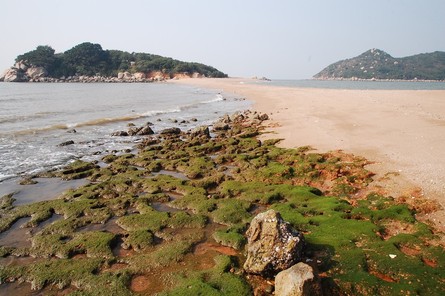
Sha Chau is one of the westernmost islands in Hong Kong with a long sand bar which is exposed at low tides. An extensive fault zone is also exposed on the island. Archeological artifacts of Neolithic age were unearthed on Sha Chau and the nearby islands. On this trip, Prof Chan will take the group along the western channel to describe the geology and morphology of the western parts of Hong Kong, discuss the archeology of the areas in context with the geology and rock formations, and hopefully see some white dolphins in action.

After exploring Sha Chau, we will ride to Tai O for a simple lunch. Afterwards, participants can return to Central with the group by 15:00 ferry or stay on your own and explore Tai O at your leisure.

Tai O is one of Hong Kong's old Tanka fishing villages with stilt houses that are interconnected to form a water-borne community. The former Tai O Police Station has been renovated into a boutique hotel and this might be another place to visit. You can even take a bus to see the Big Buddha, walk around the tea garden, view the sutra logs and meditate quietly in the Wisdom Path.

For those choosing to stay on, there are public buses or taxis to Mui Wo for a ferry (fast ferry takes half an hour and slow takes one hour) to Central. You can also catch a bus or taxi to Tung Chung to take the MTR back to Central.

In case of adverse weather conditions or unfavourably high winds, we may have to modify or cancel the trip at the resource person’s discretion.

Resource Person

We are very privileged to have Professor Chan Lung-sang (陳龍生教授) as the leader of the trip. Prof Chan is professor in Earth Sciences at the University of Hong Kong as well as College Principal of HKU SPACE Community College and HKU SPACE Po Leung Kuk Community College. He received his doctorate degree in geology from the University of California, Berkeley and is arguably the first Hong Kong native to receive formal training in geology. His research interests include tectonics of South China and Hong Kong, earthquake geology and applied geophysics. He is devoted to promoting Earth Science education, and has led field trips to South China, Tibet, Taiwan, North America, Australia, Italy, Cyprus, Arctic region and Antarctica for students.