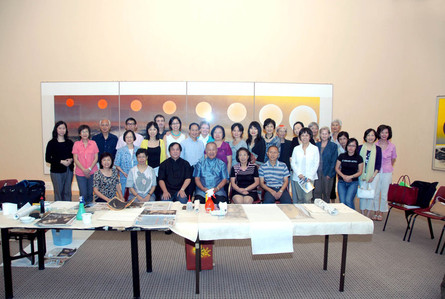
Liu Guosong’s Experimental Chinese Painting Exhibition

Liu Guosong is a renowned pioneer of modern experimental Chinese ink painting. Born in Anhui, China in1932, he moved to Taiwan in 1949, and has also lived in Hong Kong for a period of time since 1971.

Liu was trained in both Western and Chinese traditional techniques. Imbued with the spirit to invent new ways to complement ink and colour on different types of paper, he founded the Fifth Moon Group of new Chinese painting in Taiwan. Highly acclaimed internationally, Liu has participated in many exhibitions and conferences worldwide. In 2004, he was invited to stage a retrospective of his works at the Hong Kong Museum of Art. He is also the Honorary President of the Modern Ink Painting Society in Hong Kong.

We are privileged to have a private tour with Liu to preview his exhibition just hours before the opening ceremony. It will be a unique opportunity to hear him talk about his insights and experimentations.

To add frosting to the cake, we have arranged a demonstration of modern ink painting techniques by three of Liu’s former students – Eddy Chan Kwan Lap, Chan Shing-kau and Anita Lau Kam Chi – who are prize-winning artists that have exhibited and published extensively.

Eddy Chan Kwan Lap is an international prize-winning MFA artist. He will be demonstrating his special techniques using crumbled paper and cardboard to produce metaphors of brushstrokes beyond brushstrokes, a signature of his mystically surrealistic paintings.

Chan Shing-kau is the Ex-Chairman of the Hong Kong Modern Ink Painting Society, an organization for cutting-edge experimental ink artists. He will show us his techniques using plastic sheets, detergents and spray bottles to produce textures that resemble different forms of nature, including snow scenes.

Anita Lau Kam Chi is famous for her unparalleled marbling technique ?teasing ink and water, in a fascinating controlled and yet uncontrolled manner – to create her highly popular and distinguished style of artworks which are found not only on paper but also on silk and cloth.
Dr. Jing Tsu on Lin Yutang, his Chinese-Language Typewriter and the Global Importance of Chinese Language

Language is very much like art. They both are tools to render human thoughts and feelings into tangible forms. At the same time, language is also a form of currency, standardized for exchange and communication among diverse groups of people. What happens when both the aesthetic and practical sides of language are jointly expressed in technology?

The HKU Museum Society takes pleasure in presenting a lecture by literary scholar and cultural historian Dr. Jing Tsu (石靜遠), Assistant Professor at Yale University. Dr. Tsu received her Ph.D. from Harvard University and was a Fellow at the Radcliffe Institute for Advanced Study at Harvard in 2008-2009. She has researched and written extensively on a century's transformation of the sound and script of the Chinese language.

In 1946, Lin Yutang (???) filed an application with the U.S. Patent Office for his Chinese-language typewriter. The design, which had taken him fifty years to conceive and to build, marks a little known history in the struggle for global dominance between the Chinese and English languages in the area of international communication, a rivalry that continues to the present. In this lecture, Dr. Tsu will be discussing this much neglected chapter of Lin Yutang's biography and how it adds an important dimension to our understanding of his significance as one of China's most successful bilingual writers in the English-speaking world.

Dr. Tsu has published many articles, book chapters and reviews on modern Chinese literature, nationalism, and diaspora. She is the recipient of numerous academic awards and international honors. Her book "Failure, Nationalism and Literature: The Making of Modern Chinese Identity 1895-1937" was published by Stanford University Press in 2005. She is currently completing her second book manuscript, "Sound and Script in Chinese Diaspora," which is under contract with Harvard University Press.

Stephen Hui Geological Museum & Lunch at HKU Senior Common Room

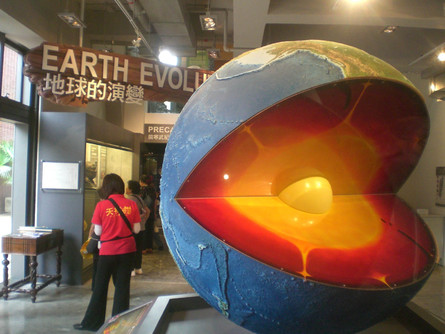
Tucked in one of the buildings inside the HKU campus, the newest museum to open in Hong Kong early this year is the Stephen Hui Geological Museum. The museum owes its existence to the generous donation and continuous support of the family of the late Dr. Stephen Hui, mining engineer, geologist, scholar and philanthropist.

The exhibits are some of the oldest artifacts from planet earth. Instead of seeing man-made art, we will see some of the most spectacular works of art by Mother Nature! The museum occupies two floors with galleries that are arranged thematically. It also contains a small theater classroom for ԍagic PlanetԠdemonstration and lectures.

We will be guided by Dr. Petra Bach, Curator of the Geological Museum, BA & MA from Johannes Gutenberg University, Germany; PhD from HKU. She has done diverse fieldwork in Finland, Egypt and China. In addition, Sylvia Kwok, the daughter of the late Dr. Stephen Hui and an educator and member of our Society, will speak to us about her fatherӳ lifetime passion in geology.

Following the tour, we will walk over to the Universityӳ Senior Common Room, an exclusive dining venue for senior faculty and staff for our lunch.

Come and enjoy the new museum on University campus.

Studio visit with Lisa Cheung, Chinese Antique Restoration Specialist

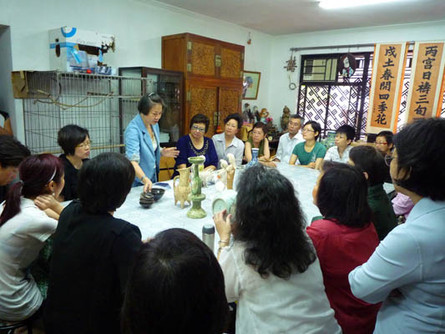
Not only famous as one of the Chinese antique pottery restorers in Hong Kong, but also as one of the top rare few in the world, Lisa Cheung is a charming lady who is very articulate and keen to share her interest and passion in life, which fortunately, has become her career. Her restored objects are found in the collections of museums in the U.S.A., Europe, Hong Kong, Taiwan and Singapore. Her global clients include dealers, collectors, auction houses and museums. She specializes in restoring white pottery, red pottery and grey pottery of Neolithic period, Han Dynasty, Tang Dynasty and Northern Wei period. Occasionally, depending on the object and its condition, she also accepts orders to restore antiques or works of art from all time periods, with materials ranging from porcelain, stone, wood, jade, bone, horn, tooth, bronze, gold and silver.

Jewelry design is Lisa’s serious hobby. Combining old and new Chinese pieces to make one-of-a-kind wearable artworks, she trademarks them under Lisa’s Collection and sells them mainly for charities. Through the years, she has raised millions of dollars for charities like Hong Kong Federation of Youth Groups, Dragon Foundation, Cable TV for Sichuan Earthquake and Chartered Bank’s “Seeing is Believing” project. One year, she had the opportunity to design souvenir necklaces for the 14 finalists of the Miss Universe Beauty Pageant.

Before becoming an antique restorer, Lisa was known as Chung Ding Dong ( 鍾叮噹 ), an award winning singer, Cantonese movie star, TV contract artist and performer. After marrying Kalam Cheung, a 5th generation Chinese herbalist medical doctor and Chinese antique collector and dealer, Lisa learned the art of restoration from her husband, who studied the craft in Paris many years ago. As patron donors to the Hong Kong Museum of Art, they have donated over 30 pieces of antique in their name and in the name of Kalam’s father, Dr. Pak Sheung Cheung.

Her studio promises to be beyond the ordinary.

Koo Mei’s Landscape Painting

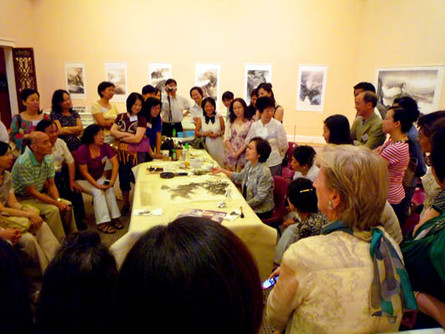
This special tour and demonstration was conducted by visiting artist Koo Mei in conjunction with her solo exhibition at UMAG. Willing a brush in her hands, clouds and mists magically appeared with mountains and trees in front of our very eyes. Koo Mei was willing to share her insights on art and life with the participants through answering questions and casual conversations. A delicious meal with the artist at a private club afterward.

Guided Viewing: Hong Kong International Art Fair (Art HK ’09)

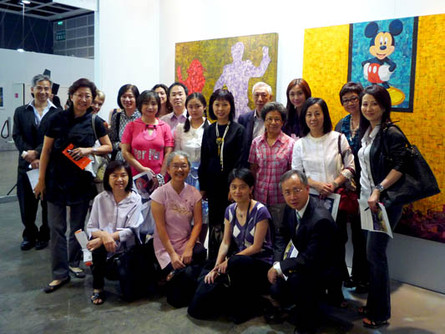
Following last year's inaugural success, the Hong Kong International Art Fair (ART HK) emerged as the leading art fair in Asia, presenting an unparalleled opportunity to see some of the freshest and most exciting work being produced around the world, alongside modern masters from the 20th century.

While last year's event showcased works of art by 101 leading art galleries, this year, Art HK 09 will bring together over 110 of the world's leading modern and contemporary art galleries from 24 countries to display unique and diverse works of art.

Amongst the overseas galleries participating for the first time are White Tube from London, Galarie Continua from Italy, Lisson Gallery from London, Gagosian Gallery, Tomio Koyama Gallery and Scai the Bathhouse from Japan.

Art Futures will be a new section dedicated to solo and two-artists presentations from young galleries on emerging artists. The fair will also feature works by Antony Gormley and Anish Kapoor for the first time in Hong Kong, alongside leading Asian artists Cai Cuo-Qiang and Jitish Kallat.

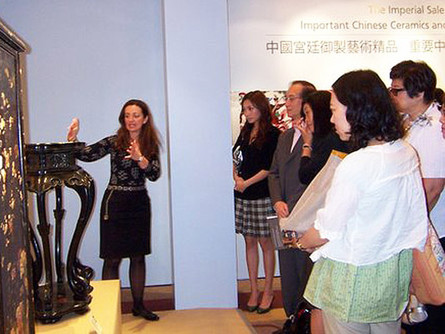
Guided Auction Viewing: Christie’s Hong Kong Spring 2009 Exhibition

Christie's Hong Kong Spring Auction 2009 will be held from 24 to 27 May, 2009. It will feature numerous sales across a variety of collecting categories – from classical Chinese paintings and works of art, to cutting edge contemporary works from artists throughout Asia, as well as wine, jewelry and watches.

A highlight of this year's auction will be The Imperial Sale the theme of which will focus strongly on the daily life and rituals of the Qing court.

Christie's specialist will guide us through some of the highlighted items on show. Members and friends are welcome to view the other works of art on exhibit at various galleries after the guided tour.

More detailed information will be available nearer the time. Do watch out for these updates by clicking on Museum Society at UMAG's website.
www.hku.hk/hkumag.

Annual General Meeting at the Hong Kong Club with Guest Speaker Wong How Man

Lecture Synopsis:

Cultural conservation has been an important concern in many countries, especially those with a long history and heritage. France in Europe and Japan in Asia, have epitomized remarkable efforts while China and Hong Kong have been trailing baby steps behind. Given its huge size, long history, treasured inventory of both living & past cultures and with current available financial resources, what should be our vision of the conservation road map ahead for us in this century?

China Exploration and Research Society (CERS) Founder and President Wong How Man, listed by Time Magazine among top 25 Heroes of Asia and honoured as “China’s most accomplished living explorer”, will share his view on the new challenges and pressing issues facing our generation regarding China’s most unique and important heritage.

Based on real cases CERS has dealt with that include: Dunhuang / Silk Road; Hanging Coffins; Manchuria Ewenki Tribe; Matrilineal Moso; Tibetan Monastery and Nunnery; and Hainan Li Minority Village, Wong will illustrate CERS’s philosophy and mission. He would also look into the questions of whether culture conservation could become a financial asset rather than a liability, and how an explorer could also be an effective conservationist.

Two short films will be shown with this interesting and thought-provoking talk. Wong’s works have been featured also in National Geographic, CNN, CNBC, Discovery Channel,among many others.

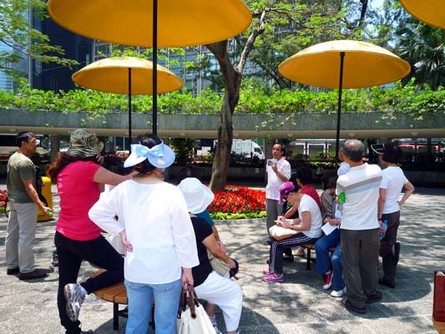
Heritage Walk: Central to Wanchai with Cheng Po Hung

In view of the ever-changing cityscape of Hong Kong, we have invited Cheng Po Hung ( 鄭寶鴻 ) , an expert on Hong Kong history, to recount what the city was like before the major reclamations in the early 20th century. He will take us on a walk and share tales beginning with Central, the old banking district that witnessed the growth of banking giants HSBC and Bank of China; important government buildings that represented the British colonial rule; and along the way, visit the original site of Queen's Pier before 1954.

From Central, we will continue to Admiralty, the former military base that includes army barracks and a naval dockyard. Walking eastward we will reach the peripheral area of Wanchai, once used as a burial site before being transformed into a church district. In 1890, the Hong Kong Electric Company was established here, giving streets names of Sun, Moon, and Star, reflecting the brilliance brought upon the city with the age of electricity.

It is hard to imagine that Queen's Road East was the original coastline before 1842. With reclamation, Wanchai developed into a popular residential area for expatriates and locals.We will continue our walk by meandering through the heart of Wanchai – Hung Shing Temple,Stone Nullah Lane, Tai Yuen Street Market and Spring Garden Lane before ending the morning at Lung Moon Restaurant, a popular dimsum restaurant that has remained unchanged since its opening in 1949.

Cheng Po Hung is an expert on Hong Kong history and has been collecting old photographs of Hong Kong for many years. He advises museums on local history and has written a number of books on this topic. His latest exhibition, Early Hong Kong Transport will be held at UMAG (25 March-10 May 2009). Visitors can glimpse the early development for Hong Kong's public transportation over the past hundred years.