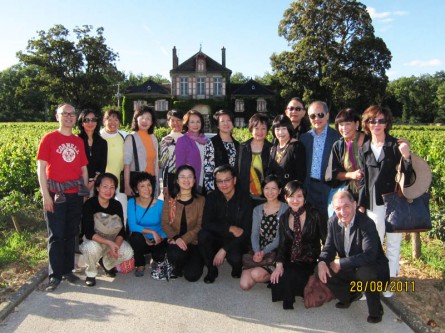
“Drinking the Stars!” Champagne, Burgundy and Chablis with Wilson Kwok

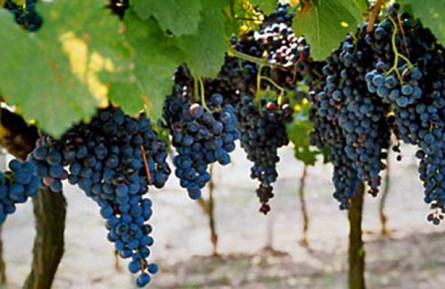
“Come quickly, I am drinking the stars!” exclaimed Dom Perignon after tasting his first Champagne. Very dignified Burgundy produces some of the world’s finest and most expensive dry white and red wines as it cultivates its grapes from over 400 different “terroir”. The distinctness of the Chablis wine is considered by wine masters to be one of the “purest” expressions of the varietal character of Chardonnay.

Following the success of our inaugural wine tour to Bordeaux last year, where our members were introduced to the basics of French winemaking, the Society is pleased to present a gastronomic tour of the renowned wine regions of Champagne, Burgundy and Chablis. This follow-up program essentially completes a comprehensive study of the three most famous and important French wine producing regions: Aquitaine (Bordeaux), Burgundy (and Chablis) and Champagne.

Together with internationally renowned food and wine connoisseur, wine judge and educator Wilson Kwok, we will be visiting important wineries such as "Clos de Vougeot" in Burgundy, "William Fevre" in Chablis and celebrated champagne cellars such as "Moet Chandon Dom Perignon, Salon and Deutz".

Our gastronomic adventure will include “Le Top du Top” establishments such as Maison Lameloise (3 stars Michelin) in Burgundy, Hostellerie des Clos (1 star) in Chablis and L’Assiette Champenoise (2 stars) in Champagne.

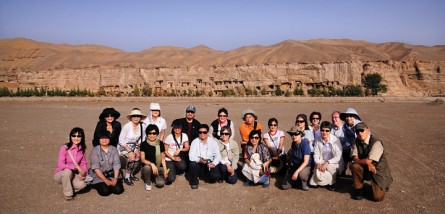
Xi’an & Dunhuang with Lee Mei-yin (Conducted in Cantonese & Putonghua)

Overview:

Xi’an (西安), also known as Chang’an in ancient time, is one of the oldest cities in China and has served intermittently as the capital of thirteen dynasties including Zhou, Qin, Han, Sui and Tang. It prospered as an international city benefiting from its location at the eastern starting point for the great trade caravans of the ancient Silk Road.

The tour’s program begins in Xi’an with a visit to the Shaanxi History Museum (陝西歷史博物館) and the Xi’an Museum (西安博物院) to view the important collections, dated from pre-history of 150,000 years ago through different dynasties to the Qing. We will visit Yangling Tomb (漢陽陵), the Mausoleum of the Western Han Emperor. It was built in the year 153 and housed up to 60,000 burial objects – painted pottery figures, utensils, chariots and weapons, including a large number of animals have been unearthed. Xi’an’s old City Wall (古城牆) was one of the largest and most complete ancient military systems of defense in the world.

Dunhuang (敦煌), a small town in northwestern China renown for its art treasures, was an oasis located amid the Gobi Desert along the Silk Road from 2 BC to 14 AD. The caves in Dunhuang are the highlights of the tour. The Mogao Grottoes (莫高窟), popularly known as “the Caves of the Thousand Buddhas”, form a complex of 492 cave temples containing some of the finest examples of Buddhist art. Spanning a period of 1,000 years, from the 4th to the 14th century, they visually represent, with brilliant details, the culture of medieval China. They were inscribed as a UNESCO World Heritage Site in 1987. The Yulin Grottoes (榆林窟), known as Wanfoxia “Gorge of Ten Thousand Buddhas”, were carved between the Northern Wei (439–534) and the Qing Dynasty (1644–1911) on two sharp cliffs facing each other on the banks of the Yulin River.

This tour will be conducted in Cantonese and Putonghua. We are very privileged to have Lee Mei-yin, a Special Research Fellow of the Dunhuang Academy, guide us in Xi’an and Dunhuang – two important ancient cities on the Silk Road. A graduate of The Chinese University, she is an advisor to the Hong Kong Institute for Promotion of Chinese Culture and has conducted in-depth research on Chinese ethnic culture, Buddhist art and Chinese embroidery for many years.

西安,古稱長安,是中國古城之一,先後有周、晉、漢、隋、唐等十三個皇朝定都於此,不僅是著名古都,而且是盛譽的國際城市,是絲綢之路的起點。

昔日的繁榮,西安給我們留下寶貴的遺址及文物,西安古城牆是我國現存最完整的一座古代城垣建築,奢華的帝王陵墓及陪葬器物,都是十分珍貴的歷史文化財富,現存陝西省歷史博物館及西安博物院。

敦煌是戈壁沙漠上的一個綠州,歷史上中西交通要道上的重鎮。

莫高窟,俗稱千佛洞,是個結合建築、彩塑、壁畫三為一體的藝術寶庫。莫高窟現存四百九十二窟,塑像兩千四百餘尊,壁畫四千五百平方米,被譽為世界最大的畫廊,是世界上現存規模最大、內容最豐富的佛教藝術地。1987年年更被聯合國教科文組織列為「世界遺產」之一。近代以來,又發現了藏經洞,內有5萬餘件古代文物,並衍生出了一門專門研究藏經洞典籍和敦煌藝術的學科—敦煌學。榆林窟又稱萬佛峽,位於安西縣城東南75公里處的祁連山中。它是敦煌藝術的一個組成部分,和莫高窟一起被稱為絲綢之路上的姊妹窟。

全程由李美賢女士帶領參觀。李女士畢業於香港中文大學,從事中國少數民族「民族史與服飾」研究、中國文化教育及推廣工作二十多年。近年研究範圍包括佛教藝術「佛教雕塑」、敦煌、絲綢與刺繡賞析等。現任香港中華文化促進中心之學術顧問「民族文化」,和敦煌研究院特別研究員。

A Tour of Sicily, with an Extension to Malta

“To have seen Italy without seeing Sicily is not to have seen Italy at all – for Sicily is the key to everything.” Johann Wolfgang von Goethe (1749-1832)

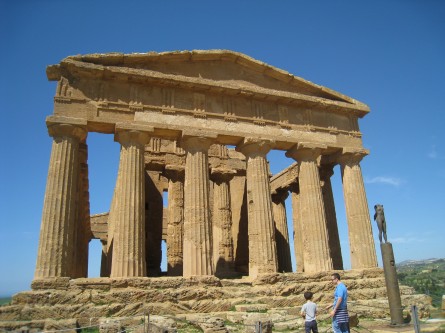
The enchanting island known as Sikania to its most ancient peoples was at one time a Greek colony, a Roman province, an Arab emirate and a Norman kingdom. Because of its size and strategic location at the southern tip of the Italian peninsula, Sicily had always been coveted by leading powers. The Phoenicians, Carthaginians, Byzantines, Saracens, Aragonese and Bourbons, after having made Sikelia their very own, left behind an eclectic heritage which has distinguished Sicily as the most important island in the Mediterranean.

Since time immemorial, Sicily is home to glorious beaches and majestic mountains. Its coasts are gold with orange and lemon orchards while vineyards, olive groves, almond orchards and wheat fields thrive on the rolling hills. Imposing ancient temples, medieval fortresses and Baroque cathedrals punctuate the landscape whereas awesome volcanoes of all shapes and sizes light up the night sky. Witness the legacy of Phoenician merchants, Greek philosophers, Arab emirs, Norman knights, Byzantine bishops and Holy Roman Emperors through centuries of artistic traditions expressed in the Classical, Romanesque and Gothic styles and embellished by the intricate motifs introduced by the Moors and enriched by the Renaissance spirit of the Baroque.

The trip is now full. We are grateful to members for their enthusiastic participation which gives our committee a greater incentive to plan for more exciting trips in the future. Thank you!

Macao Art Museum with Professor Peter Lam (林業強教授), Lunch and Macao Heritage Sites

OVERVIEW:

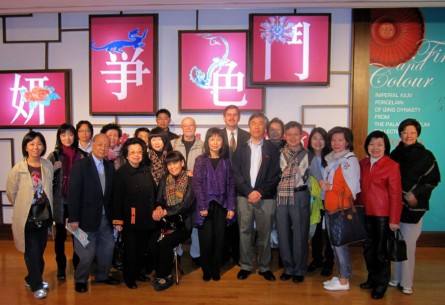
We are privileged to have Professor Peter Lam, Director of the Art Museum of The Chinese University of Hong Kong, guide an educational tour of the exhibition entitled Fire and Colour: Imperial Kiln Porcelain of Qing Dynasty from the Palace Museum Collection at the Macao Museum of Art. During the tour, Professor Lam will speak about 18th century imperial ceramics – imperial patronage, the Jingdezhen imperial factory, kiln supervisors, and technical terms on ceramics.

This exhibition showcases over 100 works from the Palace Museum’s collection of porcelains produced by imperial kilns during the reigns of emperors Kangxi, Yongzhen and Qianlong (1662-1795). They are divided into four themes – “The Beauty of Pattern”, “The Beauty of Shape”, “The Beauty of Glaze” and “The Beauty of Craftmanship”. Each represents and chronicles the technical and artistic advances produced in this glorious period of Chinese pottery and porcelain.

After viewing this impressive collection, we will enjoy lunch in one of the fine restaurants that have marked Macau as a culinary destination for food lovers in Asia.

In the afternoon, we will tour some of the temples, churches and squares – heritage relics that have contributed toward Macau’s designation as a UNESCO World Heritage site in 2005. From the local guide, we will learn about the history of Macau from its origin as a fishing village to becoming the oldest permanent European settlement in East Asia, its colonization by Portugal and the eventual reunification to China. The cultural encounters between the Chinese and Western civilizations are reflected in the fusion of its cuisine, art and architecture. Likewise, the effects from its exchange of cultural, spiritual, scientific and technical influences are considerable.

RESOURCE PERSON:

A graduate of the Percival David Foundation of Chinese Art, School of Oriental and African Studies, University of London, Professor Peter Lam is both an art historian and museum professional. His scholarly works on Chinese ceramics, calligraphy rubbings and the decorative arts are widely published. For the past three and a half decades he has been the Director/Professor of the Art Museum, The Chinese University of Hong Kong. Professor Lam is a long standing member of the Min Chiu Society of prominent collectors in Hong Kong, a council member of the Chinese Society of Ancient Ceramics in Beijing, an Honorary Research Fellow of the Palace Museum, Beijing and an Honorary Member of the Hong Kong Oriental Ceramic Society.

Bordeaux Winery Tour with Mr. Wilson Kwok

The University of Hong Kong Museum Society presents its inaugural wine study tour to the famous wine growing area of Bordeaux with internationally renowned food and wine connoisseur, wine judge and educator, Wilson Kwok.

Bordeaux is the birthplace of the legendary Bordeaux balance where generations of wine growers have perfected the subtle art of blending to elevate ordinary wines into greater, more complex ones. Beginning with a wine appreciation course, Wilson will take participants to visit a selection of important caves, such as the Chateau Figeac, Chateau Angelus, Chateau Bonalque, Chateau Branaire Ducru, Pauillac/Margaux, Chateau Girard, Chateau de Roquetaillade and Chateau Smith Haut-Lafitte. Moreover, the group will experience menus all carefully selected by Wilson to match specific qualities of the wines. Participants will learn to enjoy the essence of Bordeaux, the capital of wine civilization!

Wilson Kwok has one of the most impressive resumes in the food and wine industry in Hong Kong. Holding a Master’s Degree of Enology at the University of Bordeaux, France as well as a Grand Diploma from the Cordon Bleu de Paris, France, Wilson was knighted by the French Government as Chevalier de L’Ordre du Merite Agricole for his outstanding contribution to French cuisine and wine. He has served actively as a judge in wine competitions since 1994. In 1996, he became the first in Asia to be invited as a Member of the Jury for the prestigious wine competition, the Citadelles du Vin which is held in Bordeaux every year. In 2000, he won the Sommelier of the Year in Hong Kong on Australia Wines.

This tour is fully subscribed due to the overwhelming response of our members. We are grateful for their enthusiastic participation which gives our committee a greater incentive to plan for more exciting trips in the future. Thank you!

Ref. “Bordeaux – The Guide to Bordeaux Wine”, Conseil Interprofessionnel du Vin de Bordeaux

Art and Architecture in Seoul, Korea with Corrin Chan and Kathy Park

Overview:

Art & Architecture in Seoul

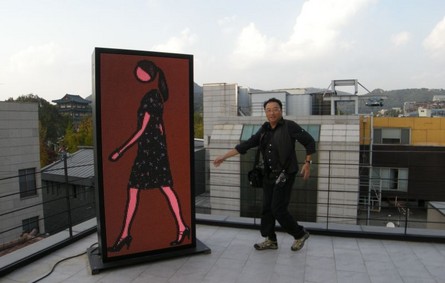
Focusing on elements that reflect both the essence of Korea’s past as well as modern influences and transformation, Korean architect Choi Wook will guide participants on a walking tour through specific areas of Seoul. The old city of Seoul is located north of the Han River, where residential districts surround the main palaces at the heart of the city’s original fortress, now long gone. We will visit the areas surrounding Kyongbok Palace such as Samcheongdong and Insadong where the old traditional houses in the alleys still retain their original shape and form although many have been retrofitted with modern amenities and aesthetics. Included in the program is a visit to the newly established Korean Furniture Museum which houses the most extensive traditional Korean furniture collection that is exhibited in a traditional structure built with much of its timber and materials recycled from demolished houses. We will also visit Kilsangsa temple, a city Buddhist temple with a modern organic Zen room built by a Zen monk.

South of the Han River is the newly developed part of the city with sprawling high rises and commercial buildings that have created a boom in Seoul’s real estate market since the 80’s. Districts such as Dosan Park and Apkujungdong evolve under commercial demands to showcase contemporary architecture and interiors. Along with its own signature collections, the unique Hermes House, the first art and boutique center in the world established by the Paris-based House of Hermes, features collections from contemporary Korean artists and designers. Horim Art Museum exhibits a range of artists, both contemporary and otherwise, in a new, modern structure.

The last decade has witnessed a giant leap in Korea’s contemporary art scene not only because of its own crop of new contemporary artists but also from its impact on the world stage of art sales and auctions in both volume and scope. Korea’s art market is soaring on the sales of native artists and world-renown artists. The highlight is a visit to the Leeum Museum that is designed in three parts by Rem Koolhaas, Jean Nouvel and Mario Batta, housing an extensive collection of masterpieces, ranging from traditional and modern Korean art to international art. Included in the walking tour are some of the most prominent contemporary art galleries in Seoul, namely Seomi and Tuus, Hyundai Gallery, Gana Arts and Kukje Gallery.

Magoksa Temple and Gongju City

A respite from the excitement of the modern city of Seoul is the overnight stay at the ancient Buddhist temple, Magoksa, in Chungchungnamdo Province. First established in the 7th century, this serene temple has survived intact for centuries in the Taehwasan Mountain. As one of the main temples of the Chogye Order of Korean Buddhism, Magoksa recently built its modern Buddhist Cultural Center where temple stays and Buddhist education programs are held for the appreciation of Korean Zen Buddhist influences on Korean aesthetics. On the second day, a visit to the ancient capital of Baekje, Gongju City, will reveal some of the finest Baekje artifacts that reflect the glorious cultural heritage from this period, which have influenced modern Korean design and crafts.

Heyri Art Village and Paju Book City

A decade ago, a group of innovative and visionary artists, architects and city planners created an ideal community outside Seoul called Heyri Art Village in an area near the 38th Parallel. Their aim was to bring substance and symbolism to a long neglected area, thereby reviving the beauty of its natural surroundings, while freely experimenting with creative structural designs. Participants will spend a day walking through Heyri’s artist community that includes galleries, studios, a library and residential structures. A visit to Paju Book City, an ambitiously planned city full of cutting-edge contemporary architecture developed by some of the major publishing houses in Korea is also on the agenda.

Resource Persons:

Corrin Chan is a registered architect and a director of Axis of Spin Architecture, a practice that she founded in Hong Kong in 1998. She graduated from the University of Hong Kong with a Bachelor Degree in Architecture and followed with a Master Degree in Architecture from Columbia University. Corrin worked in New York and Hawaii before returning to HK in 1992. She is the recipient of the Asian Cultural Council Grant and the Walter Gropius Medal.

Corrin has organized many architectural forums, exhibitions and competitions. She was the Chairlady of the “100-year Hong Kong Architecture”; Committee and Vice-Chairman of the Hong Kong Architecture Center. For the past few years, her interest in Korean Zen Buddhism led her to visit Korea regularly where she has witnessed much growth and changes.

Kathy Park is a design consultant and a practitioner of Zen Buddhist meditation. She has worked for Commes des Garcons, designed the housewares collection for Dosa Inc., and freelanced as a stylist and art director in London for World of Interiors, Elle Décor, Browns of London and the Cross. One of her vested interests is to develop traditional Korean crafts rooted with spiritual awareness from both tradition and modernity. In 2009, she collaborated with Pippa Small, a London-based jewelry designer-cum-anthropologist and a Survival International Ambassador, to incorporate Buddhist motifs and Korean Shilla Dynasty influences in modern jewelry handmade for the benefit of the charity, Lotus Outreach.

Currently, Kathy lives in Hong Kong, with her husband Andrzej Stec JDPSN, a Zen Buddhist teacher, at Su Bong Zen Monastery. A passionate practitioner of Zen Buddhism, she spends at least three months a year in meditation retreats and is involved in development projects for the Korean Zen community.
Compradors, Revolutionaries and Entrepreneurs: Trip to Zhongshan and Zhuhai with Dr. Joseph Ting

Overview:

Hong Kong's development from being a farming and fishing village to the present global commercial centre has her origins not just locally in Hong Kong but also in our neighbouring areas of Zhuhai (珠海) and Zhongshan(中山). This 3 days trip will take us to these neighbouring towns where we see the birthplace of Dr. Sun Yat Sen, and a museum in his honour. On the economic front, many of us are familiar with the local iconic stores, namely: Sincere Department Store and Wing On Department Store. The founders of these stores had their hometown in this area. We shall spend our time here looking at the origins of some of the people who shaped the history of Hong Kong, both politically and economically.

We are very privileged to have as our guest lecturer, Dr. Joseph Ting (丁新豹博士), formerly Chief Curator of the Hong Kong Museum of History. Dr. Ting graduated from the Department of Chinese, University of Hong Kong in 1974, majoring in Chinese Literature and Chinese History. He acquired his Ph.D in 1989 from the same department. He joined the Hong Kong Museum of Art in 1979 as Assistant Curator II. He was transferred to the Hong Kong Museum of History in 1988, and became the Curator. He retired as the Chief Curator of the Hong Kong Museum of History. At present he is honorary adviser to a number of cultural institutions both in Hong Kong and China.

Journey of the Mind: Zen and Architecture in Central Honshu – A tour of Central Honshu, Japan, with Professor Puay-peng Ho

Central Honshu, known also as Chubu region, is significant in the development of Japanese politics, religions and society from the Kamakura era (1192-1333) to Meiji restoration (1868). Kamakura period is the most exciting period in the development of Japanese Buddhism through very powerful aristocratic patronage and the transmission of Song and Yuan Buddhism from China. This period witnessed the beginning of Zen Buddhism in Japan with two imported schools from China flourishing around the two founders ~ Eisai (1141-1215) of the Rinzaishu and Dogen (1200-1253) of the Sotoshu.

This study tour will cover the major temples and monasteries of Zen Buddhism between Fukui and Kamakura and explore the relationship between Zen ideals, art and architecture and the stunning natural landscape. The program will also include other well-preserved ancient monuments, including a castle ~ Matsumoto Castle; a garden ~ Kenrokuen; a town ~ Kanazawa and a unique village ~ Suganuma in Gokayama. In addition, the modern architecture of Tadao Ando, Kazuyo Sejima, Kengo Kuma and Toyo Ito will be visited in order to experience the expression of Zen spirit in these contemporary buildings.

Dr. Puay-peng Ho is Professor and Director of the School of Architecture and Director of the Centre for Architectural Heritage Research at The Chinese University of Hong Kong. He received his First Class Honours degree in Architecture from the University of Edinburgh and a Ph.D. in Art History from the School of Oriental and African Studies, University of London. His thesis was focused on Buddhist art and architecture of the Tang dynasty.

The tour is fully subscribed due to the overwhelming response from members to the trip announcement last December.

A Kaleidoscope of Turkish Delights

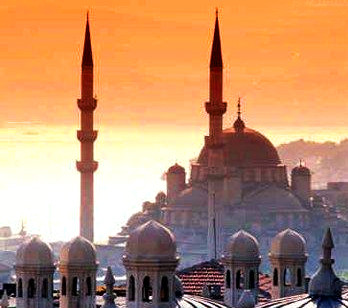
On this trip to Turkey, we shall visit the important palaces, mosques, museums and tourist attractions in Istanbul and enjoy the scenic beauty of Cappadocia, Pamukkale and Goreme, a UNESCO World Heritage site. The program covers the historical site of the Greek acropolis of Pergamum and the Roman ruins in Ephesus and Aphrodisias. Also included is a visit to Ankara's Museum of Anatolian Civilizations. Participants will enjoy a performance of the Whirling Dervishes in Sahuran as well as a cruise on the Bosphorus, the strait that separates Asia and Europe.

Owing to the overwhelming response from members to the trip announcement last September, we decided to operate two parallel tours, instead of just one. As both tours are fully subscribed, the waiting list is now closed. We are grateful to members for their enthusiastic participation which gives our committee a greater incentive to plan for more exciting trips in the future. Thank you!

India – A Transcendental Tapestry: Tour of Sanchi, Khajuraho, Amritsar & Dharamsala

We will visit three UNESCO World Heritage sites on this tour: Buddhist Monuments at Sanchi, Rock Shelters of Bhimbetka & the Khajuraho Group of Temples.

Sanchi is famous for outstanding specimens of Buddhist art and architecture belonging to the period between the 3rd century BC and the 12th century AD. The most notable of all the Sanchi monuments is the Great Stupa which was commissioned by the Maurya Emperor Ashoka in the 3rd century BC.

Khajuraho boasts the largest group of medieval Hindu and Jain temples famous for their bold, sensuous and erotic sculpture. Made of sandstone, the temple complex was built by the Chandela Rajputs over a span of 200 years from 950 to 1150. Today, they serve as fine examples of artistic Indian architectural styles that have gained popularity due to their depiction of sexual life during medieval times.

Amritsar, home to the Golden Temple, is an important seat of Sikh history and culture. The architecture of the Golden Temple represents a unique harmony between the construction styles of the Muslims and the Hindus and has created an independent Sikh school of architecture in India. The shining gold facade is accentuated not only by hundreds of lights but by the faith and devotion of its followers, many of whom are not even of the Sikh faith.

Dharamsala literally means “Holy Refuge” and many monasteries have been established here by Tibetan immigrants in the past. In 635, Hsuan Tsang recorded 50 monasteries with around 2,000 monks in this region. Dharamsala pulsates with the characteristic sights and sounds of old Tibet and has become an important destination for scholars and pilgrims worldwide.

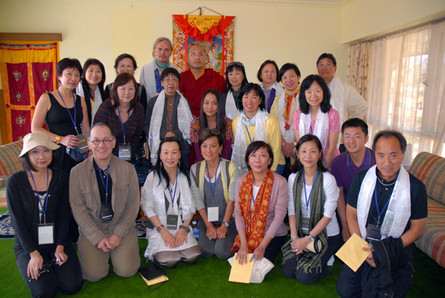
Andre Alexander will be the Resource Person of this tour. Since 1996, he is the Co-Director and Co-Founder of the Tibet Heritage Fund. Andre is responsible for managing conservation and development projects in Tibetan areas in India and China, including architectural conservation and urban rehabilitation, traditional construction skills as well as sustainable planning and design programs. These projects won several awards. Andre will share with us his knowledge of Tibetan culture and heritage and Buddhist architecture.

Optional Extension to Delhi, Agra & Jaipur (31 October – 6 November 2009)
We offer an optional five-night extension in Delhi, Agra and Jaipur. The highlights include six UNESCO World Heritage sites: Humayun Tomb, Qutub Minar and Red Fort in Delhi and Agra Fort, Fatehpur Sikri and the Taj Mahal in the State of Uttar Pradesh.